

Carrots
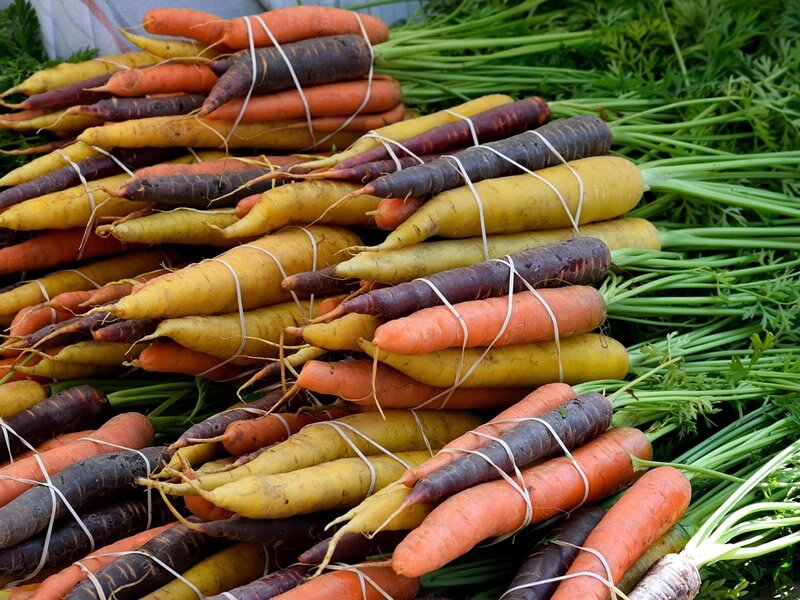
Carrots are one of the most widely grown root vegetables and are valued for their sweet flavour, versatility and excellent storage qualities. While often thought of as a simple crop, growing straight, well-shaped carrots requires the right soil preparation and careful timing.
In Ireland, carrots can be grown almost year-round with the right variety and conditions. Although most outdoor sowings begin in spring, early varieties can be sown under cover in greenhouses or polytunnels from late winter, allowing for much earlier harvests.
With careful soil preparation and variety selection, carrots can be grown successfully in most gardens.
How to grow Carrots
- Soil and Site – Carrots require a light, free-draining soil that is free from stones and fresh organic matter. Heavy or stony soils cause roots to fork or grow misshapen. Avoid adding fresh manure and instead prepare beds well in advance, incorporating well-rotted compost from the previous season if needed. Choose an open, sunny position. The 'stale seedbed' technique should be used if possible, with a bit of advance planning, whereby you prep the seedbed well ahead, allow weeds to germinate and then hoe over the bed before planting. If you can do this twice in advance you'll get even better results.
- Sowing – Carrots are always direct sown, as they do not transplant well. Under cover, early varieties such as 'Amsterdam Forcing' can be sown in greenhouses or polytunnels from late January, provided soil temperatures are not too low. Covering the bed with black plastic a few weeks beforehand can help warm the soil. If conditions are very cold, sowing can be delayed until February without issue. Outdoor sowings usually begin here from April onwards for early varieties and maincrop varieties are best left until the last week of May for the most reliable results..
- Sowing Depth – Sow seed thinly in shallow drills approximately 1cm deep and lightly cover with fine soil. Keep the soil consistently moist during germination, which can take 10–21 days depending on temperature.
- Spacing – Thin seedlings gradually to around 5–8cm apart once large enough to handle. Rows should be spaced approximately 25–30cm apart. A well-managed bed can produce a high yield from a relatively small area.
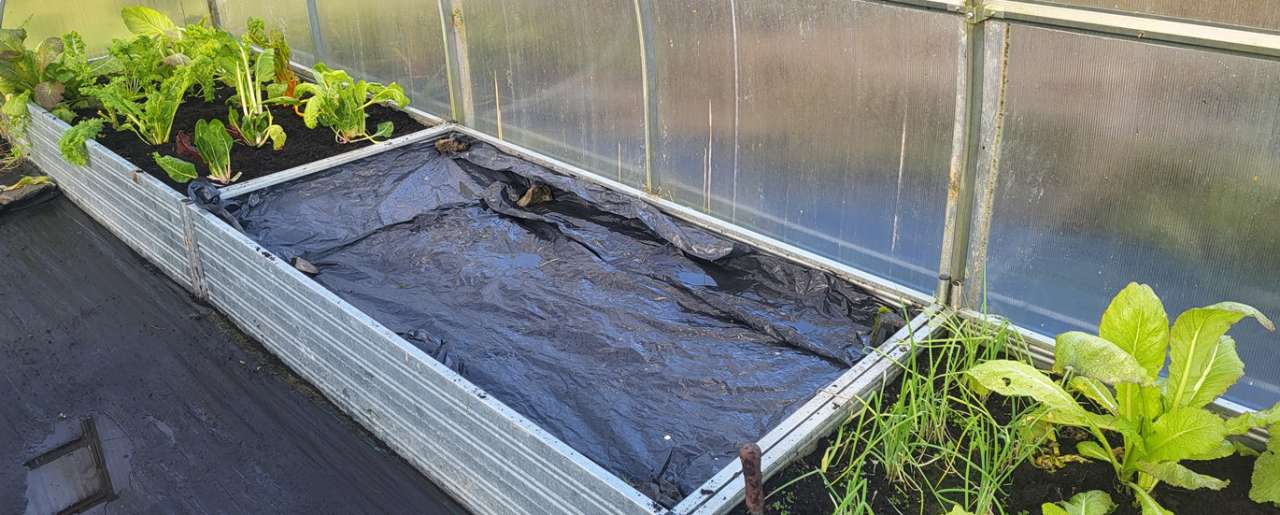
"In mid January I prep a bed in the polytunnel ready for carrots to be sown at the end of the month or in February. I had just cleared this bed of what was left of some oriental greens I had growing over winter and given it a good raking over to loosen the soil with no need to add any further fertiliser. That done, I covered it in black plastic which should help warm the soil over the next couple of weeks at which time, weather permitting, I'll start sowing some early carrot seeds ('Amsterdam Forcing' and 'F1 Napoli'). Hopefully this will give me a crop that I can start harvesting in May and June, and once those are cleared I'll add some well-rotted farmyard manure before transplanting some tomatoes there that I'll have gown in pots indoors." - Richard. Photo taken 16 January 2026 in Boyle.
Cultivation & Care
- Watering – Keep soil evenly moist during germination and early growth. Once established, carrots require regular watering during dry periods to prevent roots becoming woody or splitting.
- Thinning – Thin carrots carefully to avoid attracting carrot fly. It is best done in the evening, and thinnings should be removed from the area immediately.
- Weed Control – Carrots are slow to establish and can easily be overwhelmed by weeds. Regular, gentle hoeing is essential, particularly in the early stages of growth.
- Pest & Disease Control – Carrot fly is the main pest, laying eggs at the base of seedlings. Using fine mesh, fleece, or growing carrots under cover can significantly reduce risk. Avoid crushing foliage when thinning, as the smell attracts the fly.
Tip: If you have the resources you may also want to try growing in deep raised beds (over 60cm high preferably) as, the carrot fly is a very weak flyer and often doesn't fly much above a foot in height, so having a higher bed can impede the pest's access to your lovely roots. Crop rotation is also essential with carrots and they should not be grown in the same place in successive years.
Harvest and Storage
Early carrots grown under cover can be harvested from late spring, while maincrop varieties are ready from summer through to autumn. Harvest when roots have reached a usable size; younger carrots are often sweeter and more tender.
Maincrop carrots can be stored in boxes of damp sand or compost in a cool, frost-free place. Alternatively, carrots can be left in the ground and lifted as needed, provided soil conditions allow.
Culinary Use
Carrots are extremely versatile and can be eaten raw, roasted, boiled, steamed or added to soups, stews and casseroles. Freshly harvested carrots are particularly sweet and require minimal preparation.
Recipe – Honey Roasted Carrots
This simple recipe is adapted from a classic BBC Good Food method and works particularly well with freshly harvested carrots.
Ingredients
500g carrots, scrubbed and trimmed
2 tbsp olive oil
1 tbsp honey
Salt and black pepper
Optional: fresh thyme or rosemary
Method
- Preheat the oven to 200°C (180°C fan).
- Slice carrots lengthways if large, or leave whole if small.
- Toss with olive oil, honey, seasoning and herbs if using.
- Spread evenly on a baking tray and roast for 30–40 minutes, turning once.
- Serve as a side dish or as part of a warm salad.
Tip: If you want to create a similar dish without the lengthy roasting, you can add the carrots to a deep frying pan with about 150ml of veg stock along with 1-2 tbsp of honey, salt, pepper and the optional thyme or rosemary - cook on a medium heat covered for about 15 minutes then remove the cover and raise the heat until the liquid reduces to a nice glaze that will coat the carrots before serving. You can check the carrots with a fork to make sure they are nice and tender and if not add a little more stock if necessary, continuing to cook until they are. Other great additions to this method are a couple of star anise and even a clementine, cut in half, squeezed and dropped into the pan from the outset.
Nutritional Information
According to Bord Bia, the Irish Food Board:
Per 100g serving
- Calories – 34 kcal
- Protein – 0.5g
- Carbohydrate – 7.7g
- Fat – 0.4g
- Fibre – 2.1g (NSP) or 3.9g (AOAC)
Carrots are rich in beta-carotene, which the body converts to vitamin A, contributing to normal vision and immune function.