

Lettuce
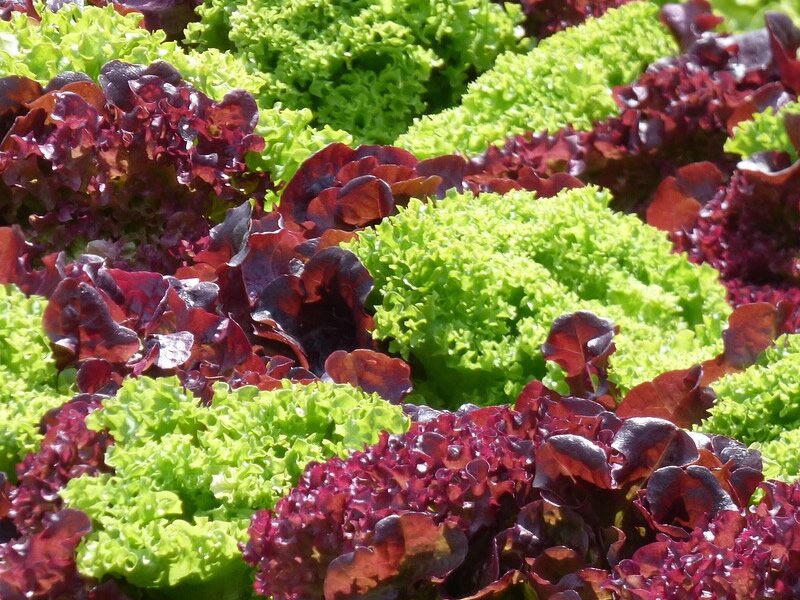
Lettuce is one of the easiest and most rewarding crops to grow, providing quick harvests, fresh flavour and a huge range of colours, textures and tastes. While supermarket offerings are often limited to a handful of familiar types, growing your own lettuce opens the door to dozens of varieties rarely seen on shop shelves.
With careful variety selection and a little protection, lettuce can be grown almost year-round in Ireland, making it an ideal crop for both beginners and experienced gardeners. From crisp hearts to loose, cut-and-come-again leaves, there is a lettuce to suit every space and season.
Types of Lettuce
There are several main types of lettuce, each with its own characteristics:
- Butterhead – Soft, tender leaves forming loose heads. Mild flavoured and ideal for salads.
- Cos (Romaine) – Upright lettuces with elongated heads and crisp ribs, well suited to cooler conditions.
- Loose-leaf – Open-growing lettuces that do not form a heart. Ideal for cut-and-come-again harvesting.
- Iceberg (Crisphead) – Firm, crunchy heads that require more space and consistent moisture.
- Batavian – A cross between iceberg and loose-leaf types, offering good crunch with better flavour.
How to grow Lettuce
- Soil and Site – Lettuce prefers a fertile, moisture-retentive but free-draining soil in a sunny or lightly shaded position. In warmer months, some shade helps prevent plants from bolting. Adding well-rotted compost before sowing improves results.
- Sowing – Lettuce can be sown almost year-round with the right varieties. Under cover, sow from late winter onwards in modules or trays. Outdoor sowings usually begin from March. Successional sowing every 2–3 weeks ensures a steady supply rather than a single glut. One of the keys to success with lettuce seed germination is making sure the compost is free draining. This is best achieved by mixing some vermiculite or perlite into your compost (up to 50%). You'll often see on seed packets that you should sow at a depth of 1cm however, you should only cover your seed very lightly with compost or the seed can just remain too wet and struggle to produce decent roots. Just adding a light covering of vermiculite is even better (although I have had great success with lettuce seed just by surface planting on to pre-dampened compost and pressing on the seeds to make sure they have good contact with the compost - if you do this you should always water by placing in a larger tray and adding water to the tray so that the compost draws the water up rather than watering over the seed which can disturb them).
- Sowing Under Cover – Winter and early spring varieties can be sown in greenhouses or polytunnels from January onwards, provided temperatures remain above freezing. Summer varieties prefer cooler soil and may struggle if sown too early under cover.
- Spacing – Thin or transplant seedlings to 20–30cm apart for hearting lettuces. Loose-leaf varieties can be grown closer together and harvested young.
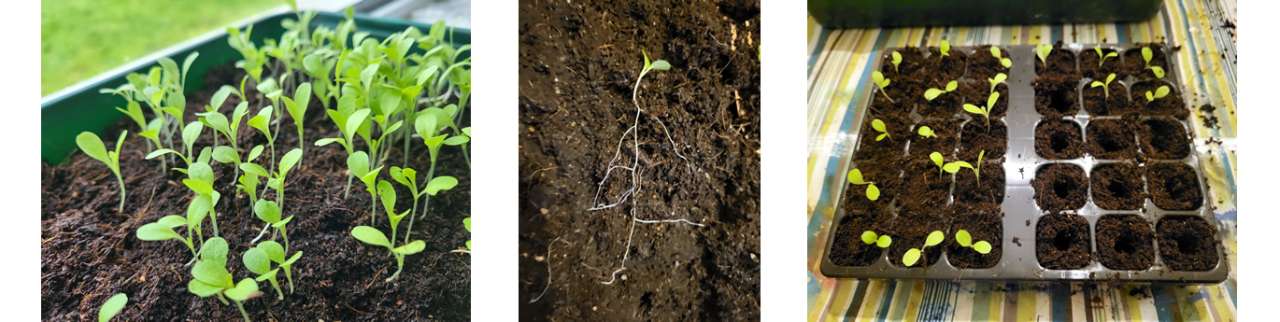
"I usually get an early start on lettuce by sowing seeds in a tray in early to mid February. I actually sowed this Green Salad Bowl variety on 29th Jan. and by 12 Feb. they were ready for pricking out and and planting in modules. As you can see from the central picture, whilst these seedlings may seem small, they have a fair amount of root on them for transplanting and that's what you are looking for. To make sure you enable the roots to grow well you need very free draining compost and even better, mix with up to 50% vermiculate. Once they are at this stage I then transfer these to modular trays, making sure I plant at a depth so the compost is right up to the growing tip and the root is covered (as well as any leggy stems!). By mid to late March I should have some healthy plugs then for planting outside" - Richard.
Cultivation & Care
- Watering – Consistent moisture is essential for good quality lettuce. Dry conditions can cause bitterness and bolting. Water regularly, particularly during warm weather.
- Feed – Lettuce is a light feeder but benefits from fertile soil. A light liquid feed may help in containers or during long growing periods.
- Weed Control – Keep beds weed-free, especially while plants are small. Shallow hoeing is usually sufficient.
- Pest & Disease Control – Slugs are the main pest, particularly in damp conditions. Under cover, aphids can also be an issue. Good hygiene and regular checks help keep problems manageable.
- Bolting – In warm or dry conditions, lettuce can bolt (run to seed). Choosing bolt-resistant varieties and keeping soil moist reduces this risk.
Harvest and Storage
Loose-leaf lettuce can be harvested as soon as leaves are large enough to use, either by picking individual leaves or cutting the whole plant just above ground level to allow regrowth. Hearting lettuces are harvested once a firm head has formed.
Lettuce is best eaten fresh but can be stored in the fridge for a few days if needed. Harvesting early in the morning helps maintain crispness.
Culinary Use
Fresh lettuce is most commonly used in salads but can also be added to sandwiches, wraps and burgers. Some varieties can even be lightly wilted into warm dishes. Growing your own allows you to experiment with colour, texture and flavour combinations rarely available commercially.
Recipe – Ginger Beef Lettuce Wrap
Lettuce is most often used in a range of salad recipes but the larger leaves can also be used as a wrap, providing a healthy alternative to bread wraps. Here is a quick recipe for doing just that for a light lunch.
Ingredients
1 tbsp sesame oil
200g beef mince
8 spring onions sliced on an angle, green parts reserved
1 red pepper
chopped
thumb-sized piece ginger peeled and finely grated
100ml oyster sauce
Romaine, Butterhead or Iceberg lettuce
Method
- Heat the oil in a non-stick frying pan. Add the beef and fry until browned all over and starting to crisp.
- Add the spring onions, pepper, ginger and oyster sauce. Stir-fry for another 5 mins until the peppers have softened.
- Separate the lettuce into leaves and pile on the minced beef.
- You can also try this adding some black beans into the mix or some pre-cooked noodles for a more substantial wrap.
Nutritional Information
According to Bord Bia, the Irish Food Board:
Per 100g serving approx:
- Calories – 11 kcal
- Protein – 1.2g
- Carbohydrate – 1.4g
- Fat – 0.1g
- Fibre – 1.3g (NSP) 1.5 (AOAC)
Lettuce is low in calories and provides fibre, folate and vitamin K, contributing to overall digestive and bone health. Considered a high protein food as 44% of its calories come from protein