

Spinach (Annual)
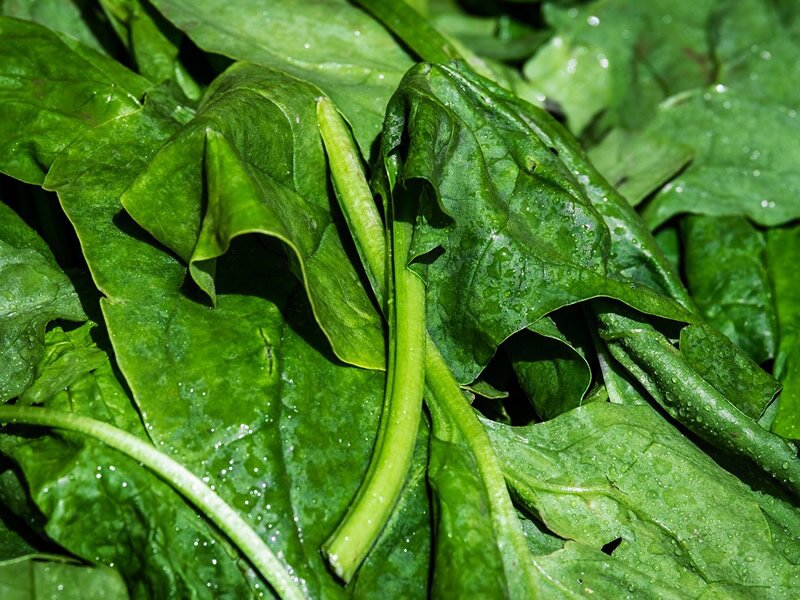
Spinach is a nutritious and fast-growing leafy vegetable that thrives in the cool, moist conditions typical of the Irish climate. When grown well, it produces tender, flavourful leaves that are far superior to shop-bought alternatives. Annual spinach should not be confused with perpetual spinach though, which has a flavour and growth habit more similar to chard.
With the right variety selection, spinach can be grown for much of the year, either outdoors or under cover. It is particularly well suited to early spring and autumn sowing, when cooler temperatures help prevent plants from running to seed.
Growing your own spinach also allows access to a wider range of varieties, from smooth-leaved types for salads to thicker-leaved varieties better suited to cooking.
How to grow Spinach
- Soil and Site – Spinach prefers a fertile, moisture-retentive soil in light shade. Dry or nutrient-poor soils can cause plants to bolt prematurely. Incorporating well-rotted compost before sowing helps ensure steady growth.
- Sowing – Spinach is best direct sown but it is possible to start some varieties off as early as February under cover, sowing 4 sees per cell in a modular tray, which can be planted out as early as March. This has the advantage of creating a an early harvest before the weather gets too warm and causes them to bolt however, they will most likely need to be covered in fleece given our erratic spring weather just to protect from intermittent frosts.
Outdoor sowings can begin from April, with further sowings made through spring and again in late summer for autumn and winter harvests. - Year-Round Growing – Special winter-hardy spinach varieties can be sown in late summer or early autumn and grown under fleece, cloches or in polytunnels to provide leaves throughout winter and into early spring.
- Sowing Depth & Spacing – Sow seed 1.5cm deep in rows spaced about 25cm apart. Plant spacing should be about 7cm apart for baby-leaf harvesting or 15cm for a more mature harvest.
- Crop Rotation - Spinach is part of the Chenopodiaceae family (which is a bit of a mouthful) like beetroot and chard and as such it doesn't fit into strict crop rotation and can be planted following any crop as long as the soil conditions are right. This makes it an excellent plant for intercropping between other vegetables to fill spaces and provide ground cover, as well as an extra harvest in beds with widely space crops that are slow to mature.
Cultivation & Care
- Watering – Keep soil consistently moist, particularly during dry spells. Irregular watering increases the risk of bolting and can lead to tough leaves.
- Feed – Spinach benefits from fertile soil but rarely needs additional feeding. In containers or long cropping periods, a light nitrogen-rich feed can be applied occasionally.
- Weed Control – Keep beds weed-free, especially while plants are young. Spinach establishes quickly but can still be overwhelmed early on.
- Pest & Disease Control – Slugs can damage young plants, particularly in damp weather. Downy mildew can occur in humid conditions, so good spacing and airflow are important.
- Bolting – Spinach is prone to bolting in warm, dry conditions. Choose bolt-resistant varieties and avoid sowing during the hottest part of summer, planting in partial shade.
Harvest and Storage
Spinach can be harvested as baby leaves from around 4–6 weeks after sowing, or left to grow larger for cooking. Harvest regularly by picking outer leaves to encourage continuous production. It can also be used as a 'cut-and-come-again' crop by cutting the entire plant about 5cm above ground level. In two to three weeks you can then have another harvest although the yields will reduce.
Spinach is best eaten fresh but can be stored in the fridge for a few days. Excess spinach can be blanched and frozen for later use. To blanch and freeze, put your spinach in boiling water for exactly 1 minute, drain and plunge into iced water to allow to cool. Once cool drain again and squeeze out as much water as you can from the spinach - this can be done by hand or you can use a clean tea towel or muslin wrap, folding it into the cloth and then twisting the ends to squeeze the water out. It can then be bagged and frozen where it will keep for 6 months.
Culinary Use
Spinach can be eaten raw when young and tender or cooked once leaves mature. It is a versatile ingredient, suitable for salads, omelettes, curries, soups and pasta dishes. Cooking reduces volume significantly, so a large harvest is often needed for cooked dishes.
Recipe – Simple Wilted Spinach
This simple recipe is adapted from a classic BBC Good Food method and is ideal for freshly harvested spinach.
Ingredients
300g fresh spinach
1 tbsp olive oil or butter
1 garlic clove, finely chopped
Salt and black pepper
Optional: squeeze of lemon juice
Method
- Wash spinach thoroughly and shake off excess water.
- Heat oil or butter in a large pan over a medium heat.
- Add garlic and cook briefly until fragrant.
- Add spinach and cook for 1–2 minutes until just wilted.
- Season and finish with a squeeze of lemon juice if desired. It is also lovely with a sprinkle of nutmeg or black pepper.
Nutritional Information
According to Bord Bia, the Irish Food Board:
Per 100g serving
- Calories – 25 kcal
- Protein – 2.8g
- Carbohydrate – 1.6g
- Fat – 0.8g
- Fibre – 2.1g (NSP)
Spinach is rich in iron, vitamin C, vitamin A and folate, contributing to immune health and energy metabolism.