

Shallots
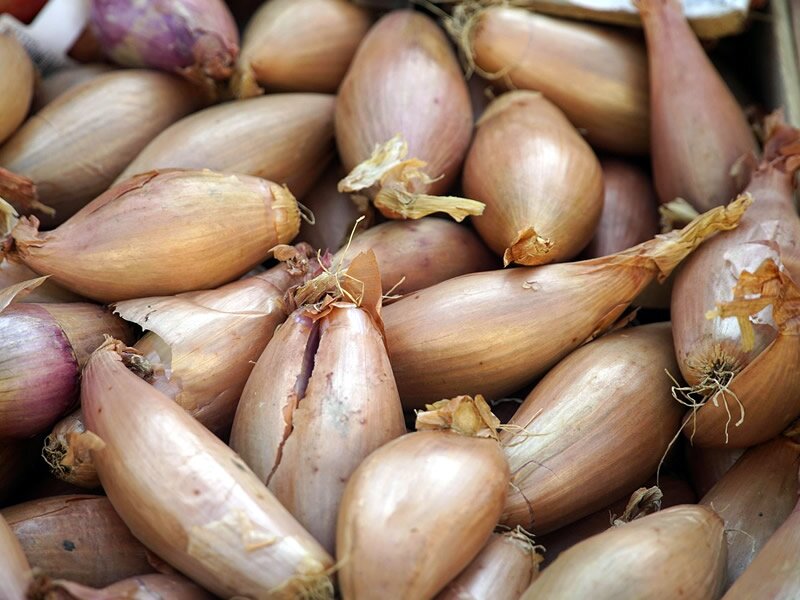
Shallots are closely related to onions but differ in both how they grow and how they are used in the kitchen. Rather than forming a single large bulb, shallots grow as clusters of smaller bulbs, similar to garlic, and are prized for their mild, sweet flavour.
In cooking, shallots are often preferred over onions for their more delicate taste, making them ideal for sauces, dressings and dishes where a subtle onion flavour is required. Growing your own shallots also gives access to varieties rarely found in shops.
In Ireland, shallots are most commonly grown from sets, which establish quickly and reliably. While they can be grown from seed, this is less common and requires a longer growing season.
How to grow Shallots
- Soil and Site – Shallots prefer a free-draining, fertile soil in an open, sunny position. As with onions, heavy or waterlogged soil can cause bulbs to rot. Avoid freshly manured ground, as excess nitrogen encourages leafy growth rather than bulb formation.
- Planting – From Sets – Shallot sets are usually planted out in Ireland from mid-March to April. Push each set gently into the soil so that the tip is just visible above the surface. Space sets around 25cm apart, allowing room for clusters to develop. If you are planting multiple rows, space rows 30cm apart.
Tip: You can also get your shallots off to an early start in February by first growing them on in modules that have relatively large cells. Plant one set per module with the tip still showing at the surface and give a light watering - you don't want them waterlogged as this can rot the bulb. You can then plant these out in April when any threat of frost has passed and hopefully the weather is a little drier. The advantage is that you have more control over the growing conditions and will establish a good root system before planting out. Be sure to harden off the plants for about 5-7 days before transplanting. - Sowing – From Seed – Shallots can be grown from seed sown indoors from February to March and planted out once conditions allow. Seed-grown shallots take longer to mature and generally produce smaller bulbs than those grown from sets.
- Spacing – Space rows approximately 25–30cm apart. Each set will usually produce a cluster of several bulbs.
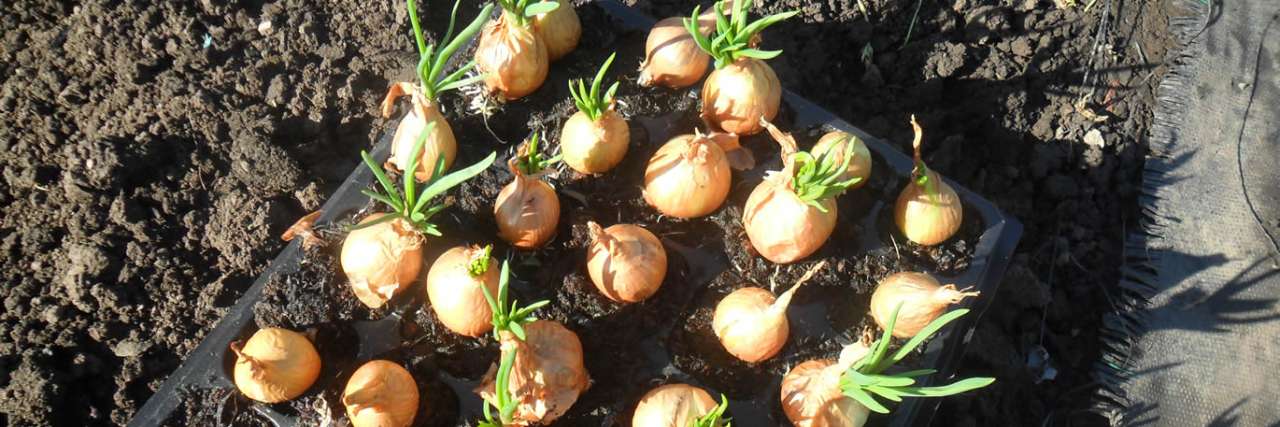
Above you can see shallots that were started off in mid-February of 2025, photographed here to be planted out on 28 March 2025. You'll noticed some have leafed up whilst others haven't but this doesn't really matter as it is the root structure underneath that counts and will help them establish quicker (whilst having protected them from outside conditions and given them an early start from February). - Photo by NotJustGreenFingers
Cultivation & Care
- Watering – Water regularly during dry spells, particularly early in the season. As bulbs begin to swell, watering should be reduced to help them ripen properly.
- Feed – Shallots are light feeders and usually require no additional feeding beyond reasonably fertile soil. Avoid high-nitrogen fertilisers.
- Weed Control – Keep beds weed-free, as shallots compete poorly with weeds due to their shallow roots. Regular hoeing on dry days is effective.
- Pest & Disease Control – Onion fly and fungal diseases can affect shallots, though they are often less troublesome than onions. Good spacing, crop rotation and hygiene help reduce problems.
Harvest and Storage
Shallots are ready to harvest when the foliage begins to yellow and fall over naturally, usually from mid to late summer. Lift the clusters carefully and allow them to dry on the soil surface in dry weather, or under cover if conditions are wet.
Once fully dried, separate bulbs and store them in nets or trays in a cool, dry, frost-free place. Properly cured shallots store very well and can last for several months.
Culinary Use
Shallots are valued for their mild, slightly sweet flavour and are widely used in sauces, dressings, vinaigrettes and slow-cooked dishes. They caramelise beautifully and are often used where onions might be overpowering. Home-grown shallots are particularly well suited to fine cooking.
Recipe – Shallot & Red Wine Sauce
This simple recipe is adapted from a classic BBC Good Food method and highlights the delicate flavour of shallots.
Ingredients
4 shallots, finely chopped
1 tbsp butter or olive oil
150ml red wine
Salt and black pepper
Optional: fresh thyme
Method
- Heat butter or oil in a pan over a low heat.
- Add shallots and cook gently until soft and translucent.
- Pour in red wine and simmer until reduced by about half.
- Season to taste and add thyme if using.
- Serve with meat, mushrooms or roasted vegetables.
Nutritional Information
According to Bord Bia, the Irish Food Board:
Per 100g serving
- Calories – 27 kcal
- Protein – 1.5g
- Carbohydrate – 3.3g
- Fat – 0.5g
- Fibre – 3.2g
Shallots provide fibre, vitamin C and antioxidants, and share many of the nutritional benefits of onions.