

Garlic
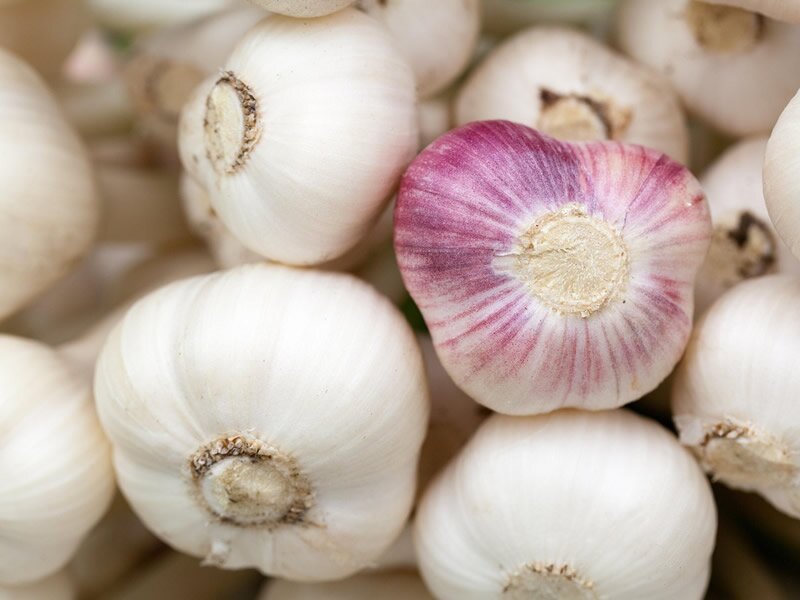
Garlic is a hardy and reliable crop that is well suited to the Irish climate, particularly when planted during autumn or early spring. It is usually grown from individual cloves rather than seed and requires very little maintenance once established.
There are two main types of garlic – soft-neck and hard-neck – each with different growing habits, storage qualities and culinary uses. In addition, elephant garlic is often grouped with garlic, though it is technically more closely related to leeks.
Growing your own garlic allows access to a wider range of varieties and flavours than those typically available in supermarkets.
Types of Garlic
- Soft-neck Garlic – The most commonly grown type. Produces multiple cloves per bulb, stores very well and is the type usually used for garlic braids. Well suited to the Irish climate.
- Hard-neck Garlic – Produces fewer but larger cloves (although this is debatable) and forms a flowering stem or 'scape'. Often considered to have a stronger, more complex flavour but does not store as long as soft-neck varieties.
- Elephant Garlic – Not a true garlic, but a type of leek. Produces very large bulbs with a mild garlic flavour. Grown in a similar way to garlic but with more spacing.
How to grow Garlic
- Soil and Site – Garlic prefers a free-draining, fertile soil in a sunny, open position. Heavy or waterlogged soil can cause cloves to rot - if you have heavy soil you might consider growing garlic in raised beds. Avoid freshly manured ground, as this encourages leafy growth at the expense of bulbs.
- Planting – From Cloves – Garlic is grown by planting individual cloves. Plant from October to March, depending on variety and conditions. Separate bulbs just before planting and place cloves point-up, about 5cm deep. Unlike onions the tip of the cloves should be about 2cm under the soil.
- Spacing – This is a point of contention as many garden books and bulb packets will recommend a spacing as little as 10cm but this will give you very small cloves. Much better to space cloves around 20 to 25cm apart with rows 25cm apart. Elephant garlic requires more space, around 30-35cm between plants and about 35cm between rows.
- Spring Planting – Garlic planted in spring will still grow successfully, though bulbs may be slightly smaller than autumn-planted crops.
Cultivation & Care
- Watering – Water during dry spells early in the season. As bulbs begin to mature, watering should be reduced to allow proper ripening.
- Feed – Garlic is a light feeder. If soil fertility is low, a balanced fertiliser can be applied early in the growing season. Avoid high-nitrogen feeds later on.
- Weed Control – Keep beds weed-free, especially in spring, as garlic does not compete well with weeds.
- Pest & Disease Control – Garlic suffers from few serious pests, though onion fly and fungal diseases can occur. Good crop rotation and spacing help reduce risk.
- Garlic Scapes – Hard-neck garlic produces a flowering stem known as a scape. Removing scapes encourages larger bulbs and the scapes themselves are edible.
Harvest and Storage
Garlic is ready to harvest when the lower leaves begin to yellow, usually from early to mid-summer. Lift bulbs carefully and allow them to dry thoroughly in a warm, airy place out of direct sunlight.
Once cured, store garlic in a cool, dry, frost-free location. Soft-neck garlic stores particularly well and can last for several months. Hard-neck varieties have a shorter storage life but excellent flavour.
Culinary Use
Garlic is used worldwide to flavour a wide range of dishes, from sauces and soups to roasted vegetables and meat dishes. Hard-neck varieties are often favoured for raw use due to their stronger flavour, while soft-neck garlic is ideal for general cooking and long-term storage.
Elephant garlic has a much milder taste and is often roasted whole or used where a subtle garlic flavour is preferred.
Recipe – Roasted Garlic Bulbs
This simple recipe is adapted from a classic BBC Good Food method and is ideal for using home-grown garlic.
Ingredients
Whole garlic bulbs
Olive oil
Salt and black pepper
Method
- Preheat oven to 200°C.
- Slice the top off each bulb to expose the cloves.
- Drizzle with olive oil and season.
- Wrap in foil and roast for 35–40 minutes until soft.
- Squeeze roasted garlic onto bread or into dishes.
Nutritional Information
Per 100g serving (taken as an average from a wide range of sources):
- Calories – 130kcal
- Protein – 6.4g
- Carbohydrate – 24g
- Fat – 0. 6g
- Fibre – 2.1g
Garlic is known for its antioxidant properties and contains compounds associated with heart health and immune support. High in calcium, potassium and phosphorous.