

Chives
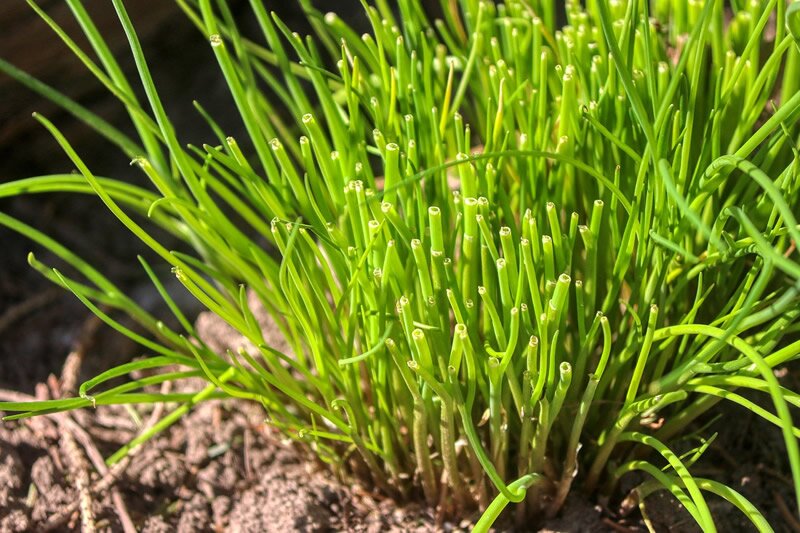
Chives are one of the easiest and most versatile herbs to grow, providing a mild onion flavour that can be harvested over a long season. Closely related to onions and garlic, chives are perennial and will return year after year once established.
In addition to their culinary value, chives are highly ornamental. When allowed to flower, they produce attractive purple pom-pom blooms that look at home in flower borders, especially when planted among ornamental alliums or even as a lower-cost alternative to them. The flowers are also edible and make a colourful addition to salads.
How to grow Chives
- Soil and Site – Chives prefer a fertile, free-draining soil in full sun or light shade. They are adaptable plants and grow well in borders, herb beds, containers and raised beds.
- Sowing – From Seed – Chives can be grown easily from seed sown indoors from March onwards, or directly outdoors once conditions improve. Sow thinly and lightly cover with compost. Germination can take 10–14 days.
- Planting Out – Seedlings can be planted out once established, spacing plants around 20–25cm apart. Chives also grow very well in pots.
Cultivation & Care
- Watering – Water regularly during dry periods, particularly for plants grown in containers.
- Feed – Chives benefit from a light feed in spring, especially if grown in pots, but generally require little additional feeding.
- Flowering – Allowing chives to flower does not harm the plant and encourages pollinators. Cutting flowers before they set seed can encourage continued leaf production.
- Pests & Disease – Chives suffer from very few problems and are generally trouble-free.
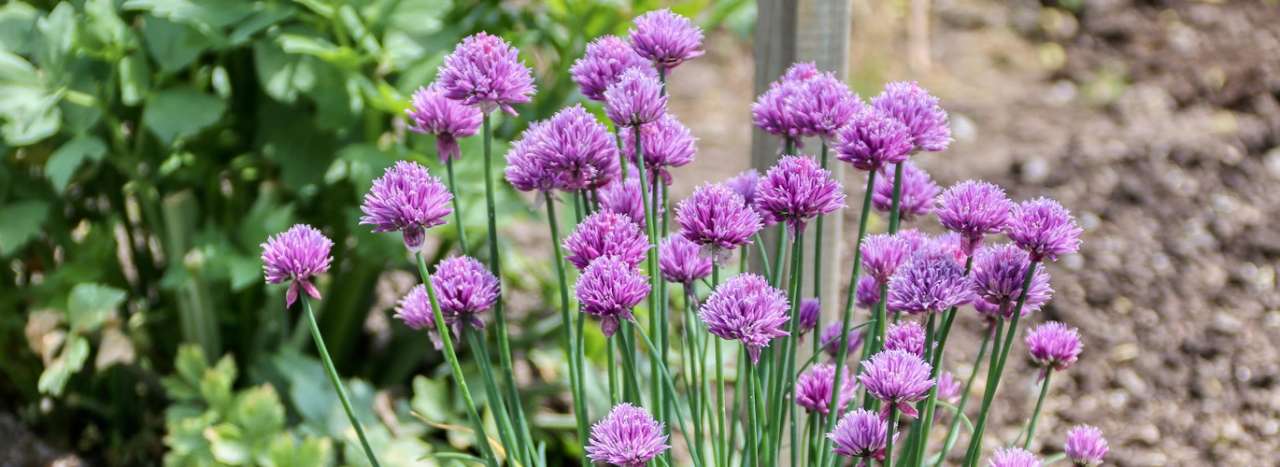
Chives have lovely purple flowers that also look great in your borders - Image by Alexander Fox from Pixabay
Dividing Chives
Once established, chives can be easily divided to create new plants. This is best done in spring or autumn.
- Lift the clump carefully from the ground.
- Divide into smaller sections using a knife or by hand.
- Replant divisions immediately at the same depth.
- Water well until re-established.
Regular division helps keep plants vigorous and provides a simple way to increase your stock.
Harvest and Storage
Harvest chives by cutting leaves down to a few centimetres above soil level. Regular harvesting encourages fresh growth. Leaves are best used fresh but can be frozen for later use.
Culinary Use
Chives are commonly used fresh in salads, omelettes, soups and potato dishes. The edible flowers have a mild onion flavour and add colour to salads and savoury dishes.
Nutritional Information
According to Bord Bia, the Irish Food Board:
Per 100g serving
- Calories – 23 kcal
- Protein – 2.8g
- Carbohydrate – 1.7g
- Fat – 0.6g
hives are rich in Vitamin A and Vitamin C and are a good source of fibre and Vitamin E.