

Scallions / Spring Onions
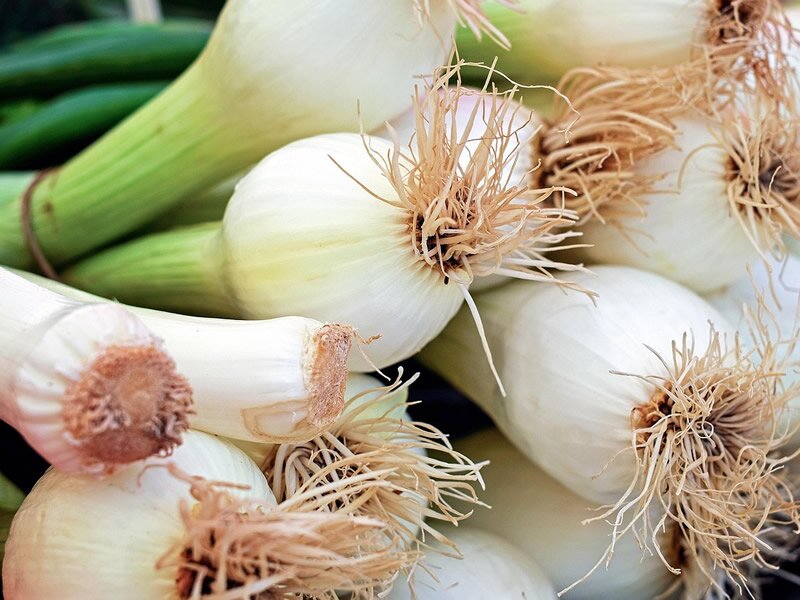
Scallions, also known as spring onions or bunching onions, are grown for their slender stems rather than for forming bulbs. They have a mild onion flavour and are quick to grow, making them ideal for succession sowing throughout the season.
Most scallions are grown from varieties often marketed as bunching onions, which are specifically bred not to bulb. These are generally the best choice for reliable crops and consistent harvests.
How to grow Scallions
- Soil and Site – Scallions prefer a fertile, free-draining soil in a sunny position. They grow well in beds, raised beds and containers.
- Sowing – Scallions can be sown from early spring through to late summer. They are usually grown from seed and do not require a long growing season.
- Sowing in Modules – For easy harvesting of bunches, sow around 8–10 seeds per module. These can be planted out as a clump, producing a ready-made bunch of scallions. These can be started off as early as February indoors on a heat mat for planting out in a polytunnel or green house in March for an early crop. Alternatively you can sow the without heat in a greenhouse or on a windowsill in late March for planting outside about 4-6 weeks later.
- Direct Sowing – Scallions can also be sown directly into the ground. Sow in small clusters, spacing around 25cm between bunches and 30cm between rows.
This is another plant that is perfect for successional sowing every 2-3 weeks to ensure a long season of supply with the last sowing made on July. - Crop Rotation - as an onion this will be part of your allium bed in your crop rotation and should be rotated accordingly to prevent disease build-up that will affect future onion crops.
Cultivation & Care
- Watering – Keep soil consistently moist, especially during dry weather, to ensure tender stems.
- Feed – Scallions are light feeders but benefit from fertile soil. A light nitrogen feed can be applied if growth is slow.
- Weed Control – Keep weed-free, particularly while seedlings are small.
- Pests & Disease – Generally trouble-free, though onion fly can occasionally be an issue. Crop rotation helps reduce risk.
Harvest and Storage
Scallions can be harvested from around 8–12 weeks after sowing, once stems reach usable size. Harvest whole bunches by lifting carefully from the soil.
They are best used fresh but can be stored in the fridge for several days if required.
Culinary Use
Scallions are widely used in salads, stir-fries, soups and garnishes. Both the white stem and green leaves are edible and provide a mild onion flavour without overpowering dishes. In a lot opf korean dishes these are referred to as 'green onions' as it is the green part of the onion that is often prized more than the white part.
Recipe - Green Onion Kimchi
"I am a big fan of kimchi and have collected various recipes over the years as I find it a great way to use or store gluts of a variety of vegetable including oriental greens, cabbages, cucumbers and radish - this recipe specifically focuses on spring onions and is adapted from a recipe I found in 'The Kimchi Cookbook by Lauryn Chun" - Richard.
Ingredients
250g spring onions
1/2 tbsp sea salt
2 tbsp of Korean chilli pepper flakes (Gochugaru)*
1/2 tbsp sugar
1 tbsp anchovy sauce (or fish sauce if you can't get anchovy sauce)
Method
- Combine onions and salt in a bowl and let sit at room temperature for 20 minutes.
- Drain and discard the liquid.
- In another bowl mix the pepper flakes, sugar and anchovy/fish sauce** Add the brined onions to the mix and combine well.
- Leave to marinate for at least 20 minutes or overnight for a more pungent flavour.
- This can be refrigerated and stored for up to 1 month over which time the flavour will develop.
This can then be used as a condiment which you can add to various rice bowls, salads, noodle dishes and even omelettes and frittatas.
* Note that Korean Chilli flakes are much different and milder than the normal chili flakes you buy in most supermarkets. If you can't find them in a local supermarket you will be able to order these online - I recommend asiamarket.ie based in Dublin. Failing that you can use a mix of paprika with a pinch of regular chilli powder.
** For a vegan alternative to fish/anchovy sauces in Kimchi you can use a mushroom broth instead. Take 50g of dried shiitaki or porcini mushrooms in a bowl, pour 200ml boiling water over the top and stir in 1 tbsp sea salt. Once cool enough to handle, squeeze the water out of the mushrooms into the same bowl. The squeezed mushrooms can be discarded, used in a stir fry or put back in the broth to allow for further infusion. This broth can be used once cooled to room temperature and can be refrigerated for use for up to 2 weeks. T
Nutritional Information
According to Bord Bia, the Irish Food Board:
Per 100g serving
- Calories – 23 kcal
- Protein – 2g
- Carbohydrate – 3g
- Fat – 0.1g
- Fibre – 1.5g (NSP)
Scallions are high in vitamin C, folate and fibre, contributing to general health.