

Jerusalem Artichokes
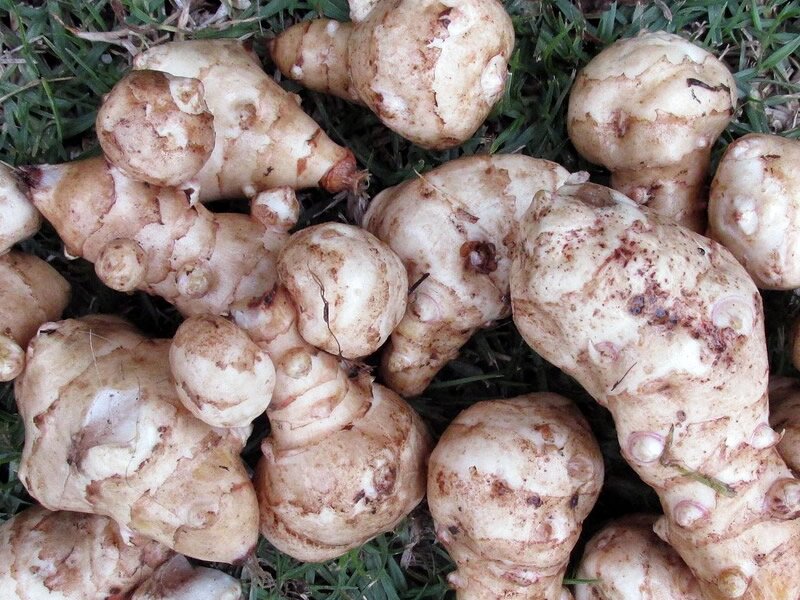
Jerusalem artichokes are a hardy and productive crop grown for their edible underground tubers. Despite their name, they are not related to globe artichokes and are instead a type of sunflower. Once established, they are extremely reliable and can provide harvests year after year.
Jerusalem artichokes are grown from tubers rather than seed and can be planted from late February onwards, weather permitting. They are particularly well suited to Irish conditions but do require some management, as they can spread if left unchecked.
This is one of those 'plant now - harvest forever' vegetables and not to be confused with Globe Artichokes, which are the ones that provide the hearts you can often buy in supermarkets. In fact, they are not even related to the artichoke but are more related to the sunflower - nor does the name 'Jerusalem' have anything to do with the place but is rather a corruption of the Italian word 'Girasola' meaning 'turning to the sun'.
How to grow Jerusalem Artichokes
- Soil and Site – Jerusalem artichokes prefer an open, sunny position and will grow in most soil types, though they perform best in reasonably fertile, free-draining ground. They are tolerant of poor soil and exposed conditions. Jerusalem artichokes can be invasive however (see note on 'Managing Spread' below). Some gardeners use Jerusalem artichokes for a handy windbreak as they grow quite tall and don't mind the exposure.
- Planting – From Tubers – Tubers are planted directly into the ground from late February to April, depending on weather and soil conditions, but the earlier the better if you have your bed prepared. Avoid planting into cold, waterlogged soil, this will just cause the tubers to rot.
- Planting Depth & Spacing – Plant tubers around 10–15cm deep, spacing them approximately 30–40cm apart, with rows about 75cm apart. Plants grow tall and benefit from space.
Cultivation & Care
- Watering – Water during dry spells while plants are establishing. Once established, Jerusalem artichokes are largely self-sufficient.
- Feed – They require little feeding, though adding compost before planting can improve yields.
- Support – Plants can grow over 2m tall and may need staking or shelter in very exposed sites.
- Weed Control – Keep weed-free early in the season. Once established, plants usually outcompete weeds.
Managing Spread
Jerusalem artichokes can be invasive if not managed carefully, as any tubers left in the ground will regrow.
- Grow them in a dedicated bed or at the edge of the vegetable garden.
- Avoid digging through the bed during the growing season, which can spread tubers.
- Lift tubers carefully at harvest to remove as many as possible.
- Consider growing in large containers or within a barrier if space is limited.
With sensible management, they can be a valuable long-term crop rather than a problem plant.
Harvest and Storage
Tubers are ready to harvest from late autumn onwards, once the foliage has died back. Tubers can be lifted as needed throughout winter, as they store best in the ground.
If lifted, store tubers in a cool, frost-free place, though long-term storage out of the ground can be difficult.
Culinary Use
Jerusalem artichokes have a nutty, slightly sweet flavour and can be roasted, mashed, added to soups or eaten raw when young. They are particularly good roasted or used in creamy soups.
Recipe – Roasted Jerusalem Artichokes
This simple recipe is adapted from a classic BBC Good Food method.
Ingredients
Jerusalem artichokes
Olive oil
Salt and black pepper
Optional: garlic or fresh herbs
Method
- Preheat oven to 200°C.
- Scrub tubers clean and cut into even pieces.
- Toss with olive oil and seasoning.
- Roast for 35–45 minutes until golden and tender.
Nutritional Information
Per 100g serving
- Calories – 82 kcal
- Protein – 2g
- Carbohydrate – 16g
- Fat – 0.1g
- Fibre – 2.2g
Jerusalem artichokes are rich in inulin, a type of fibre that supports gut health, along with phosphorous, potassium and vitamin B9.