

Cabbage
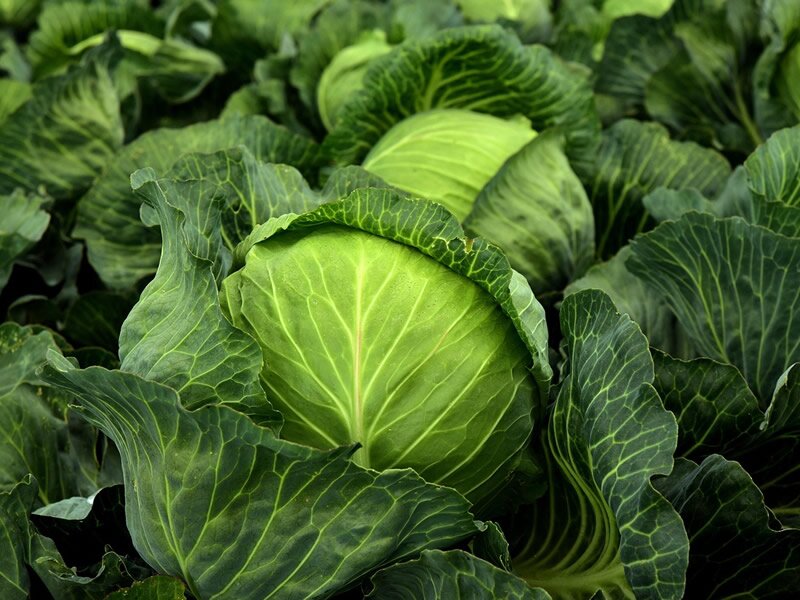
Cabbage is one of the most versatile and reliable brassicas that can be grow well in Irish gardens. With careful planning and staggered sowing, cabbages can be harvested almost year-round by selecting from spring, summer and winter varieties.
Although all cabbages belong to the same family, their sowing times, growing periods and harvesting windows differ considerably. Understanding these differences allows for continuous supply.
Types of Cabbage
- Spring Cabbage – Sown in late summer (July–August), overwintered for harvesting the following spring.
- Summer Cabbage – Sown from February (under protection) or March–April outdoors for harvesting in summer. Even in March to April, these are still probably best started off in trays in a heated propagator or a warm sunny windowsill in our unpredictable climate as they need temperatures of around 15-18°C to germinate. Once they are large enough to handle, they can then be pricked out and potted on to modules. for planting out about 4 weeks later. Alternatively you can just sow 2 seeds per cell in modular trays on a heat matt or in a warm room and if 2 germinate just take out the weakest one to grow on for planting out about 4 weeks later.
- Winter Cabbage – Sown in spring and early summer (mid-May to early June) and harvested from late autumn through winter.
- Dutch Cabbage - Sow in late April
How to grow Cabbage
- Soil and Site – Cabbages require firm, fertile soil with good moisture retention. They are heavy feeders and benefit from ground enriched with compost or manure applied the previous season. An open, sunny position with good airflow is ideal.
- Sowing – Early (Summer Types) – Early summer varieties can be started as early as February in a heated propagator. Transplant into modules once large enough to handle and grow on until planting out (see above).
- Main Sowing – Sow spring, winter and dutch types outdoors in a seedbed from April to August depending on type. You can also start these off in modules for more reliability and control, as you would summer cabbages but you shouldn't need the added heat at this time of year.
- Spacing – Space plants 30–45cm apart for smaller varieties and up to 60cm for large winter cabbages. Rows should be spaced 45–60cm apart.
- Crop Rotation – As brassicas, cabbages usually follow legumes in rotation and should not be grown in the same ground more than once every 3–4 years to reduce clubroot risk.
Cultivation & Care
- Firm Planting – Cabbages must be planted very firmly to prevent rocking and poor heart formation.
- Watering – Water consistently during dry periods to prevent splitting.
- Feed – Apply a nitrogen-rich feed during early growth if soil fertility is low.
- Pest & Disease Control – Protect from pigeons and cabbage white butterflies using netting. Clubroot can be an issue in acidic soils; maintaining a neutral to slightly alkaline pH helps reduce risk.
Another common and serious pest is the cabbage root fly, which can lay its eggs around the base of your plants. The root fly's maggots then eat the roots of your brassicas and can kill the plant off entirely. Often, you'll spot his when it's too late and your brassicas have wilted and stopped growing, then when you pull them up you see that the roots are mostly gone and there are groups of tine white jelly-bean like maggots (around 2mm in length) in the surrounding soil. The best way to prevent this is to have your brassicas covered with a bionetting like enviromesh or our anti-insect mesh. You can also but cabbage collars or make your own but these don't always work and in our climate can often just create a home for another pest you don't want near your brassicas - slugs.
Harvest and Storage
Harvest cabbages once the head is firm and solid. Cut at the base with a sharp knife. Spring cabbages are harvested young and tender, while winter cabbages can be left longer and are often more robust.
Some winter varieties store for short periods in a cool shed, though most are best used fresh. If you do plan to store cabbages, pull the whole plant, root and all, and these will store for longer in a cool shed.
Culinary Use
Cabbage is extremely versatile. Spring cabbage is excellent lightly steamed or stir-fried. Summer varieties are ideal for coleslaw, while winter cabbages are well suited to braising, soups and traditional dishes.
Recipe – Traditional Colcannon
A classic Irish dish making good use of cabbage.
Ingredients
1 small cabbage, finely shredded
4 large potatoes
50g butter
100ml milk
Salt and black pepper
- Boil potatoes until tender and mash with butter and milk.
- Steam cabbage until softened.
- Fold cabbage into mashed potato and season.
Nutritional Information
According to Bord Bia, the Irish Food Board:
Per 100g serving
- Calories – 27 kcal
- Protein – 2.4g
- Carbohydrate – 4.1g
- Fat – 0.2g
- Fibre – 2.7g (NSP) 4.1g (AOAC)
Cabbage is rich in vitamin C, vitamin K and fibre and contains beneficial antioxidant compounds. Cabbage is also a source of vitamin B1 (thiamine) which contributes to normal function of the heart.