

Radish
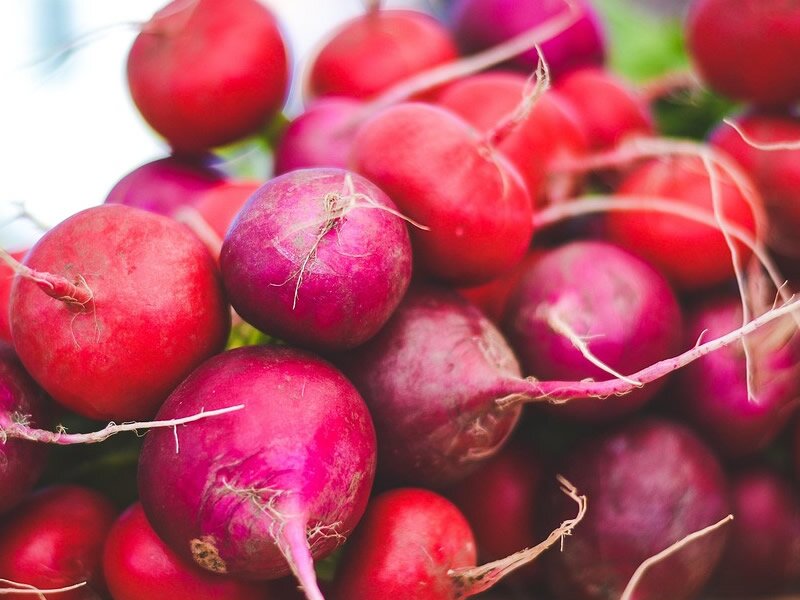
Radish is one of the quickest and easiest vegetables to grow, making it ideal for beginners and for succession sowing throughout the growing season. Some varieties can be ready to harvest in as little as 3–4 weeks from sowing.
While most commonly associated with small, round red roots, radishes come in a wide range of shapes, colours and heat levels, from mild salad types to larger winter storage varieties such as mooli (daikon).
Types of Radish
- Summer Radish – Small, fast-growing varieties such as ‘French Breakfast’ and ‘Cherry Belle’. Best grown in cool conditions in spring and autumn.
- Winter Radish – Larger varieties such as mooli, sown in mid to late summer for autumn harvest.
How to grow Radish
- Soil and Site – Radishes prefer light, fertile, moisture-retentive soil in a sunny or lightly shaded position. Avoid very rich manure, which can encourage leaf growth at the expense of roots.
- Sowing – Sow direct outdoors from March to September. Make shallow drills around 1cm deep and sow thinly. Cover lightly and water gently. Radish are often sown in rows between rows of carrots or parsnips as these; a) help mark out where your rows of carrots are and most importantly b) give you an extra crop in the same bed that will mature much quicker than your carrots and so won't affect their growth, saving on space. That said, we wouldn't recommend this as it can mess up your crop rotation (see note below.)
Another option for radish is multi-sowing in modules. You can take a modular tray with small cells and sow 5-6 seeds per cell then once the seeds have germinated and grown a little so that you have a plug with the soil held together by the roots, you can plant these out. These plantings can be used to fill gaps between other slower growing brassicas and are quite happy to grow in clusters which also makes for easy pickings once they mature. - Succession Sowing – For a continuous supply, sow small amounts every 2–3 weeks rather than all at once. This is especially the case for summer radish that won't stay in the ground long before they become woody (and often too peppery in taste),
- Spacing – Thin seedlings to 2–5cm apart for summer varieties. Winter radishes will need wider spacing (up to 15cm apart).
- Crop Rotation - It's important to note that radish are part of the brassica family. If you are going to sow radish between carrots or parsnips you'll need to bear this in mind and make sure you don't follow that bed with brassicas for the following year at least (the next 2-3 years preferably) to avoid disease build-up.
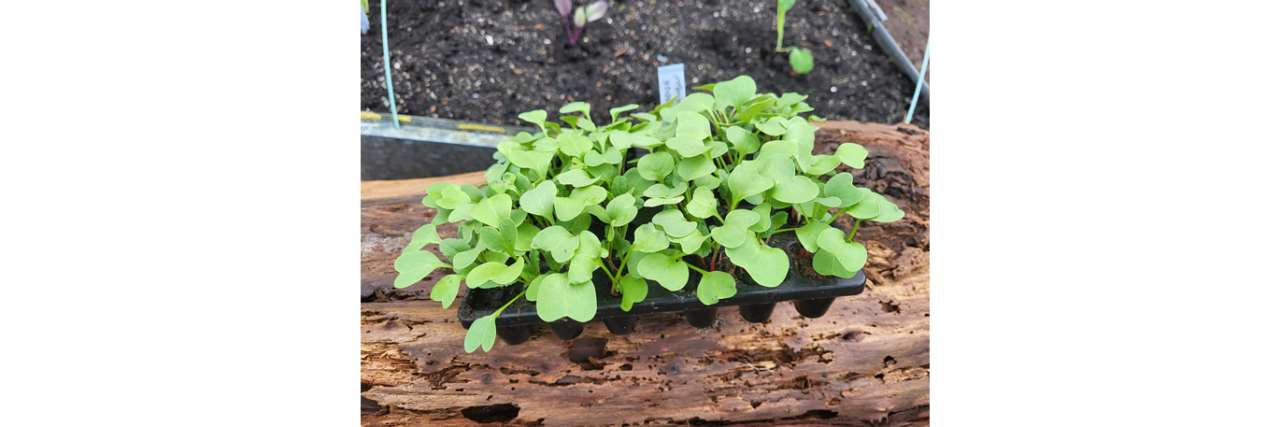
"This tray of multi-sown radish were sown a few weeks back in March and are now ready to be planted out. As you can see the modular tray doesn't have to have large cells and this way you save on compost. I'll be planting these in between some larger brassicas like broccoli (Calabrese) and cabbages as the radish will be harvested long before the other brassicas mature" - Richard - Photo taken 07 April 2026.
Cultivation & Care
- Watering – Keep soil consistently moist. Irregular watering can cause roots to become woody or split.
- Quick Harvest – Do not leave summer radishes in the ground too long as they quickly become pithy and overly hot.
- Pest Protection – Flea beetle can damage young leaves. Light fleece or fine netting can help protect seedlings.
Harvest and Storage
Harvest summer radishes once roots reach usable size, usually 3–6 weeks after sowing. Winter radishes take longer (8–10 weeks) and can be lifted in autumn.
Summer types are best eaten fresh but will keep in the bottom of a fridge in a plastic bag for about a week. Winter radishes can be stored for short periods in a cool place either in a plastic bag in the fridge or in boxes of sand in a cool shed.
Culinary Use
Radishes are most commonly eaten raw in salads but can also be lightly sautéed or roasted to mellow their heat. The leaves of young radishes are also edible and can be added to salads or soups.
Recipe – Buttered Radishes with Sea Salt
A simple French-style serving.
Ingredients
1 bunch fresh radishes
Good quality butter
Sea salt
- Wash and trim radishes.
- Serve chilled with softened butter and a sprinkle of sea salt.
Nutritional Information
Per 100g serving:
- Calories – 12 kcal
- Protein – 0.7g
- Carbohydrate – 1.9g
- Fat – 0.2g
- Fibre – 0.9g (NSP)
Radishes are a source of vitamin C and folate.