

Kohlrabi
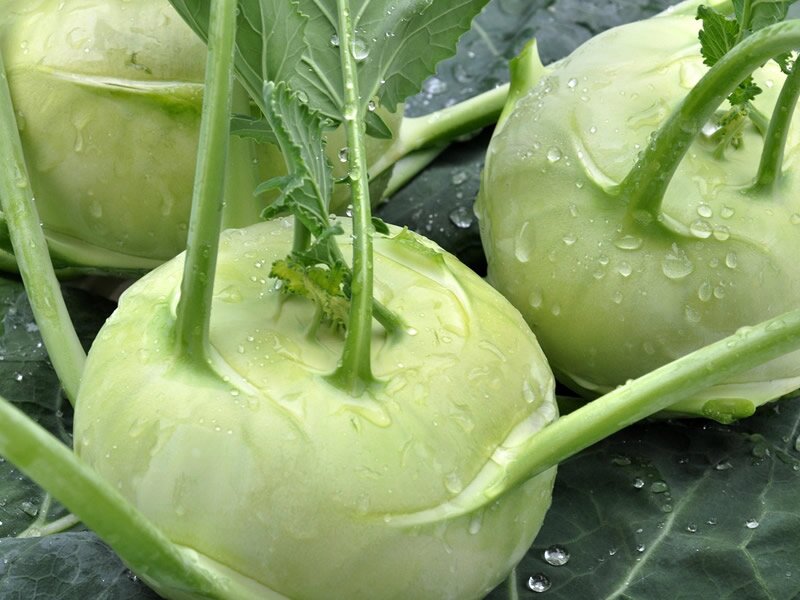
Kohlrabi is an unusual-looking but easy-to-grow brassica that forms a swollen, globe-shaped stem just above soil level. Despite its appearance, it has a mild, sweet flavour similar to a tender broccoli stem.
It is a fast-growing crop that performs well in cool conditions and can be grown in spring or autumn.
Types of Kohlrabi
- Green Varieties – Pale green skin with white flesh.
- Purple Varieties – Attractive purple skin (flesh remains white).
How to grow Kohlrabi
- Soil and Site – Fertile, moisture-retentive soil in full sun or light shade is ideal.
- Sowing – Sow indoors from February to April for early crops, or direct outdoors from April to July. For best results though, we recommend always starting seeds off in modular trays, sowing 2 seeds per module and where 2 germinate, remove the weaker seedling. These can then be grown on for about 4 weeks before planting out to their final position. With our sometimes erratic weather, whilst early crops are possible, we would advise holding off until April as kohlrabi is prone to bolting if the temperature drops below 10ºC for a few days. Like radish and turnips, kohlrabi is best sown in small amounts in succession, leaving 3-4 weeks between sowings up until the end of June. It is important with these brassicas to insure the soil remains moist, so pay specific attention to watering through dryer periods.
- Depth & Spacing – Sow 1.5cm deep. Space plants 15–20cm apart for smaller vegetables, or 30cm apart for larger ones, in rows 30cm apart.
- Rotation – As a brassica, avoid planting where other brassicas have recently grown.
Cultivation & Care
- Watering – Keep soil evenly moist to prevent bulbs becoming tough or woody.
- Firming – Plant firmly to encourage good bulb formation.
- Pest Protection – Protect from cabbage white butterflies and pigeons with netting.
Harvest and Storage
Harvest when still small and tender — once they get much larger than a tennis ball (5-8cm in diameter) they are prone to splitting or becoming hollow, especially in changeable weather. It is quite possible to grow larger, tender kohlrabi but they will require a bit more care to insure the growth is steady - avoid irregular watering, making sure the soil is moist at all times (but not waterlogged), and opt for the larger spacing so plants aren't overcrowded and competing for nutrients.
Best eaten fresh, though they can be stored briefly in the refrigerator.
Culinary Use
Kohlrabi can be eaten raw in salads or slaws, sliced and lightly steamed, or added to stir-fries. Young leaves are also edible and can be cooked like spinach, if you strip the leafy part from the stems (which can be quite tough) giving you two crops for the price of one.
Recipe – Kohlrabi & Apple Slaw
Ingredients
1 kohlrabi, peeled and grated
1 apple, grated
1 tbsp lemon juice
2 tbsp yoghurt
Salt and pepper
- Mix grated kohlrabi and apple.
- Stir in yoghurt, lemon juice and seasoning.
- Chill before serving.
Nutritional Information
Per 100g serving:
- Calories – 27 kcal
- Protein – 1.7g
- Carbohydrate – 6.2g
- Fat – 0.1g
- Fibre – 3.6g
Kohlrabi is rich in vitamin C and fibre as well as boing a source of vitamin B6, potassium, magnesium and manganese.