

Cucumber
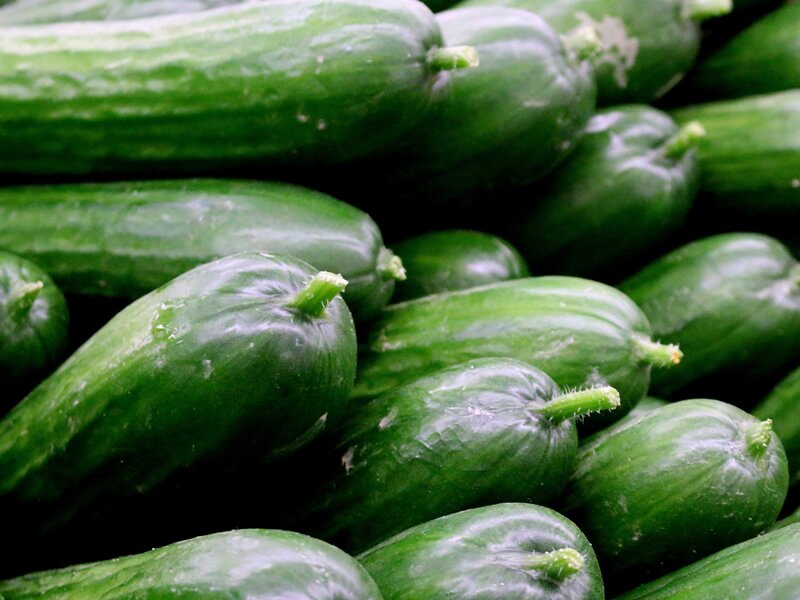
Cucumbers are a fast-growing and rewarding summer crop, producing crisp, refreshing fruits that are ideal for salads and snacking. In Ireland, they are most reliably grown in a greenhouse or polytunnel, although some outdoor varieties can perform well in warm, sheltered summers.
They are relatively easy to grow once established but require warmth, consistent watering and good feeding to produce well.
Types of Cucumber
- Greenhouse (Indoor) Cucumbers – Long, smooth fruits, usually grown under cover.
- Outdoor/Ridge Cucumbers – Shorter, often slightly spiny fruits, more tolerant of cooler conditions.
- Mini/Snack Varieties – Small, sweet cucumbers ideal for lunchboxes and containers.
Growing Conditions
- Soil: Fertile, moisture-retentive, well-drained soil rich in organic matter
- Light: Full sun
- Temperature: Warm conditions essential (minimum 15°C for good growth)
- Spacing: 60 cm between plants
Selecting Seeds
When looking for cucumber seeds it is essential, when growing indoor varieties for a greenhouse or polytunnel (which will be most of us in this climate), that you choose an all female variety which come as an F1 hybrid*. The reason for this is that open pollinated varieties have male and female flowers and if cucumber flowers are pollinated, the fruits become thick skinned, bitter and full of seeds. Cucumbers are one of those rare plants that do not require pollination to produce fruit. If you do happen to be growing an open-pollinator variety which we recommend you don't, then you will need to be removing the male flowers every day when they are produced , which can become a bit of a labour.
If you're lucky enough to be able to grow cucumbers outside, you would be better to look to 'ridge' cucumber varieties, like the popular 'Marketmore'. Unlike their indoor counterparts, ridge cucumbers need both the male and female flower to produce fruit but for these particular varieties, they do not develop the bitterness. Never grow outdoor ridge cucumbers indoors with your all female plants (or even nearby) as these will also cross pollinate and cause your female plants to give bitter fruit.
*F1 varieties are plants that have been specifically bred for certain traits and conditions i.e. disease resistance, yield, flavour etc. For any F1 plants, any seeds collected will not come true to the original plant.
Sowing & Planting
- Indoor sowings are best left until mid-April (despise what some seed packets may recommend) as, once germinated they can grow quite quickly. If grown earlier in March for instance, you may not have the room for them, you'll probably end up having to pot them on more times than necessary to keep them healthy and, well, there's really nothing to be gained by it.
- Sow seeds on their side to prevent rotting. It is usually advised that seeds are sown about 1.5cm deep in 7-9cm pots. This is fine, but take care not to over-water them as, when the seedling starts to develop, this is still a lot of compost for a small seedling to be sitting in. If that compost remains very wet, this will be too much for the seedling and this is where you have problems with roots rotting and damping off.
Alternatively, I would advise sowing cucumber seeds, singularly, in much smaller modules, and planted at a shallower depth (around 5mm). Once the seeds have germinated and enough root has developed that it holds on the the soil in the module, you can then transplant these to 7cm pots. This gives them a much better start and chance of success.
Either way you will need to keep these on a heated propagator, heat matt or warm, sunny windowsill. Seeds can be quick to germinate (5-7days) and 2-3 weeks later these can be potted on. Once the roots are well formed in their new pot, they can be potted on again or transplanted to their final position in the greenhouse or polytunnel, weather depending. It is best to grow them up canes or preferably, if possible, you can use a length of string. One end of the string can be buried underneath the plant when planting and the other end can be tied to a crossbar or wherever you can on the ceiling of your tunnel/greenhouse. You can then wrap the growing stem around the string as it develops. - Transplanting usually takes place in late May or even early June once temperature are high enough. Space your plants 60cm apart in a single row.
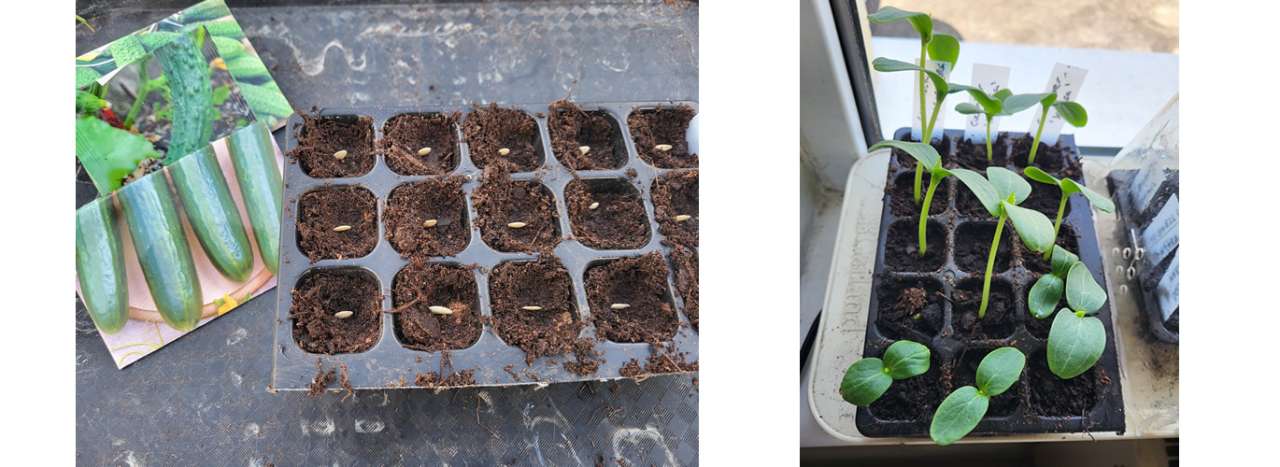
"Above you can see where I have sown cucumbers in a modular tray with quite small cells, sowing the seeds sideways so they are not lying flat. These were then covered with compost (about 5mm deep) and placed on a heated propagator with a cover. Most of the seeds germinated within a few days and on the right you can see the results 11 days later. These are about due to be moved on to 7cm pots as the roots are now holding the compost like a plug. This step prevents the smaller seedlings sitting in too much wet compost just after germination. It also means I only pot on the seeds that have germinated successful, wasting less compost on any that fail." - Richard - Images taken 13/4/2026 (left) and 24/04/2026 (right)
- For outdoor ridge cucumbers you're best to start plants off the same as above, indoors and transplant them out when the soil is warm enough. Alternatively you can use the 'hill' method, whereby you dig a hole about 45cm wide and 30cm deep and fill with a mix of 50/50 soil and compost, mounding it up to form a hill at least 15cm high. You can then plant 5-6 seeds per hill, about an inch deep, thing to the two or three strongest seedlings if they all germinate. Ridge cucumbers will tolerate cooler conditions but it may be advised to wait until late May for outdoor sowings if you plan to use this method.
It is unlikely you will get great results with outdoor cucumbers, particularly here in the west of Ireland although I did get good results some years ago in a very sheltered sub-urban garden with them growing up against a south facing. I think that was just a lucky year with a very good summer!
Any plants propagated indoors should be hardened off before planting out in their final position, even if that is a greenhouse. This is because the shock of moving from a consistently warm environment to one with cool night-time temperatures, may kill your plants. Start by putting your potted plants in the greenhouse/tunnel during the day (or outside if you are growing ridge cucumbers) and bringing them into a warm area at night. Do this for about a week before the final planting.
Care & Maintenance
- Train plants up supports, string or canes for indoor growing. Outdoor varieties can usually be trained up canes, left to trail along the ground or in some cases (depending on variety) grown as a bush.
- Water regularly and consistently
- Feed weekly with a high-potash fertiliser once flowering begins
- Pinch out side shoots that grow between the leaf and the stem to insure the plants energy is put into the forming fruit. Be careful mot to knock of the small cucumbers that form around these areas.
- All fruit on the bottom 30cm can be removed from indoor cucumbers, when small, to prevent them sitting on the ground as they form, which may attract slugs and disease. This also helps the plant grow stronger.
- For outdoor grown cucumbers, if you are allowing them to trail you may want to do so along a wire mesh just to raise them off the ground.
- Plants may benefit from the addition of poultry pellets in July/August if the foliage starts to yellow.
Growing in Containers
- Use large containers or growbags
- Ensure good drainage
- Provide vertical support
- Water frequently as containers dry out quickly
Harvesting
Harvest regularly once fruits reach usable size. Frequent picking encourages continued production and be warned, cucumbers can be quite prolific in their fruit production!
Varieties to Try
- Burpless Tasty Green F1 - Produces crisp, delicious fruits with no bitterness, and as the name suggests, are easy to digest.
- Nimrod F1 - high yielding, thin skinned variety with good flavour.
- Mini Munch F1– Compact, snack-sized fruits
- Marketmore – Reliable outdoor variety if you have the right conditions and are perhaps in a warmer, drier part of the country than here in the west of Ireland.
Common Problems
- Bitterness: Caused by inconsistent watering or stress
- Poor fruit set: Often due to low temperatures
- Powdery mildew: Can occur in dry conditions later in the season
- Cold damage: Plants are very sensitive to low temperatures and the slightest frost will kill them even in an unheated greenhouse.
- Stem rot: This is fairly common where the stem rots away at the base and is best avoided by planting cucumbers slightly raised above soil level and never plant them in cold wet soil.
Culinary Use
- Salads and sandwiches
- Pickling
- Smoothies and drinks
- Cold soups such as gazpacho
Recipe – Cucumber & Yogurt Salad (Tzatziki Style)
Ingredients
1 large cucumber, grated or finely chopped
200g natural or Greek yoghurt
1 garlic clove, crushed
1 tbsp olive oil
1 tbsp lemon juice
Salt and black pepper
- Place the grated cucumber in a sieve and gently squeeze out excess moisture.
- In a bowl, combine yoghurt, garlic, olive oil and lemon juice.
- Add the cucumber and mix well.
- Season to taste and chill before serving.
This refreshing dish is ideal as a side, dip or accompaniment to grilled meats and flatbreads.
Adapted from traditional Greek recipes.
Nutritional Information
Per 100g:
Calories: 14kcal
Protein: 1g
Carbohydrate: 1.2g
Fat: 0.6g
Fibre: 0.7g (NSP)
Low in calories with a high fibre and water content.