

Pumpkin
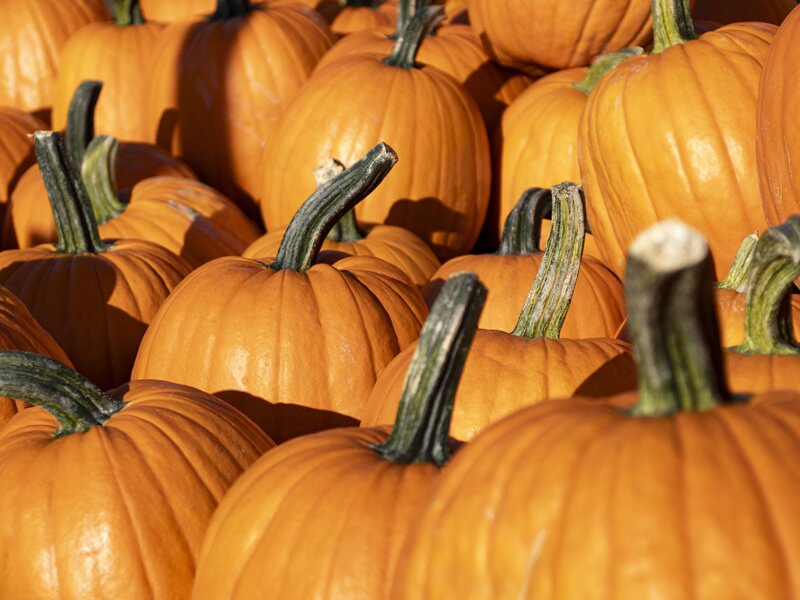
Pumpkin (Cucurbita maxima / Cucurbita pepo)
Pumpkins aren't just for Halloween! They are a rewarding crop grown for their large fruits, rich in vitamins and minerals, ideal for autumn harvests and seasonal use. They require a long growing season and plenty of space, so maybe not one for the small garden, although it is possible to grow them vertically if a strong frame is assembled and they can perform well in Irish gardens with a warm summer or under cover.
Growing Conditions
- Soil: Rich, fertile soil with plenty of compost or manure. They are a hungry crop so a good bucketful of well-rotted manure or compost will be needed for best results.
- Light: Pumpkins require a sheltered position in full sun. If exposed to strong winds the plants are easily damaged due to their large leaves and they won't appreciate the cold that comes with them.
- Spacing: 1.5–2 m between plants. This seems like a lot, but you can interplant with some fast growing crops like lettuce or radish.
- Rotation: As a cucurbit, you don't have to worry too much about where they are in the rotation as they don't attract soil borne pests or diseases. Just bear in mind that if you are interplanting with other crops, those crops may well affect your rotation later on - radish and oriental greens for example are brassicas and so, if you are interplanting with crops like these you should avoid planting brassicas there for the next couple of years.
Sowing & Planting
- Sow indoors from mid April to early May. One seed to a 7cm pot or per cell in larger modular trays is the way to go and they will need warmth until they are planted outside in late May, early June. Depending on the weather, you may get away with raising these in a tunnel or greenhouse at this time of year but be aware that even if it is warm by day, night-time temperatures can still be cold to freezing at this time of year so they'll need some fleece to protect them. Personally I've never risked this and have stuck with a windowsill in a warm room indoors.
- Plant out from late May to June. Don't plant out if there are still cold windy spells forecast. The end of May can be a tricky one, especially here in the west of Ireland as it can often bring cold gales. If you have to plant out then protection with a cloche would certainly be beneficial.
- Provide plenty of space for spreading growth or a solid frame using something like thick hazel or willow that can hold the weight. Bamboo frames won't cut it and if you're looking to raise larger pumpkins then they're best supported by something laid on the ground like a slab or piece of slate (whatever you may have lying around that will keep them from lying on wet soil). In all honesty, whilst you may seem many references to growing pumpkins vertically, this is probably more appropriate for something like squash or mini-pumpkins where you are likely to have more fruit with less weight. In general you are only likely to get one or two decent sized pumpkins from a plant so the preparation of large frames seems a bit redundant.
Care & Maintenance
- Water regularly, especially during dry spells.
- Focus on raising one large or a couple of mid sized pumpkins per plant, removing smaller fruits so that the plant's energy directed to the one or two you want to harvest.
- Feed heavily during growth - pumpkins are a fruiting vegetable and will benefit from a feed of something high in potassium, like comfrey or tomato feed, every 10-14 days.
Growing in Containers
- Only suitable for compact varieties
- Use very large containers
- Provide strong feeding and watering
Harvesting & Storage
Really pumpkins should be harvested in autumn when the foliage has died back and the skins are hard and fully coloured, however that isn't always possible in our climate and they should definitely be removed before the first frost hits. You can then eat them straight away or cure them for storage. When removing your prized fruits, cut them leaving the stem attached. To cure them for storage leave them in the sun by day and then bring them in at night for the next week to ten days. Once cured these can be stored in a cool but frost free shed over winter and should keep until the following March.
Varieties to Try
- Racer F1 – Mid-sized early maturing varietry.
- Halloween F1 - Great allrounder - good for carving and cooking.
- Uchiki Kuri – Smaller variety with excellent flavour that will produce 3-5 small pumpkins per plant although this may technically be a squash.
- Atlantic Giant – For growing large specimens, more suited to competition growers.
Common Problems
- Poor ripening: Due to lack of warmth
- Slugs: Attack young plants - if you are propping your fruit up on slates or timber be sure to check for lugs underneath as these can provide an ideal hiding spot during the day.
- Powdery mildew: Late season issue that generally won't affect your fruit.
Culinary Use
- Soups
- Roasting
- Baking
Recipe – Roasted Pumpkin Soup
Ingredients
500g chopped pumpkin (look to chop to cubes of about an inch or so)
1 onion
750ml stock
Olive oil
Salt & Pepper
- Coat your chopped pumpkin in olive oil and a bit of salt then roast on a baking tray, in the oven, at about 180ºC for about 25-30 minutes until tender.
- Chop and cook your onion in a pot, add your roasted pumpkin and 750ml of stock (use vegetable or chicken stock).
- Blend together to make a lovely creamy soup.
- For more flavour you may like to add thyme or rosemary to your the pot and heat for a while before blending to allow the flavours to infuse. For a more spicey pumpkin soup you may like to add a pinch of cayenne pepper or half a teaspoon or cinnamon or cumin. Either way this is also lovely served with the addition of a dollop or sour cream or double cream and some nice crusty bread.
Nutritional Information
Per 100g serving:
- Calories: 12Kcal
- Protein: 0.6g
- Carbohydrate: 1.9g
- Fat: 0.3g
- Fibre: 1.1g (NSP)
Pumpkin is rich in vitamin A, contains fibre and antioxidants