

Thyme
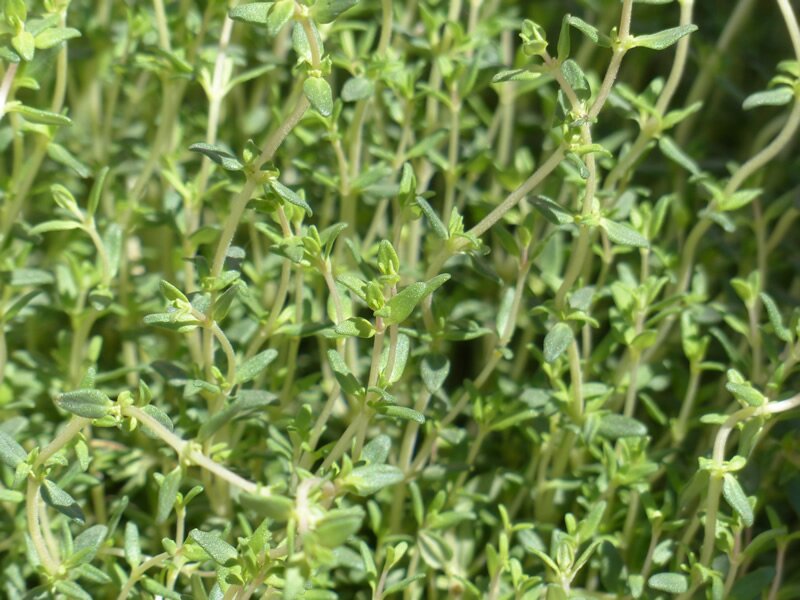
Thyme (Thymus vulgaris)
Thyme is a low-growing, woody perennial herb with small, aromatic leaves. It is well suited to dry, sunny conditions and thrives in poor, well-drained soils, making it ideal for rockeries, borders and containers.
Like rosemary, thyme prefers drier conditions and can struggle in heavy, wet soils.
Growing Conditions
- Soil: Light, well-drained soil
- Light: Full sun
- Spacing: 20–30 cm between plants
Sowing & Planting
- Sow seeds indoors in spring (slow to establish)
- Alternatively, grow from young plants
- Plant out once established in a sunny, sheltered spot
Care & Maintenance
- Trim lightly after flowering
- Avoid heavy pruning into woody stems
- Do not overwater
Growing in Containers
- Excellent for pots and raised beds
- Use free-draining compost
- Position in a sunny location
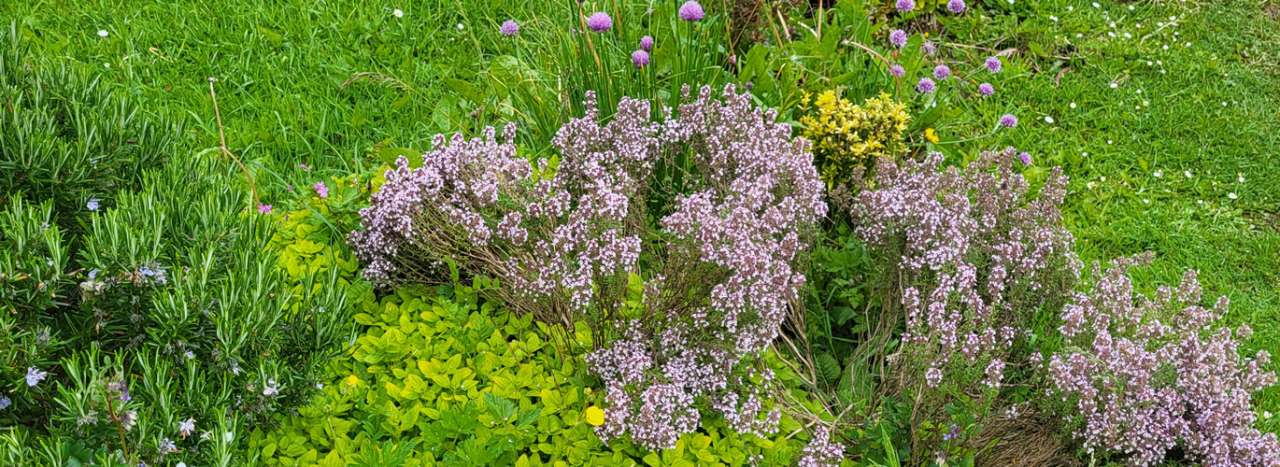
As well as being a great plant for culinary and medicinal use, thyme makes for an attractive shrub in a well drained border. here you can see it planted amongst golden marjoram, rosemary and chives, covered in pink flowers. Photo by Richard (AGC) taken 05/06/2026.
Harvesting
Harvest sprigs as needed throughout the growing season. The leaves can also be dried and stored in jars for later use but if you have a good healthy shrub this often isn't necessary as you'll be able to pick it fresh throughout the year.
Varieties to Try
- Common Thyme – Classic culinary variety
- Lemon Thyme – Citrus-scented leaves
- Creeping Thyme – Ground cover and ornamental
Common Problems
- Root rot: Poor drainage is the main issue
- Woody growth: Lack of regular trimming
Culinary Use
- Meat dishes and stews
- Soups and stocks
- Roasted vegetables
Thyme Tea
Thyme has strong antiseptic properties and is said to be good for easing chest infections. The leaves and the flowering tops can be used to make a warming tea using 2 teaspoons of fresh thyme per 250ml/1 cup of boiling water.
Allow to steep for 10 minutes for so before straining and drinking.
Nutritional Information
- Contains vitamin C
- Rich in antioxidants