

Sage
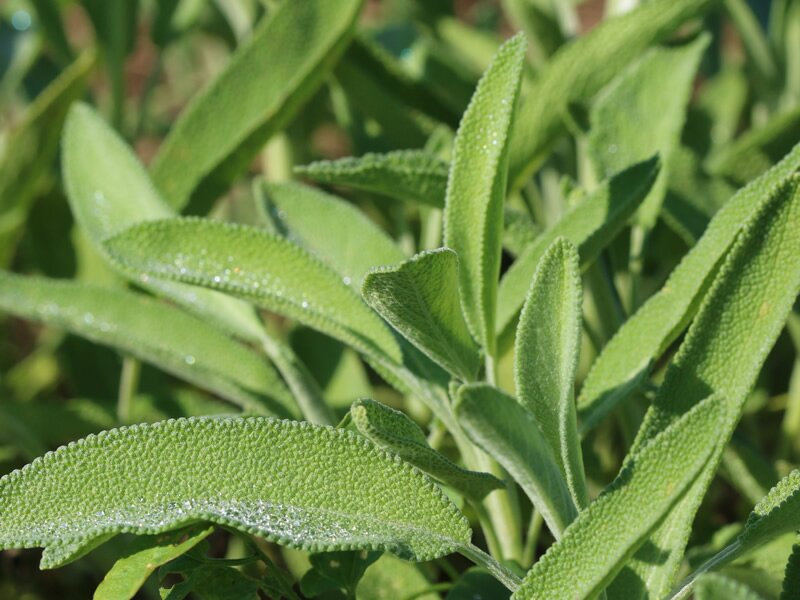
Sage (Salvia officinalis)
Sage is a hardy, evergreen herb with soft, grey-green leaves and a strong, earthy flavour. It is well suited to Irish gardens when grown in a sunny, well-drained position and is both ornamental and culinary. Common sage can be grown from seed, but plants will take at least a year to grow large enough to reach harvesting size so it is often best to buy plants or grow them from cuttings.
Growing Conditions
- Soil: Free-draining soil
- Light: Full sun
- Spacing: 40–60 cm between plants
Sowing & Planting
- Sow seeds indoors in spring, in small pots or modular trays, covering with a fine layer of compost. These can then be placed in a propagator or covered in a polythene bag (or even cling-film) to retain moisture, and placed on a sunny windowsill. Pot seedlings on as soon as they are large enough to handle.
- More commonly, sage is grown from young plants or cuttings - take softwood cuttings in late spring or early summer. Take a cutting of about 10cm in length, strip most of the leaves from the bottom, leaving a pair of leaves on top. If the leaves are large you can cut them in half. Insert several cuttings into a pot of free draining compost (you can mix multi purpose compost with vermiculite or perlite for extra drainage). You can then water and place in a covered propagator or cover in a clear polythene bag to maintain humidity. Keep the cuttings in indirect sunlight and ventilate twice a week for about 10 minutes. These cuttings should root within about 2-6 weeks - just check the bottom of the pot for roots and once they have rooted you can pot them on.
- Plant out in a sheltered, sunny location once the roots have grown firmly in the pot and hold the compost together.
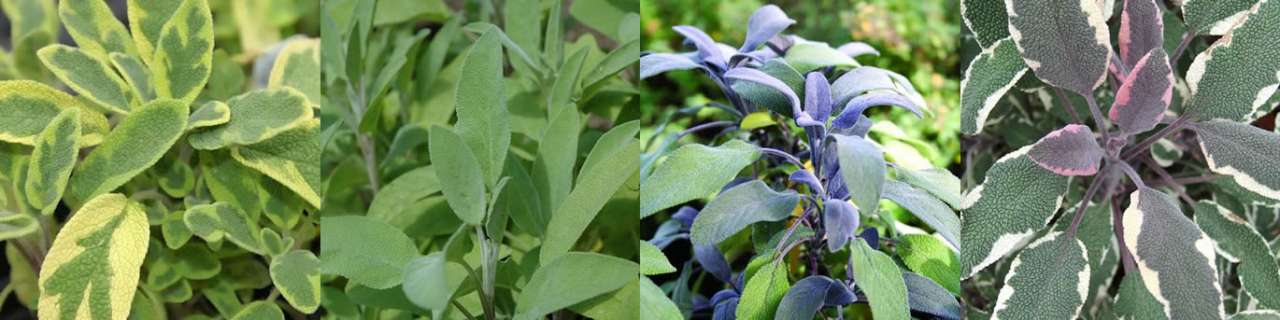
As you can see, sage comes in a number of varieties with different attractive foliage that makes them excellent ornamental border plants as well as having their culinary use. From left to right - Golden Sage (Photo by David J. Stang (CC BY-SA 4.0)), Green/Common Sage (Image by Angela2017 from Pixabay), Purple Sage (Public Image), Sage Tricolor (Image by deluna from Pixabay)
Care & Maintenance
- Prune lightly to maintain shape
- Replace plants every few years as they become woody
- Avoid overwatering
Growing in Containers
- Grows well in pots
- Use free-draining compost
- Ensure good drainage
Harvesting
Harvest leaves as needed, avoiding excessive cutting in late autumn.
Varieties to Try
- Common Sage – Traditional culinary variety
- Purple Sage – Attractive foliage
- Tricolour Sage – Decorative variegated leaves
Common Problems
- Root rot: From wet soil
- Woody plants: Older plants lose vigour
Culinary Use
- Stuffing and roast dishes
- Sausages and meats
- Butter sauces
Recipe – Sage Butter
Ingredients
Butter
Fresh sage leaves
- Melt butter and add sage leaves.
- Cook briefly until fragrant.
- Serve over vegetables or pasta.
Nutritional Information
- Contains vitamin K
- Source of antioxidants