

Raspberries
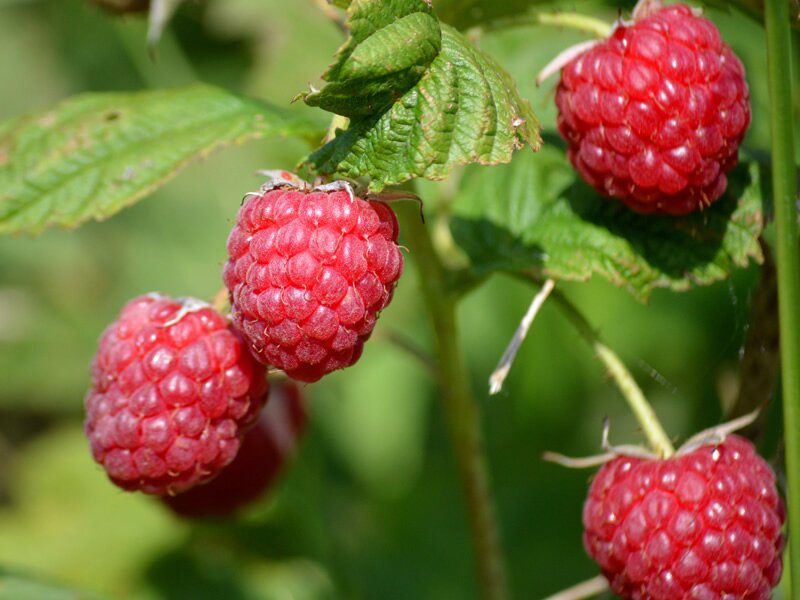
Raspberries (Rubus idaeus)
Raspberries are a reliable and productive soft fruit, well suited to Irish growing conditions. They are relatively easy to grow and can provide generous harvests over many years with proper care.
By choosing a mix of varieties, it is possible to harvest raspberries from early summer through to autumn.
Types of Raspberries
Raspberries are self-fertile and come in summer-fruiting and autumn fruiting varieties which are equally delicious but have slightly different behaviours:
- Summer Fruiting – Produce fruit on previous year’s growth
- Autumn Fruiting – Produce fruit on current season’s growth
Growing Conditions
- Soil: Fertile, well-drained soil rich in organic matter - neutral to slightly acidic soils are ideal as they won't perform well on alkaline soils. A Ph of somewhere between 6 and 7 is ideal.
- Light: Full sun or partial shade, preferring a sheltered position.
- Spacing: 40–50 cm between canes, rows 1m apart for autumn varieties and 2 m apart for summer varieties. It is also possible to grow certain varieties, like 'Autumn Treasure' that has sturdy canes, in a circle, still with the plants 45cm apart, then as they grow you can tie the tops of the canes together rather than having to provide extra wires or supports.
Sowing & Planting
- Usually grown from canes rather than seed
- Plant bare-root canes in late autumn or early spring
- Soak roots before planting
- Plant with roots not too spread out, or too deeply as raspberries are shallow rooting. Firm soil around them and after the first planting, you can snip off the top of the cane, just above a bud, about 25cm above ground level.
Outdoor Growing
Raspberries perform very well outdoors in Ireland and are one of the most reliable fruit crops.
- Plant in rows with posts and support wires or grow in a circle/square/triangle and tie the tops of the canes together so they are self supporting.
- Choose a sheltered site to protect from strong winds
- Applying a good mulch in the spring (or just after planting) will help retain moisture in the soil which raspberries love, just keep leave some space around the stem/cane so as to avoid unnecessary rot.
- Because autumn raspberries only fruit on this years canes, once you have harvested the fruit, they won't produce fruit on those canes again next year so you can cut all the canes to the ground in late winter.
- As new shoots develop in summer you can thin them out to avoid overcrowding. You can tie the to wires as they grow, wait and tie the tops later or even just let them form a fruiting hedge which, may be slightly untidy but it will be productive.
Growing Under Cover (Greenhouse/Polytunnel)
- Can be grown under cover for earlier crops but given the fact that they grow reliably outside you may want to consider whether it is worth taking up valuable polytunnel or greenhouse space for these fruits.
- Can be useful for extending the harvest season if you are growing indoors and out.
- Ensure good airflow and avoid overcrowding to avoid pests and particularly any mold.
Care & Maintenance
- Water during dry periods
- Feed in spring with a balanced fertiliser
- Mulch with compost or manure annually
Pruning
- Summer varieties: Cut back fruited canes after harvest
- Autumn varieties: Cut all canes to ground level in winter
Growing in Containers
- Possible with compact varieties but they will do reasonably well albeit with lower yields. Autumn varieties tend to do a lot better in containers.
- Use large containers and provide support - limit planting to 3 canes to a pot with a 30-40cm diameter.
- Water and feed regularly and give them some support and security - you don't want to find your potted raspberries rolling around the garden in the slightest breeze.
Harvesting & Storage
Harvesting usually takes place from mid to late summer for summer varieties, with autumn varieties ripening from about August into October.
If you are growing a summer variety, because they fruit on last year's canes, you won't get a harvest in the first year. Each can will only fruit once and so you can remove canes that have produced fruit after harvesting. This will leave room for new canes to grow at which point you can start tying them in again.
Harvest when fruits are fully coloured and come away easily from the plant, leaving the little central plug of the berry cluster intact.. Pick regularly to encourage continued production.
Raspberries freeze well, but of you want to keep them from freezing in a big clump, lay them out separately on a tray you can place in the freezer. Once frozen you can then put the frozen berries in a bag and put them back in the freezer for long term storage.
Varieties to Try
- Glen Ample – Reliable summer variety
- Autumn Bliss – Popular autumn-fruiting type
- Polka – High yielding and good flavour
Common Problems
- Birds: May require netting
- Raspberry beetle: The maggot of these pests can affect fruit and is noticeable by dried patches at the stalk end of the fruit, usually in July. There's no cure other than killing the adults if you see them, which are brown and about 5mm long
- Overcrowding: Leads to reduced airflow and disease. With our humidity, overcrowding often results in grey mold which ruins your fruit although this in itself won't kill your plants thankfully.
- Viruses: There are a number of viruses that can affect raspberries which you will notice from yellow blotching of the leaves or in the case of blight, black bases on the canes. Again avoid overcrowding plants, buy from a reputable source (such as us of course!) and if you do notice diseased plants discard and incinerate them immediately. Don't put diseased plants in the compost as you may well just spread the disease elsewhere later on.

The maggot of the Raspberry Beetle can destroy the fruit of your plant and is noticeable by dried patches at the stalk end of the fruit, usually in July. Unfortunately the best way to stop this spreading is to kill any adult raspberry beetles you see. They are about 5mm long and brown, as pictured above - photo by kitenet (CC BY-SA 2.0)
Culinary Use
- Eaten fresh
- Desserts and baking
- Jams and preserves
- Smoothies
Recipe – Raspberry Jam
Ingredients
500g raspberries
500g sugar
1 tbsp lemon juice
- Heat fruit gently until soft (you can mash the fruit and even strain back into another an if you want to remove any seeds).
- Add sugar and bring to a boil, then boil rapidly for about 5 mins. Remove from the heat and drop a little jam onto the chilled plate. Push your finger through it – it should wrinkle, remain separated and, well, look like jam. If it doesn’t, boil for 2 mins, then test again.
- Once yo are happy with the set, pour into warm steralised jars and seal. This will keep in a cool, dark cupboard for a year but should be refrigerated once opened.
Traditional preserve.
Nutritional Information
- High in vitamin C
- Rich in fibre
- Contains antioxidants