

Peaches, Apricots & Nectarines
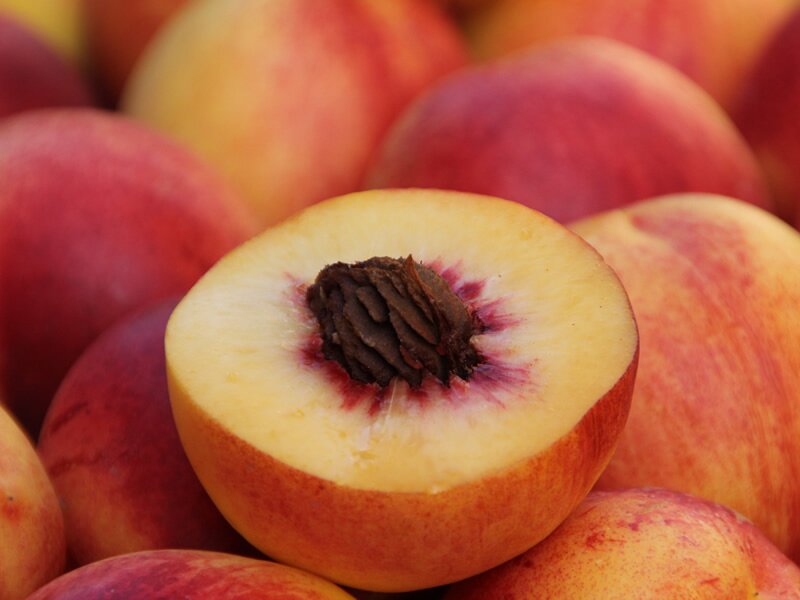
Growing Peaches, Apricots and Nectarines in Ireland
There is something particularly special about picking a ripe peach, nectarine or apricot straight from your own tree. The fruit is wonderfully fragrant, and when it has ripened properly in the warmth of the sun, the flavour can be quite different from anything you might buy in a supermarket.
However, these are among the more challenging fruit trees to grow successfully in Ireland. They need plenty of sunshine and warmth to ripen their fruit, their blossom can be damaged by spring frosts, and our damp climate can encourage fungal diseases, particularly peach leaf curl.
That doesn't mean you shouldn't try them! A sunny, sheltered garden with a suitable south- or west-facing wall can provide good growing conditions, especially if the tree is trained as a fan. If you have the space for a greenhouse or polytunnel, you have another option for protecting the blossom and fruit from the weather and giving the tree the warmth it needs.
It is worth being realistic, though. A tree planted in an exposed garden in the west of Ireland may grow perfectly well but still produce little fruit, or fruit that struggles to ripen in a cool summer. If a reliable crop is your main aim, a sheltered wall or protected growing space gives you a better starting point.
What's the Difference Between Peaches, Nectarines and Apricots?
Although they are closely related and have broadly similar growing requirements, there are some differences worth knowing before choosing a tree.
- Peaches (Prunus persica) produce the familiar round fruit with soft, fuzzy skin and juicy flesh. Varieties differ in flesh colour, flavour and whether the flesh separates readily from the stone.
- Nectarines are closely related to peaches and are essentially smooth-skinned peaches. They are grown in much the same way, but generally need slightly warmer conditions to ripen successfully.
- Apricots (Prunus armeniaca) produce smaller, golden-orange fruits with velvety skin and a distinctive sweet, aromatic flavour. They flower early, so spring frost protection is particularly important.
All three are members of the Prunus family, which also includes plums and cherries. This means there are similarities in their pruning requirements and some of the diseases that can affect them.
Choosing the Right Position
For these fruit trees, sunshine and shelter are essential rather than optional extras. Choose the warmest position available, ideally against a south- or west-facing wall or fence. This will provide additional warmth, help protect the blossom from cold winds and encourage the fruit to ripen.
Free-standing trees can succeed in particularly warm, sheltered gardens, but they are a riskier choice in exposed or cooler parts of Ireland. A wall-trained tree is easier to manage and makes it much more practical to protect the blossom from frost or the foliage from prolonged wet weather.
Choose fertile, moisture-retentive but well-drained soil. These trees need a reliable supply of water while their fruit is swelling, but they dislike sitting in waterlogged ground. Poor drainage can damage the roots and make it harder to maintain a healthy tree.
If planting against a wall, remember that the ground immediately beside it can be unusually dry and poor in nutrients. Improve the soil with well-rotted organic matter where needed, and keep an eye on watering during dry spells.
Should I Grow Them in a Greenhouse or Polytunnel?
If you have a greenhouse or polytunnel with sufficient height and space, growing one of these trees under cover is certainly worth considering. A protected environment can help the fruit ripen and reduce the amount of rain reaching the blossom, leaves and developing fruit.
Peaches and nectarines are particularly well suited to growing under cover, and apricots can also be grown this way. Trees are often fan-trained against a wall or other support to make the most of the available space.
However, there are a few things to consider before planting a tree inside a greenhouse or polytunnel:
- Height and width: These are not all naturally tiny trees. Check the expected size of the variety and rootstock, and allow enough room for the trained branches to spread. A fan-trained peach or nectarine can extend several metres across.
- Pollination: Although many varieties are self-fertile, flowers grown under cover may not receive enough visits from insects. Hand-pollination with a small, soft paintbrush can help.
- Ventilation: A greenhouse or polytunnel can become excessively hot on sunny days. Ventilate it to prevent overheating and to improve air circulation.
- Watering: Rain will not reach trees growing under cover, so you will need to water them yourself. Keep the soil or compost evenly moist while the fruit is developing.
- Winter conditions: Established trees are generally hardy while dormant, so keeping a greenhouse heated throughout winter is not usually necessary. The more important consideration is protecting early blossom and providing suitable growing conditions during the season.
A greenhouse or polytunnel is not essential if you have a warm, sheltered outdoor position, but it can give you more control over some of the conditions that make these trees challenging in Ireland.
Do I Need More Than One Tree?
Fortunately, most commonly grown peaches, nectarines and apricots are self-fertile, which means that a single tree can produce fruit without a second pollinating variety.
The catch is that self-fertility does not guarantee a crop. These trees flower early, sometimes when the weather is still cold and wet and pollinating insects are relatively scarce. Frost can also damage the flowers before they have a chance to develop into fruit.
If your tree is growing under cover, you can help by gently transferring pollen between flowers using a small, soft paintbrush. Repeat the process over several dry days while the flowers are open. Outdoors, a sunny, sheltered position will make it easier for insects to visit the blossom.
Peach Varieties to Consider
When choosing a peach for an Irish garden, look for varieties with a reputation for cropping in cooler conditions, and pay particular attention to resistance to peach leaf curl. No variety is guaranteed to crop reliably in every location, but some are better suited to the challenge than others.
- ‘Avalon Pride’ – Particularly worth investigating because it has been noted for resistance to peach leaf curl. This fungal disease is one of the biggest challenges when growing peaches outdoors in a damp climate. A resistant variety still benefits from good growing conditions and protection from prolonged wet weather.
- ‘Peregrine’ – A well-known peach producing attractive, red-flushed fruit with white flesh and a good flavour. It is a traditional choice for a warm, sheltered position.
- ‘Rochester’ – Produces large, yellow-fleshed fruit and flowers later than many peach varieties. Later flowering can be useful where spring frosts are a concern, although it does not remove the risk altogether.
- ‘Bonanza’ – A naturally compact, patio-type peach suitable for container growing. It can be useful where space is limited, although the same requirements for sunshine, watering and blossom protection still apply.
Nectarine Varieties to Consider
Nectarines need conditions much like peaches, but they can be a little more demanding when it comes to ripening. A warm, sheltered position or protected growing space is particularly valuable in Ireland.
- ‘Nectarella’ – A compact nectarine suitable for growing in a large container. This makes it a useful choice for a sunny patio or courtyard, or for moving under cover when protection is needed.
- ‘Lord Napier’ – A traditional nectarine variety producing attractive, red-flushed fruit. As with all nectarines, it needs a warm position and a sufficiently long, sunny growing season to ripen well.
Variety availability changes from year to year, so use these examples as a starting point rather than assuming that every cultivar will be available or equally suitable for every garden.
Apricot Varieties to Consider
Apricots are attractive trees in their own right, but the main challenge is getting the blossom through spring without frost damage and giving the fruit enough warmth to ripen.
- ‘Moorpark’ – A traditional variety producing large, golden-orange fruit with a rich flavour. It is well known for its culinary qualities and is useful for eating fresh, cooking and preserving. It needs a warm, sheltered site to crop well.
- ‘Tomcot’ – A variety worth considering for its good-quality fruit and reputation as a productive apricot in suitable conditions. It still needs plenty of sunshine and protection from early spring frost.
- ‘Garden Aprigold’ – A naturally compact apricot, particularly useful for patio or container growing. Its smaller habit can make it easier to position in a sheltered spot or move under cover during periods of frost risk.
For apricots, the warmth and shelter of the planting position can be just as important as the variety. Even a good cultivar may struggle to ripen reliably in a cool, exposed garden.
Growing in Containers
If you don't have room for a large tree, a compact variety grown in a container can be a good option. Patio peaches and apricots, and suitable compact nectarines, can be grown in a large pot and positioned in the warmest part of the garden.
Choose a container with generous drainage holes and use a good-quality, loam-based growing medium. These trees need regular watering during the growing season, especially while the fruit is swelling, and container-grown trees will also benefit from appropriate feeding.
One advantage of a container is that the tree can be moved to a more sheltered position during periods of frost risk, or into a greenhouse or polytunnel when necessary. Remember, though, that the container itself can become heavy as the tree grows, so plan its position carefully.
Protecting the Blossom from Frost
Frost damage is one of the main reasons peaches, nectarines and apricots fail to produce a crop. The trees may look healthy and grow well, but a cold night while they are in flower can damage the blossom and prevent fruit from forming.
Choose a sheltered position and avoid planting in a frost pocket where cold air tends to collect. If frost is forecast while a tree is flowering, cover a small tree or fan-trained branches overnight with horticultural fleece, supported so that it does not press heavily against the flowers.
Remove the covering during the day so that light and pollinating insects can reach the blossom. Container-grown trees can sometimes be moved into a greenhouse or another sheltered place during a cold spell.
Fan-training makes this job much easier because the branches remain relatively close to the wall or support, rather than spreading into a large, difficult-to-cover canopy.
Peach Leaf Curl – A Particular Challenge in Ireland
If you are considering growing peaches or nectarines outdoors, peach leaf curl is one disease you should understand before planting. It is caused by a fungus, Taphrina deformans, which infects developing leaves in spring.
Affected leaves become thickened, distorted and often reddish or purplish in colour. They may develop a pale, powdery coating before falling prematurely. Repeated infections can weaken the tree and reduce fruit production.
The fungus infects the tree when young leaves are emerging, particularly during cool, wet weather. This is why peach leaf curl can be such a persistent problem in Ireland: the conditions that favour infection often coincide with the time the tree is coming into leaf.
There are several practical ways to reduce the risk:
- Choose a variety with some resistance to peach leaf curl, such as ‘Avalon Pride’.
- Grow the tree in a sheltered position where possible.
- Consider a rain shelter over a wall-trained tree to keep emerging leaves dry, while leaving the sides open for ventilation and pollinating insects.
- Remove infected leaves promptly before the fungus produces its next generation of spores, and dispose of affected material appropriately.
Growing under cover can help, but it is not a complete guarantee against disease. Good ventilation, careful watering and sensible variety selection remain important.
Pruning and Training
Peaches, nectarines and apricots belong to the stone-fruit group, and they should not be pruned in winter as you might prune apples or pears. Pruning is generally carried out in spring or summer, choosing a dry spell to reduce the risk of silver leaf disease and bacterial canker entering through fresh wounds.
Peaches and nectarines produce most of their fruit on shoots that grew during the previous season. Pruning therefore needs to encourage a regular supply of new growth to replace the shoots that have already fruited.
Apricots have a somewhat different fruiting habit, producing fruit on both younger shoots and older fruiting wood. Their pruning approach is therefore not identical to that of peaches and nectarines, even though all three benefit from being kept healthy and well structured.
Fan-training is particularly useful for these trees. A fan has a short trunk with branches trained outwards across wires attached to a wall or sturdy fence. This helps make the most of available space, encourages fruit to ripen in the warmth, and makes it easier to protect blossom and fruit from the weather.
For established trees, prune on a dry day and follow the appropriate method for the fruit type. Peaches and nectarines are generally pruned after harvesting, while apricots are also pruned during the growing season. Avoid making large pruning cuts unnecessarily, and do not attempt major renovation without checking the correct timing for the species.
Watering and Feeding
These trees need a steady supply of moisture while the fruit is developing. Inconsistent watering can lead to poor fruit development, premature fruit drop or splitting, particularly when dry conditions are followed by heavy watering or rain.
Water newly planted trees during dry spells while they establish. Trees grown in containers or under cover need more regular attention, as their roots cannot access moisture from a wider area or benefit from natural rainfall.
A mulch of well-rotted organic matter around trees growing in the ground helps conserve moisture and improve the soil. Keep it clear of the trunk to prevent the bark from remaining damp.
Thinning the Fruit
It can be tempting to leave every developing fruit on the tree, especially when you have waited a long time for a crop. However, thinning some of the young fruitlets can help the remaining fruits develop to a better size and quality.
Once the young fruit has formed and is roughly hazelnut- to walnut-sized, remove crowded, damaged or poorly positioned fruitlets. The ideal spacing depends on the fruit type and the tree's vigour, but the general aim is to avoid clusters in which fruits press against each other as they grow.
Thinning also reduces the weight on branches and can help prevent damage to a young or fan-trained tree.
Harvesting and Using Your Fruit
Peaches, nectarines and apricots are generally ready to pick when they have developed their characteristic colour and aroma and the flesh has begun to soften. The exact timing depends on variety and weather, but the harvest usually falls in summer.
Handle the fruit carefully, as ripe peaches and apricots bruise easily. Check the tree regularly, as fruits do not necessarily ripen all at once.
These fruits are at their best eaten fresh, straight from the tree. Any surplus can be used in a variety of ways:
- Peach or nectarine crumble, tart and cake
- Apricot jam, chutney and preserves
- Poached apricots with vanilla or spices
- Grilled peaches or nectarines served with yoghurt or ice cream
- Fruit compotes and sauces
- Freezing sliced fruit for use in baking and desserts later in the year
Apricots are also particularly suitable for drying or making into preserves, while peaches and nectarines can be cooked into sauces and compotes if the harvest is more generous than expected.
Common Problems
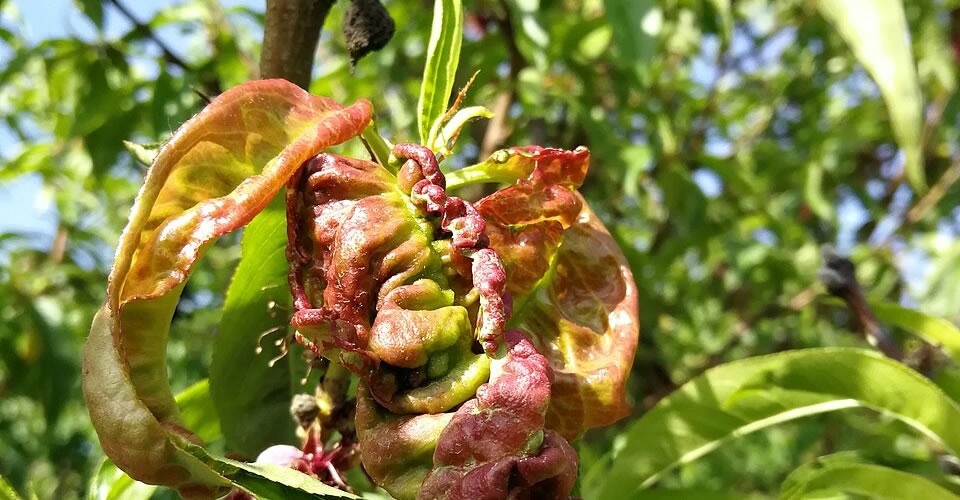
Above we see an example of Peach-leaf Curl, caused by a fungus, Taphrina deformans, often brought about in cool, wet weather in spring.
- Photo by Tanasa009, Wikimedia Commons (CC BY-SA 4.0)
- Frost-damaged blossom – Early flowers can be damaged by late frosts, preventing fruit from forming. Choose a sheltered site and protect blossom when frost is forecast.
- Peach leaf curl – A fungal disease that distorts and discolours young leaves. Choose resistant varieties where possible and consider a rain shelter to keep emerging leaves dry.
- Bacterial canker and silver leaf – Diseases that can enter through pruning wounds. Prune only during the recommended spring or summer period, on a dry day.
- Fruit failing to ripen – Often caused by insufficient warmth or sunshine. A warm wall, protected growing space or more suitable variety can improve the chances of success.
- Fruit splitting or dropping – May result from inconsistent watering, wet weather or other growing stresses. Keep soil moisture as even as possible.
- Birds and wasps – Ripening fruit can attract wildlife. Protect the crop with suitable fruit sleeves or carefully fitted netting, ensuring that birds and other wildlife cannot become entangled.
Final Thoughts
Peaches, nectarines and apricots can be wonderful additions to the garden, but they are best approached with realistic expectations. In Ireland, particularly in cooler and wetter parts of the country, a healthy tree does not automatically mean a reliable harvest.
If you have a sunny, sheltered wall, fan-training is an excellent option. If you have room for a greenhouse or polytunnel, growing under cover can offer more control over rain, blossom protection and ripening conditions. Compact container varieties can also be worth trying if space is limited.
Choose varieties carefully, protect the early blossom from frost, pay attention to peach leaf curl, and prune at the correct time of year. With the right position and a little extra care, you may be rewarded with delicious home-grown fruit — but if you are gardening in a cool, exposed site, it is worth treating these as a more ambitious crop rather than the easiest fruit trees for a beginner.
For more information on choosing, planting and caring for fruit trees, see our Growing Fruit Trees guide.