

Broad Beans
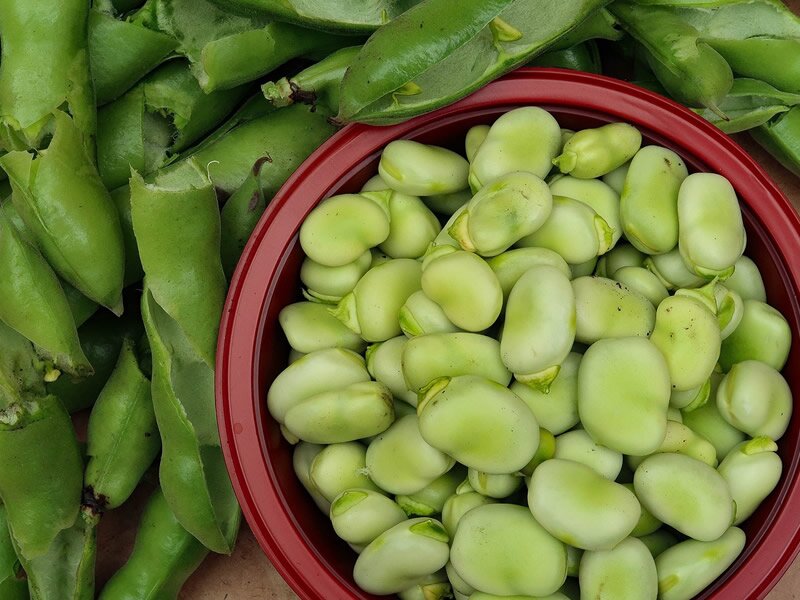
Broad beans rarely, if ever appear on supermarket or grocery store shelves and this is a shame because they are very easy to grow, have a variety of culinary uses and are a rich source of pantothenic acid (vitamin B5) which is needed for the conversion of
fats, carbohydrates & proteins into energy. Also known as 'fava beans', a name which gained more familiarity from the creepy Anthony Hopkins scene in 'Silence of the Lambs' than due to its widespread culinary use, these beans are also a great source of fibre, folate (Vitamin B9), niacin (vitamin B3) and protein.
What's more they are a substantial and tasty bean and when used in cooking or allowed to steep in a dressing, they are great at absorbing other flavours and bulking out various dishes.
In terms of the plants themselves, with the numerous varieties available, there is a variety to suit most garden settings from dwarf varieties like 'Sutton' that can be grown in pots and more exposed, windier areas to avoid staking, to the larger varieties that can offer big yields within a relatively small space. Below is a quick guide on how to grow these nutritional versatile legumes
How to grow Broad Beans
- Soil and Site - In terms of crop rotation, as with all legumes, these should follow on in a bed fertilised/manured for a previous crop such as potatoes. Legumes (peas and beans) are nitrogen fixers, taking nitrogen from the air and fixing it back into the soil and so you don't want an overly fertile soil to inhibit this. This 'fixed' nitrogen will also prove beneficial to the crops that then follow in the rotation. A nice open, sunny site will also prevent the build up of aphids which can become an issue later in the season.
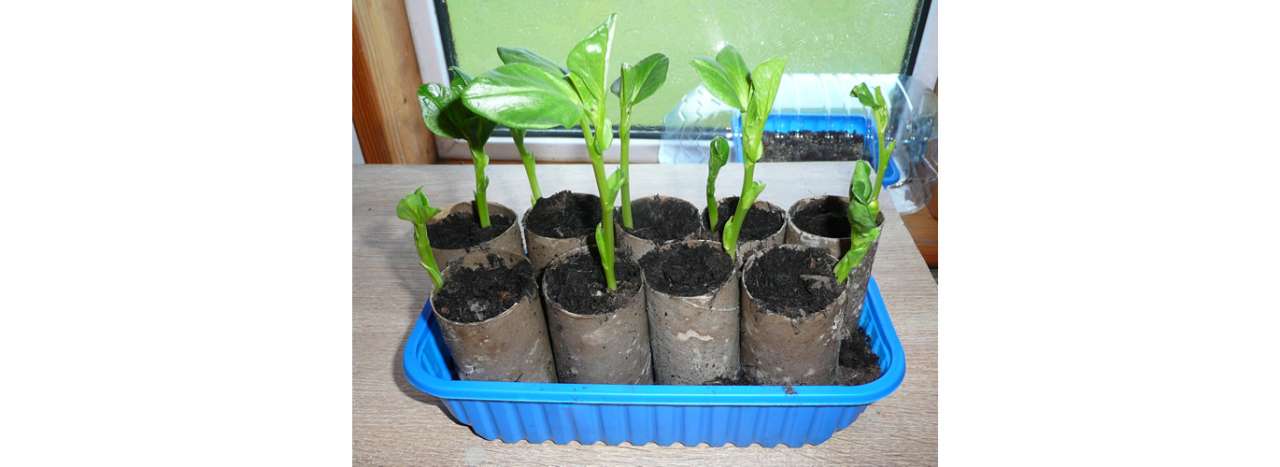
- Sowing - There are two seasonal types of broad bean, those that can be planted in autumn (such as 'Aquadulce' varieties) and those that can be planted in late winter/early spring such as 'The Sutton'. All can be sown directly, 5cm deep although you can also start these off indoors, sown in deep cell modules or even using the cardboard inners of toilet rolls to get them off to a good start before transplanting. For indoor sown plants, you will need to start hadening off the plants about a week before transplanting to their final position. Autumn types can be sown from late September to Early November with spring types sown from late February to late April. Dwarf varieties can be sown in containers at least 40cm wide, filled with a multi-purpose or loam-based compost.
- Spacing - 15cm between plants and 45cm between rows. A 2m² will yield approximately 6kg beans depending on the variety.
- Crop Rotation - Broad beans are part of the legume family and should fit into this area of your crop rotation. For more information on crop rotation see 'Planning Your Vegetable Patch
Staff Tip
"Although broad beans can be sown directly outside, because where I live is prone to visitors from mice, I always start my broad beans off in the cardboard innards I have saved from toilet rolls, filled with compost. I use saved trays from supermarket bought mushrooms as the base, which is a great way to re-use these. Once these are about 20-30 cm high, I harden them off for a week and then separate each cardboard tube (taking care to gently untangle any roots formed underneath in the tray) and plant them directly into the soil outside, tube and all." - Richard.
Cultivation & Care
- Support - Taller varieties like 'Aquadulce Cladia' may need support through the season, which is perhaps easiest done by staking around the plants and running a grid of string between the stakes or canes to prevent them falling over. Dwarf varieties like 'The Sutton' should not require staking as they only grow to about 30cm high and are ideal for exposed, windy areas.
- Watering - Unless in very light soil, they won't generally need watering over the season although a good soak when they start flowering and another 2 weeks later is said to improve the harvest. Container grown beans (as with almost anything in containers) will require frequent watering as the soil should be kept fairly moist but not waterlogged.
- Feed - Broad beans shouldn't require any feed through the season unless grown in containers in which case it is best to start applying a fortnightly feed of a high potassium fertiliser like tomato feed or if you have the resources available, a home made comfrey feed.
- Pest & Disease Control - By ensuring adequate drainage and digging the site over prior to planting as well as making sure there is adequate airflow around the plants, you can avoid 'Chocolate spot' which is a fungal disease that can reduce yields and cause brown patches to appear across the plant. If you are unfortunate enough to see this on your plants then it is best to pick any untouched pods immediately and dispose of the remaining affected plant material (don't put this in your compost bin though as you'll be adding the fungus to it.
Broad beans can also be prone to blackfly later in the season. They generally attack the soft new growth at the top of the plant so, once your plants are fully grown you can nip out the soft tips to prevent this.
With autumn varieties sown direct, mice getting at the seeds can be a problem but starting seeds off in runners, deep pots or toilet roll innards before transplanting can make sure this is avoided. - Weed Control - As with the vegetable patch generally, a regular run over with a hoe on dry, sunny days, to get rid of unwanted, competing weeds is always a benefit and the more often you do this, the easier it is before weeds take hold and it becomes a labour to get them out.
Harvest and Storage
Overwintered plants can generally be harvested from May onwards with spring crops being harvested a little later from June until August. The pods can be picked at various stages but if you pick them when the pods become firm with just a bit of give (and not too 'squeezy') this is the ideal time. Once the pods become solid and almost shine, you'll find that the skins of the beans inside are a bit tougher, although, you can shell these if you're not keen on the skin.
If you have a glut of beans, perhaps the best way to store them is to blanch them in boiling water for 3 minutes and then plunge them into iced water. Once completely cool, these can be bagged and frozen. Alternatively you can dry the beans and store them in jars, some of which can then be used for planting the following year or rehydrated for cooking later.
Culinary Use
Broad beans are a pretty versatile bean.
If your beans have fully matured and you're not keen on the skin, which some find a little leathery, you can blanch the bean in boiling water for a couple of minutes, plunge into cool water and then once cooled, the outer, whitish skin can easily be removed by pinching the bean between your finger-tips.
The vibrant green bean that is revealed can be mixed with olive oil, lemon juice and garlic as a side dish. The beans are a lovely addition to most salads and you will find a variety of recipes online for pickling or brining that will insure you have jars of these beans available in your fridge, having absorbed all manner of flavours. They can also be added to soups, stews and casseroles to bulk them up and provide extra nutrition.
Broad beans can be mixed with chickpeas to make a delicious variety of green hummus and they can be combined with other beans and ingredients to create veggie burgers.
Recipe - Broad Bean & Chick Pea Falafel
This was a recipe, slightly adapted here, originally found in a book entitled 'Abundance' by Alys Fowler. A highly recommended book if you're planning to grow large amounts of produce:
Ingredients
260g broad beans
240g chickpeas (about the amount you'll get in a 400g tin - or you can use dried chick-peas, soaked overnight and drained if you have them)
1 garlic clove crushed
1 small onion, finely chopped
1 small dried chili finely chopped (or 1/2 to 1tsp dried chili flakes)
Small handful of flat-leaf parsley
Small handful of mint leaves
Small handful of dill (optional)
1 tbsp coriander seeds
2 tsp cumin seeds
1 tbsp sesame seeds
1 tsp baking powder
Olive oil
Salt and pepper to taste
Flour for dusting
Method:
- Blanch fresh beans for two minutes and if they are a bit tough, remove the skins as described above
- Combine beans, chickpeas, onion, garlic, herbs, spices and baking powder in a bowl and blend the mixture together with a hand blender or food processor. You can add a little olive oil as you go to keep the mixture moving (but be as sparing as possible as you don't want to create a loose oily paste - aim for it to be on the dry side).
- Add salt and pepper to taste.
- The mixture should be dry enough to roll into balls, if not you can add plain flour or breadcrumbs to make the mixture dryer and more stable until you're able to do so.
- Once rolled into balls, about 5cm/2" in diameter, dust in flour and set aside. Alternatively you can flatten these into patties for a falafel burger
- Heat some olive oil in a frying pan and fry, on a medium heat, until golden brown all over (or on each side if you have these flattened).
- Plate with a salad, and some yoghurt and mint dressing or use to fill a pita bread or burger bun.
This recipe should produce up to 32 of the smaller balls or 8-16 burger style patties and the beauty of these is that they can be frozen and stored for later use. Simply lay them out on a tray in your freezer and once frozen you can transfer them to a bag and place them back in the freezer until you fancy them again!
Nutritional Information
According to Bord Bia, the Irish Food Board:
Per 100g serving
- Calories - 48kcal
- Protein - 5.1g
- Carbohydrate - 5.6g
- Fat - 0.8g
- Fibre - 5.4g
As mentioned in the introduction, broad beans are a source of folate (Vitamin B9 - which contributes to normal function of the immune system and the reduction of tiredness and fatigue), vitamin C and is high in vitamin B5 with 43% of its calories coming from protein.