
Planning a vegetable patch is one of the most rewarding gardening projects you can take on. Whether you have a dedicated plot, a few raised beds, or simply some pots on a patio, a little thought and preparation now can set you up for a productive and enjoyable growing year ahead.
Why grow your own vegetables?
Beyond the obvious benefits of fresh produce, growing your own food offers a sense of connection, resilience and satisfaction that’s hard to beat.
Why Start a Vegetable Patch?
There are many reasons why more people are choosing to grow at least some of their own food. Concerns around food security, rising supermarket prices and the environmental cost of imported produce have encouraged gardeners to look closer to home.
Growing your own vegetables also gives you greater control over what you eat — how it’s grown, what goes into the soil, and when it’s harvested. The difference in flavour between freshly picked produce and shop-bought vegetables can be remarkable.
Perhaps just as importantly, vegetable growing offers wellbeing benefits. Time spent outdoors, working with the soil and watching plants develop through the seasons can be hugely satisfying and restorative. It’s a slower, more mindful way of engaging with food.
Add to this the sheer variety available to the home grower — from heritage varieties to unusual crops rarely seen in shops — and it’s easy to see the appeal.
Planning Your Vegetable Patch
Good planning is the foundation of a successful vegetable garden, but it doesn’t need to be complicated. The key considerations are space, soil and time.
Space: Take an honest look at the space you have available. A traditional vegetable patch, raised beds, containers, window boxes or even a few pots can all be productive. Limited space should never be seen as a barrier — herbs, salads and compact crops thrive in containers.
Soil: Healthy soil is essential. Whether you’re working with garden soil, raised beds or compost in pots, improving soil structure and fertility will pay dividends. Adding organic matter such as compost or well-rotted manure helps improve drainage, nutrient availability and soil life.
Time: Be realistic about how much time you can dedicate. Some crops need regular attention, while others are relatively low maintenance. Choosing crops that fit your lifestyle will make the experience far more enjoyable.
Whatever your circumstances, there is always something you can grow — even if it’s just a small selection of herbs or salad leaves close to the kitchen door.
What to Grow
A good starting point is simply to grow what you like to eat. There’s little sense in dedicating space to vegetables that won’t make it to your plate.
It can also be useful to prioritise crops that offer good value. Some vegetables are relatively expensive to buy but easy to grow, such as salad leaves, herbs, courgettes, tomatoes and soft fruit. These often make excellent use of limited space.
If space is tight, it’s worth considering whether certain crops are better bought than grown. Vegetables that are inexpensive and readily available in shops may not be the best use of precious growing space unless you particularly enjoy growing them.
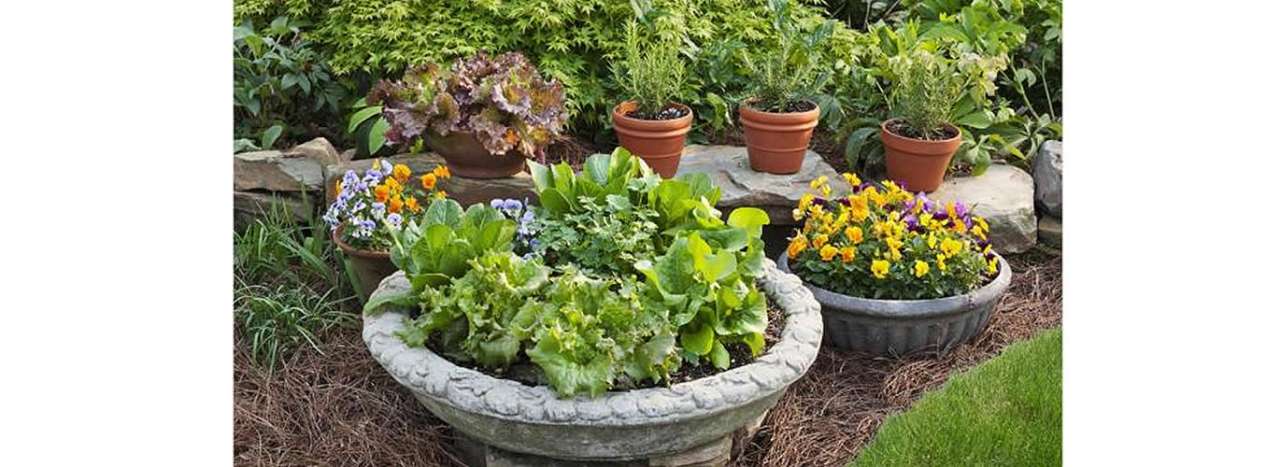
As you can see here, even in a small space vegetables can be grown in pots and containers offering supplies of leafy greens along with herbs and they can easily be mixed in with flower displays for an attractive aesthetic - Photo courtesy of GrowMate (CC BY-SA 4.0)
Understanding Crop Rotation
Crop rotation is an important part of maintaining soil health and reducing pest and disease problems. In simple terms, it means avoiding growing the same type of vegetable in the same place year after year.
Different plant families have different nutrient requirements and attract different pests. Rotating crops helps prevent nutrient depletion and reduces the build-up of soil-borne diseases.
A simple two-year rotation might look like this:
- Year One: Potatoes and other heavy feeders, like cabbage and perpetual spinach in Bed A, light feeders like carrots, beetroot and onion in Bed B
- Year Two: Swap these crops so they grow in a different area
Even a basic rotation like this can make a noticeable difference over time, particularly in smaller gardens.
For those with more space, the traditional 4 Bed Rotation system is preferrable which cycles through :
Year 1:
Bed A - Potatoes
Bed B - Legumes - which includes Peas and Beans
Bed C - Brassicas - which includes Cabbages, Broccoli, Kale, Cauliflowers etc.
Bed D - Root Vegetables such as carrots and parsnips along with Alliums (Onions, Leeks etc.)
Year 2:
Bed A - Legumes - (Peas and Beans)
Bed B - Brassicas (Cabbages, Broccoli, Kale, Cauliflowers etc.)
Bed C - Root Vegetables & Alliums
Bed D - Potatoes
The likes of salads, beetroot and spinach can generally be added to any bed in the rotation as they don't tend to attract pests and diseases or affect the soil in the same way. Furthermore, if you have even more space, you may want to also add another bed in this rotation which allows you to grow green manures which can be dug back into the bed to increase fertility, with no veg at all growing in it for that year, ensuring you revitalise the soil in your beds as part of the cycle.
There is also the option to have perennial vegetables growing separately - such as globe artichokes or rhubarb which will offer a crop year after year.
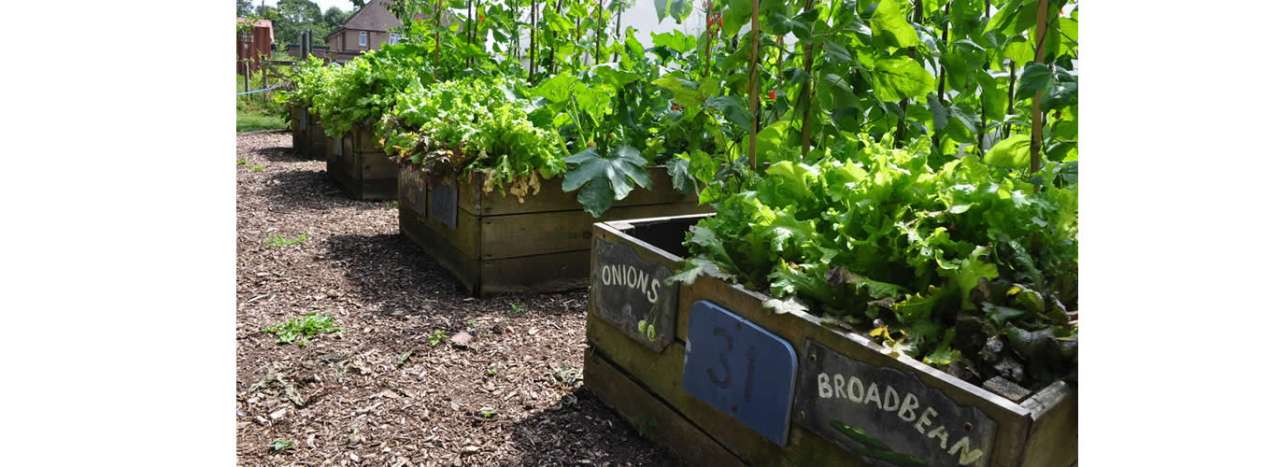
This raised bed vegetable patch at Two Moores Primary School in Tiverton, UK demonstrates how crop rotations can vary. The main thing is that you don't grow the same vegetables in the same area of ground year after year as this can cause a build up of disease and pests in the soil that can result in poor results and worse, things like 'club root' which is harmful to brassicas and can take years to eliminate. It must also be noted here that raised beds are probably the best way to manage your veg growing as they are easy to manage and allow for better drainage (particularly here in the west of Ireland) - photo by Lewis Clarke (geography.org.uk - CC BY-SA 2.0)
It is also worth noting that there is nothing wrong with growing some vegetables within your flower bed or borders. Some vegetables can even be quite ornamental and showy. Globe Artichokes can make a great, architectural statement in a sunny mixed border, rainbow chard can offer brightly coloured stems for a large part of the part of the season and some varieties of beans have flowers that would rival those of the sweet pea.
We have also put together a 'Crop Rotation Quick Guide' which you can download and print, detailing a 6-bed rotation and showing which 'group' the various vegetables fall in. If you have less beds, you can simply split your beds accordingly and rotate in the same way: 'Vegetable Crop Rotation - Quick Reference Guide' - oh and see if you can spot the mistake in the image...
Matching Crops, Rotation & Preparation
Once you know what you’d like to grow, consider how those crops fit into your rotation and what preparation is needed in advance.
Some vegetables, such as potatoes and brassicas, benefit from well-prepared ground enriched with organic matter. Others, like carrots and parsnips, prefer lighter soils with fewer fresh nutrients added.
Putting together a simple written plan can be incredibly helpful. This doesn’t need to be detailed — just a basic guide covering:
- What you plan to grow
- When seeds should be sown
- When plants are transplanted outdoors
- Expected harvesting periods
This kind of plan provides structure for the year and helps ensure that key jobs aren’t forgotten during busy periods.
Propagation: Getting Plants Started
Some vegetables are best sown directly into the ground, while others benefit from being started under cover. Early sowing indoors or in a greenhouse allows you to get a head start on the season.
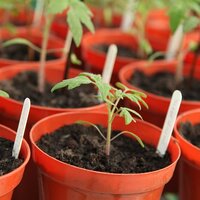
Windowsill propagators, seed trays under cover, electric propagators and heat mats can all be used to provide the warmth needed for successful germination. Crops such as tomatoes, peppers, chillies and aubergines particularly benefit from early indoor sowing.
Starting plants this way also allows you to make better use of space outdoors, planting out strong young plants when conditions are suitable.
Ongoing Maintenance
Once your vegetable patch is underway, regular maintenance will keep plants healthy and productive. This includes watering, feeding, weeding and keeping an eye out for pests and diseases.
Mulching helps retain moisture and suppress weeds, while feeding crops appropriately supports steady growth and good yields. Small, regular jobs often prevent bigger problems later in the season.
If You Have a Greenhouse or Polytunnel
A greenhouse, polytunnel or conservatory opens up even more possibilities. These protected spaces allow for earlier sowing, longer growing seasons and the ability to grow tender crops that might struggle outdoors.
They’re also ideal for propagation, hardening off young plants and extending harvests well into autumn.
Quick Veg Patch Checklist
Use this simple checklist to make sure you’ve covered the essentials before the growing season gets underway.
- ☐ Decide what you’d like to grow (start with what you enjoy eating)
- ☐ Assess your available space — beds, raised beds, containers or pots
- ☐ Check soil condition and add compost or organic matter if needed
- ☐ Think about crop rotation (even a simple two-year plan helps)
- ☐ Note which crops can be sown directly and which need starting under cover
- ☐ Prepare propagation equipment — trays, pots, compost, labels
- ☐ Write a basic growing plan with sowing and harvesting times
- ☐ Allow space for succession sowing and later crops
A little preparation now can save time and frustration later — and helps keep the year manageable and enjoyable.
Final Thoughts
Vegetable growing is a learning process, and no two years are ever the same. Starting small, planning realistically and adapting as you go will help build confidence and success over time.
A good book on vegetable growing can be a valuable companion. It’s worth noting that many gardening books are quite Anglo-centric, and sowing times in Ireland — particularly in the west — often fall a few weeks later than suggested. Books such as Klaus Laitenberger’s Vegetables for the Irish Garden and Vegetables for the Polytunnel and Greenhouse are particularly well suited to our conditions and we highly recommend them.
With a little planning and preparation now, you’ll be well on your way to a productive and satisfying growing year.
Ready to start planning?
We have a wide range of vegetable, herb and flower seeds in stock now, with something to suit every garden and growing setup. Browse our seed catalogue online and start planning your garden for 2026 today.