

Broccoli (Calabrese)
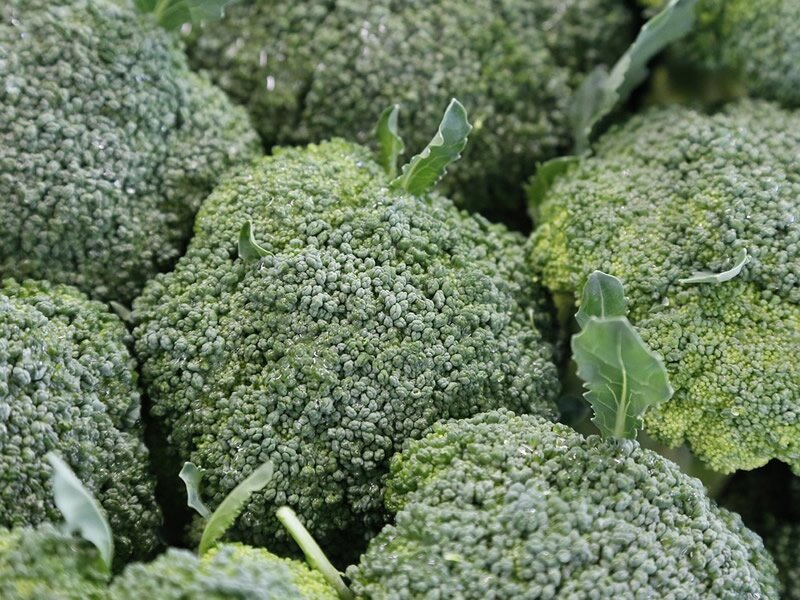
Calabrese produces a single large central head and is sold in most shops and supermarkets under the name 'Broccoli' which is why we have it listed here. True broccoli is the sprouting kind, which produces multiple smaller side shoots over a longer period and is generally grown later in the season for a late winter, early spring harvest. Now calabrese plants can take up a bit of space, especially if you're thinking that you're only going to get one head as a result but one of the great things about home-grown calabrese is that once you have harvested the main head, you will have smaller side shoots that develop which can provide you with a further 2-3 harvests of tender stems. In addition, the leaves of the calabrese plant are also great as edible greens.
Unlike sprouting broccoli, calabrese is quicker to mature and ideal for summer harvesting.
How to grow Calabrese
- Soil preparation - Calabrese is best grown in a sheltered position that gets full sun or some light shade. You need fertile soil that is moisture retentive yet still free draining and it is best to add well-rotted manure or compost the previous autumn, digging about 2 bucketfuls in per square metre. If you're taking a no-dig approach to gardening, you can simply add a 10-15cm layer of organic-matter over your bed in late February/early March.
- Sowing – You can sow calabrese seeds indoors from February in a heated propagator, or from March without heat. If sowing in February to extend the season, in order to save space and compost (especially if you have a heated propagator or matt with limited real estate) you can sow seed in a small tray and cover with about 1cm of compost. Once the seedlings are large enough to handle you can then start pricking these out and planting in modules or small pots a couple of weeks later. If sowing direct to modules in March, without heat, you can sow one or two seeds per cell in a modular tray. Where two seeds germinate in one cell, just tease out the weaker of the two and discard. These are usually ready to plant out 4-5 weeks later.
Calabrese is a good candidate for successional sowing as you ten don't end up with a mass of heads all at once, so you may want to try a sowing in March, early May and early June to maintain an extended supply. - Planting Out – Plant out once hardened off, spacing 45cm apart with 30cm between rows if you are planting multiple rows.
- Crop Rotation - Calabrese is part of the brassica family and so this should be taken into consideration in terms of your rotation. For more information on crop rotation see 'Planning Your Vegetable Patch'
Cultivation & Care
- Firm soil well around plants.
- Water regularly as drying out causes small plants and premature budding.
- Protect from pigeons and cabbage white butterflies - this is best done by covering in a durable enviromesh
Harvest
Cut the main head before flowers open. Side shoots may follow. Cropping usually starts around 70-100 days after sowing.
Culinary Use
Calabrese is commonly steamed, stir-fried or added to pasta dishes, soups and salads. It is milder and more tender than sprouting broccoli and is usually harvested as a single central head.
Recipe – Simple Steamed Calabrese with Lemon
Calabrese is delicious in all manner of meals but this simple preparation just adds that little extra flavour and can be served as a side for pretty much any meal.
- Steam florets until just tender.
- Mix a good extra virgin olive oil and lemon juice (at a ration of 1:1), with the zest of one lemon and some black pepper in a small jar and shake to make a dressing.
- Toss the broccoli in a bowl with the dressing and serve.
- You can also add some finely chopped garlic into the dressing mix for added flavour.
Nutritional Information
According to Bord Bia, the Irish Food Board:
Per 100g serving
- Calories – 34 kcal
- Protein – 4.3g
- Carbohydrate – 3.2g
- Fat – 0.6g
- Fibre – 2.6g (NSP) or 4g (AOAC)
Calabrese provides vitamin C, vitamin K and fibre, supporting immune and bone health, is a source of potassium which contributes to the maintenance of normal blood pressure, and is high in folate, which contributes to the the normal function of the immune system and reduces tiredness and fatigue