

Currants (Black, Red & White)
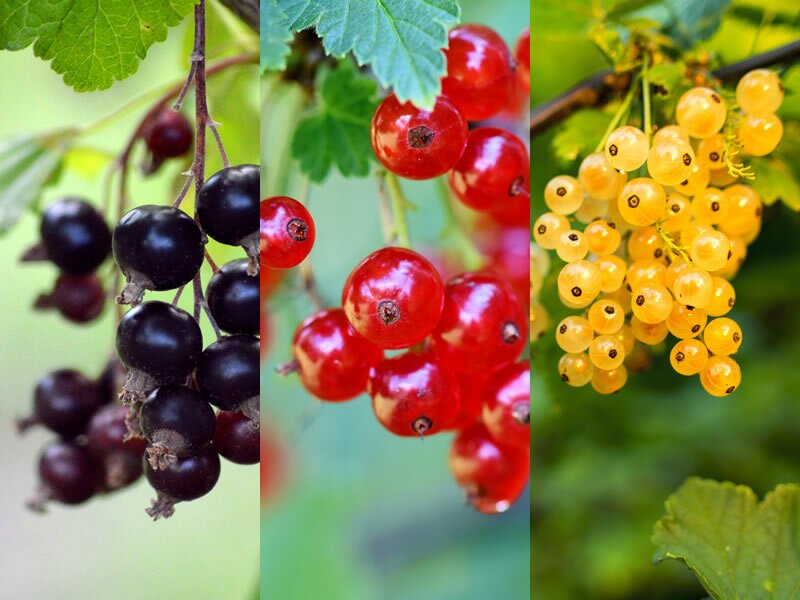
Currants (Ribes species)
Currants are hardy, productive fruit bushes that are particularly well suited to Irish gardens. They are easy to grow and can produce reliable crops year after year with minimal maintenance. Given that they are rarely, if ever, sold in shops, this is just another reason to grow currants yourself.
This group includes blackcurrants, redcurrants and whitecurrants, each with slightly different flavours and uses.
Types of Currants
- Blackcurrants – Strong flavour, ideal for cooking and preserves
- Redcurrants – Tart and refreshing, often used fresh or in desserts and can be added to other fruit in jams to raise pectin levels.
- Whitecurrants – Milder and sweeter than redcurrants
Growing Conditions
- Soil: Moisture-retentive, fertile soil - blackcurrants will dolerate a damp position in the garden, whereas redcurrants and whitecurrants prefer a more well-drained soil
- Light: Currants will grow in full sun or partial shade but you will get much better results and more ripening fruit in full sun.
- Spacing: 1–1.5 m between plants
- Pollination: All currants are self fertile and so don't require pollinating partners
Sowing & Planting
- Usually grown from bare-root plants
- Plant in autumn or early spring
- Plant slightly deeper than they were in the nursery
- Water well after planting
Outdoor Growing
Currants are ideally suited to outdoor growing in Ireland and tolerate a wide range of conditions.
- Suitable for borders, fruit cages or mixed planting
- Can tolerate partial shade better than many fruit crops
- Mulch annually to retain moisture
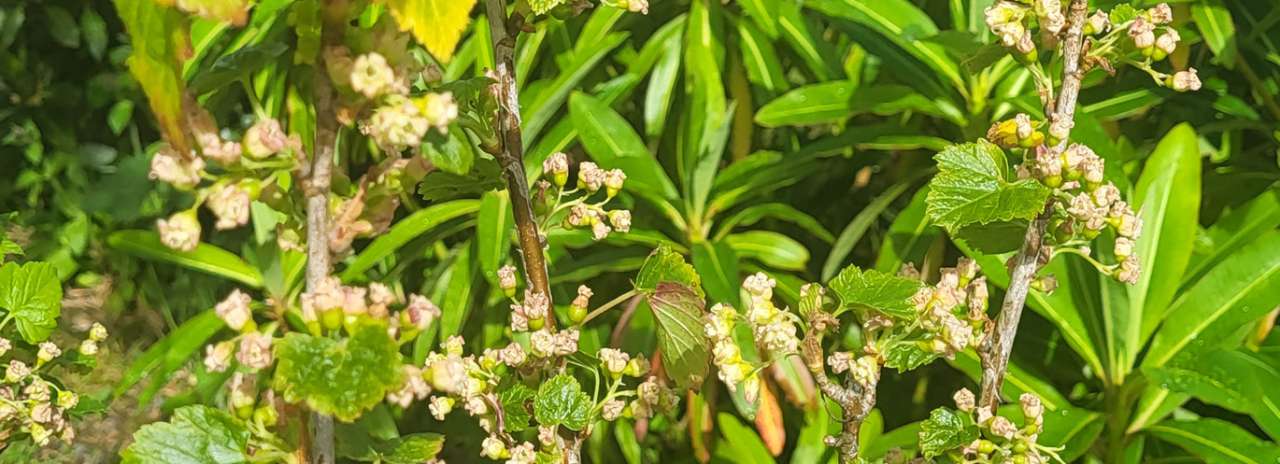
Here you can see the berries forming behind the flowers which have been pollinated in May. Once the flowers drop entirely, I'll start thinking about protecting the fruit from birds. I'm hoping that hanging a few old CDs from the nearby fruit trees will be enough of a deterrent this year, so I don't have to use netting which birds can get caught up in - Photo taken by Richard (AGC), 11 May 2026.
Growing Under Cover (Greenhouse/Polytunnel)
- Less commonly grown under cover
- May be used to advance crops slightly but given how easy they are to grow outdoors this would likely be a waste of valuable indoor growing space.
- Ensure good ventilation and space
Growing in Containers
- Possible with careful management
- Use large containers of at least 40cm in diameter and pot plants on every 3 years with fresh compost.
- Water and feed regularly
Care & Maintenance
- Water during dry periods
- Feed annually in spring
- Mulch with compost or manure
Pruning
- Blackcurrants: Fruit on new wood – prune hard annually
- Red & White currants: Fruit on older wood – prune more lightly
Harvesting & Storage
Harvest when fruits are fully coloured and ripe. Currants can be picked as whole trusses or individual berries and are suitable for freezing. They are best laid out on a tray in the freezer and then once they have frozen you can transfer them to bags and put them back in the freezer. This method avoids them freezing into a big clump of fruit.
Also be sure to try the leaves of blackcurrants, steeped in boiling water for a refreshing blackcurrant tea.
Varieties to Try
- Ben Sarek – Compact blackcurrant
- Ben Connan – Reliable and productive blackcurrant
- Rovada – Popular redcurrant
- White Versailles – Classic white currant
Common Problems
- Birds: Netting is often required or, if possible you can also hang old CDs of nearby trees or a overhead on a string as the reflection from them often deters birds.
- Mildew: Can affect leaves and fruit
- Currant gall mite: Affects blackcurrants - pick off any discoloured or distorted leaves and incinerate.
- Blister aphids: These can cause red blisters on redcurrant leaves in summer, yo can check the underside of leaves and remove the yellow aphids in spring but this is mainly cosmetic and won't affect your fruit.
Culinary Use
- Jams and jellies
- Desserts
- Sauces and cordials
Recipe – Redcurrant Jelly
Redcurrant jelly is a delicious addition to lamb and other meats, can be added to gravy to add a bit of depth and fruitiness and also adds some acidity when eaten with oily fish.
Ingredients
1kg redcurrants
Sugar
- Cook fruit (about 20 mins) and mash with a potato masher to extract as much juice as possible.
- Strain juice through a muslin cloth or jelly bag over a pot.
- Heat the juice and gradually add 650g of sugar for every litre of juice you now have, stirring to dissolve the sugar as you go. Bring to the boil and leave on a rolling boil for about 6 minutes, remove from heat, and check to see if the setting point has been reached (the loose, light coloured bubbles on the surface should have all but disappeared). You can do this by adding a teaspoon of the liquid to a frozen saucer, leaving for a few minutes and then sliding your finger through it. It should be a jelly like consistency that doesn't pool back. If it is still runny, return to the heat for a few more minutes and then test again. Repeat until the setting point is reached.
- Once the setting point is reached, pour into warm steralised jars and seal with the lid.
- This will keep for about a year in a cool, dark cupboard. Once opened you can keep it in the fridge for up to 3 months.
Traditional preserve.
Nutritional Information
- Rich in vitamin C
- Contains antioxidants
- Low in fat