

Hazelnuts
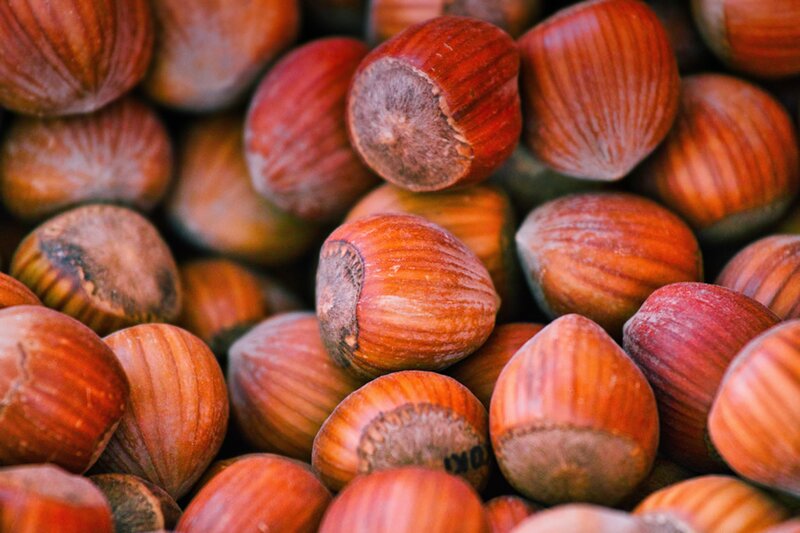
Growing Hazelnuts and Cobnuts in Ireland
Hazelnuts are a little different from the fruit trees in this rest of the A-Z guide, but they are well worth considering if you have the space. A hazel can provide a handsome, long-lived tree or large shrub as well as a crop of delicious nuts, and once established it requires relatively little attention.
The terms hazelnut, cobnut and filbert are sometimes used interchangeably, although there are botanical and horticultural differences. Cobnuts are generally associated with Corylus avellana, while filberts are traditionally associated with Corylus maxima. Both are grown for their edible nuts and both have similar requirements in the garden.
Choosing the Right Position
Hazels are hardy plants and can cope with the Irish climate well, but they crop best when given a reasonably sunny, sheltered position.
Full sun or light shade is suitable, although too much shade can reduce flowering, nut production and the overall vigour of the tree. Avoid extremely exposed positions if possible, particularly because the branches can become quite substantial as the tree matures.
Hazels prefer fertile, well-drained soil. They can tolerate a range of conditions but generally perform best in soil around neutral pH rather than strongly acidic ground. Avoid permanently waterlogged sites.
Think About the Eventual Size
A young hazel can look like a relatively modest plant, but an unpruned hazel can eventually become a substantial tree or multi-stemmed shrub, potentially reaching around 6 metres in height and a similar spread.
This is an important consideration when choosing a position. Don't plant a hazel somewhere simply because there is room for it today; think about the space it will occupy in ten or twenty years.
Hazels can be grown as single-stemmed trees, but they are naturally inclined to produce multiple stems from the base. They can also be managed as traditional multi-stemmed stools through coppicing, although a fruiting tree grown specifically for nuts will usually be managed differently.
Do I Need Two Hazel Trees?
The short answer is YES this is one of the most important things to understand when growing hazelnuts.
Hazels are monoecious, meaning that the same tree produces both male and female flowers. The familiar hanging catkins are the male flowers, while the much smaller female flowers appear separately on the branches.
It might therefore seem that one tree should be able to pollinate itself. In practice, however, the male and female flowers on a hazel do not always mature at exactly the same time. As a result, self-pollination can be unreliable, and some cultivars are particularly poor at pollinating themselves.
For a dependable crop, it is therefore best to plant at least two compatible cultivars that flower at the same time and for more reliable results three or more trees is far more effective.
Hazels are wind pollinated, rather than bee pollinated, so the trees do not need to be planted immediately beside one another. However, planting compatible cultivars reasonably close together gives the best chance of good nut set.
If you have the space, planting three compatible hazels can provide a useful safety net for pollination and can also increase the overall crop. This is particularly worthwhile if you are planting a small group rather than simply adding one hazel to an existing garden.
However, remember that hazels can become large plants. It is better to give two compatible trees enough room to develop properly than to squeeze several trees into a space that cannot support them.
As a general guide, trees planted around 5 metres apart will still be close enough for good pollination in most gardens, while giving them room to develop. Pollen can travel considerably further, so a mature hazel growing nearby may also contribute to pollination.
Existing wild hazel in the area can also provide useful pollen, as hazel produces large quantities of pollen over an extended flowering period.
Hazel Flowers in Winter
One of the pleasures of growing hazel is that it gives the garden some interest surprisingly early in the year. The long male catkins develop through winter and become particularly conspicuous from January onwards.
The female flowers are much less obvious. Look closely and you may see tiny red styles emerging from the buds. These are the flowers that need to receive pollen before the nuts can develop.
Hazels generally flower from around January through March, making them one of the earliest trees of the year to release pollen.
Hazelnut and Cobnut Varieties to Consider
There are a number of cultivars available, and choosing compatible varieties is more important than simply choosing two different-looking trees. Always check the pollination compatibility supplied by the nursery when purchasing.
- ‘Cosford’ – A well-known cobnut producing sweet, good-flavoured nuts with relatively thin shells. It is a reliable variety and also makes a useful pollinator for several other cultivars.
- ‘Butler’ – A vigorous, heavy-cropping hazel producing large, sweet nuts. It is also a useful pollinator and can be paired with several other cultivars.
- ‘Ennis’ – A filbert producing large, round nuts with excellent flavour. It is a good pollinator but needs a compatible partner for reliable nut production.
- ‘Gunslebert’ – A heavy-cropping filbert producing medium-sized nuts with a strong flavour. It can be used as part of a compatible pollination pairing.
- ‘Kentish Cob’ – A hardy and reliable filbert with good flavour and fine-textured nuts. It is particularly useful where a traditional cobnut type is wanted.
- ‘Pearson’s Prolific’ – Also known as ‘Nottingham Prolific’, this is a more compact hazel producing round nuts with good flavour. Its relatively compact habit can make it attractive for smaller gardens, although eventual size should still be taken into account.
- ‘Red Majestic’ – A more ornamental choice with dark purple foliage and purplish-pink catkins, while still producing edible nuts. It can be useful where the tree needs to earn its place in an ornamental garden as well as an edible one.
The exact compatibility between cultivars is important, so don't assume that any two hazels will necessarily pollinate one another effectively. Your nursery should be able to advise on suitable combinations.
Planting a Hazel
Hazels are best planted during the dormant season, from late autumn through to early spring. Bare-root trees are particularly good value at this time of year and usually establish well when planted correctly.
Choose a fertile, well-drained position and prepare the soil before planting. Water thoroughly after planting and continue to water during prolonged dry spells while the tree establishes.
A mulch of well-rotted organic matter around young trees will help conserve moisture and suppress competing grass and weeds. Keep mulch away from direct contact with the stem.
Growing Hazels in a Smaller Garden
Although hazels can become substantial trees, they do not necessarily have to be allowed to reach their maximum size. Regular management can keep them within more useful dimensions.
Some cultivars are naturally more compact than others, so this is worth considering when choosing a tree. A compact cultivar such as ‘Pearson’s Prolific’ may be more appropriate for a smaller garden than a particularly vigorous hazel.
Hazels can also be trained and managed as multi-stemmed shrubs, although this requires more regular maintenance if the objective is to maximise nut production while controlling size.
They are also sometimes grown as hedging plants. However, if your main reason for planting hazel is to harvest nuts, remember that a dense hedge may produce less fruit than trees given plenty of light and room to develop.
Pruning and Managing Hazel
Hazels are naturally multi-stemmed and can be managed in several different ways depending on whether your priority is nuts, appearance, wildlife value or a combination of all three.
For a nut-producing tree, remove dead, damaged or badly crossing branches and keep the centre reasonably open so that light can reach the foliage and developing nuts.
Hazels also produce new shoots, or suckers, from around the base. Remove unwanted suckers if you want to maintain a clear tree shape or prevent the plant gradually spreading beyond its allotted space.
Older hazels can be rejuvenated by removing some of the oldest stems at ground level, although avoid removing everything at once if nut production is important. Maintaining a mixture of younger and older productive wood is a better approach.
When Are Hazelnuts Ready to Harvest?
Hazelnuts generally ripen from late summer into early autumn. The husks gradually change colour as the nuts mature, and eventually the nuts begin to loosen and fall naturally.
Don't wait too long once the first nuts start falling. Squirrels and other wildlife are extremely efficient at harvesting hazelnuts and will often beat you to the crop!
Collect fallen nuts regularly and check the trees for nuts that are still attached. The exact harvest period varies according to cultivar and growing conditions.
Drying and Storing Hazelnuts
Freshly harvested hazelnuts contain a considerable amount of moisture and should be dried before long-term storage.
Remove any damaged or mouldy nuts and spread the sound nuts somewhere warm, dry and well ventilated. Allow them to dry thoroughly before storing in a cool, dry place.
Hazelnuts can also be stored in their shells for longer-term use, helping protect the kernel from deterioration. Once shelled, they are more vulnerable to becoming rancid and are best stored carefully, particularly if keeping them for an extended period.
Protecting Your Crop from Squirrels
Birds can cause problems, but squirrels are often the biggest challenge for anyone growing hazelnuts. They have an excellent memory for nut-bearing trees and can remove a surprisingly large proportion of the crop.
There is no single foolproof solution for a mature tree, but harvesting promptly as the nuts ripen can help. Young or smaller trees may also be easier to protect with suitable netting.
If using any protective netting, make sure it is securely fitted and regularly checked so that birds and other wildlife cannot become trapped.
Hazels and Wildlife
Even if your main reason for growing hazel is the nuts, the tree has considerable wildlife value. The early catkins provide an important source of pollen for insects emerging early in the year, while the nuts themselves are valuable food for birds and mammals.
Allowing some nuts to remain available for wildlife can therefore make a hazel a useful addition to a wildlife-friendly garden, although gardeners hoping for a substantial harvest may find themselves having to compete for their share!
Common Hazelnut Problems
- Squirrels – Often the biggest threat to a hazelnut crop. Harvest promptly and consider protecting smaller trees.
- Nut weevil – The hazel or nut weevil can damage developing nuts, with the larvae feeding inside the kernel. Look out for small holes in harvested nuts and remove affected nuts.
- Hazel aphid – Aphids can sometimes colonise young shoots and foliage. Healthy established trees will generally tolerate modest infestations.
- Coral spot and other fungal diseases – Dead or damaged wood can provide opportunities for fungal diseases. Good pruning hygiene and removing dead wood can help keep problems under control.
- Poor nut set – If a hazel flowers well but produces very few nuts, pollination is one of the first things to investigate. Check that you have compatible cultivars flowering at the same time and that there is no shortage of suitable pollen.
Final Thoughts
Hazels are an excellent choice if you have enough room for a substantial shrub or small tree and would like an edible crop that requires relatively little day-to-day attention once established.
The biggest mistake is probably to think of hazel as a single-tree crop. Although one tree carries both male and female flowers, dependable nut production is much more likely when you grow two compatible cultivars together. Check pollination compatibility before buying rather than simply choosing two varieties that look appealing.
Give your hazels a sunny or lightly shaded, sheltered position, allow plenty of room for their eventual size, keep the root area free from excessive competition and harvest the nuts promptly before the local wildlife gets there first!
For more information on choosing, planting and caring for fruit trees, see our Growing Fruit Trees guide.