

Celeriac
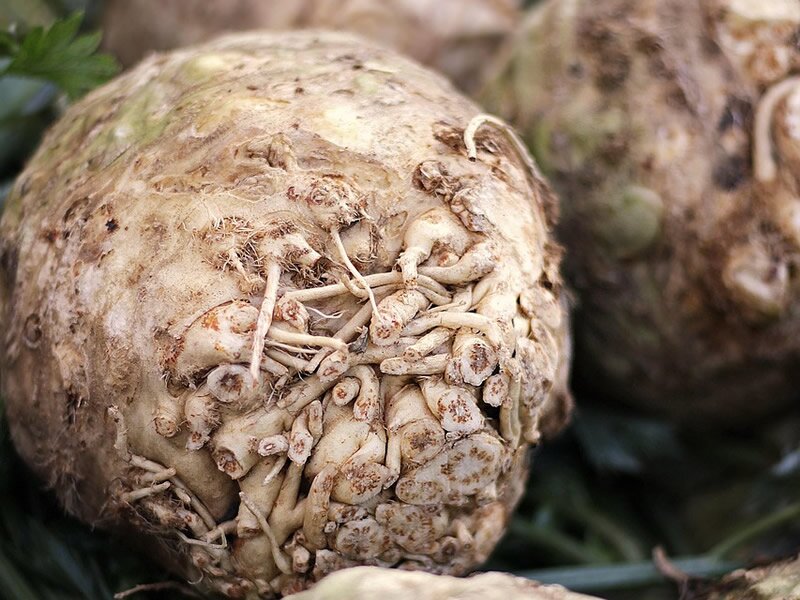
Celeriac is grown for its knobbly, swollen root which has a distinctive celery flavour. Although it has a long growing season, it stores well and provides valuable winter harvests.
It requires early sowing and steady growth, making it a crop best started indoors in late winter.
How to grow Celeriac
- Soil and Site – Moisture-retentive, fertile soil in full sun or light shade. Celeriac dislikes drying out and performs best in soil enriched with compost.
- Sowing – Sow indoors from February to March at around 18–20°C. Seeds are slow to germinate and should not be covered heavily — press lightly into a pre-watered compost surface.
- Growing On – Prick out seedlings into modules once large enough to handle (about 2 weeks after germination)
- Planting Out – Plant out in May once frost risk has passed and the seedlings are about 10cm tall. Space 30–40cm apart.
- Rotation – Though not a brassica, rotation is still beneficial and is best rotated with other umbellifers like carrot and parsnip. Avoid recently manured soil.
Cultivation & Care
- Watering – Consistent moisture is essential. Dry spells can result in small or woody roots.
- Feeding – Apply a balanced fertiliser during the growing season if growth slows.
- Earthing Up – Unlike celery, celeriac does not require blanching.
- Leaf Trimming – Remove outer leaves late in the season to allow the bulb to swell.
Harvest and Storage
Harvest from October onwards once bulbs reach a usable size (10–15cm diameter). Lift before heavy frost.
Celeriac stores well in a cool shed or refrigerator and can last several weeks.
Culinary Use
Celeriac can be mashed, roasted, added to soups, or grated raw into remoulade. Its nutty celery flavour intensifies when cooked.
Recipe – Celeriac Remoulade
Classic French preparation.
Ingredients
1 small celeriac, peeled and grated
2 tbsp mayonnaise
1 tsp Dijon mustard
1 tbsp lemon juice
Salt and pepper
- Mix mayonnaise, mustard and lemon juice.
- Fold through grated celeriac.
- Chill before serving.
Nutritional Information
Per 100g serving:
- Calories – 42 kcal
- Protein – 1.5g
- Carbohydrate – 9g
- Fat – 0.3g
- Fibre – 1.8g
Celeriac provides fibre, potassium and vitamin K.