

Swede
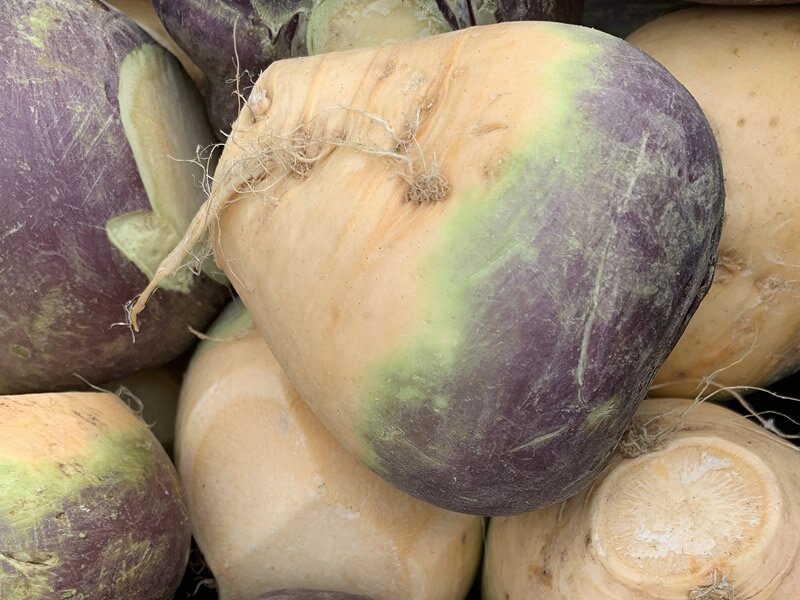
Swede (also known as rutabaga) is a hardy root vegetable grown for autumn and winter harvest. Often confused with turnips, swedes are generally larger, slower growing and better suited to long-term winter use.
They require a relatively long growing season and are best sown from late spring into early summer. In Irish conditions, they are particularly valuable as a reliable winter crop that stands well in the ground once mature.
Swede vs Turnip – What’s the Difference?
- Swedes – Larger roots, yellow flesh, longer growing season, harvested autumn–winter.
- Turnips – Smaller, usually white flesh, quicker growing, harvested summer–autumn.
- Flavour – Swedes are generally sweeter and denser when cooked.
How to grow Swede
- Soil and Site – Swedes prefer firm, fertile, moisture-retentive soil in full sun. Avoid freshly manured ground, as this can lead to misshapen roots.
- Sowing – Whilst you can sow directly outdoors from May to June in theory, it is often best to start seeds off in modular trays. The reasons we recommend raising most seedlings this way is that you will get more reliable germination, you give them a good protected start to life away from slugs and other pests and it is much easier to space them correctly and see what is what when you plant them out. You can have enough swede grown for autumn/winter harvesting from just tow sowings, one around mid April and one in late May/early June. Sow 2 seeds per module, 2cm deep and discard the weaker seedling if both germinate. These should be ready to harden off and plant out about 4 weeks after germination. IF you do sow direct, sow seeds 1–1.5cm deep in drills spaced 30cm apart. Thin seedlings to 20–30cm apart (the smaller spacing will just give you a smaller swede, it just depends on what you need).
- Spacing – For larger swedes space plants 30cm apart with 30cm between rows. For smaller swedes plant 20cm apart with 30cm between rows.
- Rotation – As a brassica, swede should be included in a 3–4 year crop rotation to reduce the risk of clubroot.
Cultivation & Care
- Thinning – Thin promptly to allow proper root development.
- Watering – Maintain consistent soil moisture during dry spells to prevent woody or cracked roots.
- Weeding – Keep beds weed-free, particularly while plants are establishing.
- Pest Protection – Protect young plants from flea beetle and cabbage root fly using netting or fleece.
Harvest and Storage
It is possible to harvest from late August/early September if you have sown seeds early in modules in mid April. For later sowings, harvest from late October onwards once roots reach usable size. Swedes are very hardy and can remain in the ground into winter, though lifting before prolonged severe frost is advisable.
Trim leaves and store roots in a cool, frost-free shed or clamp. Swedes store well and can last for several months under good conditions.
Culinary Use
Swede is a staple of traditional winter cooking. It can be mashed, roasted, added to soups and stews, or combined with carrot for a classic side dish.
Recipe – Mashed Swede & Carrot
Ingredients
1 medium swede, peeled and cubed
2 carrots, peeled and chopped
25g butter
Salt and black pepper
- Boil swede and carrots until tender.
- Drain and mash with butter and seasoning.
- Serve hot as a winter side dish.
Nutritional Information
Per 100g (boiled) serving:
- Calories – 11 kcal
- Protein – 0.3g
- Carbohydrate – 2.3g
- Fat – 0.1g
- Fibre – 0.7g (NSP)
Swede is a source of vitamin C, fibre and potassium.