

Dill
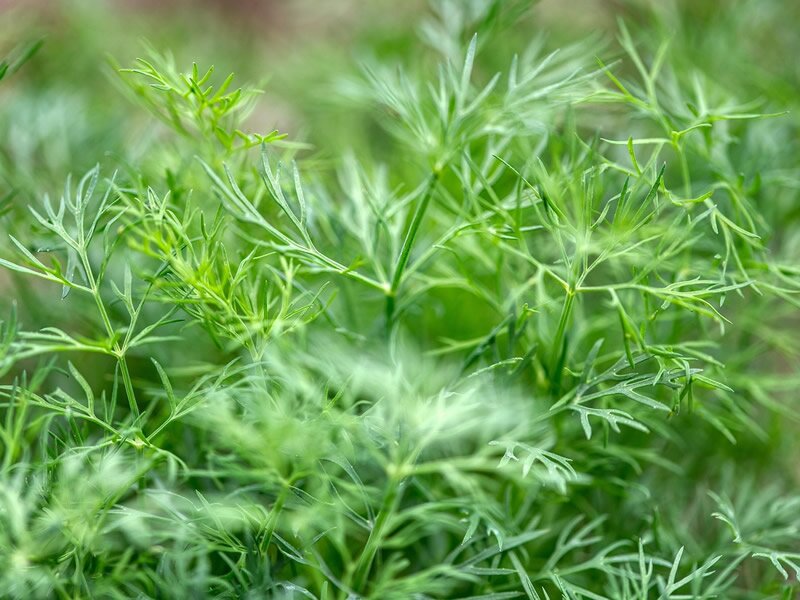
Dill is a delicate annual herb grown for both its feathery leaves and aromatic seeds. It has a distinctive flavour commonly associated with fish dishes, pickles and Scandinavian cooking.
It is relatively easy to grow and performs well in Irish gardens during the warmer months, though it prefers a sheltered position away from strong winds.
How to grow Dill
- Soil and Site – Dill grows best in fertile, well-drained soil in full sun.
- Sowing – Sow indoors from February or outdoors from April onwards once soil temperatures begin to warm. Sow every 2-3 weeks until about mid August for continuity of supply. Early sowings (Feb-March) should be made in modular trays and placed on a heat matt or raised in a heated propagator. Add about 5-6 seeds per cell for planting out or potting on about 4 weeks or so later, where the clumps of seedlings should be kept together and not separated.
- Direct Sowing – Dill dislikes root disturbance, so direct sowing is often preferable.
- Spacing – Thin seedlings to approximately 20cm apart to allow plants to develop fully with 25cm between rows.
Cultivation & Care
- Watering – Water regularly during dry periods to prevent premature bolting.
- Staking – Taller plants may require support in exposed areas.
- Succession Sowing – Sow every few weeks for a continuous supply of fresh leaves.
Harvest and Storage
Harvest leaves as required once plants are established. For seed production, allow flowers to develop and mature.
Dill leaves are best used fresh but can be frozen for later use.
Culinary Use
Dill is commonly paired with fish, particularly salmon, and is widely used in pickling, salads and sauces.
Recipe – Dill & Yoghurt Sauce
Ingredients
150g natural yoghurt
1 tbsp chopped fresh dill
1 tsp lemon juice
Salt and pepper
- Combine all ingredients in a bowl.
- Mix well and chill before serving.
Nutritional Information
Per 100g serving:
- Calories – 43 kcal
- Protein – 3.5g
- Carbohydrate – 7g
- Fat – 1.1g
- Fibre – 2.1g
Dill provides vitamin C, calcium and beneficial plant compounds.
Medicinally it is said to relieve flatulence and calm the stomach and digestion. The seeds can also be chewed to freshen your breath.