

Parsley
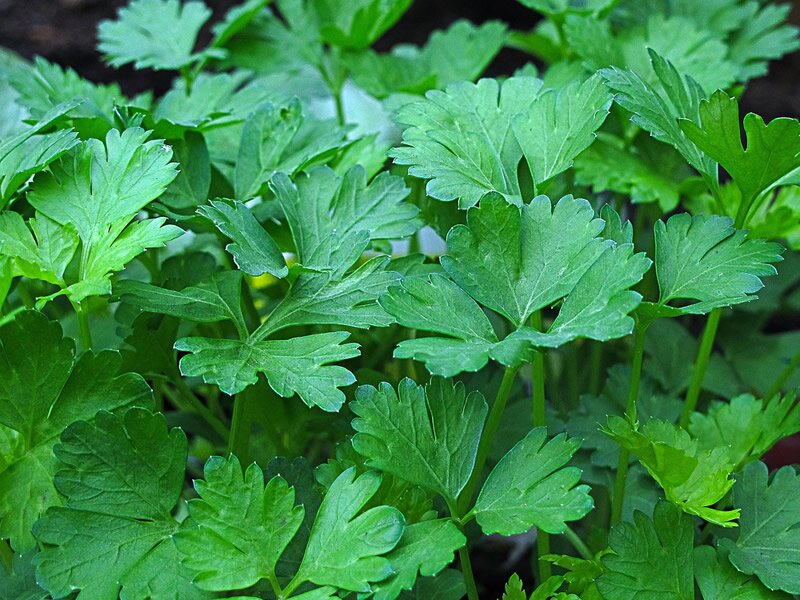
Parsley is one of the most widely used culinary herbs and a staple in many kitchen gardens. It is a hardy biennial typically grown as an annual for its fresh leaves.
It can be grown outdoors in beds or containers and performs well in Irish conditions, providing a reliable supply of leaves for much of the year.
Types of Parsley
- Flat-Leaf Parsley – Also known as Italian parsley, valued for its stronger flavour and commonly used in cooking.
- Curled (Moss) Parsley – Decorative tightly curled leaves often used as a garnish.
How to grow Parsley
- Soil and Site – Parsley prefers fertile, well-drained soil in full sun or partial shade.
- Sowing – Sow indoors from February or outdoors from April onwards.
- Depth – Sow 3-4 seeds approximately 1cm deep in modules for early sowing indoors (on a heat matt or warm windowsill) or in drills for direct sowing in April. You can also make a further sowing in July for over-wintering in a polytunnel or greenhouse. When planting out module sown seedlings, don't separate them, just plant the three or four seedlings together.
- Germination – Parsley can be slow to germinate, sometimes taking 3–4 weeks.
- Spacing – Thin seedlings (or groups of seedlings) to around 20cm apart with 25cm between rows.
Cultivation & Care
- Watering – Keep soil evenly moist, particularly in containers as infrequent watering can cause them to bold prematurely.
- Feeding – Occasional feeding with a balanced liquid fertiliser will encourage leafy growth.
- Overwintering – Parsley often survives mild winters and can continue producing leaves although this is best done in a polytunnel or greenhouse for more reliable results.
Harvest and Storage
Harvest leaves regularly once plants are established, removing a few, full stems of leaves from the outside of several plants allowing for continued growth and harvesting. Alternatively you can cut the whole plant about 5cm above the ground but you will then have to wait a further 3-4 weeks before harvesting again and this method can reduce yield.
Parsley can be frozen or dried, though the flavour is best when used fresh.
Culinary Use
Parsley is widely used in soups, salads, sauces and garnishes. Flat-leaf parsley is often preferred for cooking due to its stronger flavour.
Recipe – Parsley & Garlic Butter
Ingredients
100g softened butter
2 tbsp chopped parsley
1 garlic clove, crushed
Salt and pepper
- Mix parsley and garlic into softened butter.
- Season and roll into a log using parchment paper.
- Chill and slice as needed.
Nutritional Information
Per 100g serving:
- Calories – 36 kcal
- Protein – 3g
- Carbohydrate – 6g
- Fat – 0.8g
- Fibre – 3.3g
Parsley is particularly rich in vitamin K and also contains vitamin C and iron.
Medicinally parsley is considered a natural vitamin and mineral supplement. Parsley is also said to encourage the flushing out of waste products from inflamed joints and has a diuretic action.