

Beetroot
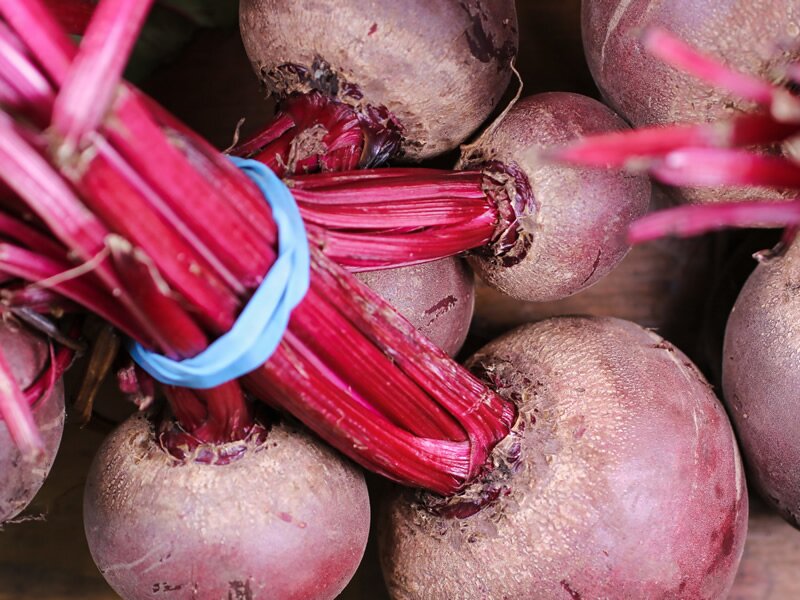
Beetroot (Beta vulgaris)
Beetroot is an easy and reliable crop, producing sweet, earthy roots as well as edible leaves. It is well suited to Irish conditions and can be grown over a long season with successive sowings.
Both roots and young leaves can be harvested, making it a versatile addition to the vegetable garden.
Types of Beetroot
- Globe Beetroot – Traditional round varieties
- Cylindrical Beetroot – Longer roots, ideal for slicing
- Coloured Varieties – Including golden and striped types
Growing Conditions
- Soil: Beetroot like light, well-drained, fertile soil but avoid adding fresh manure, instead applying a dressing of old compost, otherwise you'll get plants with more leaf than beet.
- Light: Full sun
- Water: Moderate but consistent watering
- Spacing: 10 cm between plants and 20cm between rows.
- Rotation: as part of the 'goosefoot' (Chenopodiaceae) you don't have to be too fussy about rotation.
Sowing & Planting
- Sow direct outdoors from March to July. If you are are sowing early in March or April, there is only really one variety worth sowing and that is 'Boltardy' to avoid them bolting in the summer. It is recommended however that you leave direct sowing until early May when you'll have better success and a wider range of varieties to choose from. You can also start seedlings off in modular trays and plant them out when quite young, remembering that most beetroot seeds are actually clusters of seeds that can produce 3 to 5 seedlings. Having said that, beetroot grow perfectly well with these seedlings planted as groups in a multi-sown fashion, maybe increasing your spacing to about 15-20cm if doing so.
- Sow seeds outdoors 2–3 cm deep in drills or about 1cm deep if using the modular tray method.
Care & Maintenance
- Keep soil moist to prevent woody roots
- Thin seedlings if you want larger, singular grown beets.
- Weed regularly while plants are establishing
Growing in Containers
- Grow in deep containers or raised beds
- Ensure good drainage
- Water regularly
Harvesting
Harvest when roots reach golf ball to tennis ball size. Younger roots tend to be more tender.
Leaves can also be harvested young and used like spinach.
Varieties to Try
- Detroit Globe – Reliable classic variety
- Boltardy – Good resistance to bolting
- Cylindra – Long roots, ideal for slicing
- Pablo F1 - This is my personal favourite it produces beautiful beets that can grow quite large without any woodiness and are a delicious sliced or julienned raw in salads as they are roasted.
Common Problems
- Woody roots: Caused by irregular watering
- Poor germination: Often due to cold soil
- Overcrowding: Leads to smaller roots but where you have multi-sown your beetroot you can twist away the larger beets as they develop allowing the remainder more room to grow larger through the season.
Culinary Use
- Roasted or boiled
- Salads
- Pickled beetroot
- Soups such as borscht
Recipe – Roasted Beetroot with Honey & Thyme
Ingredients
4 medium beetroot, peeled and cut into wedges
1 tbsp olive oil
1 tbsp honey
Fresh thyme leaves
Salt and black pepper
- Preheat oven to 200°C (180°C fan).
- Toss beetroot in olive oil, honey and thyme.
- Spread evenly on a baking tray.
- Roast for 30–40 minutes until tender.
- Season and serve warm.
Roasting brings out the natural sweetness of beetroot and pairs well with a wide range of dishes.
Inspired by seasonal roasting recipes.
Nutritional Information
Per 100g serving:
Calories: 46kcal
Protein: 2.3g
Carbohydrate: 9.5g
Fat: 0.1g
Fibre : 1.9g
Beetroot are rich in folate, contain fibre and antioxidants and are a good source of potassium