

Medlars
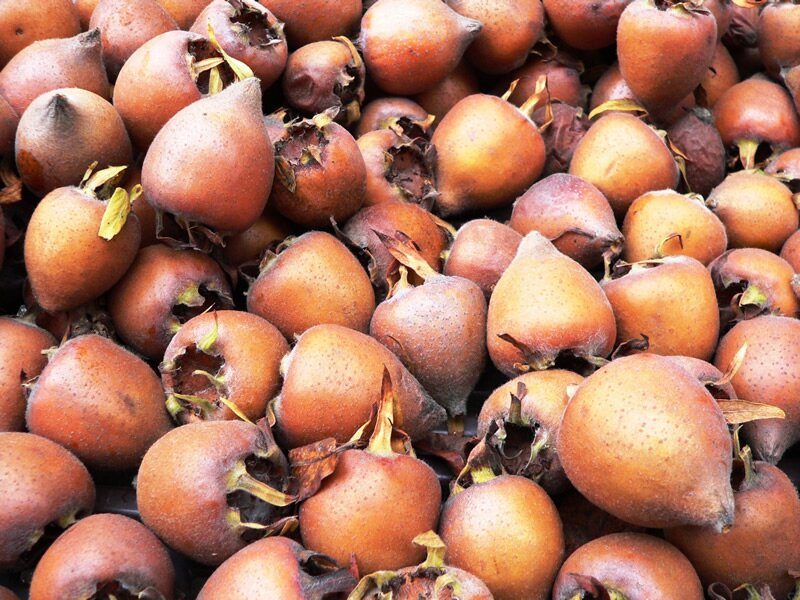
Medlar (Mespilus germanica)
Medlars are one of those fruit trees that tend to raise an eyebrow when you first encounter them. They produce attractive white flowers in late spring, develop good autumn colour and bear unusual, rounded brown fruits that look rather like small russet apples.
But there is something particularly curious about the medlar harvest: the fruit is not ready to eat when you pick it.
Freshly harvested medlars are hard, bitter and decidedly unappetising. Instead, they need to go through a traditional ripening process called bletting. During this process the fruit softens, its flavour develops and the hard, astringent flesh becomes sweet and aromatic.
If you have never grown medlars before, this unusual harvest is half the fun.
Choosing a Medlar Tree
Medlars make attractive small to medium-sized garden trees and are useful as both ornamental and fruiting plants.
When choosing a tree, consider:
- The eventual size of the tree (which you will find in our product descriptions)
- The available space
- A sunny position with reasonably good drainage
- Whether you want the tree primarily for fruit, ornament or both
- The form of tree you require for your garden (some are more upright than others)
Medlars are generally self-fertile, so unlike many apple cultivars, you do not normally need to plant a second medlar simply to obtain a crop.
Where to Plant Medlars
Choose a sunny position with good drainage and, where possible, some shelter from strong winds.
Medlars are relatively undemanding and can tolerate a range of soil conditions, provided the ground is not persistently waterlogged.
They are also attractive trees in their own right. Their white flowers appear in late spring, followed by the unusual fruits, while the foliage can develop attractive autumn colour.
Planting Medlars
Autumn through to early spring is an excellent time to plant a bare-root medlar while it is dormant. Container-grown trees can be planted more widely through the year, provided conditions are suitable and the tree is watered adequately while establishing.
For general advice on preparing the soil, planting depth, staking, watering and mulching, see our Growing Fruit Trees guide.
As with other grafted fruit trees, take care to keep the graft union above soil level when planting.
Care and Maintenance
Once established, medlars are relatively easy-care fruit trees and generally require less pruning than apples and pears.
- Water regularly while newly planted, particularly during dry weather.
- Keep grass and weeds away from the base of the tree.
- Mulch around the tree, taking care not to allow mulch to touch the trunk.
- Feed where appropriate according to soil conditions and tree performance.
- Remove dead, damaged or diseased wood when necessary.
- Prune lightly to maintain a healthy, open framework rather than continually cutting the tree back hard.
Flowers and Pollination
Medlars produce attractive white flowers in late spring. The flowers are useful to bees and other pollinating insects.
Unlike apples, medlars are generally self-fertile, so a single tree can produce a crop. Good pollinating insect activity is still beneficial during flowering, however.
Harvesting Medlars
And now for the slightly strange part!
Medlars are not harvested when they look ready to eat.
The fruits usually mature in autumn and are harvested while they are still firm and hard. Depending on the cultivar and growing conditions, this is generally around October and November.
Unlike an apple, a freshly picked medlar is not something you want to bite into. At this stage the flesh is hard, bitter and astringent.
Harvest the fruits carefully, ideally on a dry day, and handle them gently to avoid bruising.
The fruits can be harvested once they have reached their mature size and colour. Traditionally, medlars were sometimes left on the tree until late autumn and could be exposed to frost, although it is not necessary to rely on frost to begin the process of bletting.
What is Bletting?
Bletting is the controlled softening and ripening process that transforms a hard, inedible medlar into a sweet, soft fruit.
During bletting, the flesh undergoes changes that reduce its harsh, astringent character and increase the sugars available to the palate. The fruit gradually changes from firm and pale inside to soft, dark brown and aromatic.
This is the stage that often causes first-time medlar growers to wonder whether they have accidentally allowed their fruit to rot!
A properly bletted medlar can look surprisingly unappetising from the outside. The skin becomes darker and the fruit softens considerably. This is normal.
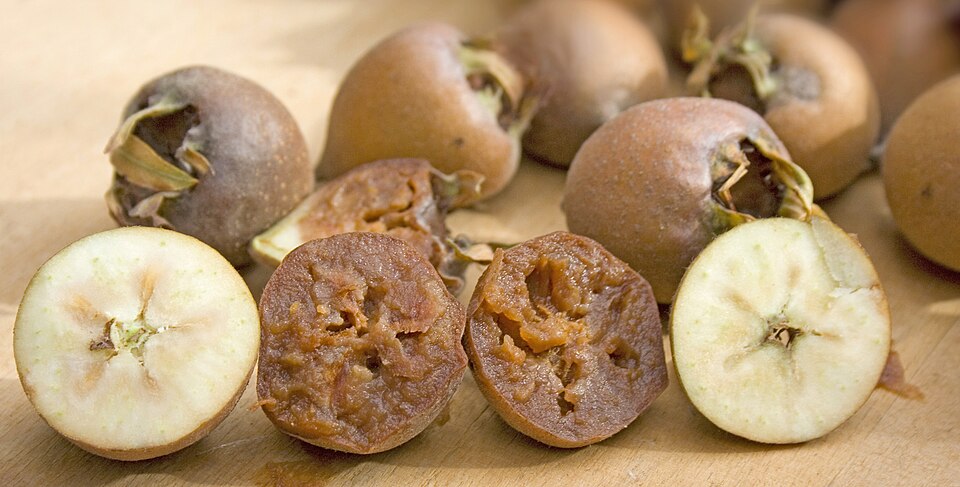
Mespilus germanica (Medlar) - semi-mature and fully ripe fruit, cross section - the fully 'bletted' medlars are seen here as having browned flesh in the middle of the photo - Photo by Takk (CC BY-SA 3.0)
How to Blet Medlars
Bletting is wonderfully simple and requires no specialist equipment.
- Harvest the medlars. Pick mature, sound fruit in autumn while it is still firm.
- Check each fruit. Remove any that are damaged, bruised or showing signs of rot.
- Place the fruit somewhere cool. A cool, dry place away from direct sunlight is suitable.
- Keep the fruits separated. Arrange them so that they are not piled tightly together, allowing you to inspect them easily.
- Wait. Bletting takes several weeks, although the exact time varies with temperature and the fruit itself.
- Check regularly. The medlars will gradually darken and soften.
- Use when fully bletted. The fruit should be very soft, dark brown and aromatic rather than simply hard and bitter.
The RHS recommends storing harvested medlars for several weeks to allow them to blet, with the fruit becoming dark brown, soft, sweet and aromatic as the process progresses.
How Do I Know When a Medlar is Ready?
This is perhaps the most important part of growing medlars, particularly if you have never eaten one before.
A ripe, bletted medlar should be:
- Very soft to the touch
- Dark brown in colour
- Aromatic
- Sweet rather than bitter or strongly astringent
- Soft enough for the flesh to be spooned or scooped from the skin
Don't judge a medlar by appearance alone. A bletted fruit can look as though it has gone past its best, but this dramatic change in appearance is part of the normal ripening process.
Eating Bletted Medlars
Once properly bletted, medlars can be eaten fresh.
The soft flesh has a distinctive flavour that has been compared to cooked apple and other rich, sweet flavours. The fruit can be eaten by itself, although it is perhaps more commonly used in preserves and desserts.
One thing to remember is that medlars contain relatively large seeds, so they are not eaten in quite the same way as an apple.
What Can I Do With Medlars?
Medlars have traditionally been used in preserves and desserts, where their distinctive flavour and natural pectin can be particularly useful.
Try using bletted medlars for:
- Medlar jelly
- Medlar cheese
- Fruit preserves
- Jams and jellies
- Tarts and desserts
- Fruit purées
The fruit's high pectin content makes it particularly useful when making jellies and other preserves.
Common Problems
Medlars are generally considered relatively easy and trouble-free fruit trees, although they can still be affected by the usual problems associated with fruit trees.
Watch for:
- Aphids and other sap-sucking insects
- Bird damage
- Fungal diseases encouraged by poor airflow or persistently wet conditions
- Damage to fruit before harvest
- Fruit rot during storage if damaged fruit is included
Regular inspection and good general tree care will help you spot problems early.
Growing Medlars in Ireland
Medlars are an interesting choice for an Irish garden because they are hardy, relatively unfussy and don't require the long, hot growing season needed by some more tender fruiting plants.
As with any fruit tree, however, a sunny position with good drainage will give the best chance of healthy growth and a worthwhile crop.
The cool autumn conditions we often experience in Ireland also make the medlar's unusual harvesting and ripening process particularly interesting. Rather than needing to eat your entire crop immediately, the fruit is deliberately brought indoors to complete its transformation.
Final Thoughts
Medlars are not a fruit for anyone looking for instant gratification. They ask you to harvest a fruit that looks unripe, store it for several weeks and then patiently wait for it to become something completely different.
But that is precisely what makes them so fascinating.
When a hard, bitter fruit has finally become soft, dark, fragrant and sweet, you have completed a process that gardeners have been using for centuries. If you have the space for a medlar tree, it can provide not only an unusual harvest but also a wonderful talking point in the garden.
Thinking of planting a medlar? Autumn and winter are excellent times to plant bare-root fruit trees. For general advice on choosing, planting and caring for fruit trees, see our Growing Fruit Trees guide.
Shop Fruit Trees Shop Bare Root