

Fruit Trees - General Growing Guide
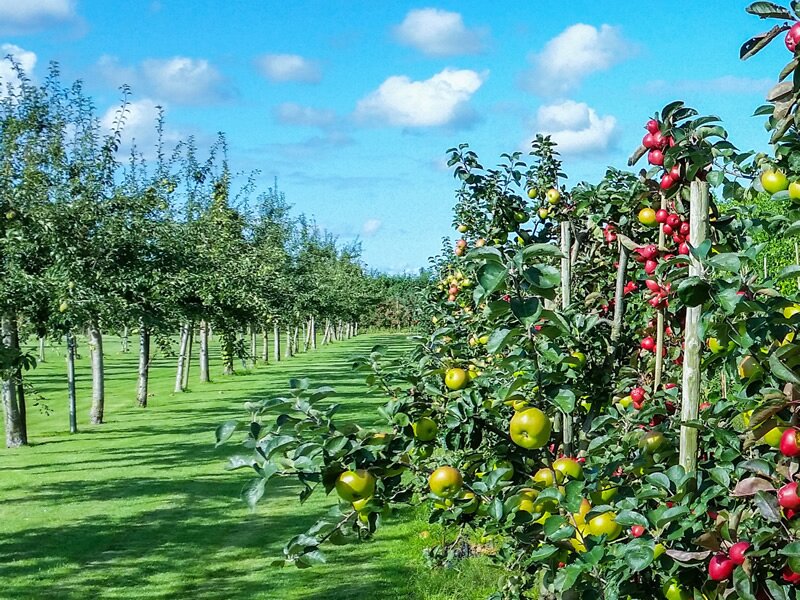
There is something particularly satisfying about planting a fruit tree. Unlike many of the plants we grow in our gardens, a fruit tree is a long-term investment: with the right choice of tree and a little care in its early years, it can provide blossom in spring, welcome shade and structure in summer, and delicious home-grown fruit for many years to come.
Autumn is an especially good time to start thinking about planting fruit trees. As the leaves fall and plants enter dormancy, the ground is still relatively warm while the cooler weather reduces the stress placed on newly planted trees. This gives the roots an opportunity to begin settling into their new surroundings before the growing season begins again in spring.
It is also the time of year when bare-root fruit trees begin to become available. These are trees that have been grown in the ground and lifted while dormant, rather than being supplied in a container. Bare-root trees can be an excellent and economical way to establish a fruit garden, and they are often available in a wider range of cultivars than container-grown trees.
In this guide, we look at the basics of choosing, planting and caring for fruit trees in the garden. For more detailed information about particular fruits, see our individual guides to apples, pears, plums, cherries and other fruit trees in the 'Grow Your Own A-Z'.
Choosing the Right Fruit Tree
Before choosing a tree, it is worth thinking about three things: what fruit you want to grow, how much space you have, and the conditions available in your garden.
Fruit trees can vary enormously in their eventual size. A tree that looks small when you buy it may eventually become a substantial plant, so it is important not to choose simply by looking at the size of the tree in the pot or at the height of a young bare-root specimen.
When choosing a fruit tree, consider:
- The amount of space available
- The eventual height and spread of the tree
- How much sunlight the site receives
- The soil type and drainage
- Whether the position is sheltered from strong winds
- Whether the tree needs a pollination partner
- Whether you want dessert fruit, cooking fruit, or both
- When you would like the fruit to ripen
- Whether the fruit can be stored
- Whether the tree is suitable for growing in a container or against a wall or fence
Don't be tempted to choose a tree simply because it is carrying beautiful fruit in summer. Autumn and winter are actually excellent times to make your choice, as you can concentrate on the characteristics of the tree rather than simply how attractive it looks at the garden centre.
A Few Fruit-Tree Terms Explained
Fruit trees can come with a surprising amount of terminology on their labels. Understanding a few of the most common terms makes choosing the right tree much easier.
Cultivar
A cultivar is a particular cultivated selection of a plant. Gardeners commonly use the word "variety" when talking about named fruit such as an apple or pear, and this is perfectly understandable in everyday gardening. Strictly speaking, however, cultivar is the more precise term for a named cultivated selection.
Rootstock
Most fruit trees are grafted. The roots and lower part of the tree come from one plant, known as the rootstock, while the desired fruiting cultivar is grafted onto it.
The rootstock has a major influence on the eventual size and vigour of the tree. This is one of the most important things to understand when buying a fruit tree, particularly if you have a small garden.
Rootstocks range from dwarfing types, which produce relatively small trees, through to vigorous rootstocks suitable for larger gardens and traditional orchard planting. The rootstock can also influence how quickly a tree begins to fruit and how much support it requires.
For this reason, don't simply ask how tall a particular apple or pear will grow. The answer also depends on the rootstock, cultivar, training method and growing conditions.
Graft Union
The graft union is the point where the fruiting cultivar has been grafted onto the rootstock. You will usually see a noticeable swelling or change in the stem close to the base of the tree.
When planting, the graft union should remain clearly above the soil. It should never be buried, as this can encourage the grafted cultivar to produce its own roots and potentially undermine the effect of the chosen rootstock.
Bare-Root Trees
Bare-root trees are grown in the ground and lifted while they are dormant, with little or no soil remaining around their roots. They are normally available during the dormant season, from late autumn through winter and into early spring.
Because they are not growing actively when lifted, bare-root trees can be transported and planted without a container. They are often less expensive than container-grown trees and can offer an excellent choice for establishing an orchard or planting several trees.
The roots of a bare-root tree should never be allowed to dry out. If you cannot plant immediately, keep the roots protected and moist, and plant as soon as practical. If planting must be delayed, temporary "heeling in" can be used to protect the roots until permanent planting is possible.
Container-Grown Trees
Container-grown trees have been raised in pots and are generally available for a longer planting season. They can be particularly useful when you want to plant a fruit tree outside the bare-root season.
However, container-grown does not automatically mean that a tree can simply be planted and forgotten. Newly planted trees still need good watering and aftercare while they establish, particularly during dry weather.
When is the Best Time to Plant Fruit Trees?
Autumn through to early spring is generally the ideal planting period for fruit trees, provided the ground is not frozen or waterlogged.
Autumn planting has several advantages. The soil is often still holding some of the warmth accumulated during summer, while the tree itself is entering dormancy. This allows the roots to settle before the demands of spring growth begin.
For gardeners in Ireland, this also makes autumn and winter an excellent time to think ahead. By planting a tree before spring, you give it time to establish a root system before it has to support a full season of new leaves and growth.
Container-grown trees can be planted at other times of year, but autumn and winter planting generally reduces the amount of watering required during establishment. Avoid planting when the soil is frozen, excessively wet or waterlogged.
Finding the Right Position
Most fruit trees will perform best in a sunny, open position with good drainage. Sunlight is particularly important for fruit production and for helping fruit to ripen properly.
Where possible, choose a position that is sheltered from strong prevailing winds but still has good air circulation. Avoid planting directly into areas where water regularly collects.
A south- or west-facing wall or fence can also be useful for trained fruit trees, particularly for fruits that benefit from additional warmth and shelter.
Remember to look upwards as well as sideways when choosing a position. Overhead branches, buildings and other trees can eventually shade a young fruit tree even if the site appears sunny when the tree is first planted.
Preparing the Soil
Good preparation before planting is one of the best things you can do for a new fruit tree.
Clear grass and weeds from the planting area and dig the soil thoroughly. Fruit trees establish much more easily when there is little competition from grass and weeds around their roots.
Improve very poor soil with well-rotted organic matter where appropriate, while taking care not to create a planting hole filled with substantially different soil from that surrounding it. The aim is to create a healthy rooting environment rather than an isolated pocket of rich compost.
Most importantly, consider drainage. Fruit trees generally dislike sitting in permanently waterlogged soil. If your garden has heavy or poorly drained ground, raised planting or a more suitable position may be necessary.
How to Plant a Fruit Tree
Whether planting a bare-root or container-grown tree, take your time with this stage. A good start can make a considerable difference to establishment.
- Prepare the planting area. Remove grass and weeds and loosen the soil over a good-sized area around the planting position.
- Prepare the tree. If planting a container-grown tree, remove the pot carefully and check the roots. Bare-root trees should be handled gently and their roots protected from drying out.
- Dig the planting hole. Make it wide enough to accommodate the roots comfortably without bending or cramping them.
- Position the tree. Spread the roots naturally rather than forcing them into a small hole.
- Check the planting depth. The tree should be planted at approximately the same depth as it was previously growing, with the root collar at soil level. The graft union must remain well above the soil.
- Backfill carefully. Work the soil around the roots, gently firming it as you go to remove large air pockets.
- Water thoroughly. Give the newly planted tree a good watering to settle the soil around the roots.
- Mulch the surrounding soil. Apply a layer of suitable organic mulch around the tree, keeping it clear of the trunk itself.
- Stake where necessary. Young trees may need support while their roots establish, particularly in exposed gardens or when grown on dwarfing rootstocks.
The exact staking method depends on the type of tree and rootstock, so follow the advice supplied with your particular tree.
Staking and Early Support
Newly planted trees can be vulnerable to strong winds before their roots have properly anchored them. A stake can help prevent excessive movement while the tree establishes.
However, the way a tree is supported matters. The aim is not necessarily to hold the entire tree rigidly in place, but to provide appropriate support while allowing some natural movement.
Some dwarfing rootstocks require longer-term or permanent support, while larger, more vigorous trees may only need support during their establishment period. This is another reason why the rootstock information on the label is important.
Watering and Mulching
Even though autumn and winter usually provide plenty of rainfall in Ireland, newly planted trees should still be checked regularly during their first growing season.
Water thoroughly when necessary rather than giving a little water every day. This encourages moisture to reach the developing root system.
A mulch of well-rotted organic matter around the base of the tree can help conserve moisture, suppress weeds and improve the soil over time. Keep mulch away from direct contact with the trunk, as constantly damp bark can encourage problems.
Pollination – Do You Need Two Fruit Trees?
This is one of the most important questions to ask before buying a fruit tree.
Some fruit trees and cultivars are self-fertile, meaning that a single tree can potentially produce fruit when its flowers are pollinated with pollen from the same cultivar. Others require cross-pollination from a compatible cultivar flowering at around the same time.
Many apples and pears, for example, require a suitable pollination partner, while some cultivars of plums and cherries are self-fertile. The exact situation varies considerably between crops and cultivars, which is why pollination should always be checked before making your final choice.
It is also important to remember that self-fertile does not necessarily mean that another compatible tree is of no benefit. Good insect activity and suitable pollination conditions can still help fruit set.
When choosing two or more trees, look for cultivars whose flowering periods overlap and check their stated pollination groups where these apply.
Encouraging pollinating insects into the garden is also valuable. A garden containing a good mixture of flowering plants provides food for bees and other pollinating insects throughout the season.
How Much Space Will a Fruit Tree Need?
This is where rootstock and training become particularly important.
A fruit tree does not have to mean a huge tree taking over half the garden. Modern rootstocks and training methods allow many fruit trees to be grown successfully in relatively small spaces.
Depending on the fruit and rootstock, trees can be grown as:
- Bush trees – the most common form, with a relatively short trunk and an open crown.
- Half-standards and standards – larger trees with a taller clear trunk, more suited to larger gardens and orchard situations.
- Cordons – trees trained to grow as a narrow stem, useful where space is limited.
- Espaliers – trees trained with horizontal branches against a wall or fence.
- Fans – branches trained outwards from a central point, particularly useful against walls and for certain stone fruits.
Rootstock and training method work together to determine the eventual size and shape of the tree.
Growing Fruit Trees in Small Gardens
You don't need a large garden to grow your own fruit.
If space is limited, look for dwarfing or semi-dwarfing rootstocks and consider trained forms such as cordons and espaliers. Some fruit trees can also be grown successfully in large containers when an appropriately sized rootstock is chosen.
When planning a small fruit garden, it is often better to grow one or two carefully chosen trees that suit the available space than to plant larger trees and find yourself constantly fighting their size.
Remember to consider the spread as well as the height. A tree may be relatively modest in height but still require considerable room for its branches.
Growing Fruit Trees in Containers
Some fruit trees can be grown successfully in containers, making them an option for patios, courtyards and smaller gardens.
Choose a suitably dwarfing rootstock and a large, stable container with good drainage. Container-grown fruit trees need more attention to watering and feeding than trees planted directly into the ground, as their root systems are restricted.
Apples, pears, cherries and some plums are among the fruit trees that can be grown in containers when the right cultivar, rootstock and training method are chosen.
Pruning Fruit Trees
Pruning is an important part of maintaining a productive fruit tree, but it is also one area where it pays not to treat every fruit tree in exactly the same way.
The aim of pruning is generally to create a strong, well-shaped tree with good access to light and air, while encouraging the production of fruiting wood.
The timing and method of pruning varies between different types of fruit tree. Apples and pears, for example, are generally pruned differently from plums and cherries, and trained trees such as espaliers and fans require their own pruning routines.
For this reason, we will cover pruning in more detail within each individual fruit-tree guide rather than attempting to give one set of instructions for every species.
Feeding and General Care
A well-established fruit tree does not usually need constant attention, but a little routine care will help it remain healthy and productive.
- Keep the area around the trunk free from grass and weeds.
- Water newly planted trees during dry periods, particularly through their first growing season.
- Apply an appropriate mulch in spring, keeping it away from the trunk.
- Feed according to the needs of the particular fruit tree and soil.
- Check the tree regularly for signs of pests, disease or damage.
- Remove damaged, dead or diseased growth using clean, sharp tools.
- Keep an eye on supports and ties and loosen or adjust them as the tree grows.
- Thin developing fruit where necessary to avoid overcrowding and excessive strain on the tree.
Common Problems with Fruit Trees
Fruit trees can be affected by a range of pests and diseases, but good growing conditions are an important first line of defence.
Problems you may encounter include:
- Aphids and other sap-sucking insects
- Fruit tree moths and other caterpillars
- Bird damage to developing fruit and buds
- Fungal diseases such as scab and mildew
- Bacterial diseases affecting particular fruit trees
- Damage caused by poor drainage or drought
- Poor fruit set caused by unsuitable or inadequate pollination
- Excessive vigorous growth caused by unsuitable rootstock, pruning or feeding
- Biennial bearing, where a tree produces a heavy crop one year followed by a poor crop the next
Not every problem can be prevented, particularly in a cool, wet climate, but choosing a suitable cultivar, giving the tree enough space and maintaining good airflow can all help. Correct pruning and avoiding excessive nitrogen feeding are also important considerations.
Don't Expect a Huge Crop Straight Away
One of the most important things to remember when planting a fruit tree is that patience pays off.
A newly planted tree needs to establish its root system before it can produce its best crops. Dwarfing rootstocks can bring trees into fruit relatively quickly, while more vigorous trees generally take longer to reach productive maturity.
It can be tempting to leave every flower or tiny fruit on a young tree, but allowing a young tree to concentrate its energy on establishing a strong framework can be more beneficial in the long term. The appropriate approach varies according to the fruit, rootstock and age of the tree.
Harvesting and Storing Your Fruit
One of the great advantages of growing your own fruit is that you can choose cultivars that give you a mixture of early, mid-season and late crops.
Some fruits are best eaten straight from the tree, while others are particularly useful for cooking, preserving or storing.
When harvesting, handle fruit carefully to avoid bruising and follow the guidance for the individual crop. Some fruits are ready to eat as soon as they are picked, while others develop their best flavour after a period of ripening.
Apples, pears, plums, cherries and other fruits all have different harvesting characteristics, so our individual fruit-tree guides will cover these in more detail.
Why Grow Your Own Fruit?
There are plenty of reasons to plant a fruit tree, but flavour has to be near the top of the list. Fruit allowed to ripen properly on a healthy tree can be quite different from fruit that has travelled considerable distances before reaching the supermarket shelf.
Fruit trees also bring more than just a harvest. Their spring blossom provides valuable food for pollinating insects, while the trees themselves add structure and seasonal interest to the garden.
And perhaps best of all, planting a fruit tree is a long-term project. The tree you plant this autumn could still be producing fruit many years from now.
Final Thoughts
Fruit trees are not quite as complicated as their labels sometimes make them appear. The key is to choose the right tree for the space available, pay attention to the rootstock and pollination requirements, plant it carefully and give it a little patience while it establishes.
Autumn is a particularly good time to begin planning. With bare-root trees becoming available and the garden entering its quieter months, it is the perfect opportunity to think about what fruit you would like to be harvesting in years to come.
Once you have chosen the right tree, the rewards can be considerable – beautiful blossom in spring, a productive tree through the summer and, eventually, your own harvest of fresh fruit.