

Plums, Gages, Damsons & Mirabelles
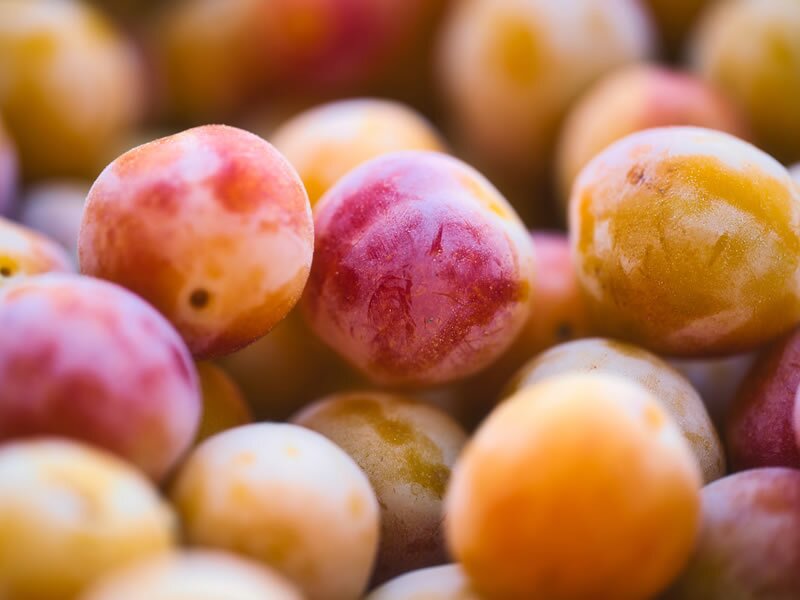
Plums are one of the most rewarding fruit trees to grow in the garden, producing attractive spring blossom followed by generous crops of juicy fruit from summer into early autumn. There is also a surprisingly wide range to choose from, from familiar dessert plums such as ‘Victoria’ to rich, sweet gages, tart and wonderfully flavoured damsons, and the small golden fruits of Mirabelles.
For gardeners in Ireland, however, choosing a plum is not simply a matter of choosing the fruit you like best. Where you plant the tree, how sheltered it is, and when the variety flowers can all have a significant effect on the crop you eventually get.
Plum blossom appears relatively early in spring, when weather conditions can still be cold, wet and windy. A tree in an exposed position may flower beautifully but then lose much of that potential crop if strong winds damage the blossom or discourage the bees and other insects needed to pollinate it. Late frosts can also damage open flowers before they have had a chance to set fruit.
This is particularly worth considering in the west of Ireland, where spring weather can be cool, unsettled and windy. A warm, sheltered position and a suitable variety can make a considerable difference.
Plum, Gage, Damson or Mirabelle – What's the Difference?
Although gardeners often think of these as separate fruits, they are all very closely related and there is considerable overlap between them. In everyday gardening terms, the easiest way to think of them is:
- Plums – generally larger fruits, with varieties ranging from sweet dessert plums to excellent cooking varieties.
- Gages – a type of plum valued particularly for their exceptionally sweet, rich and often honey-like flavour. They tend to appreciate warmer, more sheltered conditions.
- Damsons – generally smaller, darker and more tart, with a distinctive rich flavour that makes them particularly good for jams, preserves, chutneys, pies and other cooking.
- Mirabelles – small, round, usually golden-yellow fruits with a sweet, aromatic flavour. They are closely related to damsons and are often classified with them botanically, although gardeners generally treat Mirabelles as a distinct group. ‘Mirabelle de Nancy’, for example, is listed by the RHS as Prunus insititia.
There is therefore no need to think that you must have a “plum” to grow a plum-like fruit. A gage, damson or Mirabelle can all be excellent choices depending on your garden, the conditions available and what you want to do with the harvest.
It is also worth noting that plums, gages, damsons and mirabelles will all cross pollinate with each other as long as there is an overlap in their flowering times
Choosing a Plum Tree for an Irish Garden
When choosing a plum, gage, damson or Mirabelle, it is worth considering four things together: position, flowering time, pollination and what you want to do with the fruit.
Give it a sheltered position
This is one of the most important considerations with plums.
Choose a position with as much sun as possible, but more importantly, try to protect the tree from strong prevailing winds. A sheltered garden, a position close to a wall or fence, or a warm south- or west-facing aspect can all be beneficial.
Strong winds during flowering can damage delicate blossom and make it much harder for pollinating insects to work the flowers. This is particularly important because plums rely on insects rather than wind for pollination. Even self-fertile varieties can crop better when conditions allow plenty of insect activity during flowering.
A sheltered position also gives the tree a better chance of making use of whatever sunshine our climate provides during the growing season.
You may also consider fan-training or growing as single cordons against a south facing wall that will provide suitable shelter.
Consider when the tree flowers
Late spring frosts are another important consideration. If a plum is in full flower when temperatures suddenly drop below freezing, the blossom can be damaged and the potential crop reduced or lost.
One useful way of reducing this risk is to choose a late-flowering variety. This does not make a tree frost-proof, but it can mean that its flowers open after some of the worst of the late-frost risk has passed.
This is one reason varieties such as ‘Blue Tit’ and ‘Marjorie’s Seedling’ are particularly interesting for cooler gardens. ‘Prune Damson’, also known as ‘Shropshire Damson’, is another late-flowering option.
However, this should not be taken to mean that earlier-flowering varieties cannot be grown successfully in Ireland. ‘Victoria’, for example, remains one of the most reliable and productive garden plums and can crop exceptionally well when given a good position. The important point is to match the variety to the conditions rather than assuming that one variety will be ideal for every garden.
Pollination
The good news is that many plums, gages and damsons are self-fertile, meaning that you can grow just one tree and still get a crop. This makes them particularly useful for smaller gardens.
However, self-fertile does not mean that a second tree is unnecessary if you have the space. Cross-pollination between compatible varieties can often improve fruit set and crop size, particularly when flowering conditions are less than ideal.
Pollination is carried out by insects, especially bees and other pollinating insects, so cool, wet or windy weather during flowering can be just as significant as the presence or absence of a second tree.
If you have enough room for two or three trees, choosing varieties that flower and ripen at different times can be an excellent way of spreading your risk and extending the harvest. This can be particularly worthwhile in our increasingly unpredictable weather.
There is also a practical consideration here: one mature plum tree can produce a surprisingly large amount of fruit. For many households, a single good cropper will provide more than enough plums for eating, cooking and preserving. Rather than planting several identical trees, it may make more sense to plant two or three different varieties, giving you a longer harvest period and some insurance against a poor flowering period affecting one particular variety.
Always check the pollination requirements of the individual cultivar when buying, as some are fully self-fertile, some are only partly self-fertile and some require a compatible partner.
Choosing the Right Variety
Rather than recommending one “best” plum, we think it is more useful to consider what different varieties have to offer. The following are examples of cultivars worth considering for Irish gardens, particularly where conditions may be cooler or more exposed than those found in the warmer parts of Britain.
‘Blue Tit’ – A particularly useful choice for cooler gardens
Type: Plum
Pollination: Self-fertile
Fruit: Blue-black, dual-purpose
Season: Mid-August
Particular strengths: Late flowering, compact habit, reliable cropping
‘Blue Tit’ is one of the varieties we would particularly consider for a cooler Irish garden (this is one variety I have in the garden and it was the most productive this year with a high yield of deliciously sweet plums, most of which were converted to jam that is sitting in our kitchen cupboards at the time of writing!) . It is self-fertile, relatively compact and produces blue-black fruit suitable for both eating and cooking.
Most importantly for gardeners concerned about spring frost, it is a late-flowering variety. The RHS specifically recommends it for colder locations because its later flowering can reduce the risk of frost damage to the blossom.
It is therefore a good example of why variety selection can be more important than simply choosing the most familiar plum.
‘Marjorie’s Seedling’ – Late, heavy crops
Type: Plum
Pollination: Self-fertile
Fruit: Large, dark blue-purple; particularly good for cooking and preserving
Season: Late September into October
Particular strengths: Late flowering, heavy cropping, reliable
‘Marjorie’s Seedling’ is another particularly interesting choice for cooler areas. It is a vigorous, upright tree producing heavy crops of large, dark blue fruits late in the season.
Its late flowering is a particularly useful characteristic, helping to reduce the likelihood of blossom being caught by late spring frosts. It is also self-fertile, so a second tree is not essential.
The fruit is particularly good for jam, preserves and cooking, although fully ripe plums can also be eaten fresh. If you have limited space but want a dependable late-season crop, this is a variety well worth considering.
‘Mirabelle de Nancy’ – Small golden fruit with excellent flavour
Type: Mirabelle / damson type
Pollination: Partly to fully self-fertile, depending on source
Fruit: Small, round, golden-yellow with attractive red speckling
Season: Around mid to late August
Particular strengths: Excellent flavour, culinary versatility, cold hardy
If you come across a Mirabelle when choosing a fruit tree, don't dismiss it simply because it looks different from a conventional plum.
‘Mirabelle de Nancy’ is one of the best-known Mirabelles, producing small golden fruits with a rich, sweet flavour. They are delicious eaten fresh when fully ripe, but are also particularly good for jams, tarts, desserts and other preserves.
The tree itself is considered cold hardy, although its blossom can still be damaged by spring cold, so it should be given the same sheltered treatment as other plums.
Mirabelles are sometimes confusingly described as damsons, and the botanical classification of these closely related fruits is not always consistent between sources. For gardeners, however, the important point is that Mirabelles can be grown and managed in much the same way as plums and damsons, while offering a distinctly different type of fruit.
‘Czar’ – A good option where conditions are less than ideal
Type: Culinary plum
Pollination: Self-fertile
Fruit: Dark blue-purple; excellent for cooking
Season: Early August
Particular strengths: Compact, reliable, relatively frost tolerant, tolerates some shade
‘Czar’ is an especially useful plum for gardens where a perfect full-sun position simply isn't available.
It is a compact, self-fertile variety with good crops of dark blue fruit. The fruit is somewhat sharp when eaten fresh but becomes excellent when cooked, making it ideal for crumbles, pies, jams, bottling and other desserts.
One of its most useful characteristics is its ability to tolerate some partial shade. It is also considered relatively frost resistant compared with many plum cultivars, making it an interesting option for a more difficult garden.
It should still be given as much light and shelter as possible – “tolerates partial shade” should not be confused with “doesn't need sun” – but if your garden doesn't offer the perfect plum-growing position, ‘Czar’ is worth considering.
‘Victoria’ – The classic heavy cropper
Type: Dessert and culinary plum
Pollination: Self-fertile
Fruit: Red-purple with yellow flesh
Season: Late August to early September
Particular strengths: Very heavy crops, versatility, familiar excellent flavour
It would be impossible to discuss garden plums without mentioning ‘Victoria’. It is one of the most popular plum varieties for very good reason: it is self-fertile, crops heavily and produces fruit that is excellent both eaten fresh and used in the kitchen.
It is not, however, necessarily the best choice for every site.
‘Victoria’ flowers earlier than some of the late-flowering varieties mentioned above, so a sheltered position is particularly important in areas where late frosts are a regular concern. It is also relatively susceptible to some diseases, including silver leaf.
None of this should put you off growing it. A healthy ‘Victoria’ in a good position can crop extraordinarily well and is still one of the most dependable choices for the ordinary garden. It is simply worth recognising that its success is likely to depend more heavily on giving it the right conditions.
‘Prune Damson’ / ‘Shropshire Damson’ – Late flowering and excellent for preserving
Type: Damson
Pollination: Self-fertile
Fruit: Blue-black, rich and tart
Season: Late August into September
Particular strengths: Late flowering, reliable cropping, excellent for cooking
Damsons are among the hardier members of this group and are particularly worthwhile if your main interest is cooking, preserving and making jams, jellies or chutneys.
‘Prune Damson’, also known as ‘Shropshire Damson’, is particularly interesting for cooler gardens because it is a late-flowering, self-fertile variety. The later flowering can help it avoid some spring frost damage, while the fruit has the classic rich, sharp damson flavour.
It is a vigorous but relatively neat-growing tree and produces regular crops. If you want a dependable damson rather than a dessert plum, this is one of the varieties worth looking for.
‘Farleigh Damson’ – Compact and dependable
Type: Damson
Pollination: Self-fertile
Fruit: Small, very dark blue
Season: Mid-September
Particular strengths: Compact habit, reliable cropping, hardiness
‘Farleigh Damson’ is a useful choice where space is more limited. It has a naturally compact habit, is self-fertile and is noted for reliable crops of dark blue fruit.
Like other damsons, the fruit is particularly useful for cooking and preserving rather than simply eating straight from the tree. It is also considered less susceptible to frost damage than many other cultivars.
‘Warwickshire Drooper’ – A useful choice for colder or slightly shadier gardens
Type: Dual-purpose plum
Pollination: Self-fertile
Fruit: Yellow with red speckling; sweet yellow flesh
Season: Early to mid-September
Particular strengths: Reliable cropping, suitable for colder areas, tolerates light shade
‘Warwickshire Drooper’ is an interesting alternative to the more familiar blue and red plums. It is a reliable, self-fertile cropper with yellow fruit that can be used both fresh and in cooking.
The RHS specifically notes its suitability for colder areas and its ability to tolerate light shade. It is a vigorous tree with a naturally weeping habit, so it needs enough space to develop properly.
‘Oullins Gage’ – A reliable gage for a good sheltered site
Type: Gage
Pollination: Self-fertile
Fruit: Yellow-green, sweet
Season: Mid-August
Particular strengths: Reliable cropping, excellent dessert fruit
If flavour is the priority and you have a warm, sheltered position, a gage is well worth considering.
‘Oullins Gage’ is one of the more reliable gages and is self-fertile, producing sweet yellow-green fruit in mid-August. Gages generally appreciate better warmth and shelter than the hardier damsons, so they are best reserved for the more favourable positions in cooler gardens.
Is it Worth Growing More Than One?
Well, this may depend on how much you love plums but you probably don't need to.
Because many plums, gages and damsons are self-fertile, one healthy tree can provide a surprisingly generous crop. For the average family garden, a single well-established tree may produce more fruit than you can comfortably eat fresh.
However, if you have room for two or three trees, as previously mentioned there is an advantage to choosing varieties that flower and ripen at different times.
For example, an earlier variety such as ‘Czar’, a mid-season variety such as ‘Victoria’, and a later variety such as ‘Marjorie’s Seedling’ or ‘Prune Damson’ could potentially give you a much longer harvesting season.
More importantly, in a climate where spring weather can vary dramatically from year to year, spreading your choices across different flowering periods gives you some insurance. A cold snap or particularly wet and windy spell that affects one flowering period may not have the same impact on a variety flowering a little later.
There is no guarantee, of course – weather remains weather – but when you have the space, diversity can be a very sensible strategy.
Planting Your Plum Tree
Plums, gages and damsons prefer fertile, well-drained soil that does not remain waterlogged. Choose the sunniest and most sheltered position available, particularly if you are growing a gage or an earlier-flowering plum.
Autumn and winter are excellent times to plant bare-root fruit trees while they are dormant. Container-grown trees can be planted at other times, provided they are watered well during establishment.
When planting:
- Prepare the soil thoroughly and remove perennial weeds from around the planting area.
- Dig a hole wide enough to accommodate the roots without bending or cramping them.
- Plant at the correct depth, keeping the graft union clearly above soil level.
- Use a suitable stake where necessary, particularly for young trees and exposed gardens.
- Water thoroughly after planting and keep the tree watered during dry spells while it establishes.
- Apply a mulch around the root area, keeping it clear of direct contact with the trunk.
Remember that the rootstock affects the eventual size and vigour of the tree, so always check the rootstock when buying. Semi-dwarfing rootstocks such as Pixy are useful for smaller trees and trained forms, while St Julian A produces a larger, more vigorous tree and can be a better choice where conditions are less than ideal.
Caring for Plum Trees
Once established, plums are relatively straightforward fruit trees, but good basic care will help them crop consistently.
Watering
Newly planted trees need regular watering while their root systems establish. Even in Ireland, young trees can suffer during dry spells, particularly during their first few growing seasons.
Established trees are much more resilient, but watering during prolonged dry weather can be particularly beneficial while fruit is swelling.
Feeding and mulching
A healthy soil with plenty of organic matter will provide much of what the tree needs. An annual mulch of well-rotted organic matter around the root zone can help maintain soil moisture and fertility.
Avoid piling mulch against the trunk, as this can encourage problems with the bark.
Thinning the fruit
Plums can sometimes set far more fruit than the tree can comfortably carry. This is particularly noticeable with heavy-cropping varieties such as ‘Victoria’.
If the young fruit is packed tightly along the branches, thinning some of it in early summer can help the remaining fruit develop better and can also reduce the strain placed on branches. It can also help reduce the tendency of some trees to alternate between a very heavy crop one year and a much lighter crop the following year.
Pruning Plums
Plums should generally be pruned differently from apples and pears. In particular, avoid heavy winter pruning, as pruning stone fruits such as plums when they are dormant can increase the risk of silver leaf disease.
Routine pruning is generally carried out during the growing season, particularly in late spring or summer, when wounds can heal quickly and the conditions are less favourable for silver leaf spores.
The exact approach depends on whether your tree is being grown as a bush, pyramid, fan or another trained form, so it is worth learning the appropriate pruning method for the form you have chosen rather than treating all fruit trees in the same way.
Harvesting Plums, Gages, Damsons and Mirabelles
Fruit should generally be allowed to ripen on the tree as much as possible for the best flavour. The exact point at which to harvest varies considerably between cultivars.
As fruit approaches maturity, it should begin to develop its characteristic colour and will usually soften slightly when gently squeezed. Ripe fruit should come away relatively easily when lifted and twisted gently rather than requiring force.
Don't worry if the whole tree doesn't ripen at once. A good crop can often be harvested over several pickings, allowing the fruit to be used at slightly different stages of ripeness.
What can I do with a glut?
This is one area where choosing the right variety really pays off. Plums, damsons and Mirabelles can all be used in an enormous range of ways.
- Eat ripe dessert plums straight from the tree.
- Make jams, jellies and preserves.
- Cook into crumbles, pies and tarts.
- Stew or poach for desserts.
- Make plum sauces and chutneys.
- Use damsons for particularly rich preserves and jellies.
- Freeze prepared fruit for use later in the year.
- Use Mirabelles in tarts, jams and desserts where their sweet, aromatic flavour really comes into its own.
As with many home-grown fruits, having more than you can eat fresh is not necessarily a problem – it is an opportunity to make use of the harvest throughout the year.
Common Problems
Plums, gages and damsons can be affected by many of the same pests and diseases as other stone fruits. Good growing conditions and sensible pruning are often the best first line of defence.
Silver leaf
Silver leaf is one of the more serious diseases affecting plums. It causes a characteristic silvery appearance to the leaves and can eventually lead to branch dieback and tree decline.
One of the most important preventative measures is to avoid unnecessary pruning and, when pruning is required, carry it out at the correct time of year. Summer pruning is recommended for established plum trees because the risk of infection is lower and wounds heal more rapidly.
Some cultivars are also more susceptible than others. ‘Victoria’, for example, is particularly susceptible to silver leaf, which is another reason to give it a healthy, well-sited position and avoid unnecessary pruning wounds.
Plum moth
Plum moth caterpillars can burrow into developing fruit, leaving damaged or prematurely ripening plums. If you regularly find small, damaged fruits that fall early, plum moth may be responsible.
Wasps and birds
Ripe plums are understandably attractive to birds and wasps. Picking fruit promptly as it ripens is often the simplest solution, particularly if you have a heavy crop.
Brown rot
Brown rot can affect ripening fruit, particularly during damp weather. Remove affected fruit promptly and avoid leaving rotten fruit hanging on the tree or lying beneath it.
Final Thoughts
Plums, gages, damsons and Mirabelles offer an enormous amount of choice, but for Irish gardeners the most important decision may not be which fruit tastes best – it may be which tree is best suited to the position you can give it.
A warm, sheltered position will always be an advantage, particularly while the tree is in flower. If your garden is exposed or particularly prone to late frosts, choosing a later-flowering variety such as ‘Blue Tit’, ‘Marjorie’s Seedling’ or ‘Prune Damson’ may improve your chances of a reliable crop.
At the same time, don't be too quick to dismiss old favourites. A well-positioned ‘Victoria’ can produce an enormous crop, while ‘Czar’ can be useful where light levels are less than perfect. If you have room for several trees, choosing varieties that flower and ripen at different times can spread both your harvest and your risk.
And perhaps most importantly, remember that one good plum tree can produce a lot of fruit. For many gardens, a carefully chosen tree in the right position will be far more rewarding than several trees squeezed into less suitable conditions.
For more information on choosing a rootstock, planting, staking, watering, pollination and the general care of fruit trees, see our guide to Growing Fruit Trees.