

Quince
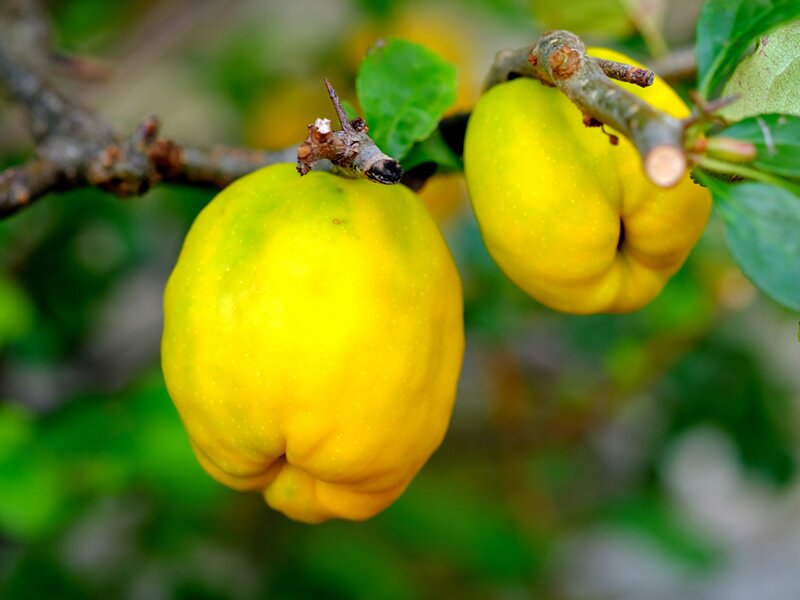
Growing Quince in Ireland
Quince is one of those fruit trees that deserves to be grown more often. Its beautifully fragrant, golden fruit is rarely seen in supermarkets, yet a mature tree can provide a generous harvest for cooking, preserving and making some wonderfully distinctive desserts and preserves.
Quince trees also make attractive garden trees in their own right, with pretty spring blossom followed by large, aromatic fruit in autumn. They are generally hardy and relatively trouble-free, but they do appreciate a warm, sunny and sheltered position, particularly in the cooler and wetter parts of Ireland.
There is also a little confusion surrounding the name "quince", so it is important to know what you are buying. The fruiting quince grown for a substantial crop of cooking fruit is Cydonia oblonga, also known as common or true quince. Japanese quince, Chaenomeles, is a quite different, usually thorny flowering shrub grown primarily for its spectacular spring blossom. It does produce small, aromatic fruits which can be cooked, but it is not the large-fruited quince normally meant when we talk about growing quince as a fruit tree.
Chinese quince, meanwhile, is another distinct plant. It can form a much larger tree and produces aromatic edible fruit, but it is much less commonly grown than Cydonia oblonga. For a traditional quince tree grown specifically for its fruit, look for Cydonia oblonga.
Choosing the Right Position
Quince appreciates as much sunshine as possible. Choose a warm, sheltered position where the tree will receive good sunlight throughout the growing season. A south- or west-facing wall can be particularly valuable in Ireland, especially in colder or more exposed gardens, as it provides additional warmth and protection from cold winds.
The spring flowers can be damaged by frost, so avoid exposed frost pockets if possible. Good shelter is particularly useful in western and northern areas where cool, wet weather can continue well into spring.
Quince tolerates a range of soils but performs best in deep, fertile soil that holds moisture while still draining reasonably well. It does not appreciate being permanently waterlogged.
Do I Need Two Quince Trees?
No. One of the advantages of growing quince is that it is self-fertile, so a single tree is capable of producing a crop without needing another quince nearby.
Good pollination is still important, of course, and a sunny, sheltered position where pollinating insects can easily reach the flowers will help encourage fruit set. But unlike some pears and sweet cherries, there is no need to find a compatible second variety simply to get a crop.
Quince Varieties to Consider
There are a number of different quince cultivars available, with differences in fruit shape, cropping time, tree size and tolerance of disease. Availability can vary from year to year, so it is worth looking at the characteristics of a variety rather than simply choosing according to what happens to be available.
- ‘Meech’s Prolific’ – A popular, heavy-cropping variety producing attractive pear-shaped, golden-yellow fruit with a strong, sweet fragrance. A particularly useful choice if a good crop is the main priority.
- ‘Vranja’ – A productive variety producing large, pear-shaped, aromatic golden fruit from October. The fruit is excellent for jams, jellies, desserts and adding to apple dishes for extra flavour and acidity.
- ‘Serbian Gold’ – Produces rounded, aromatic fruit and forms a relatively compact tree. It is particularly interesting for wetter gardens because it has shown good tolerance to quince leaf blight.
- ‘Aromatnaya’ – Another variety worth considering in wetter areas because it has shown good tolerance to quince leaf blight. It produces aromatic fruit and is useful for cooking and preserving.
In a wetter part of Ireland, disease tolerance can be a particularly useful characteristic to look for. Quince leaf blight is a fungal disease that can significantly affect foliage, vigour and fruiting, particularly during wet summers.
Planting Your Quince
Quince trees can be planted during the dormant season, making bare-root trees an excellent option from late autumn through to early spring. Container-grown trees offer more flexibility, although planting while the tree is dormant is still preferable where possible.
Prepare the planting area well and make sure the soil drains reasonably well. Plant at the same depth as the tree was previously growing, taking particular care not to bury the graft union if the tree is grafted.
Water thoroughly after planting and continue to water during prolonged dry periods while the tree establishes. A generous mulch of well-rotted organic matter will help retain moisture and suppress competition from grass and weeds, but keep it away from the trunk itself.
How Large Will a Quince Tree Become?
This depends considerably on the rootstock. Quince trees can eventually become broad, substantial trees, but grafted trees on dwarfing or semi-dwarfing rootstocks can be kept much more manageable.
If space is limited, look for a tree grafted onto a suitable dwarfing rootstock. Some particularly compact forms can even be grown successfully in large containers.
When planning your planting position, remember that a young quince can look deceptively small. Give it enough room to develop its eventual width without crowding nearby plants, paths or buildings.
Can I Grow Quince Against a Wall?
Yes. A quince can be trained against a wall where space is limited, and this can be particularly useful in Ireland. A south- or west-facing wall provides extra warmth and shelter and can help the fruit ripen in a cooler climate.
Wall training also makes it easier to keep the tree to a manageable size and can make pruning, harvesting and general care more straightforward.
Pruning Quince
Quinces generally require less pruning than apples and pears. The aim is mainly to maintain a healthy, open framework and prevent the tree from becoming overcrowded.
Young trees should be allowed to establish a good framework rather than being heavily pruned. Once established, remove dead, damaged or crossing branches and thin congested growth where necessary.
If an older tree has become badly overgrown, it is better to renovate it gradually rather than removing a huge amount of wood in one go. Removing some of the oldest branches can open the centre of the tree and encourage a more balanced structure.
When Will My Quince Be Ready to Harvest?
Quinces are usually harvested in October or November, depending on variety and growing conditions. The fruit should be left on the tree as long as possible to develop its characteristic fragrance and colour, but it is important to harvest before a hard frost.
Look for fruit changing from green or pale yellow to a deeper golden colour, accompanied by that unmistakable quince fragrance.
Don't worry if the fruit feels hard when picked. Unlike many of the fruits we normally eat straight from the tree, quince is not generally eaten fresh and needs further preparation.
Storing and Mellowing Quince
One of the pleasures of growing quince is that the harvest does not all have to be used immediately. Sound, undamaged fruits can be stored for several weeks or even a few months in a cool, dark place.
Quince benefits from being allowed to mellow for around six to eight weeks after harvesting. Store the fruit carefully in a single layer, making sure that individual fruits do not touch each other.
Quinces have an extremely strong fragrance, so it is worth storing them separately from other fruit if possible, as their aroma can taint nearby produce.
What Can I Do With Quince?
This is where quince really comes into its own. The raw fruit is extremely firm and astringent, but cooking transforms it into something wonderfully fragrant, tender and richly flavoured.
Quince is excellent for:
- Quince jelly – one of the classic ways to use the fruit, producing a beautiful, fragrant jelly.
- Membrillo – a traditional Spanish quince paste, delicious served with cheese.
- Quince crumble and pies – particularly good combined with apple or pear.
- Poached quince – slowly cooked in sugar syrup, wine or spices until tender.
- Quince compote – excellent with porridge, yoghurt or desserts.
- Chutney and preserves – quince's natural acidity and fragrance make it very useful in savoury preserves.
- Quince and apple dishes – adding quince to an apple pie or crumble gives the familiar fruit a completely different character.
Its high natural pectin content also makes quince particularly useful when making jams and jellies, where it can help other fruits set.
Common Quince Problems
- Quince leaf blight – A fungal disease that can cause spotting and premature leaf loss and can reduce vigour and fruiting, particularly during wet summers. Choosing a more tolerant variety can be worthwhile in wetter areas.
- Brown rot – A fungal disease that can cause fruit to develop brown, rapidly spreading rot. Remove affected fruit promptly and avoid leaving rotting fruit beneath the tree.
- Frost damage – Quince flowers in spring and can be affected by late frosts. A sheltered, warm position is therefore particularly valuable.
- Fireblight – Quince, like other members of the rose family, can be susceptible to fireblight. Watch for sudden wilting and blackening of shoots and flowers and remove affected material appropriately.
Final Thoughts
Quince is a particularly rewarding fruit tree for anyone who enjoys cooking and preserving. It is self-fertile, attractive in the garden and capable of producing a generous crop from a single tree.
For Irish gardens, concentrate on giving it as much sun and shelter as possible. A warm south- or west-facing wall can be particularly valuable in cooler or exposed areas, while choosing a variety with good tolerance of quince leaf blight is worth considering in wetter parts of the country.
And if you are looking for quince when shopping for a fruit tree, remember that true fruiting quince is Cydonia oblonga. Japanese quince, Chaenomeles, is a different plant, principally grown for its spectacular spring flowers, while Chinese quince is another distinct species that can produce edible fruit but is much less commonly grown as a fruit crop.
For more information on choosing, planting and caring for fruit trees, see our Growing Fruit Trees guide.