
From winter-flowering shrubs to showy spring displays and autumn berry highlights, Viburnum is one of the most versatile plant groups you can add to your garden. With varieties to suit almost every season, soil, and style, these hardy shrubs bring structure, colour, fragrance, and wildlife interest all year round.
Whether you’re looking for evergreen foliage to brighten winter borders, spectacular blossom for spring, or clusters of berries for the birds, there’s a Viburnum to meet your needs. Here are some of the very best varieties and what makes them special.
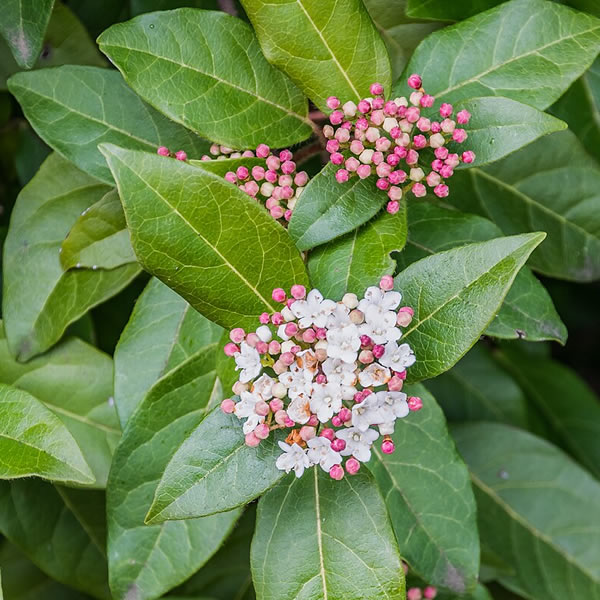
Viburnum tinus
A true garden staple, Viburnum tinus is evergreen, reliable, and especially valuable in autumn and winter when many other plants fade.
- Peak season: Autumn through winter, with white to pink-tinged flower clusters.
- Garden use: Excellent for mixed borders, hedging, or as background structure in all but the coldest gardens.
- Notable varieties:
- ‘Lisa Rose’ – Compact and bushy with a profusion of pink buds opening to white flowers; perfect for smaller gardens.
- ‘Spirit’ – Dense growth and glossy foliage, with strong winter flowering; great for hedging.
- ‘Eve Price’ – Neat habit, with deep pink buds and slightly earlier blooms than other forms.
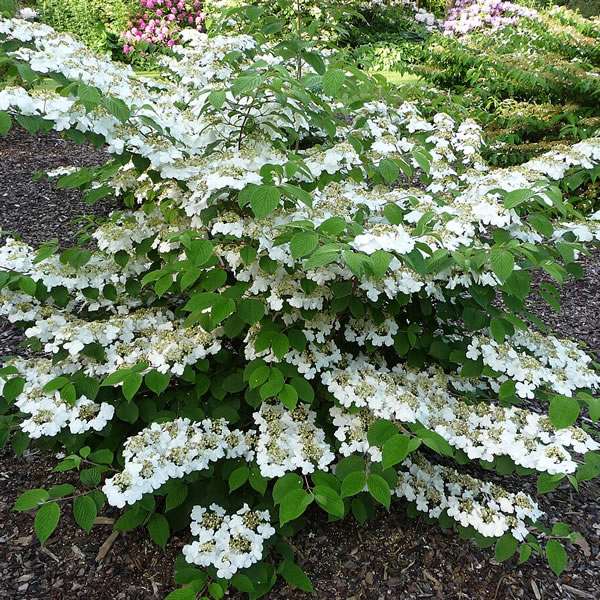
Viburnum plicatum
Famed for its tiered, horizontal branches smothered in lacecap-like flowers, Viburnum plicatum makes a striking statement in spring and summer.
- Peak season: Late spring to early summer with masses of flat, white flower heads.
- Garden use: Ideal as a specimen shrub where its graceful, layered form can be appreciated.
- Notable varieties:
- ‘Newport’ – Compact and rounded with abundant flowers, suited to smaller spaces.
- ‘Mariesii’ – A classic, with wide horizontal branches and breathtaking flower displays, best in larger gardens.
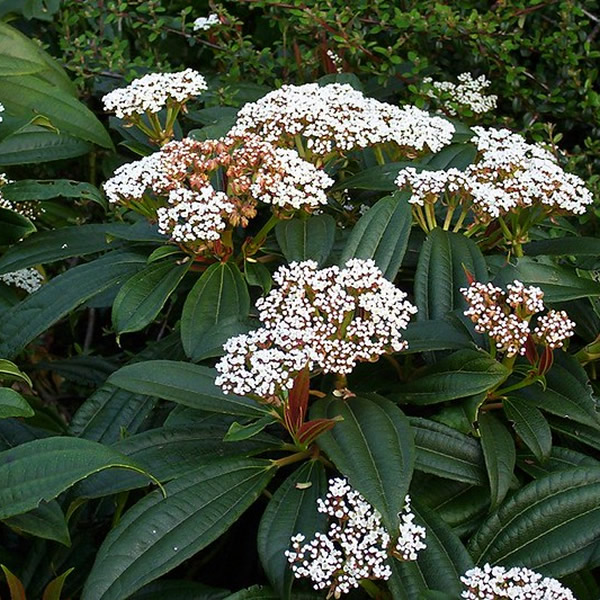
Viburnum davidii
An evergreen with bold, textured leaves, Viburnum davidii offers both architectural foliage and colourful fruit.
- Peak season: Spring flowers followed by striking metallic-blue berries in autumn and winter.
- Garden use: Low, spreading habit makes it useful for groundcover or slopes.
- Features: Male and female plants are needed for good berry display – a bonus for wildlife.
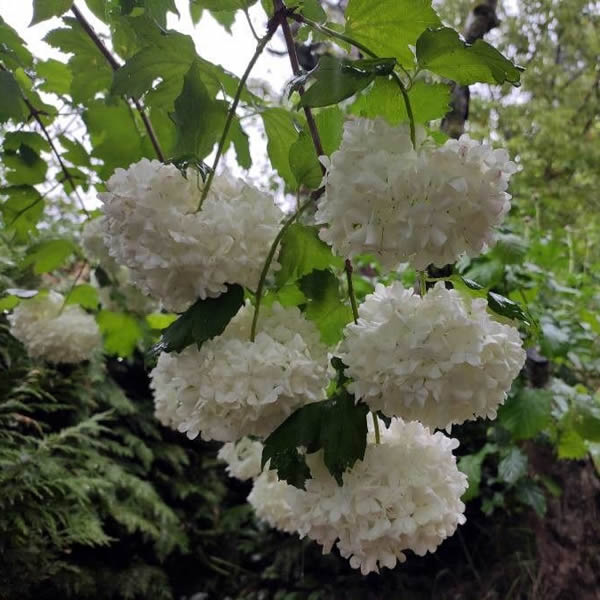
Viburnum opulus
Also known as the Guelder Rose, this deciduous viburnum provides three seasons of interest.
- Peak season: Spring for lacecap flowers, summer for red berries, and autumn for fiery foliage.
- Garden use: Suits wildlife gardens, cottage borders, or naturalistic plantings.
- Features: Berries are loved by birds; foliage turns scarlet in autumn.
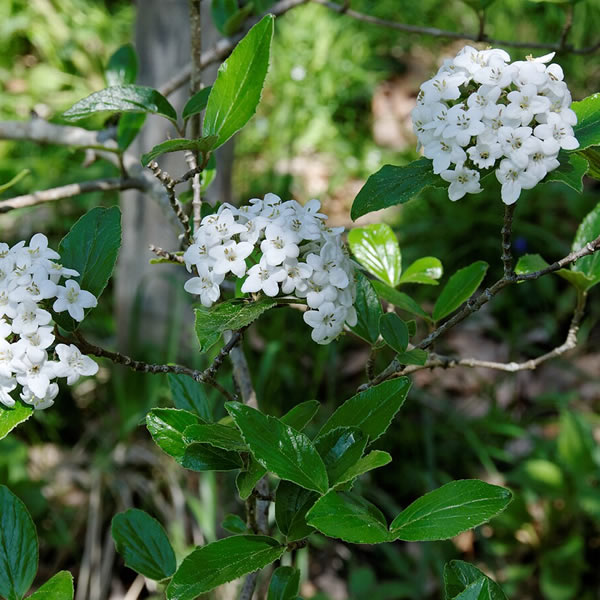
Viburnum × burkwoodii
A semi-evergreen hybrid treasured for its fragrance and spring flower display.
- Peak season: Spring – clusters of pink buds opening to deliciously scented white flowers.
- Garden use: Perfect near paths and patios where the fragrance can be enjoyed.
- Notable varieties:
- ‘Anne Russell’ – Compact with particularly strong scent, well-suited to smaller gardens.
- ‘Mohawk’ – Darker red buds and excellent fragrance, with good autumn foliage colour.
Top Tips for Choosing Viburnum
- Match the season: Choose V. tinus or V. davidii for evergreen structure and winter value, or V. plicatum for spring impact.
- Think about scale: Go for compact forms like ‘Lisa Rose’ or ‘Anne Russell’ in smaller gardens; save larger varieties like ‘Mariesii’ for open spaces.
- Add fragrance: Plant V. × burkwoodii near seating areas and paths to enjoy its scent in spring.
- Encourage wildlife: V. opulus offers both nectar-rich flowers and berries for birds, making it ideal for naturalistic or wildlife-friendly borders.
- Combine for year-round interest: Mix evergreen and deciduous viburnums so something is always at its best in your garden.
Final Thoughts
From evergreen structure in the depths of winter to show-stopping flowers in spring, Viburnum offers unmatched versatility for gardens of every size and style. Whether you choose a compact tinus for year-round cover, a plicatum for architectural drama, or a fragrant burkwoodii, you’ll enjoy beauty and interest throughout the seasons.
Inspired to add Viburnum to your garden?
Browse our full range and discover the perfect variety for your space.