
Hellebores are one of the quiet heroes of the winter and early-spring garden — tough, long-lived perennials that bring colour and structure when little else is flowering. Loved for their nodding, cup-shaped flowers and attractive evergreen or semi-evergreen foliage, they’re perfect for shady borders, woodland gardens and sheltered containers. This guide — written with gardeners in the North-West of Ireland in mind — explains why hellebores are so special and how you can grow them successfully at home or in pots for year-round interest.
Common names and the meaning of their botanical name
Hellebores are commonly known as Christmas Rose or Lenten Rose (though they are not true roses). The name Christmas Rose is used for species that can flower around December in mild winters, while Lenten Rose refers to those that bloom around Lent. The genus name Helleborus may derive from the Greek words helê (meaning ‘milk’) and bora (meaning ‘food’), or from hellē (meaning ‘to injure’) referring to the plant’s historical use and toxic properties — a reminder to handle with respect.
Flowering season
Many hellebores begin to flower in late winter and reach their peak from late January through March — precisely when gardens most appreciate early colour. Exact timing depends on variety and winter weather; in a mild NW Ireland winter you may see flowers from December right through to April.
Position, Planting and Soil
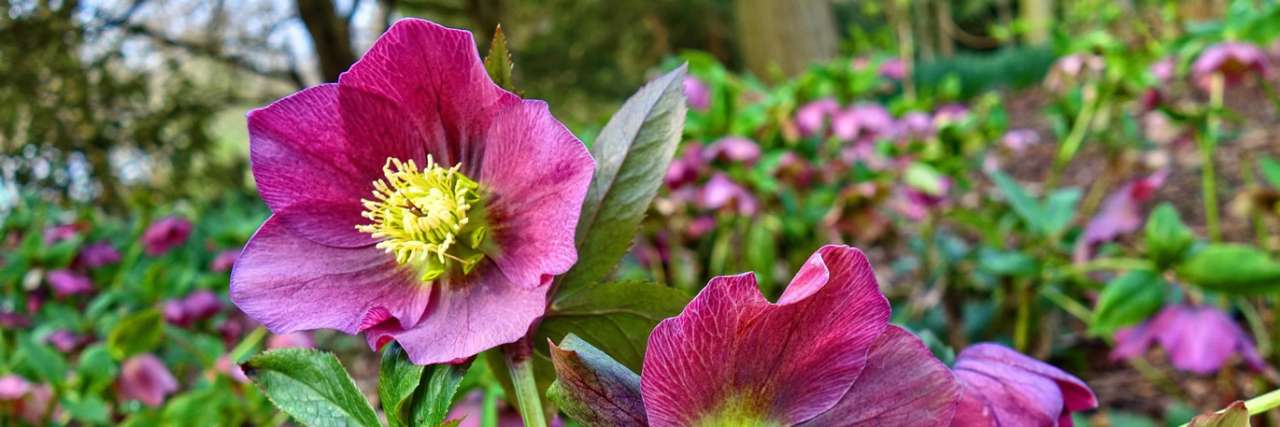 As woodland plants, hellebores thrive in dappled shade and can look amazing planted in huge swathes amongst trees and shrubs - Image by Mabel Amber from Pixabay.
Where to plant: Hellebores thrive in light to dappled shade — the edges of woodlands, beneath deciduous trees (once leaves fall you’ll give them some winter sun) or on the shaded side of a wall. They also do well in sheltered borders and under larger shrubs or established roses, making excellent underplanting because they enjoy the root protection and filtered light.
Soil: Aim for a humus-rich, well-drained soil that retains moisture but doesn’t sit waterlogged. They like a neutral to slightly alkaline pH but are adaptable if you enrich the soil with plenty of organic matter. In heavier clay soils, improve drainage by incorporating grit and well-rotted compost at planting.
Planting: Plant hellebores in spring or autumn. When planting, dig a hole wider than the rootball and set the crown at the same depth as it grew in the pot — planting too deep can slow flowering. Backfill with a mix of garden soil and compost, firm gently, and water well. Mulch annually with leaf mould or compost to keep roots cool and moist and to feed the plants slowly through the year.
Growing Hellebores in Containers
Hellebores are surprisingly happy in pots when given the right conditions. Use a deep, frost-proof container with good drainage. A free-draining, peat-free potting mix amended with some well-rotted compost and grit is ideal. Place containers in a sheltered, partly shaded spot. Water regularly during dry spells and don’t let the compost dry out completely — but avoid waterlogged pots. In colder areas, raise pots slightly off the ground and provide a winter mulch around the pot rim to protect roots from hard frost. Container-grown hellebores can look wonderful on patios, beside doors, or grouped in winter displays.
Care Throughout the Year
- Watering: Keep newly planted hellebores moist until established. Thereafter they need only occasional watering during prolonged dry spells.
- Feeding: Apply a slow-release, balanced fertiliser in early spring and add a mulch of compost each year to maintain soil fertility.
- Deadheading & tidying: Remove old, damaged leaves in late winter or early spring to reveal flowers and improve airflow around the crown. This also reduces disease risk and makes the display cleaner.
- Dividing: Mature clumps can be divided in early spring or late summer if they become congested — split into sections with healthy shoots and replant promptly.
- Pests & diseases: Hellebores are generally trouble-free. Watch for vine weevil or aphids occasionally and remove any leaves showing black spot or prolonged decay. Good air circulation and avoiding planting too deep will help prevent crown rot.
Our Favourite Varieties to Grow
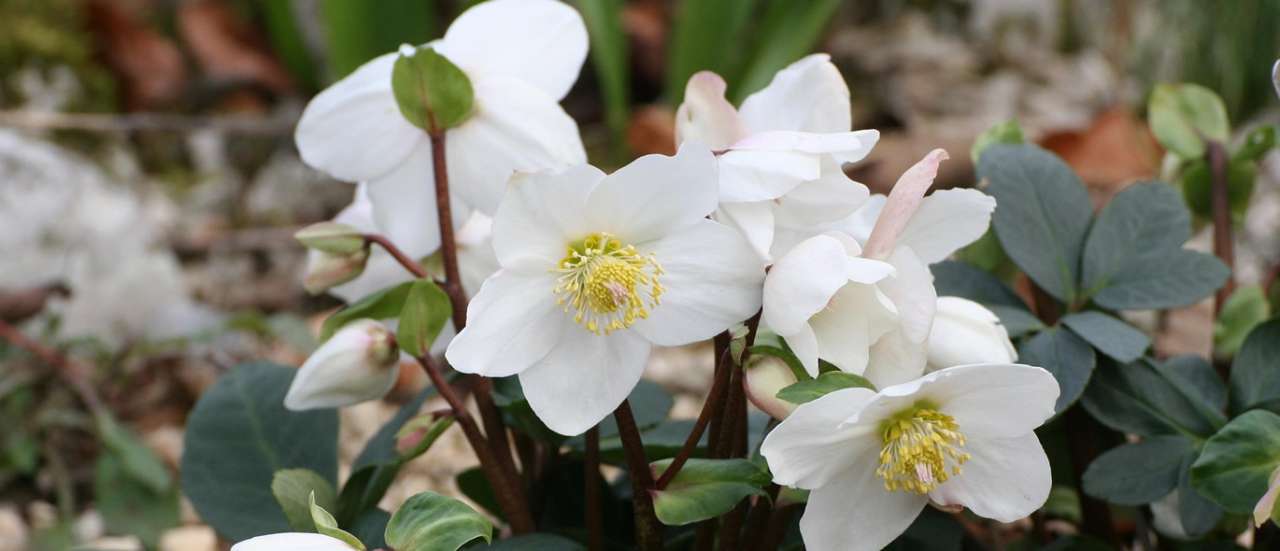 A variety like 'Christmas Carol' is a compact, neat variety that looks great in borders but is also perfect for growing in containers for a winter display - Image by Roland Steinmann from Pixabay
Below are some of our favourite hellebore varieties that perform well in NW Ireland — chosen for flower colour, reliability and garden presence.
Companion Planting — Five Great Combinations
Hellebores sit beautifully with a range of plants that complement their form, foliage and flowering season. Here are five tried-and-tested combinations (each includes at least two additional plants):
- Woodland Drifts: Hellebores + Snowdrops (Galanthus) + Cyclamen hederifolium. This trio gives delicate early flowers and attractive foliage — perfect for shaded, naturalistic edges.
- Textural Shade Bed: Hellebores + Ferns (Dryopteris or Polystichum) + Heuchera. The fine fronds of ferns and colourful Heuchera leaves make a beautiful backdrop and lengthen the seasons of interest.
- Long-season Colour: Hellebores + Pulmonaria (lungwort) + Brunnera. Pulmonaria and Brunnera both provide early spring flowers and striking foliage that contrasts well with hellebore blooms.
- Spring Cheer: Hellebores + Dwarf Daffodils (Narcissus) + Muscari (grape hyacinth). Bulbs lift the colour palette and add vertical accents to the low, cup-shaped hellebore flowers.
- Container Display: Hellebores + Skimmia japonica + Trailing Ivy (Hedera helix). This combination works beautifully in a winter container: Skimmia offers evergreen structure and seasonal berries (on the right cultivar), while ivy provides trailing form to soften the pot edges.
Note: Hellebores are also excellent for under-planting roses and larger shrubs. Their evergreen foliage keeps borders looking tidy in winter and the early flowers add soft contrasts beneath rose canopies before the roses themselves get going.
Final Thoughts
Hellebores are a superb addition to the garden for anyone wanting winter and early-spring interest with minimal fuss. They reward patience: once happily established they flower reliably year after year, offer excellent foliage and work well in borders, woodland settings and containers. For gardeners in the North-West of Ireland, choose sheltered, humus-rich spots with dappled shade and you’ll be rewarded with a long season of delicate, jewel-like blooms.
Looking for hellebores for your garden?
Visit our garden centres in Boyle and Roscommon or browse our range online for a hand-picked selection of hellebores and companion plants delivered to your door.