
Permaculture gardening is an approach that works with nature rather than against it. By carefully combining plants that support each other, it is possible to create garden spaces that are productive, beautiful and resilient while also encouraging biodiversity and improving soil health.
What is permaculture?
Permaculture is a design philosophy that aims to create sustainable systems modelled on natural ecosystems. In the garden, this often means selecting plants that perform multiple roles and support each other’s growth.
Permaculture in the Garden
Permaculture can be applied to an entire garden, but it can also be introduced on a smaller scale — perhaps around a single fruit tree, within a border, or in a dedicated planting area. One of the most effective ways to do this is through the creation of plant guilds.
A well-designed guild combines different types of plants that each play a role within the system. Together they help suppress weeds, attract beneficial insects, improve soil fertility and create a balanced growing environment.
These types of planting schemes can be both productive and visually attractive. Layers of foliage, flowers and fruiting plants create a naturalistic look that works particularly well in wildlife-friendly gardens.
While permaculture guilds share some similarities with traditional companion planting, they go a step further. Companion planting usually focuses on pairing specific crops together and to be honest, many companion planting claims are sketchy at best, whereas a guild is a more complete ecosystem, usually built around a central plant.
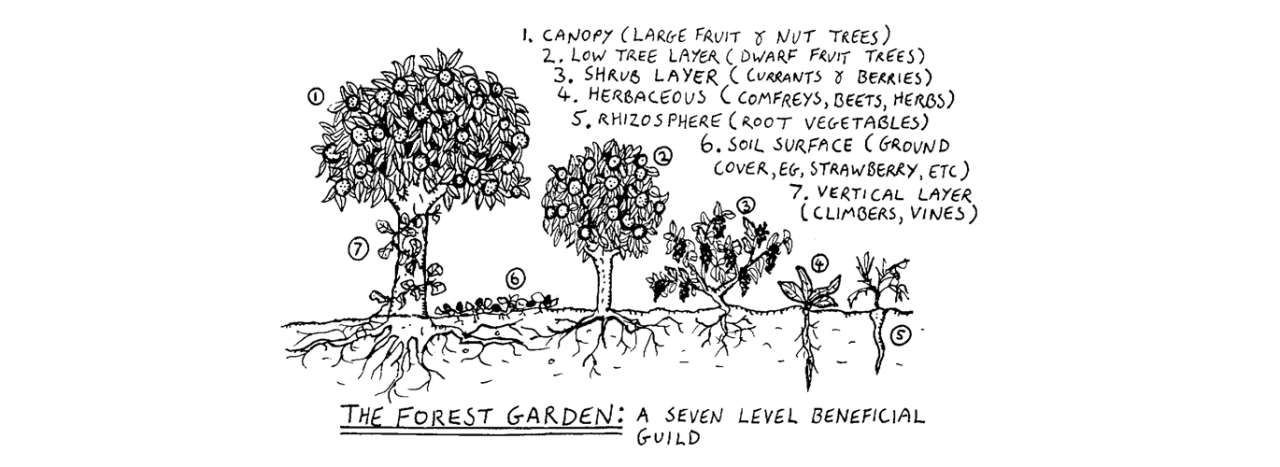
Above we have a diagram explaining the layers of a forest garden, starting with a larger tree as the canopy layer. For smaller gardens you may want to start at level 2 with a dwarf fruit tree or even level 3 with a shrub as the higher and central plant from which to build your guild around. It is always best to decide on your larger or 'keystone' plants first when planning a guild and working from there. Diagram by Graham Burnett (CC BY-SA 3.0)
So what is a Plant Guild?
A plant guild is a group of plants designed to support a central or “keystone” plant. Each plant within the guild performs a specific role, helping the overall system function more effectively.
In nature, plants rarely grow alone. They exist as part of a wider community where different species interact and support each other. A permaculture guild simply recreates this natural structure in a deliberate and thoughtful way.
Key Roles Within a Guild
Different plants within a guild contribute in different ways. Not every guild will include all of these elements, but they provide a useful framework when designing a planting scheme.
Keystone Plants
The keystone plant is the central element of the guild, often a tree or large shrub. The surrounding plants are chosen specifically to support this main plant.
Examples: Fruit trees and nut trees.
Suppressor Plants
Suppressor plants help prevent weeds from establishing by covering the soil surface. Many are low-growing or spreading plants that create a living ground cover.
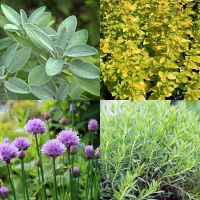
Examples: Strawberries, thyme, oregano, wild garlic.
Attractor Plants
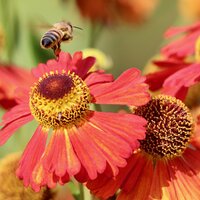
Attractor plants provide nectar and pollen that draw in pollinators and beneficial insects. These insects help pollinate crops and can also help control pest populations.
Examples: Lavender, calendula, borage.
Repeller or Confuser Plants
Some plants naturally repel or confuse pests through their scent. These can help protect nearby crops by masking the scent that pests use to locate their preferred plants.
Examples: Garlic, chives, mint.
Mulchers and Accumulators
These plants help improve soil structure and fertility. Some have deep roots that draw nutrients from deeper layers of soil, while others produce abundant leaves that can be chopped and dropped to create natural mulch.
Examples: Comfrey, rhubarb, yarrow.
Fertility Plants
Fertility plants help build soil nutrients, particularly nitrogen. Many of these are legumes that form relationships with beneficial soil bacteria.
Examples: Lupins, clover, peas.
Many plants may cover 2 or more of these functions. Wild garlic for instance is a spreading plant that will act as a suppressor as well as a repellant for some pests. At the same time, useful hoverflies are attracted to the flowers of wild garlic. Hoverflies are considered the second most important pollinator to bees and are fantastic at mopping up aphid larvae which are a huge nuisance in the garden.
An Example: A Fruit Tree Guild
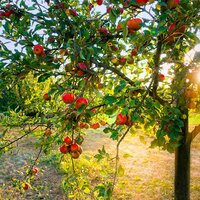
One of the simplest ways to introduce permaculture principles into a garden is by creating a fruit tree guild. Here, the fruit tree acts as the keystone plant, supported by a variety of useful companion plants.
Example Fruit Guild Structure:
- Keystone Plant: Apple or plum tree
- Mulchers: Rhubarb or comfrey
- Fertility Plants: Lupins or clover to help fix nitrogen
- Suppressors: Strawberries as a low-growing ground cover
- Attractors: Calendula, borage or lavender for pollinators
- Repellers: Wild garlic, chives or garlic
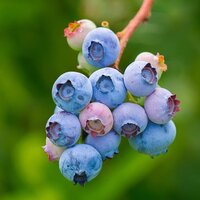
- Additional Edibles: Soft fruit bushes such as currants or gooseberries
Over time this type of planting becomes a small ecosystem in its own right. The plants protect the soil, attract beneficial insects and help feed the central tree while also providing a range of edible crops.
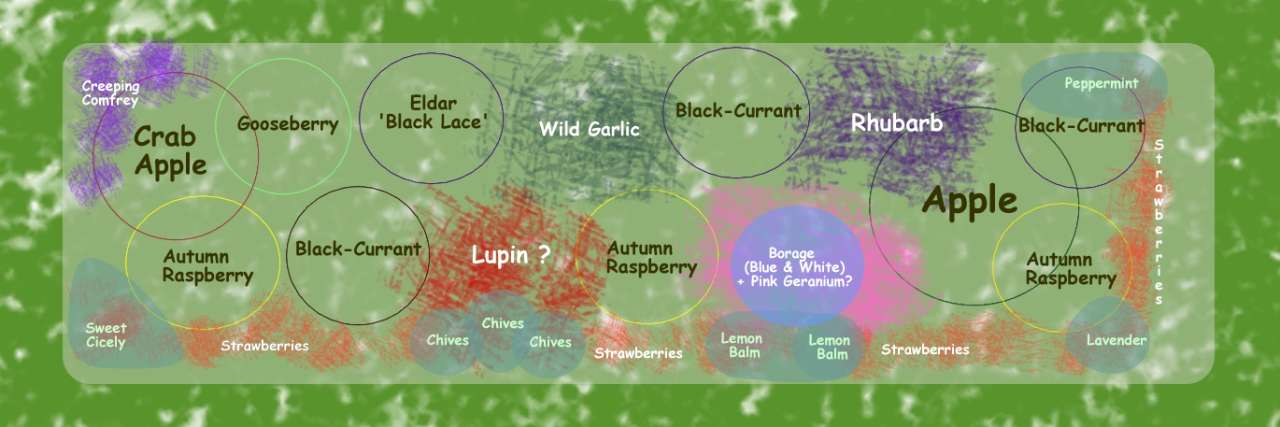
"Planning a fruit guild can just be a simple sketch. I have a long 8m x 2m bed which currently just has an apple tree near the front of it so I drew this first draft up very quickly. I have no doubt it will change when I come to planting and as yet I'm not 100% about the flowering elements but this is just to give an idea. Here the apple tree and crab apple will provide the height, with the apple being the main keystone plant. Other fruit bushes will provide a lower canopy, whilst the likes of rhubarb, borage and creeping comfrey will act as both suppressor and mulcher. Wild garlic will cover ground, acting as a suppressor in a shady north-side of the bed, whilst attracting helpful hoverflies and repelling other pests. The lupins will add nitrogen and a mulch when they die back over winter and the various herbs are there as attractors. I'll likely throw down white clover to fill the rest of the gaps - acting as a nitrogen fixer whilst also attracting bees." - Richard.
Final Thoughts
Permaculture gardening doesn’t require a complete redesign of your garden. Even introducing one or two small guilds can make a meaningful difference, creating planting areas that are productive, resilient and wildlife-friendly.
By thinking about how plants interact and support each other, gardeners can create spaces that are not only more sustainable but also rich in diversity and visual interest.
As always, experimenting with different combinations and observing how plants respond in your own garden is part of the learning process — and one of the most rewarding aspects of gardening.
If you are interested in starting out with this style of gardening I would highly recommend a book entitled 'Permaculture Planting Designs' by Pippa Chapman. It's an easy straight-forward read that contains some ready-made designs that can be easily implemented in most gardens and are much better than my scrappy sketch above! You can currently find this book for online order (at time of writing) at Sheelagh Na Gig bookstore in North Tipperary and our staff are always happy to provide advice on permaculture planting schemes to suit your outdoor space.
Thinking of starting a fruit guild?
Visit our garden centres in Boyle and Roscommon to explore our current range of fruit and nut trees, or browse online for availability and planting advice from our team.