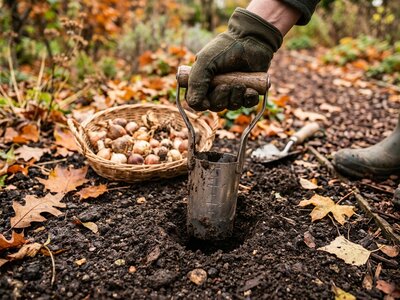

Few plant groups offer such diversity as the Iris. From tiny bulbs that flower in late winter to elegant moisture-loving plants that brighten ponds and water gardens in summer, irises come in many forms and suit a wide range of garden situations. Yet despite their popularity, many gardeners are unaware just how different the various types can be.
Some iris thrive in dry, sunny borders where their rhizomes can bask in the sun, while others prefer consistently moist soil and may even grow happily at the edge of a pond. Understanding these differences is the key to success and can help you choose the right iris for the right place.
In this guide we explore the major groups of iris commonly grown in Irish gardens, how they differ, and how to get the best from each.
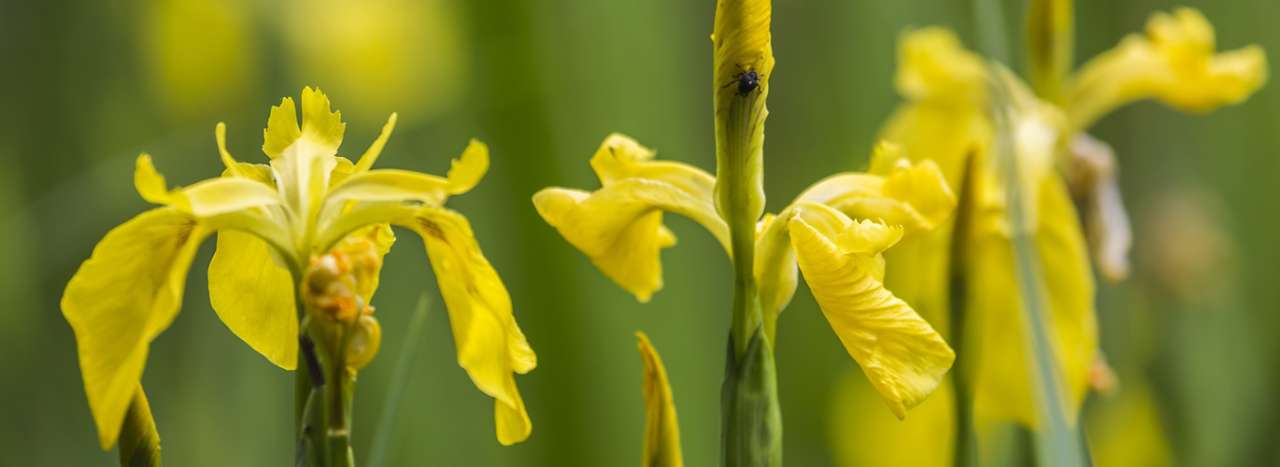
Image of the more common Yellow Flag Iris (iris pseudacorus), which can often be seen growing in the wild across Ireland but still makes for a lovely garden plant in wet soils or near pond margins - Image by Bruno Müller from Pixabay
Understanding the Different Types of Iris
For simplicity, iris can be divided into six broad groups:
- Reticulata Iris – early flowering bulbous iris for pots, rockeries and spring displays.
- Dutch Iris – elegant summer-flowering bulbs often grown for cutting.
- Bearded Iris – classic border plants grown from rhizomes.
- Siberian Iris – graceful, moisture-tolerant perennials.
- Japanese Iris – spectacular large-flowered plants for moist ground.
- Flag Iris – waterside iris suited to ponds and naturalistic planting.
Although they share the same family resemblance, each group has its own growing requirements and strengths.
Reticulata Iris – The Earliest Iris of the Year
Reticulata iris are among the first flowers to appear in the garden, often emerging during late winter when little else is in bloom.
Why Grow Them?
- Very early flowers
- Excellent for containers and alpine troughs
- Ideal for rockeries
- Good for naturalising in well-drained sites
Growing Conditions
- Full sun
- Excellent drainage
- Light soil or raised beds
- Suitable for containers
In wetter parts of Ireland, growing reticulata iris in containers or raised areas can help prevent bulbs sitting in cold, wet soil during winter.
Flowering Time
Late winter to early spring.
Dutch Iris – Elegant Summer Flowers
Dutch iris are perhaps best known as cut flowers, producing elegant blooms on tall stems during late spring and early summer.
Why Grow Them?
- Excellent cut flowers
- Easy to grow
- Elegant, refined blooms
- Good for mixed borders
Growing Conditions
- Full sun
- Free-draining soil
- Sheltered position preferred
Unlike bearded iris, Dutch iris are grown from bulbs and generally require little maintenance once established.
Flowering Time
Late spring to early summer.
Bearded Iris – The Classic Border Iris
For many gardeners, bearded iris are the quintessential iris. Their large, intricate flowers and wide colour range make them some of the most dramatic plants in the early summer border.
Why Grow Them?
- Spectacular flowers
- Huge colour range
- Drought tolerant once established
- Excellent for sunny borders
Growing Conditions
- Full sun
- Excellent drainage
- Relatively poor to moderately fertile soil
Important: One of the most common mistakes with Bearded Iris is planting the rhizomes too deeply. Unlike many perennials, iris rhizomes should sit close to the soil surface and benefit from exposure to sunlight.
In the west of Ireland, winter wet can sometimes be a greater challenge than winter cold. Good drainage is therefore particularly important.
Flowering Time
Late spring to early summer.
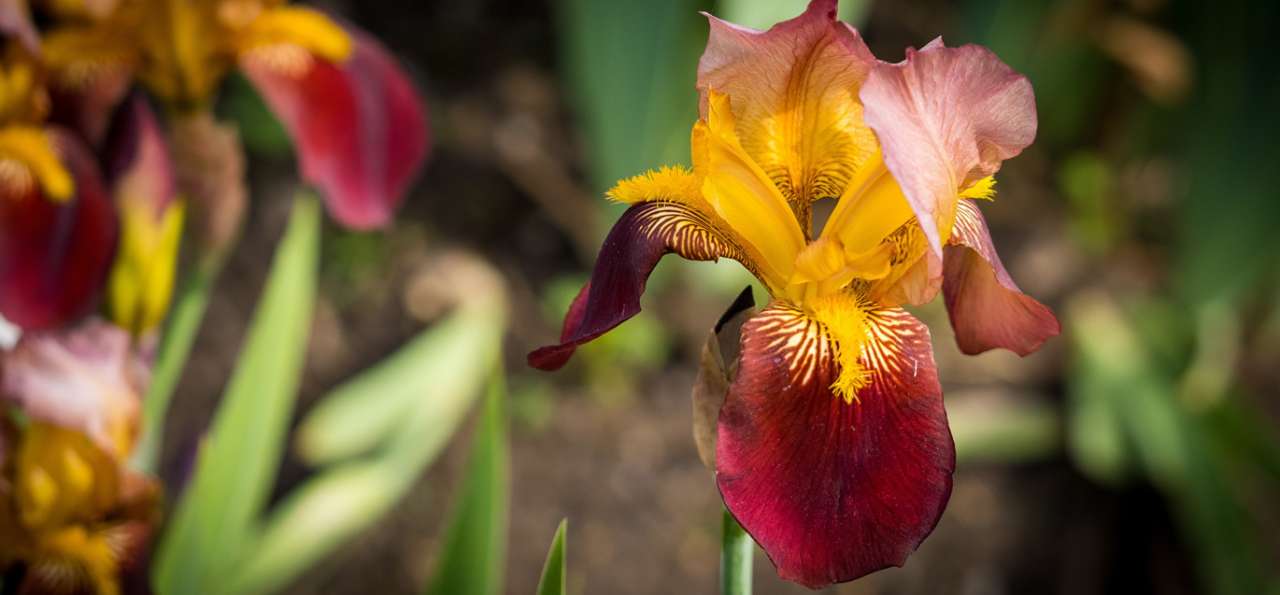
Bearded Iris are probably what we think of when we imagine iris plants. These are the ones with the characteristics of : 'Standards' - the three petals that form a kind of dome on top (those peachy ruffled petals pictured above); 'Falls' - the three lower petals that curve downward (seen above in burgundy red); 'The Beard' - A fuzzy line of soft hairs running down the center of each of the falls (yellow in this picture). These act as a runway to guide pollinators into the flower and; 'Style Arms' - Small, stiff, petal-like structures above the beard that protect the flower's reproductive organs (again, featured in yellow on the variety above). - Image by Samuel Stone from Pixabay
Siberian Iris – Graceful and Reliable
Siberian iris bring a softer, more naturalistic appearance to the garden. Their elegant foliage provides interest long after flowering has finished.
Why Grow Them?
- Elegant flowers
- Attractive foliage
- Long-lived clumps
- Tolerates more moisture than Bearded Iris
Growing Conditions
- Sun or light partial shade
- Moist but well-drained soil
- Suitable for damp borders
These are excellent choices for gardeners who find Bearded Iris struggle in their soil conditions.
Flowering Time
Late spring into summer.
Japanese Iris – The Drama Queens of the Iris World
Japanese iris produce some of the largest and most spectacular flowers in the genus.
Their broad, often flat blooms create a striking display and can bring a touch of the exotic to the garden.
Why Grow Them?
- Large flowers
- Excellent for pondside planting
- Bold summer displays
- Architectural foliage
Growing Conditions
- Moisture-retentive soil
- Consistent moisture during growth
- Sun or light shade
Unlike Bearded Iris, Japanese iris appreciate moisture and perform best when allowed to remain consistently damp during the growing season.
Flowering Time
Early to mid-summer.
Flag Iris – Native Beauty for Wet Areas
The Yellow Flag Iris (Iris pseudacorus) is one of Ireland's most recognisable native waterside plants.
It thrives in conditions where many other garden plants would struggle.
Why Grow Them?
- Excellent wildlife value
- Suitable for pond margins
- Strong architectural growth
- Native species
Growing Conditions
- Wet soils
- Pond edges
- Water gardens
- Naturalistic planting schemes
Flag iris can be vigorous and should be given adequate space to develop.
Flowering Time
Late spring to early summer.
Iris Through the Seasons
| Season | Iris Group | Main Interest |
|---|---|---|
| Late Winter | Reticulata Iris | Early flowers |
| Spring | Bearded Iris | Large colourful blooms |
| Late Spring | Dutch Iris | Elegant flowers and cut blooms |
| Summer | Siberian Iris | Flowers and graceful foliage |
| Summer | Japanese Iris | Large dramatic flowers |
| Spring/Summer | Flag Iris | Waterside colour and wildlife value |
By growing several different types of iris, it is possible to enjoy flowers from late winter through to mid-summer. You will find all of these types of Iris stocked at our garden centres at different times in the season. Potted varieties feature at different times throughout the year but you will find many more varieties sold sold as bulbs in the autumn as this is usually the best time to plant them for a display the following year.
Varieties We Love This Season
With such a diverse range of iris available, there is a variety suitable for almost every garden situation. Here are some of our favourites this season.
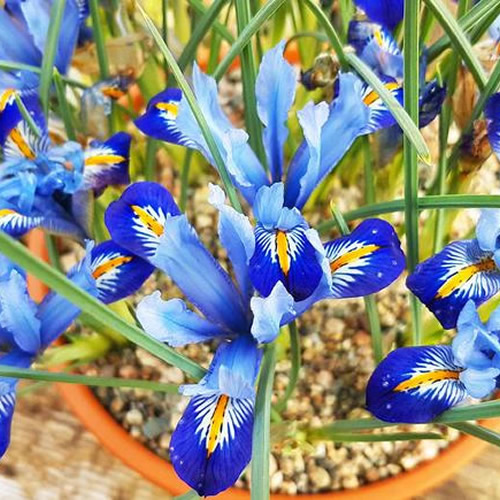
Iris reticulata 'Harmony'
One of the finest early flowering iris varieties, producing vivid violet-blue flowers with golden markings.
Flowering in late winter and early spring, 'Harmony' is ideal for containers, alpine displays and rockeries where its jewel-like flowers can be appreciated up close.
This is often found sold as a pack of bulbs for planting in the autumn.
Best for: Containers, alpine troughs, rockeries and early-season colour.
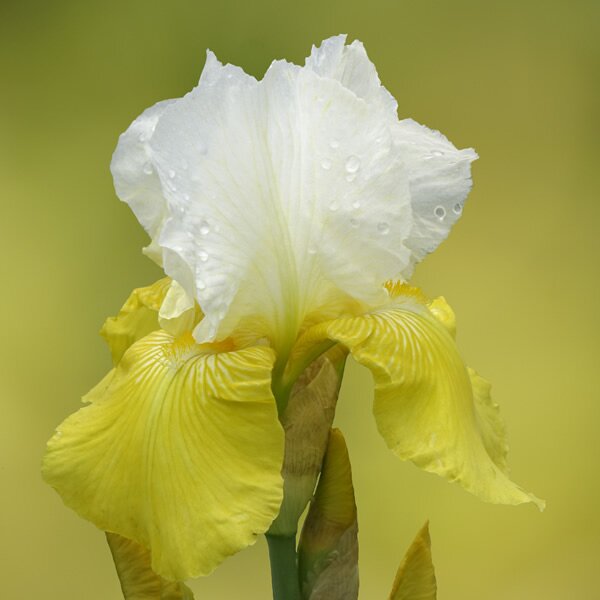
Siberian Iris (Iris sibirica) 'Summer Revels'
An elegant Siberian Iris producing soft lavender-blue flowers above graceful grassy foliage.
Long-lived and reliable, it forms attractive clumps that continue to provide structure long after flowering has finished.
Siberian Iris are sold both as potted plants when available through the year or as fiberous rootstocks in our bulb section when in season.
Best for: Damp borders, naturalistic planting and cottage gardens.
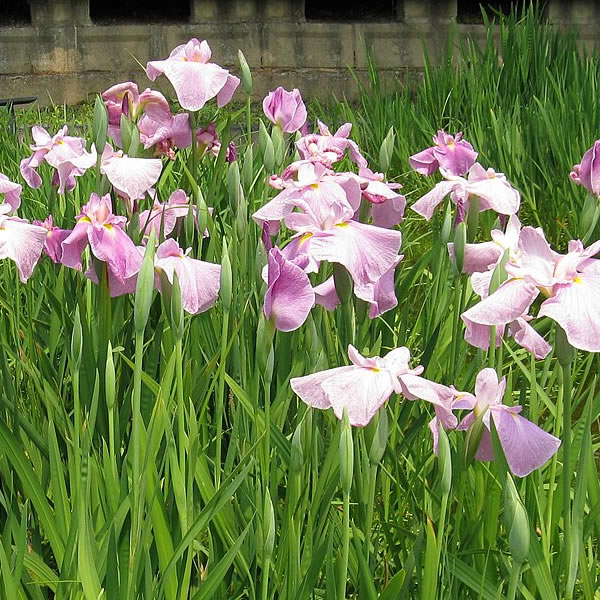
Japanese Iris (Iris laevigata) 'Rose Queen'
Producing large rose-pink flowers, this variety delivers the bold, exotic appearance for which Japanese Iris are renowned.
Particularly effective near water or in moisture-retentive borders where its dramatic blooms can be fully appreciated.
Japanese Iris are generally found in our perennial and aquatic plants section as they become available through the year.
Best for: Pondside planting, damp borders and feature displays.
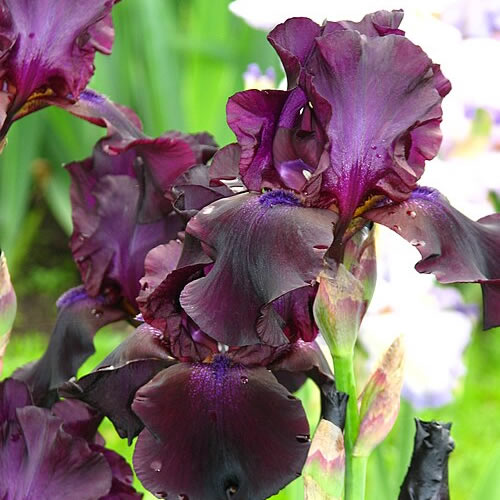
Bearded Iris (Iris germanica) 'Superstition'
A striking, RHS Award winning Bearded Iris with rich, velvety, almost black flowers that make a bold statement in sunny borders.
Like all Bearded Iris, it thrives in full sun and rewards gardeners with spectacular blooms when planted in well-drained soil.
Bearded Iris tend to be sold as a rhizome within our bulbs section for planting in autumn.
Best for: Sunny borders, gravel gardens and drought-tolerant planting.
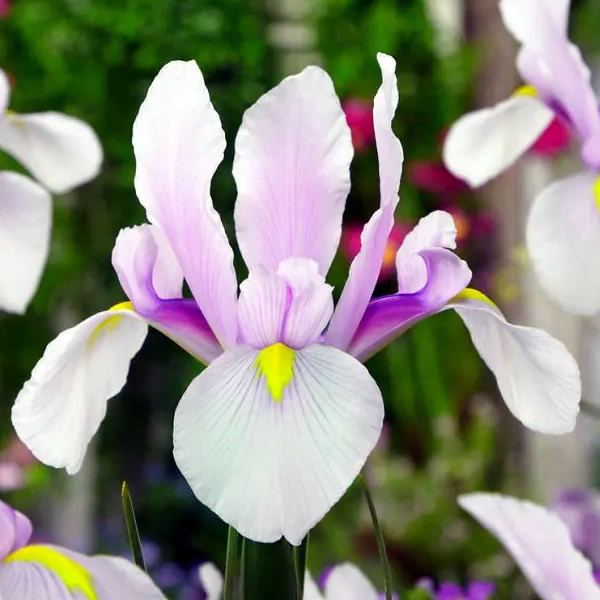
Dutch Iris (Iris × hollandica) 'Carmen'
An elegant variety producing deep purple flowers with contrasting yellow markings.
Popular with florists and gardeners alike, Dutch Iris are among the finest flowers for cutting and bringing indoors.
Dutch Iris are often found sold as a pack of bulbs for planting in the autumn.
Best for: Cut flower gardens, mixed borders and seasonal displays.
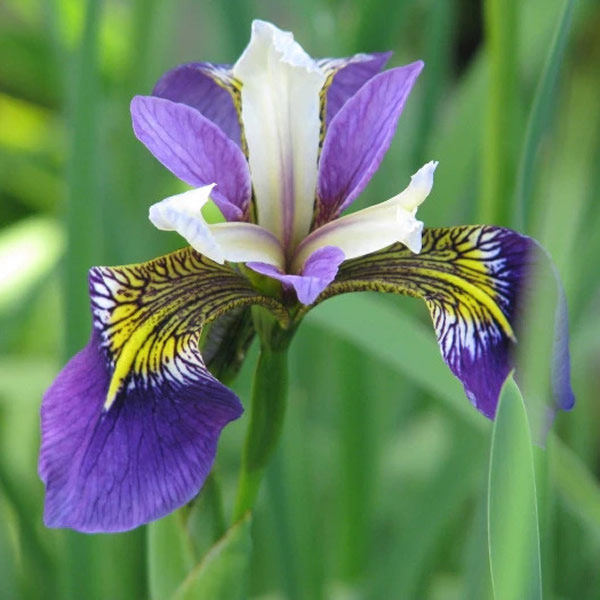
Flag Iris (Iris pseudacorus) 'Holden's Child'
A more compact and refined selection of the native Yellow Flag Iris, producing attractive yellow flowers above strong upright foliage.
Excellent for ponds, wildlife gardens and wetland planting schemes.
You'll often find various varieties of flag iris in our perennial and aquatic plants section as they become available through the year.
Best for: Pond margins, water gardens and wildlife-friendly planting.
Companion Planting
Different iris suit different companions depending on their growing requirements.
Companions for Bearded Iris
- Lavender
- Salvia
- Nepeta (Catmint)
- Roses
- Stachys
These plants enjoy similar sunny, well-drained conditions and create classic cottage garden combinations.
Companions for Siberian and Japanese Iris
- Astilbe
- Rodgersia
- Ligularia
- Hostas
- Primulas
These moisture-loving companions help create lush, naturalistic planting schemes.
Companions for Reticulata Iris
- Crocus
- Muscari
- Dwarf Narcissus
- Early Primroses
Together they provide a succession of colour during late winter and early spring.
Propagation
Most iris are relatively easy to increase once established.
Reticulata and Dutch Iris
Bulbs naturally multiply over time. Established clumps can be lifted and divided when overcrowded.
Bearded Iris
Bearded Iris are propagated by dividing rhizomes.
- Lift clumps every 3–5 years
- Discard old central rhizomes
- Replant healthy young sections
- Keep rhizomes near the soil surface
Siberian and Japanese Iris
These can be divided in spring or autumn to create additional plants and rejuvenate older clumps.
Common Problems
Poor Flowering
This is often caused by:
- Too much shade
- Overcrowding
- Excess nitrogen fertiliser
Rhizome Rot
Most commonly affects Bearded Iris.
Usually caused by:
- Poor drainage
- Heavy soils
- Rhizomes planted too deeply
Slug and Snail Damage
Young foliage can occasionally be damaged during spring, particularly during wet weather.
Winter Wet
One of the biggest challenges for gardeners in the west of Ireland.
Good drainage is essential for Bearded Iris and Reticulata Iris, while Siberian and Japanese Iris are generally more tolerant of damp conditions.
Choosing the Right Iris for Your Garden
| Garden Situation | Recommended Iris |
|---|---|
| Containers and Alpine Displays | Reticulata Iris |
| Cut Flower Garden | Dutch Iris |
| Sunny Well-Drained Border | Bearded Iris |
| Damp Border | Siberian Iris |
| Pondside Planting | Japanese Iris |
| Pond Margins and Wildlife Areas | Flag Iris |
Not sure which Iris to choose?
If your garden is sunny and free-draining, start with Bearded Iris. If your soil tends to remain moist, Siberian Iris are often a better choice. For pondside planting, Japanese and Flag Iris are difficult to beat, while Reticulata Iris provide some of the earliest colour of the gardening year.
Creating an Iris Collection for Season-Long Interest
Rather than trying to grow every type of iris in a single border, many gardeners achieve better results by growing each group in the conditions it naturally prefers.
For example:
- Reticulata Iris can be grown in containers, alpine troughs or rockeries.
- Bearded Iris thrive in sunny borders and raised beds.
- Siberian Iris suit damper areas of the garden.
- Japanese Iris perform best in moisture-retentive borders or beside water.
- Flag Iris are ideal for ponds and naturalistic wetland planting.
Container gardening offers another useful option. By growing different iris in separate pots and planters, each can be maintained according to its own requirements while still contributing to an overall display. As one group finishes flowering, containers can be moved or replaced with other seasonal plants, extending the display even further.
This approach allows gardeners to enjoy iris flowers from late winter through to summer without compromising the needs of any individual variety.
Final Thoughts
Few plant groups offer the diversity found within the Iris family. From the jewel-like flowers of Reticulata Iris in late winter to the bold blooms of Japanese Iris in summer, there is an iris for almost every garden situation.
The secret to success lies in understanding the differences between the various groups and matching them to the conditions they prefer. By doing so, you can enjoy one of the most rewarding and varied genera available to gardeners, with flowers appearing over many months of the year.
Looking for the perfect Iris for your garden?
Visit our garden centres in Boyle and Roscommon to explore our latest range of Iris varieties, or speak to a member of our team for advice on selecting the right type for your garden conditions.