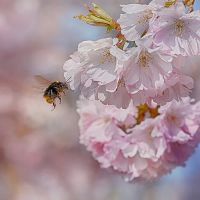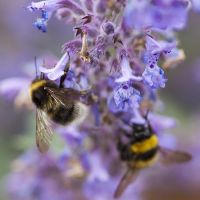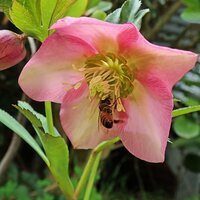

When we talk about planting for pollinators, it is easy to imagine that the only way to make a garden wildlife-friendly is to turn it into a wildflower meadow. Whilst a meadow can be a wonderful habitat, it is certainly not the only option.
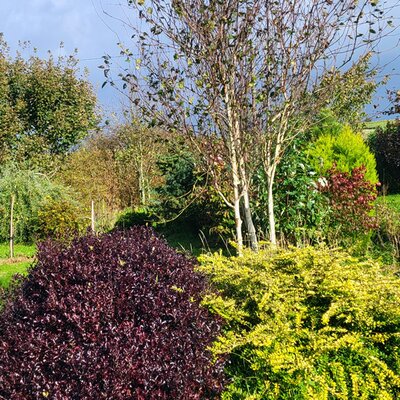
A Japanese-style garden, a cottage garden, a prairie planting, a contemporary garden or even a small urban courtyard can all provide valuable food and shelter for pollinating insects. The trick is not necessarily to change the style of your garden, but to think a little more carefully about what you plant, when it flowers and what else it can offer.
And there is a benefit for us as gardeners too. A garden that attracts bees, hoverflies, butterflies and other insects can quickly become a much more animated place. Instead of simply looking at a garden, you begin to watch it: seeing which flowers are attracting visitors, noticing different insects appearing through the seasons and discovering that there is always something moving amongst the planting.
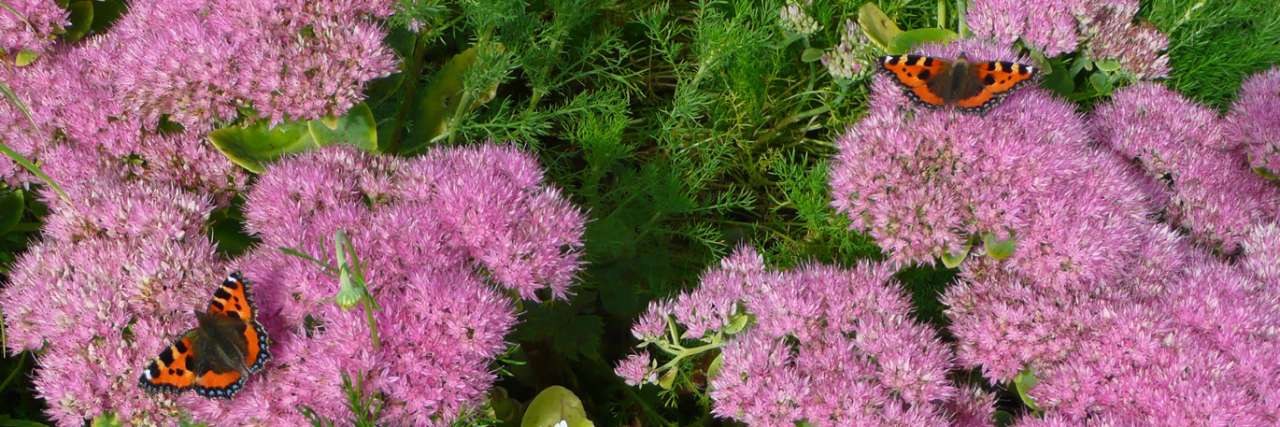
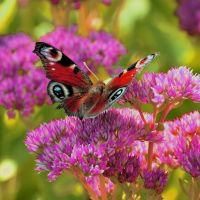
The flat clusters of flowers on some sedum species are particularly attractive to butterflies. This variety, aptly named 'Autumn Joy' provides nectar later in the growing season as the flowers of many perennials start to fade. - Photo taken by Richard (AGC) 2019.
Plant for the Garden You Want
You do not need to abandon your preferred garden style to plant for pollinators. A pollinator-friendly garden can still be structured, colourful, formal, contemporary or highly designed. Think about adding plants that work with your existing planting rather than replacing it.
What Do We Mean by "Pollinators"?
Bees and butterflies tend to receive most of the attention, but they are only part of the story. Ireland is home to around 100 species of wild bee and around 180 species of hoverfly, alongside other insects including moths, wasps and beetles that can contribute to pollination.
Different insects also use flowers in different ways. Some are attracted to easily accessible nectar and pollen, whilst others have particular relationships with certain plants. This is one reason why variety is useful.
Rather than planting one type of "bee-friendly" flower everywhere, try to create a mixture of flower shapes, sizes and flowering periods. This gives a wider range of insects something to feed on and helps ensure that there is not a sudden shortage of food when one particular group of plants finishes flowering.
There is another benefit to this approach too. A garden that attracts a greater variety of insects can also attract a greater variety of wildlife. Birds may come to feed on insects and caterpillars, while other creatures make use of the shelter, vegetation and food sources that a more diverse garden provides.
In other words, planting for pollinators can make a garden feel more alive.
Native or Non-Native – Do We Have to Choose?
This is where the subject can become surprisingly polarised. Native plants are clearly important and should form an important part of any attempt to support Ireland's wildlife. They have evolved alongside our native insects and are particularly valuable as part of wider natural habitats.
But that does not mean that every non-native plant has no value.
In a garden setting, ornamental plants can provide an additional source of nectar and pollen, sometimes during periods of the year when relatively few other plants are flowering. The All-Ireland Pollinator Plan, in coordination with the National Biodiversity Data Centre, makes this distinction too, recommending native plants as the best option whilst recognising that non-native, ornamental plants can supplement the food supply in gardens and other managed spaces.
This is particularly useful when we think about the garden as a whole rather than individual plants. A native shrub might provide an excellent source of food in spring, whilst a non-native perennial might continue flowering into autumn. Used together, they can help reduce the gaps between periods of abundance.
In rural areas of Ireland, such as where we are located in the west, native trees and shrubs often make-up the hedging that surrounds our garden spaces. As these plants often have a practical application in defining our garden borders, the benefits to our local wildlife can often be overlooked. Two very common examples are Hawthorn and Blackthorn, Irish staples that provide a huge range of benefits for wildlife and vital nectar early in the season. You may already have a wealth of native species surrounding your garden that can then be supplemented with more ornamental, non-native planting to extend the availability of such benefits through the year.
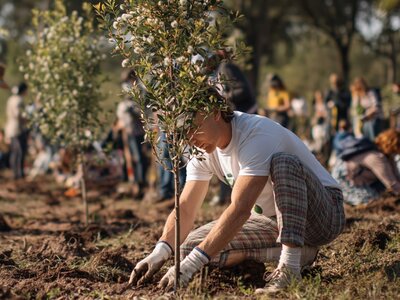
This is also something to consider when planting a new hedge, particularly during bare-root season, from around November until March, where each year we have a huge variety of beneficial native hedging, shrubs and trees available. These suit a variety of needs, from containing a field to growing just a single specimen in a border and is perhaps the most inexpensive way to add native species to your outdoor spaces.
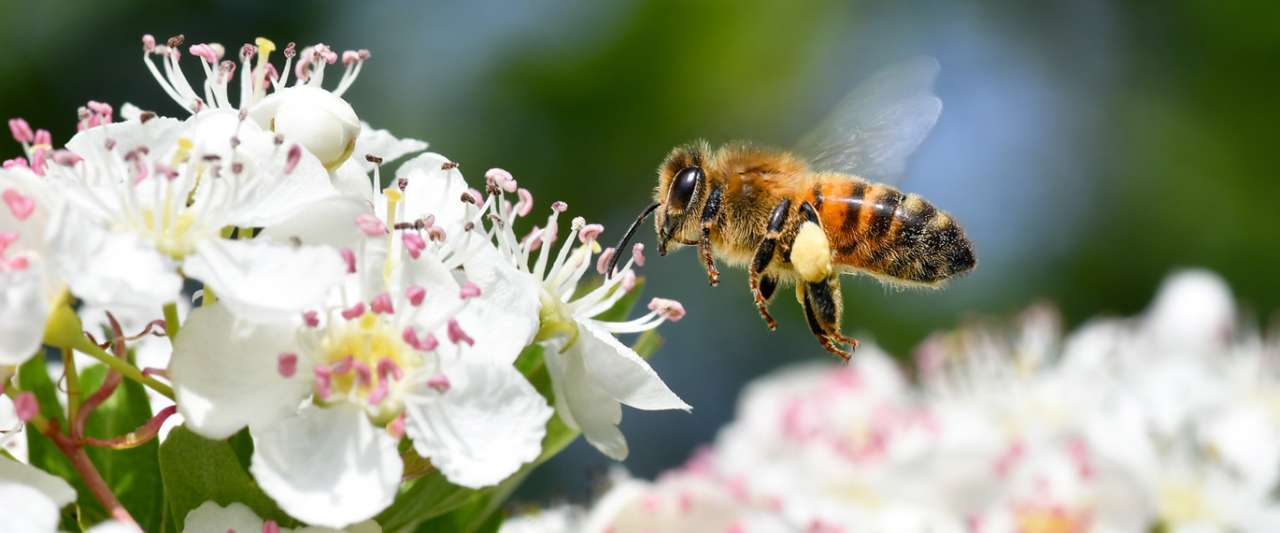
Our native hawthorn is a magnet for honey bees and other pollinators in spring and is loved by bee-keepers too as it is said to be the source of some of the finest honey - Image by Christel SAGNIEZ from Pixabay
The Best Approach May Be Somewhere in Between
Rather than asking whether a plant is native or non-native, ask a more useful question: what does this plant contribute to the garden?
Native trees, shrubs and wildflowers are extremely valuable, particularly where they form part of wider habitat. Carefully chosen ornamental plants can complement them within a garden by providing additional flowers, extending the season or simply allowing you to combine wildlife value with the style of garden you enjoy.
Think About the Whole Year
One of the most useful things we can do when planting for pollinators is to stop thinking about a single season.
A garden can be absolutely buzzing with insects in June and July, but what is available in February? What happens when the last summer perennials finish flowering? Are there flowers available in September and October when some insects are still active?
The All-Ireland Pollinator Plan refers to these periods without sufficient food as "hunger gaps", and recommends choosing plants that provide nectar and pollen across the flowering season. Irish bee-recording data also gives us a useful reminder of how varied the plants being visited can be from month to month.
With that in mind, here are some plants worth considering through the seasons. This isn't intended to be a definitive list – nor does every garden need all of them. Instead, think of it as a starting point for building a succession of flowers that works with your own soil, conditions and garden style.
Spring – Getting the Year Started
Spring can be an important period for pollinators as insects emerge and begin looking for food. Native trees and shrubs are particularly valuable because they can produce large quantities of blossom at a time when there are fewer flowers available.
| Plant | Native? | Why it helps |
|---|---|---|
| Willow (Salix) | Several native species | Early flowering catkins provide an important source of pollen when relatively little else is available. |
| Blackthorn (Prunus spinosa) | Native | One of our characteristic early-flowering hedgerow shrubs, providing abundant spring blossom. |
| Crab Apple (Malus spp. and cultivars) | Native | Spring blossom provides food for a range of insects, followed later by fruit that can benefit birds and other wildlife. |
| Wild Cherry (Prunus avium) | Native | A beautiful spring-flowering tree with abundant blossom and later fruit. |
| Flowering Currant (Ribes sanguineum) | Non-native | A useful early-flowering ornamental shrub that can provide nectar when the season is still relatively young. |
| Rosemary (Salvia rosmarinus) | Non-native | Can flower surprisingly early and, in a sheltered Irish garden, may provide food over a long period. |
| Hellebores | Non-native | Long-lasting flowers provide an early-season source of nectar and pollen and work particularly well in shaded planting. |
| Heathers | Native and non-native species | Some garden heathers flower very early and can provide a useful source of food when there is little else available. |
This is also a good time to remember that not everything useful in spring has to be a tree or shrub. Allowing some naturally occurring plants such as dandelions to flower can provide an important source of food too. In fact, recent Irish recording data found dandelions were the most frequently recorded food plant for wild bees in 2025 (National Biodiversity Data Centre).
Summer – When the Garden Comes Alive
Summer is usually the easiest season in which to provide flowers for pollinators. This is when borders are at their fullest and there is an enormous range of ornamental plants to choose from.
The challenge here is less about finding flowers and more about choosing a mixture that continues flowering rather than producing one enormous flush followed by a gap.
| Plant | Native? | Why it helps |
|---|---|---|
| Bramble (Rubus fruticosus agg.) | Native | The flowers are highly attractive to a wide range of insects, followed by fruit that supports other wildlife. |
| Red Clover (Trifolium pratense) | Native | A valuable summer food source, particularly for bumblebees. |
| Bird's-foot Trefoil (Lotus corniculatus) | Native | A low-growing wildflower with yellow flowers that supports a range of insects. |
| Knapweed (Centaurea species) | Native species | One of the particularly useful summer plants for wild bees and other insects. |
| Lavender | Non-native | Long-flowering and extremely popular with bees, whilst also fitting naturally into many ornamental planting styles. |
| Catmint (Nepeta) | Non-native | Long flowering, easy to grow in sunny borders and regularly visited by bees. |
| Thyme (Thymus) | Several native species; garden varieties often non-native | A useful choice for sunny, well-drained positions and particularly valuable when allowed to flower. |
| Comfrey (Symphytum) | Native species | Its bell-shaped flowers are attractive to bees and it can provide a substantial flowering period. |
| Ornamental Alliums | Non-native | The large flower heads are highly visible and can attract a variety of bees and other insects. |
| Helenium | Non-native | A useful late-summer perennial that can help maintain flowering as some early summer plants begin to fade. |
Single Flowers Are Often Better Than Double Flowers
When choosing ornamental plants for pollinators, look beyond the colour of the flower. Highly double flowers can have so many additional petals that pollen and nectar become difficult or impossible for insects to reach.
Where wildlife value is important, single or semi-double flowers are generally the better choice. This doesn't mean every flower in your garden needs to be single – simply consider including plenty that are easily accessible too.
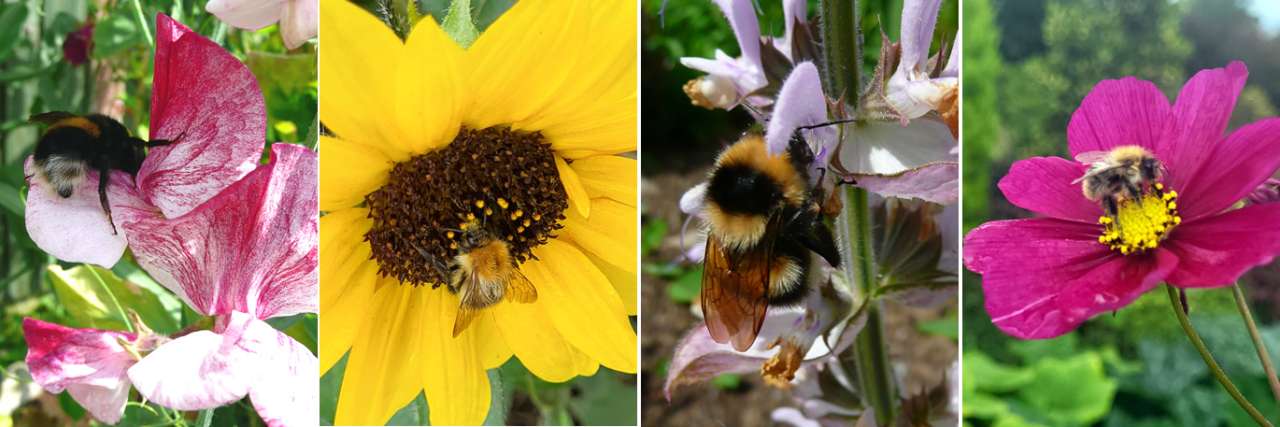
It's also worth noting that a whole range of annuals attract a variety of bees and pollinators, particularly in the summer, and provide an opportunity to add colourful beneficial plants, that can complement your more permanent trees, shrubs and perennials. Here from left to right we have sweet-peas, sunflowers, clary sage and cosmos all providing valuable nectar to bees - Photos taken by Richard (AGC) in Boyle, Co. Roscommon.
Autumn – Don't Let the Food Run Out
Autumn is perhaps where thoughtful planting becomes particularly useful. As the abundance of summer begins to disappear, there can be noticeably fewer flowers available even though some insects remain active.
| Plant | Native? | Why it helps |
|---|---|---|
| Ivy (Hedera helix) | Native | One of the most valuable late-season flowering plants, providing nectar when many other plants have finished flowering. |
| Devil's-bit Scabious (Succisa pratensis) | Native | A valuable late-summer and autumn wildflower that can continue feeding insects well into the later season. |
| Heather (Calluna vulgaris) | Native | Provides abundant late-season flowers and works particularly well in acidic soils and naturalistic planting. |
| Sedum / Hylotelephium | Non-native garden plants | Late summer and autumn flowers are highly accessible and particularly useful when many earlier perennials have finished. |
| Asters | Non-native | Excellent late-season flowering perennials that can extend the availability of nectar and pollen well into autumn. |
| Verbena bonariensis | Non-native | Its long flowering period and open flower structure make it useful for a wide variety of insects. |
| Rudbeckia | Non-native | Provides a long period of summer and autumn colour, with accessible flowers that continue to attract insects. |
| Michaelmas Daisies | Non-native | Another excellent late-season group for maintaining colour and food as the garden moves towards winter. |
This is one of the strongest arguments for combining native and ornamental plants. A native hedgerow can provide invaluable spring resources, whilst a carefully chosen ornamental border can continue producing nectar and pollen well into September or October.
Winter – Finding Flowers When You Can
Winter is different. Many pollinating insects are dormant or much less active during the coldest months, so we should not expect a garden to be buzzing throughout December and January.
However, on mild winter days some insects will emerge, and early-flowering plants can provide a useful opportunity to feed. The aim isn't to fill the garden with winter flowers, but to include a few plants that can take advantage of those milder periods.
| Plant | Native? | Why it helps |
|---|---|---|
| Ivy (Hedera helix) | Native | Its late flowering makes it particularly valuable at the boundary between autumn and winter, whilst its dense growth also provides shelter and later berries for birds. |
| Winter-flowering Heathers | Native and non-native species | Some varieties flower through the colder months and can provide occasional food during mild weather. |
| Mahonia | Non-native | Several species flower from late autumn through winter or early spring, providing an important source of nectar and pollen during a relatively flower-poor period. |
| Viburnum tinus | Non-native | Long-lasting flower clusters can appear from autumn through winter and into spring, depending on conditions. |
| Hellebores | Non-native | Early flowers can provide food around the end of winter and into spring, while their shaded-growing habit makes them useful in parts of the garden where other pollinator plants may struggle. |
| Snowdrops (Galanthus) | Non-native | Early flowers provide a welcome source of food towards the end of winter, particularly during mild spells. |
The important thing here is not to feel that your garden has failed if there are no insects visiting it in the depths of winter. Instead, think of winter planting as providing opportunities for those insects that are active whenever weather conditions allow.
You Don't Need a Wildflower Meadow
One of the easiest misconceptions about pollinator-friendly gardening is that you have to choose between an immaculate ornamental garden and a wildlife-friendly one.
You don't.
A Japanese-style garden can contain flowering trees, shrubs and carefully chosen perennials that provide food for insects. A cottage garden can be packed with pollinator-friendly plants without looking remotely like a meadow. A prairie-style planting is already naturally suited to the idea, whilst even a formal garden can incorporate flowering trees, hedges, herbaceous borders and containers that provide valuable food.
Even a small garden can make a difference. The All-Ireland Pollinator Plan specifically highlights that pots and window boxes can be useful places for pollinator-friendly planting, meaning you don't need a large garden to start building a more varied food supply.
Think in Layers
Rather than creating one dedicated "pollinator area", think about adding useful plants throughout the garden:
- Trees for abundant blossom and shelter.
- Shrubs for structure and seasonal flowers.
- Perennials for a succession of flowers through spring and summer.
- Herbs such as thyme, rosemary and lavender where conditions suit them.
- Containers for extending flowering in small spaces or introducing plants suited to particular conditions.
The result can still look like your garden – just one that happens to have more going on.
Flowers Are Only Part of the Picture
Although flowers are the most obvious way to support pollinators, insects also need somewhere to live and shelter.
Many wild bees do not live in hives. Solitary bees may nest in the ground, in old walls, in hollow stems or in other small cavities. Leaving a little bare ground, retaining some old stems over winter or allowing a less intensively managed corner of the garden to develop can provide opportunities that a perfectly tidy garden may not.
This doesn't mean that every garden needs to become untidy. A small patch of longer grass, a hedge rather than a fence, some fallen leaves beneath a shrub or a few hollow stems left standing can all provide useful habitat without changing the overall appearance of a garden.
And if your garden already has a healthy population of insects, you may find that other wildlife follows. Birds, for example, can benefit from the abundance of insects and caterpillars, whilst a garden with more vegetation, flowers and shelter simply creates more opportunities for wildlife to move through and inhabit the space.
Five Simple Ways to Plant for Pollinators
- Think about the whole year. Try to avoid having all of your flowers appear at once. A succession of flowering plants is more useful than one spectacular flush followed by a long gap.
- Include trees and shrubs. Don't concentrate entirely on herbaceous plants. Flowering trees, hedges and shrubs can provide substantial resources and often flower at particularly useful times of year.
- Use native plants where they make sense. Native trees, shrubs and wildflowers are an important foundation for supporting Irish wildlife.
- Don't be afraid of suitable ornamental plants. A carefully chosen non-native plant that produces accessible nectar or pollen can complement your native planting, particularly where it extends the flowering season.
- Leave a little room for nature. Not every corner of the garden needs to be perfectly manicured. A small amount of undisturbed ground, longer grass, fallen leaves or retained stems can provide shelter as well as food.
Planting for Pollinators Can Be About Enjoyment Too
There is a practical reason for encouraging more insects into the garden, but there is also a much simpler one: it makes gardening more interesting.
A garden full of flowers is lovely. A garden where you can sit with a cup of coffee and watch bumblebees moving from flower to flower, hoverflies hovering over a border and butterflies appearing as the seasons change is something else entirely.
It becomes a living space rather than simply an outdoor room.
And perhaps that is the most useful way to think about planting for pollinators. You don't have to redesign your garden, follow a particular gardening philosophy or fill every available space with wildflowers.
Simply look at the garden you have and ask a few questions: What is flowering now? What will flower next? Is there anything flowering when most of the garden has gone quiet? And where could I add something useful without compromising the way I want my garden to look?
Over time, those small decisions can create a garden with more colour, more movement, more wildlife and, ultimately, more to enjoy.
Want to Explore Further?
We've also made the Top 10 Pollinator-friendly Plants for Different Situations guide produced by UCD Horticulture and the All-Ireland Pollinator Plan available to download below:
Top 10 Pollinator-friendly Plants for Different Situations
Each guide contains a range of plant lists covering different situations, including native and non-native ornamental plants, gardens, containers and other growing environments. These are useful reference if you want to explore some of the choices in more detail.
Bring More Life to Your Garden
Whether you're looking to add a flowering tree, fill a sunny border, brighten a shady corner or simply find a few plants that will provide food for insects at a time when your garden is otherwise quiet, choosing the right plants for the right place can make a noticeable difference.
Visit us at Ardcarne Garden Centre in Boyle or Roscommon Town to explore our seasonal selection of plants and find something that works for your garden, your growing conditions and your own style.
You can also check out our 'Plants for Pollinators' category within our online store, where we have curated a selection of beneficial plants for each of the seasons:
Plants for Pollinators