
Achillea, commonly known as Yarrow, is one of the best perennials for sunny, free-draining gardens. Loved for its flat flower heads, ferny foliage and excellent wildlife value, it brings colour, texture and a relaxed naturalistic feel to borders from early summer onwards.
It is also one of those plants where too much kindness can cause problems. Rich soil, excess feeding, too much shade or poor drainage can all lead to soft, floppy growth and a shorter-lived plant. Given sun, space and relatively lean soil, however, Achillea can be wonderfully reliable.
Garden Centre Tip:
Although Achillea will tolerate light shade, this should not be mistaken for its preferred conditions. Plants grown in shade often become leggy and are more likely to flop. For the strongest stems, best flowering and longest-lasting display, choose a position in full sun.
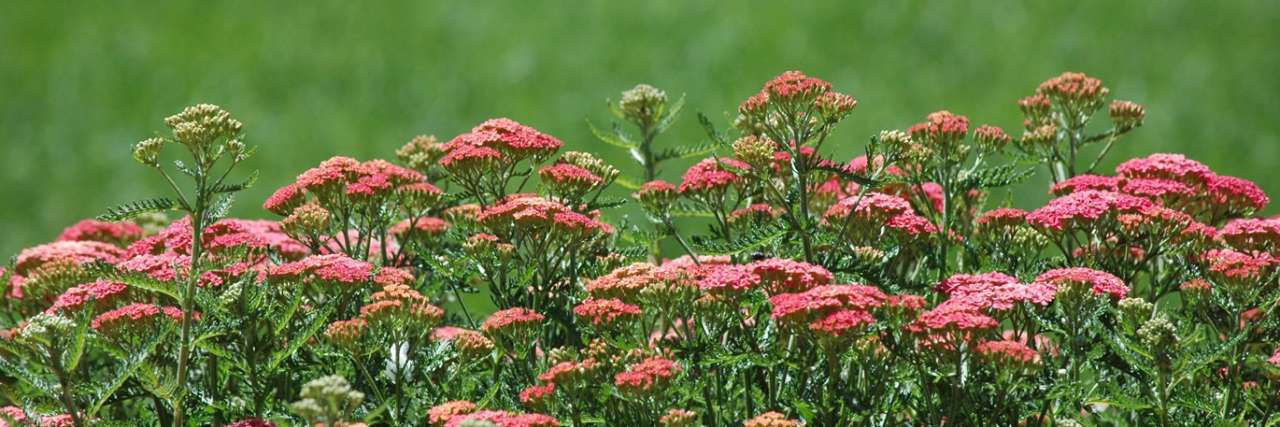
Achillea grown in swathes can produce a lovely block of colour in the garden through summer, with flattened heads of flowers floating like clouds above the attractive, fine foliage. - Image by splambo from Pixabay
Where Does Achillea Grow Best?
Achillea performs best in open, sunny positions with free-draining soil. It is well suited to gravel gardens, prairie-style borders, cottage gardens and wildlife-friendly planting schemes.
- Light: Full sun is best
- Soil: Well-drained, preferably not too rich
- Moisture: Tolerates dry conditions once established
- Position: Open, airy borders with room to spread
While Achillea can tolerate some moisture, prolonged wet conditions — particularly in winter — can lead to crown or root rot. This is especially worth bearing in mind in the west of Ireland, where prolonged periods of cold, wet weather can significantly shorten the lifespan of plants that naturally prefer dry, free-draining conditions. If your soil is prone to being saturated in the winter, or is particularly heavy and you're determined to have these plants in your garden, then it's essential you improve your soil conditions with adequate drainage. This can be done by adding plenty of grit and raising your soil level so that the plants roots will be sitting above the level at which water normally settles or pools in your garden. Alternatively, achillea can be grown in containers (see below).
Don’t Kill Achillea with Kindness
Achillea naturally grows in open grassland and relatively poor soils. This means it does not need rich compost, heavy feeding or regular fertilising.
Less really is more.
Overfeeding Achillea can encourage soft, leafy growth at the expense of flowers. It can also make stems weaker and more likely to collapse. When planting, avoid adding large amounts of fertiliser or rich manure. Good drainage and sunshine are far more important.
Cultivated varieties are often bred to be more compact, colourful and robust than common wild yarrow, but they still perform best when grown in conditions close to those they naturally prefer.
How to Plant Achillea
Achillea is best planted in spring or autumn, when soil conditions are mild and moisture is naturally available. That is not to say they can't be planted in the summer season, they just may need a little more care whilst they become established, being sure to give these plants some water during prolonged dry spells. Once established in the first year, they will become relatively drought tolerant in subsequent years.
- Choose a sunny, open position
- Improve drainage if soil is heavy
- Plant at the same depth as the pot
- Water in well after planting
- Allow space for plants to spread naturally
Most varieties will form clumps around 45–60cm across, depending on variety and growing conditions. Avoid overcrowding, as good airflow helps reduce flopping and disease.
Growing Achillea in Containers or Pots
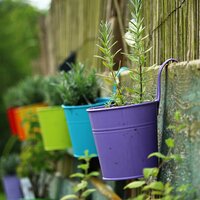
Growing achillea in containers is an excellent way of overcoming heavy soils and unreliable winter weather, giving you far greater control over drainage and growing conditions. While Achillea may thrive during a warm, dry Irish summer, it is often the following winter that proves more challenging. Container growing allows you to enjoy the plant during its peak season before moving it to a more sheltered position when prolonged wet weather arrives. With weather patterns becoming more erratic, container grown plants give gardeners far greater control over drainage, moisture levels and winter protection.
If you have relatively heavy soil that retains a lot of water over winter, then growing achillea in containers may well be the perfect option and it's worth noting that growing plants in pots doesn't mean they have to sit on a patio. There's no reason why containers of your favourite perennials can't sit within your borders when they are at peak performance, to be relocated later when conditions don't suit. You just have to be sure that your containers have adequate drainage holes and they are sitting somewhere that doesn't block those holes off.
To grow achillea in containers:
- use a multi-purpose potting compost that doesn't contain fertiliser (for reasons we have already covered). This is best done as early in spring as possible when all risk of frosts have past and will give time for the plants to establish before the arrival of the summer heat.
- achillea like to be on the drier side, so only water when the top 5cm (2 inches) have dried out.
- container grown achillea require little supplementary fertiliser, so a mulch or top dressing of organic compost or worm castings early in the spring will add enough nutrients paired with a diluted liquid feed of seaweed fertiliser once a month from late spring until the end of summer. (note this addition of some fertiliser is only applicable to container grown achillea because otherwise, over time, the compost will become completely devoid of nutrients, unlike when grown in a garden bed)
- if growing as a display with other plants, choose those that thrive in similar conditions like lavender, thyme and other Mediterranean-type plants
- move your container grown yarrow to a frost-free, sheltered position over winter.
Achillea and Wildlife
Achillea is an exceptional plant for wildlife. Its flat flower heads provide easy landing platforms for a wide range of insects and can support well over 100 species.
It is particularly valuable for:
- Native bees
- Hoverflies
- Ladybirds
- Butterflies
- Beneficial predatory insects
Achillea can sometimes attract aphids, but this is not always a disaster. Aphids often bring in ladybirds, hoverfly larvae and other beneficial insects that help keep pest populations under control elsewhere in the garden.
Some of Our Favourite Achillea Varieties
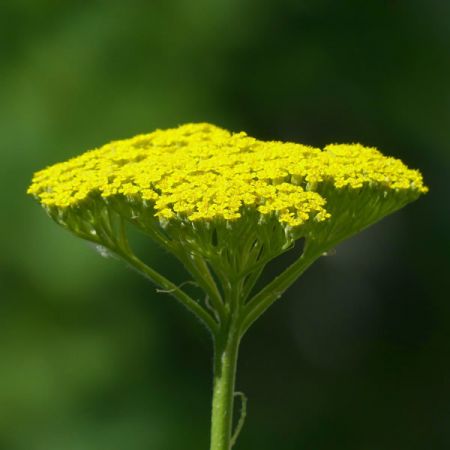
Achillea ‘Moonshine’
A classic pale yellow variety with silver-grey foliage and a long flowering season. It was bred for prolific flowering and makes a beautiful contrast with purple, blue and pink perennials.
‘Moonshine’ can be shorter-lived than some varieties, but its sterile nature means it will not self-seed around the garden — something many gardeners may appreciate.
Best for: Sunny borders, gravel gardens and gardeners who prefer non-seeding varieties.
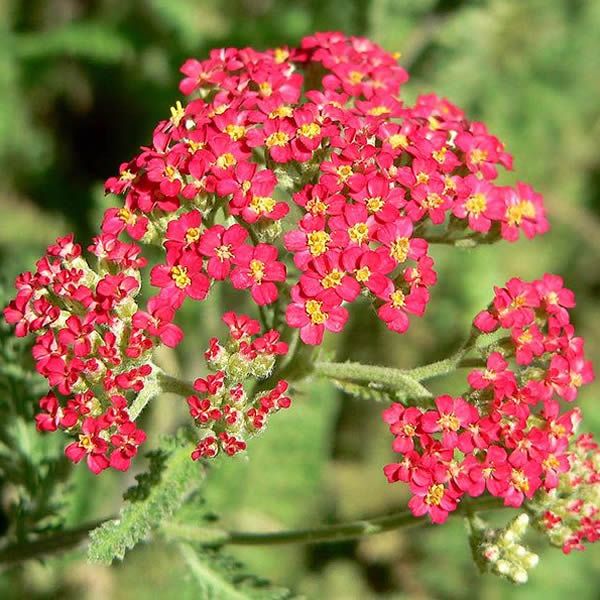
Achillea ‘Paprika’
A vibrant variety with red flowers that often soften and fade as they mature, creating a warm, informal colour effect.
‘Paprika’ has a high nectar volume and is particularly attractive to bees, making it an excellent choice for wildlife-friendly planting.
Best for: Pollinator borders, cottage gardens and warm colour schemes.
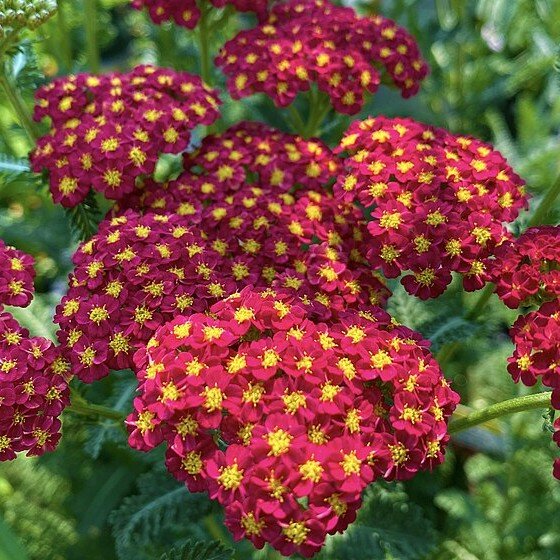
Achillea ‘New Vintage Red’
A compact variety bred for strong colour and tidy growth. Its naturally shorter habit makes it particularly useful where taller Achillea may be too loose or sprawling.
It was bred with container growing in mind, but also works very well near the front of a sunny border.
Best for: Containers, front-of-border planting and compact displays.
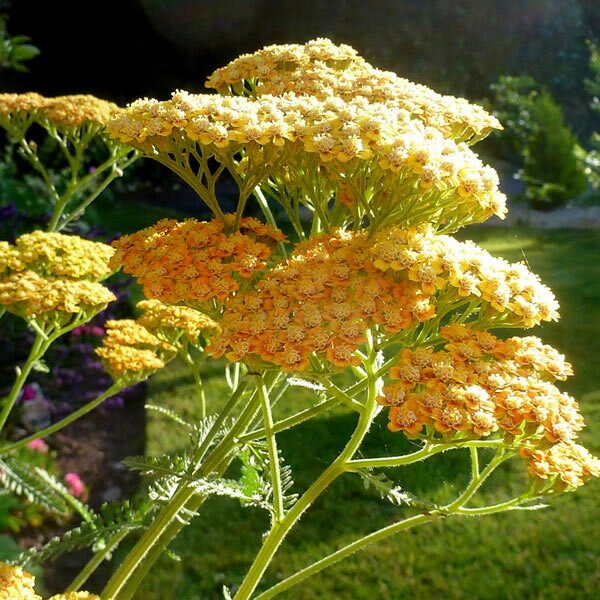
Achillea ‘Terracotta’
A beautiful variety producing warm orange, peach and terracotta tones that blend wonderfully with grasses and late-summer perennials.
It performs particularly well in alkaline soils and tends to hold attractive foliage well into mid-autumn compared with some varieties that thin out after flowering.
Best for: Prairie-style planting, alkaline soils and warm-toned borders.
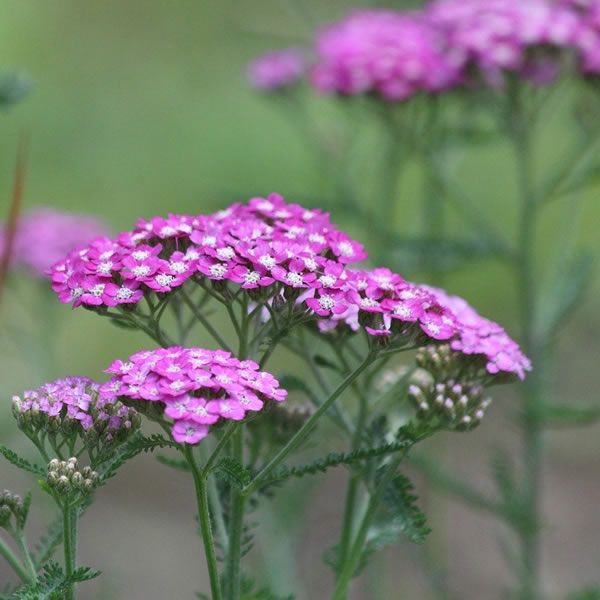
Achillea ‘Pink Grapefruit’
Part of the Tutti Frutti series, ‘Pink Grapefruit’ produces an abundance of large flower heads on sturdy, compact stems.
The series was developed for strong garden performance, self-reliance and low maintenance. If this type appeals, it is also worth looking for others in the series such as ‘Pomegranate’.
Best for: Compact borders, easy-care planting and long-lasting summer colour.
Achillea in Naturalistic Planting
Achillea works beautifully in naturalistic, prairie-style and gravel planting schemes. Its flat flower heads contrast well with spikes, daisies and fine-textured grasses, while the seed heads can provide structure after flowering.
It is especially effective when planted in drifts or repeated through a border, helping to create rhythm and a relaxed, meadow-like feel.
Companion Planting
Achillea pairs best with plants that enjoy the same sunny, free-draining conditions.
Good companions include:
- Salvia: Upright flower spikes contrast beautifully with flat Achillea flower heads.
- Nepeta: Soft blue flowers and aromatic foliage create a relaxed cottage-garden feel.
- Echinacea: Excellent for pollinators and late-summer colour.
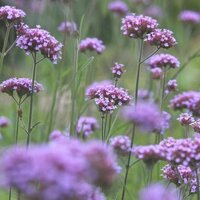
- Verbena bonariensis: Adds height and airiness without crowding.
- Stipa tenuissima: Provides movement and softness in dry, sunny borders.
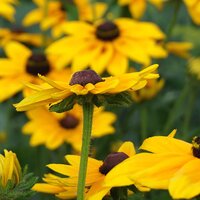
- Rudbeckia: Combines well with warmer Achillea tones.
- Lavender: Shares similar preferences for sun and drainage.
Ongoing Care and Maintenance
- Watering: Water newly planted Achillea until established. After that, it is generally drought tolerant.
- Feeding: Avoid regular feeding. Rich conditions can weaken growth.
- Deadheading: Remove spent flowers to encourage further blooming or leave some seed heads for structure.
- Dividing: Divide clumps every 3–4 years to maintain vigour.
- Winter care: Avoid waterlogged conditions, especially in heavy soils.
Common Problems
- Flopping stems: Usually caused by shade, overly rich soil or overcrowding.
- Short lifespan: Often linked to winter wet or overly fertile conditions.
- Aphids: May appear, but often attract beneficial predators such as ladybirds and hoverflies.
- Rot: Can occur where plants sit in cold, wet soil for long periods.
Propagating Achillea – A Simple Way to Future-Proof Your Planting
One advantage of growing Achillea is just how easily it can be propagated.
Even in gardens where mature plants may occasionally struggle through particularly wet winters, propagating new plants every few years provides an easy way of maintaining your stock.
Division
The easiest and most reliable method.
- Lift established clumps in spring or early autumn.
- Divide using two garden forks or a sharp spade.
- Ensure each section has healthy roots and shoots.
- Replant immediately into free-draining soil or containers.
Dividing every three or four years also rejuvenates older clumps and encourages stronger flowering.
Basal Cuttings
Young shoots around 10–15cm long can be removed during spring.
- Take shoots from the outside of the clump.
- Remove lower leaves.
- Insert into a gritty propagation compost.
- Keep lightly moist until rooted.
Seed
Species Achillea can be grown from seed quite easily.
However, many named cultivars such as 'Moonshine' are sterile or will not come true from seed.
For these varieties, division remains the best method.
Contingency planning:
If you garden in an area prone to prolonged winter wet, keeping one or two younger divisions growing in containers can provide a useful insurance policy should an older border plant fail after an exceptionally damp winter.
Final Thoughts
Achillea is one of those plants that teaches an important gardening lesson: more care does not always produce better results. Given full sun, good drainage, room to spread and relatively lean soil, it will reward you with strong stems, long-lasting flowers and excellent wildlife value.
Whether grown in cottage borders, gravel gardens, prairie-style planting or pollinator-friendly schemes, Achillea is a reliable and valuable perennial — provided we remember that, sometimes, less really is more.
Looking to add Achillea to your garden?
Visit our garden centres in Boyle and Roscommon or browse our current range online for colourful, pollinator-friendly varieties suited to sunny borders.