
Evergreen shrubs covered in summer flowers... graceful perennial spikes that return year after year... despite their similar names, Hebes and Veronicas are often very different plants. In fact, although Hebes have recently been reclassified botanically within the Veronica genus, gardeners still commonly use the traditional name "Hebe" to distinguish these compact evergreen shrubs from their herbaceous perennial relatives.
For most gardeners, that distinction remains useful because the two groups have very different growing habits and, more importantly, different requirements in the garden. Treating a Hebe like a moisture-loving perennial Veronica—or vice versa—can often lead to disappointment.
Fortunately, once you understand these differences, both groups are remarkably rewarding plants. Hebes provide year-round structure, evergreen foliage and valuable late-season nectar for pollinating insects, whilst herbaceous Veronicas produce elegant flower spikes that bring colour and movement to borders through summer.
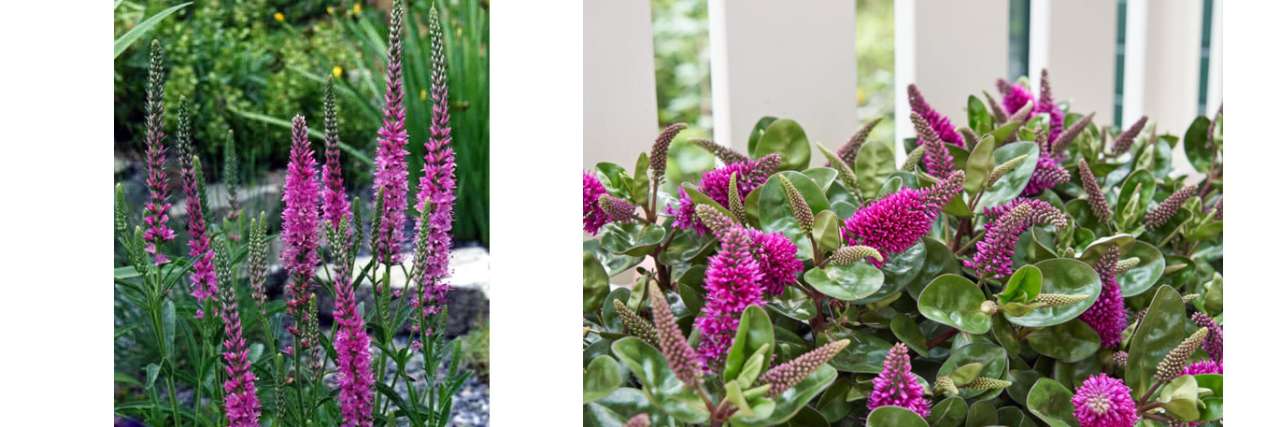
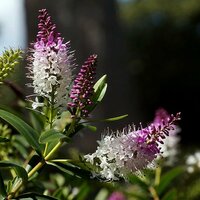
Left we have a pink flowering herbaceous Veronica spicata Rosea and right we have a Hebe or 'Shrubby Veronica' Hebe Donna® Alina Pink Bordeaux. It is easy to see how these plants are related by the flower form although herbaceous veronica flower spike tend to be longer and more upright (Images courtesy of Ghislain118 (CC BY-SA 2.0) and Addenda respectively)
Names Change—Plants Don't
Botanical names occasionally change as our understanding of plant relationships improves. Whilst Hebes are now generally included within the Veronica genus, understanding how a plant naturally grows will always be far more useful than memorising its latest scientific classification.
Two Very Different Plants
Although closely related, Hebes and herbaceous Veronicas occupy rather different roles in the garden. Understanding this distinction helps explain why they require such different growing conditions.
Shrubby Veronica (Hebe)
- Evergreen shrub providing year-round structure.
- Flowers from early summer into autumn depending on variety.
- Excellent source of nectar for bees and other pollinating insects.
- Prefers full sun and free-draining soil.
- Dislikes prolonged winter wet.
- Requires only light pruning.
Herbaceous Veronica
- Herbaceous perennial that dies back each winter.
- Produces upright flower spikes during summer.
- Regrows from the crown each spring.
- Many species appreciate moisture-retentive soil.
- Can usually be cut back hard after flowering or in autumn.
- Easy to divide every few years to maintain vigour.
This difference in growth habit explains why a Hebe may struggle in a damp border where a perennial Veronica flourishes quite happily. Likewise, planting many herbaceous Veronicas into the hot, sharply-drained conditions enjoyed by Hebes may result in disappointing growth and reduced flowering.
Helping Hebes Thrive
Hebes have earned a reputation for being low-maintenance shrubs, and in the right conditions that reputation is well deserved. However, they are often sold simply as suitable for "sun or partial shade" in "well-drained soil", which doesn't always tell the full story—particularly in the west of Ireland.
Whilst Hebes may tolerate light shade, they perform considerably better in full sun. Strong sunlight encourages compact growth, richer foliage colour and abundant flowering, whilst plants grown in too much shade often become open, leggy and produce fewer flowers.
The greatest challenge for Hebes is usually not cold itself but prolonged winter moisture. Their naturally woody stems and relatively fine root systems dislike sitting in saturated soil for extended periods. Improving drainage, planting on a gentle slope or raised bed, or even growing certain varieties in containers can often make the difference between a plant that merely survives and one that thrives for many years.
Think Lavender, Not Laurel
Although Hebes are shrubs, they should not be treated like large evergreen hedging plants. Much like lavender, they prefer sunny, well-drained conditions and respond best to only light trimming after flowering. Cutting back into old woody stems often results in poor regrowth.
Planting Tips
- Choose the sunniest position available.
- Improve drainage where soils remain wet during winter.
- Avoid excessive feeding, which encourages soft growth.
- Water regularly during establishment, particularly in dry spells.
- Apply only a light trim after flowering to maintain shape.
- Avoid cutting into old wood wherever possible.
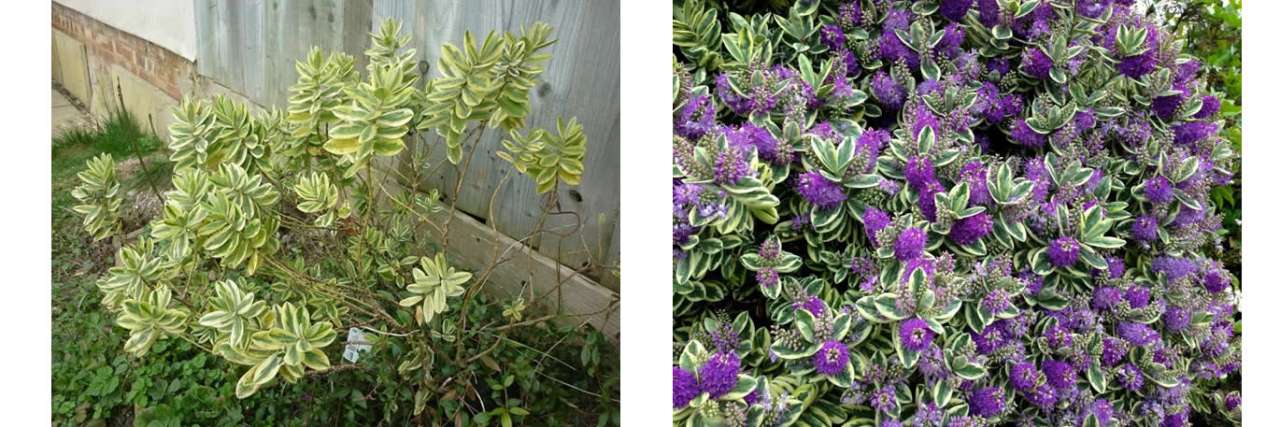
To the left a Hebe andersonii 'Variegata' has gone verry leggy and sad looking. The most likely cause is a lack of adequate sunlight and possible too much water. To the right is a healthy specimen planted in well-drained soil and full sun. At this stage, probably the best thing to do with the first specimen, is maybe try to propagate some new plants from cuttings and position them somewhere with more adequate conditions. Unlike some shrubs, cutting this back hard will more likely kill it altogether as Hebes really only like a light pruning and you shouldn't cut into dead wood (below where you have leaves being produced).
Helping Herbaceous Veronicas Thrive
Unlike Hebes, herbaceous Veronicas disappear below ground during winter before producing fresh shoots each spring. Many varieties naturally grow in meadows, damp grasslands or beside streams, making them far more tolerant of moisture-retentive soils than their shrubby relatives.
Most enjoy full sun, although several species will happily tolerate light shade provided the soil remains fertile and reasonably moist. Taller varieties may benefit from discreet supports before flowering, particularly in more exposed gardens.
Once flowering has finished, spent stems can simply be cut back. Established clumps also respond well to division every few years, helping to maintain strong flowering and healthy growth.
Pollinator Value
Both Hebes and Veronicas are excellent additions to wildlife-friendly gardens, providing nectar for a wide range of pollinating insects including bees, hoverflies and butterflies.
Hebes are particularly valuable because many continue flowering well into late summer and early autumn, helping provide food at a time when many spring-flowering shrubs have already finished. Herbaceous Veronicas complement this beautifully by producing elegant flower spikes that attract pollinators throughout the height of summer.
Our Favourite Hebes
Whether you're looking for neat evergreen structure, colourful foliage or months of flowers for pollinators, these are some of our favourite Hebes for Irish gardens.
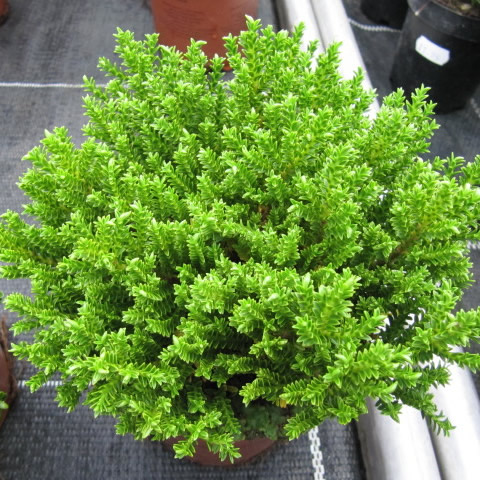
Hebe 'Green Globe'
One of the neatest evergreen Hebes available, 'Green Globe' forms a naturally compact mound of vibrant green foliage that requires very little maintenance. Although grown primarily for its attractive shape rather than its flowers, it makes an excellent low-growing feature for sunny borders, gravel gardens and containers.
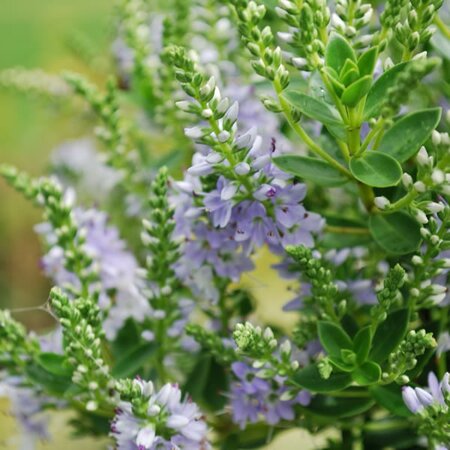
Hebe 'Margaret'
A reliable evergreen shrub producing masses of violet-purple flower spikes throughout summer. Its dense habit, attractive foliage and excellent value to pollinating insects make it one of the most dependable Hebes for sunny, well-drained gardens.
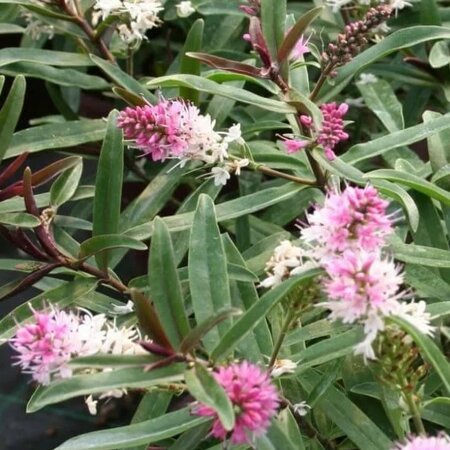
Hebe 'Strawberries & Cream'
A particularly eye-catching variety with soft pink and white flowers held above glossy evergreen foliage. It brings gentle colour to borders and containers whilst providing a long flowering season that is especially attractive to bees.
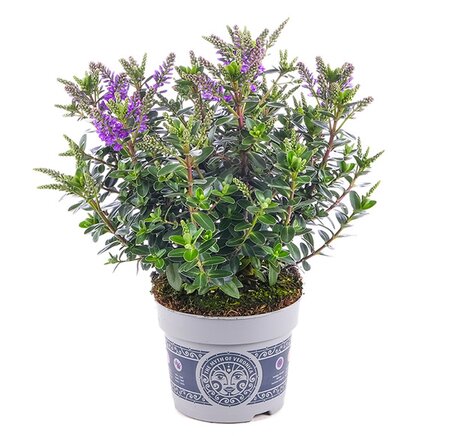
Hebe 'All Blooms' Series
Bred to produce an exceptionally long flowering season, the All Blooms series combines compact growth with masses of flowers over many weeks. These modern cultivars are ideal for containers, sunny borders and wildlife-friendly planting schemes, offering colour well into late summer whilst remaining neat and manageable.
Our Favourite Herbaceous Veronicas
If you're looking for upright flower spikes, reliable summer colour and excellent pollinator value, these perennial Veronicas are among our favourites. Unlike Hebes, they die back naturally each winter before returning with fresh growth the following spring.
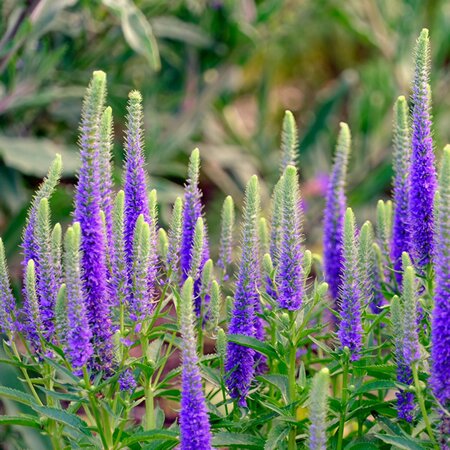
Veronica 'Anniversary' Series
A compact collection producing elegant flower spikes in a range of colours throughout summer. Their tidy habit makes them particularly suitable for the front of mixed borders, cottage gardens and container displays where reliable flowering and pollinator appeal are priorities.
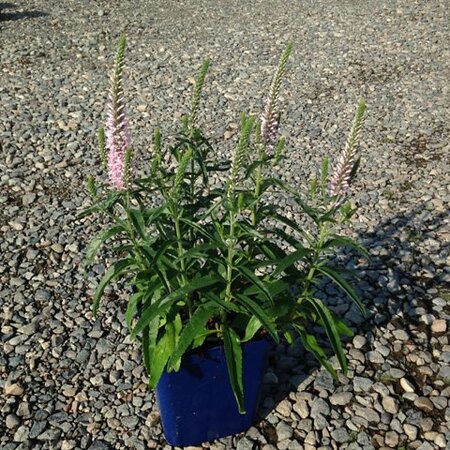
Veronica 'Moody Blues' Series
Bred for compact growth and prolific flowering, the Moody Blues series produces dense spikes of vibrant blooms over an extended season. Excellent for attracting bees and butterflies, these varieties also make dependable, easy-care additions to sunny perennial borders.
Common Problems
Hebe Becoming Leggy
Cause: Usually insufficient sunlight.
Solution: Move young plants to a sunnier position if practical, or ensure future plantings receive at least six hours of direct sunlight each day.
Winter Dieback
Cause: Waterlogged soils rather than low temperatures.
Solution: Improve drainage, avoid heavy clay where possible and consider raised beds or containers in particularly wet gardens.
Poor Regrowth After Pruning
Cause: Hebes cut back into old woody stems.
Solution: Restrict pruning to light trimming immediately after flowering, avoiding older wood wherever possible.
Flopping Flower Spikes (Herbaceous Veronica)
Cause: Rich soils, excessive shade or exposure to strong winds.
Solution: Grow in full sun where possible and support taller varieties early in the season before flowering begins.
Final Thoughts
Although Hebes and herbaceous Veronicas now share the same botanical genus, they reward very different approaches in the garden. Hebes excel as evergreen shrubs that provide year-round structure and months of nectar-rich flowers, whilst herbaceous Veronicas bring elegant flower spikes and seasonal colour to perennial borders.
Understanding those differences is often the key to success. Rather than simply asking whether a plant will tolerate a particular situation, it is usually more helpful to ask whether it will genuinely thrive there. A Hebe planted into heavy, damp shade may survive for a few years, but one growing in a sunny, free-draining border is likely to remain compact, floriferous and healthy for much longer.
One Simple Principle
Don't choose a place simply because a plant will tolerate it. Choose the place where it naturally wants to grow.
Whether botanical names change or new varieties appear, that simple principle remains one of the most reliable guides to successful gardening.
Looking for Hebes & Veronicas?
Visit Ardcarne Garden Centre in Boyle or Roscommon Town to explore our seasonal selection of Hebes, Veronicas and many other pollinator-friendly shrubs and perennials. Our team is always happy to help you choose the right plant for the right place in your garden.
You can also browse many of our plants online, where you'll find inspiration, practical advice and a growing collection of detailed gardening guides designed specifically for Irish gardens.