
For many gardeners, container gardening means pots beside the front door, hanging baskets on a wall or a few planters on the patio. But containers can do far more than simply decorate paved spaces. Used thoughtfully, they can become one of the most flexible tools in the modern garden.
As Irish weather becomes more unpredictable — with wetter winters, sudden cold spells, dry periods and occasional summer heatwaves — growing some plants in containers gives gardeners a little more control. Containers allow us to move, protect, rotate and experiment with plants that may not thrive permanently in the ground.
Think beyond the patio.
A container does not always have to be on show. Pots can be tucked into borders, hidden among more permanent planting, raised for effect or moved seasonally to create changing focal points throughout the garden.
Why Think Beyond the Patio?
Containers are often treated as separate from the garden, but they can be used as part of the garden itself.
They can:
- Fill temporary gaps in borders
- Create seasonal highlights
- Add height and structure
- Allow sensitive plants to be moved when conditions change
- Bring colour or fragrance exactly where it is needed
- Let gardeners experiment without permanently committing a plant to one spot
This makes container growing especially useful in gardens where soil, exposure or winter wet limits what can be grown successfully in the ground.
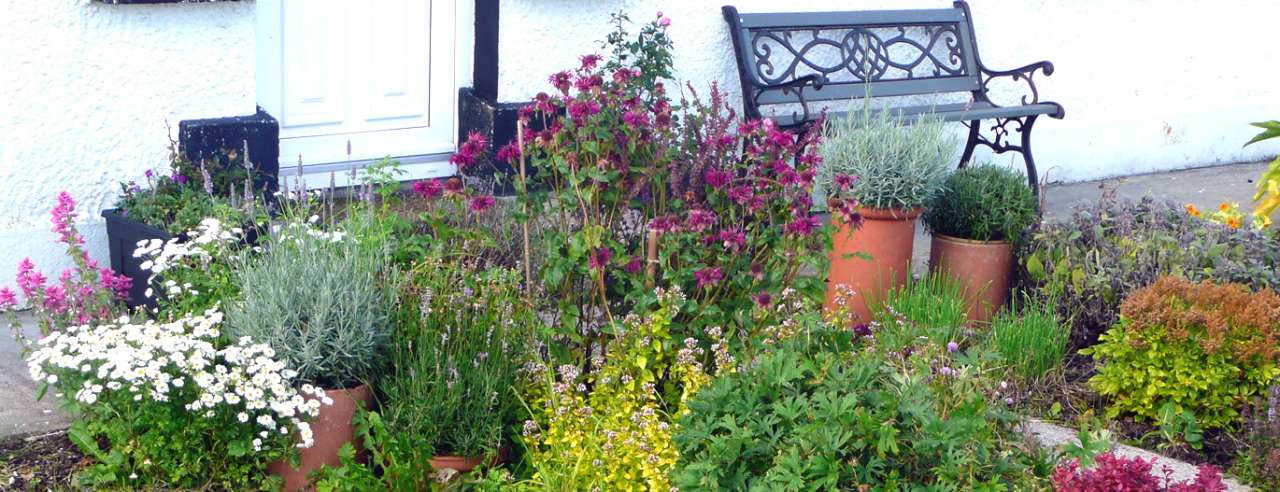
Above you can see some old clay pipe sections being used as containers for lavender, which not only enabled me to adjust the height of the plant but also meant I could relocate the lavender easily over winter (and yes, I did eventually straighten those containers up!) - Photo by Richard (GC) in Boyle, May 2020.
Gardening for an Unpredictable Climate
Irish gardeners are used to variable weather, but recent years have shown just how quickly conditions can swing from one extreme to another.
We may experience:
- Prolonged winter wet
- Late frosts
- Dry summer spells
- Short heatwaves
- Sudden heavy rainfall
- Strong winds
Plants that thrive during a dry summer may struggle badly if their roots sit in cold, wet soil all winter. Equally, plants that dislike heat may benefit from being moved into light shade during very hot spells.
Containers give gardeners options. They allow us to respond to conditions rather than simply hoping the weather suits the plant.
Grow Plants You Couldn’t Otherwise Grow
One of the greatest benefits of container gardening is the ability to grow plants that may not suit your garden soil or winter conditions.
This is especially useful for plants that prefer sharp drainage or drier winter conditions, such as:
- Achillea
- Lavender
- Agapanthus
- Salvias
- Mediterranean herbs
- Small ornamental grasses
- Olives and other Mediterranean-style plants
In the ground, some of these plants may struggle in heavy Irish soils or prolonged winter wet. In containers, drainage can be improved, compost can be tailored, and plants can be moved to a more sheltered position when needed.
Container growing is not just for small spaces.
Even in large gardens, pots can be used strategically to grow plants that would otherwise be difficult to maintain through changing seasonal conditions.
Overcoming Soil pH
Containers also allow gardeners to grow plants that may not naturally suit their garden soil. By choosing the appropriate compost, it's perfectly possible to grow acid-loving (ericaceous) plants such as showy Azaleas, Camellias and Pieris in gardens with more alkaline soil. Likewise, gardeners hoping to maintain the rich blue flowers of certain Hydrangeas can often do so more successfully in containers using an ericaceous compost, where soil conditions are much easier to manage.
Create Seasonal Displays Without Replanting Borders
Containers allow you to change the focus of a garden through the year without disturbing permanent planting.
For example:
- Spring: Bulbs, primroses, violas and early alpines
- Summer: Agapanthus, lavender, salvias, achillea and herbs
- Autumn: Grasses, heucheras, asters and Japanese anemones
- Winter: Skimmia, heathers, small conifers, ivy and winter pansies
As one container display fades, it can be moved away and replaced with another. This allows different parts of the garden to shine at different times of year.
Don’t Be Afraid of Plastic Pots
Not every container has to be an expensive glazed pot or decorative urn.
Plastic nursery pots, recycled containers and simple black pots can be extremely useful, especially when they are tucked into borders where the container itself is hidden by surrounding plants.
Used this way, the pot becomes functional rather than decorative.
- Black pots can disappear among foliage
- Recycled pots reduce waste
- Plastic containers are lightweight and easy to move
- Cheaper pots make it easier to experiment
Thoughtful positioning can allow the plant to appear as part of the border while still being fully removable when conditions change.
When the Pot Is the Feature
Of course, there are also times when the container itself should be part of the display.
Large terracotta pots, glazed containers, stone troughs, half barrels and decorative planters can all add character, structure and style to a garden.
A well-chosen pot can:
- Frame an entrance
- Create a focal point
- Add colour or texture even before planting
- Lift a plant to eye level
- Provide year-round structure
While good containers can be an investment, they can also last for many years and help protect favourite plants from unsuitable conditions.
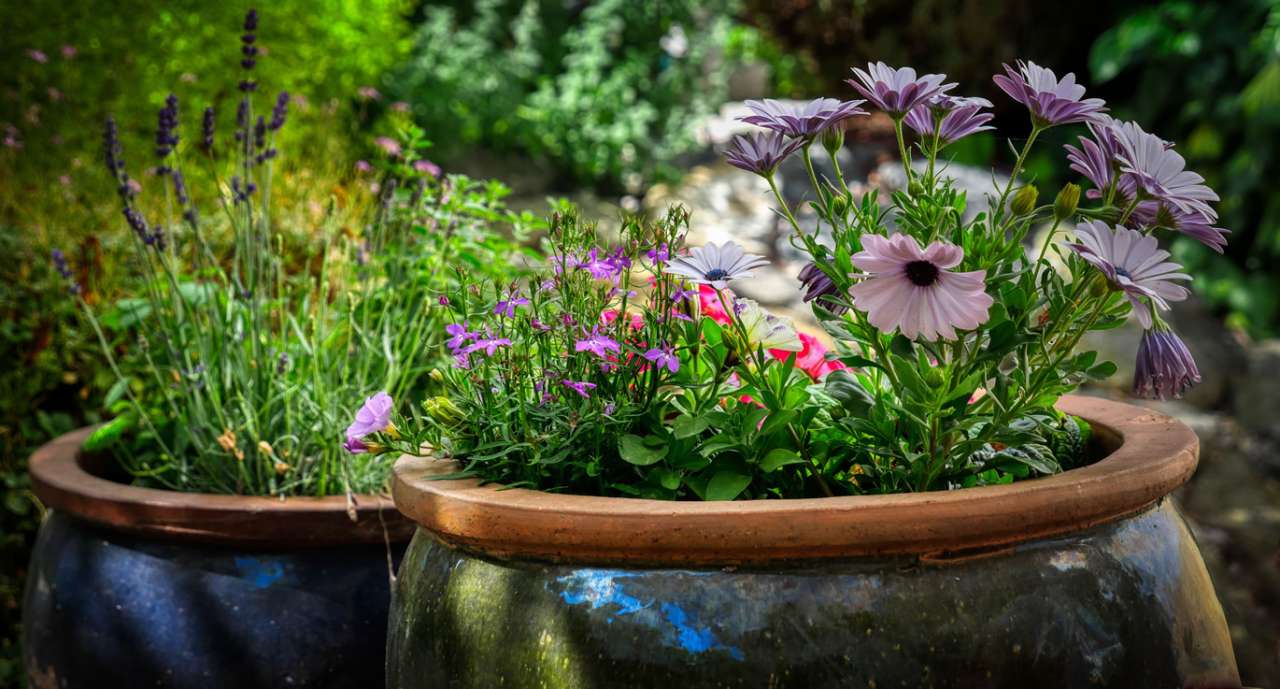
These urns are certainly a feature in themselves, but they also provide an opportunity to create colourful focal points. Here they are planted up with more tender perennials and bedding plants that like free draining soil with sun exposure and wouldn't perform so well in the shady, less drained beds around them. - Image by Albrecht Fietz from Pixabay
Create Levels and Hidden Highlights
Containers are a useful way to add height and depth to planting schemes.
They can be used to:
- Raise low-growing plants so they are easier to appreciate
- Display trailing plants over the edge of a pot or wall
- Add height to flat borders
- Create temporary focal points
- Bring fragrance closer to seating areas or paths
This can be particularly effective in established borders where planting space is limited but a seasonal feature is still wanted.
Move Plants, Not Just Pots
One of the great advantages of container gardening is mobility.
A plant can be moved:
- Into the spotlight when in flower
- Into shelter during bad weather
- Out of view when resting or recovering
- Closer to seating areas when fragrant
- Into shade during excessive heat
This gives gardeners far greater flexibility than permanent planting alone.
Saving Money in the Long Run
Containers do involve some cost, especially if using decorative pots, but they can also help prevent plant losses.
If a favourite specimen can be protected during winter wet, moved during frost or grown in the correct compost rather than unsuitable garden soil, the container may quickly pay for itself.
In some cases, a simple recycled pot hidden within a border can be enough to save a plant that might otherwise fail in open ground.
Think Like a Garden Designer
Garden designers often use containers to create rhythm, repetition and seasonal flexibility.
You can do the same at home by using pots to:
- Repeat a colour through the garden
- Frame paths, steps and entrances
- Soften hard landscaping
- Draw the eye to a particular view
- Add temporary impact where permanent planting is not yet mature
Containers can also help bridge the gap while young borders are still filling out.
Wildlife Benefits
Container planting can also support wildlife, especially when nectar-rich plants are grouped together.
Pollinator-friendly pots can be moved into sunny, sheltered areas where bees, hoverflies and butterflies are most active.
Good container choices for wildlife include:
- Lavender
- Salvia
- Nepeta
- Achillea
- Thyme
- Verbena
Even a small group of well-planted containers can make a meaningful contribution to pollinators.
Our Favourite Plants for Climate-Resilient Containers
Some plants are especially useful when grown this way because they either need better drainage, seasonal protection or the ability to be moved into the spotlight when at their best.
- Achillea: Excellent in sunny, free-draining containers.
- Lavender: Ideal where garden soil is too wet or heavy.
- Agapanthus: Flowers well when slightly restricted and benefits from winter shelter.
- Salvias: Useful for long summer colour and easier to protect in pots.
- Heucheras: Provide year-round foliage colour and work well in mixed displays.
- Hostas: Excellent in shaded containers and easier to protect from slugs.
- Small Acers: Perfect for sheltered containers with careful watering.
- Skimmia and Heathers: Reliable options for winter and spring displays.
- Mediterranean herbs: Thyme, rosemary and oregano all appreciate sharp drainage.
Practical Tips for Success
- Choose the right compost: Match the compost to the plant’s needs.
- Prioritise drainage: Make sure pots have clear drainage holes.
- Raise pots slightly: Pot feet or small blocks help prevent drainage holes from becoming blocked.
- Water carefully: Containers dry out faster in summer but can also stay too wet in winter.
- Feed lightly where needed: Plants in pots depend entirely on the nutrients available in the compost.
- Move plants seasonally: Use mobility as one of the main advantages of container growing.
Terracotta or plastic?
Terracotta pots are attractive and allow moisture to evaporate more freely, which suits many dry-loving plants. Plastic pots are lighter, cheaper and easier to move. Both have their place — the best choice depends on whether the pot is decorative, practical, or both.
Final Thoughts
Perhaps the biggest change is not where containers are placed, but how we think about them.
They are not simply decorative features for patios, balconies and front doors. Used creatively, containers can become one of the most flexible and climate-resilient tools in the garden.
They allow us to grow plants that might otherwise struggle, protect favourite specimens from difficult conditions, create seasonal highlights and adapt our gardens as the weather changes.
In an increasingly unpredictable climate, container gardening is not just a solution for small spaces — it is a practical strategy for gardeners who want more control, more flexibility and more opportunities to keep their gardens looking good throughout the year.
Looking to rethink your container planting?
Visit our garden centres in Boyle and Roscommon or browse our range of pots, composts and seasonal plants online to create flexible displays for your garden.