

Few flowering perennials seem quite as at home in the west of Ireland as Astilbe. Whilst many gardeners struggle with those cooler, damper corners of the garden where the sun only makes a fleeting appearance, Astilbes positively thrive there. Their elegant plumes of flowers rise above attractive fern-like foliage throughout summer, bringing colour, texture and movement to parts of the garden where many other flowering plants simply fail to perform.
That said, Astilbes are often misunderstood. They're sometimes planted in hot, sunny borders because of their colourful blooms, only for gardeners to be disappointed when the foliage scorches or the flowers quickly fade. The reality is that Astilbes aren't difficult plants—they simply need the right conditions.
Understanding the Plant
Rather than trying to improve the place to suit the plant, choose the plant that already suits the place.
Astilbes evolved naturally in woodland margins, stream sides and mountain meadows where their roots remain cool and consistently moist throughout the growing season. Once you understand this, everything else about growing Astilbes suddenly makes sense.
Why Grow Astilbe?
There are very few perennials capable of providing such a combination of elegant flowers and attractive foliage in shaded parts of the garden.
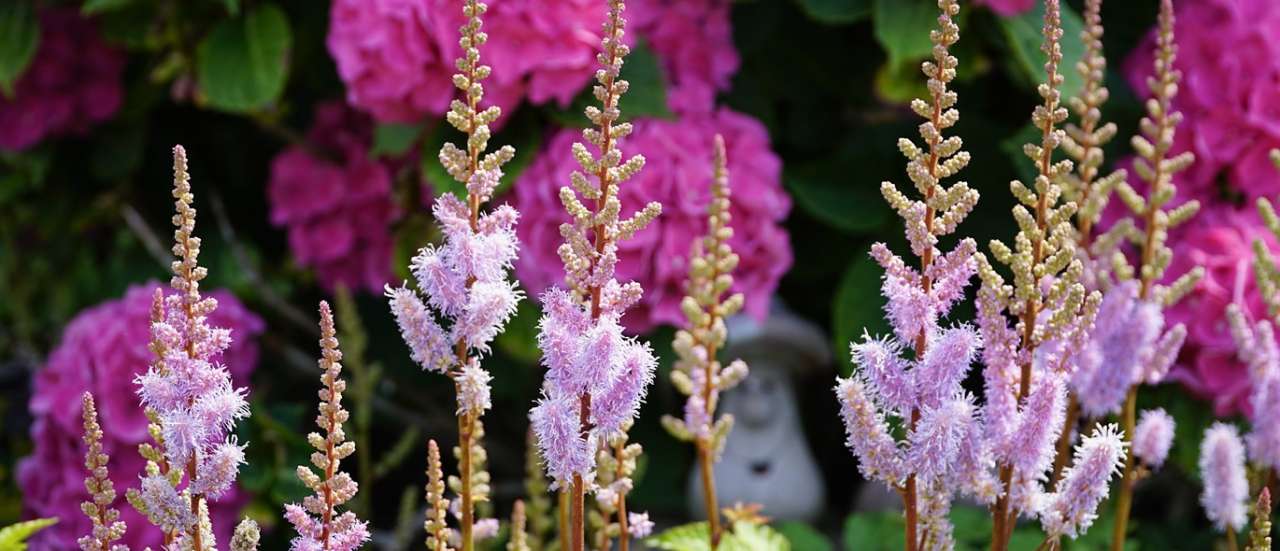
Depending on the variety, Astilbes produce graceful plumes in shades of white, cream, blush pink, rose, cerise, crimson and deep burgundy from early to late summer. Their finely divided foliage often emerges bronze or copper in spring before maturing to rich green, with many varieties taking on attractive autumn tones before dying back for winter.
Unlike many traditional shade-loving plants which are grown primarily for their foliage, Astilbes provide genuine floral impact whilst still complementing hostas, ferns and other woodland perennials beautifully.
- Excellent for damp borders.
- Reliable in partial shade.
- Long-lasting summer flowers.
- Excellent cut flowers.
- Attractive seed heads that may be left for winter interest.
- Bee-friendly blooms.
- Fully hardy herbaceous perennial.
Perfect for West of Ireland Gardens
Many gardeners spend years trying to improve damp areas of the garden when, in reality, they simply haven't chosen the right plants. Moisture-retentive soil that proves challenging for Mediterranean plants can provide almost ideal growing conditions for Astilbes.
Choosing the Right Position
If there's one secret to growing Astilbes successfully, it's understanding where they naturally want to grow.
They perform best in moisture-retentive soil that never completely dries out during summer. Dappled shade beneath deciduous trees, woodland borders and the edges of ponds or streams all make excellent planting positions.
Although you'll often see Astilbes described as suitable for "full sun or partial shade", this deserves a little explanation.
Yes, many varieties will tolerate full sun provided the soil remains consistently moist. However, in reality, prolonged sunshine—particularly during the increasingly frequent dry spells we've experienced in recent Irish summers—can quickly lead to leaf scorch, shorter flowering and increased watering requirements.
For most gardens in Ireland, particularly in the west, partial shade remains the ideal position.
Heatwaves Are Changing How We Garden
Whilst Astilbes remain exceptionally well suited to our Irish climate, recent summers have shown that even moisture-loving perennials can suffer during prolonged hot, dry weather.
Mulching around the base of plants each spring with compost or leaf mould helps retain soil moisture, whilst deep watering during dry spells is far more beneficial than little-and-often watering.
Planting Astilbes
Astilbes are best planted during spring or autumn when the soil is naturally moist and temperatures are cooler, allowing the roots time to establish before periods of heat or frost.
Before planting, enrich the soil with generous quantities of compost or well-rotted organic matter. Unlike many drought-tolerant perennials we've discussed in previous guides, Astilbes positively appreciate fertile, humus-rich soils.
Planting Checklist
- Dig a hole approximately twice the width of the pot.
- Improve the soil with compost or leaf mould.
- Water the plant thoroughly before removing it from its pot.
- Position the crown level with the surrounding soil.
- Backfill and firm gently.
- Water deeply after planting.
- Apply a mulch around the base.
As with many perennials, incorporating mycorrhizal fungi around the root ball may also help plants establish more quickly.
Can Astilbes Be Grown in Containers?
Absolutely—and in some situations they can perform exceptionally well.
Container growing offers an excellent solution where garden soils are either too dry or where you wish to introduce colour into shaded patios or courtyards.
The key is choosing a sufficiently large container that won't dry out rapidly.
Use a good-quality moisture-retentive compost, incorporating some garden compost or leaf mould if available, and be prepared to water regularly during prolonged dry weather.
One advantage of container growing is that pots may be repositioned seasonally, allowing plants to benefit from brighter spring conditions before moving them into cooler positions during periods of intense summer sunshine.
Don't Panic If...
Your Astilbe appears to disappear each autumn.
Like many herbaceous perennials, Astilbes die back completely during winter before re-emerging from below ground in spring. Resist the temptation to assume they've been lost—provided the crown remains healthy they'll return year after year.
Varieties We Love This Season
Astilbes are available in a wonderful range of colours and sizes. Here are a few of our favourites.
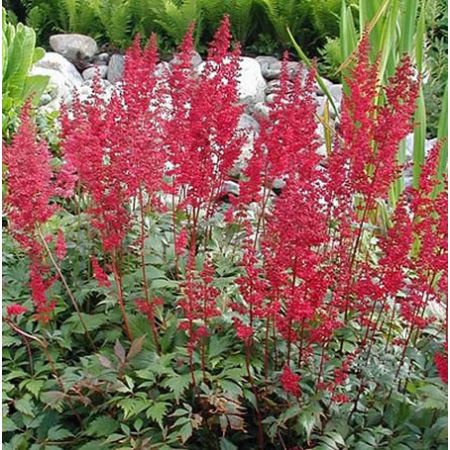
Astilbe 'Fanal'
Perhaps one of the finest deep red Astilbes available, 'Fanal' produces rich crimson flower plumes above bronze-flushed spring foliage that matures to deep green. A dependable performer that brings real drama to woodland borders.
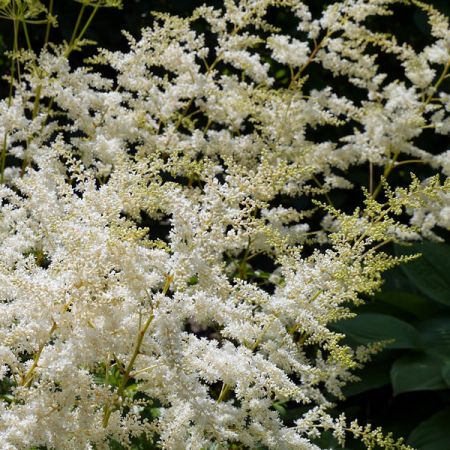
Astilbe 'Deutschland'
Elegant creamy-white flower plumes held above fresh green foliage make this one of the brightest choices for shaded planting schemes. Particularly effective when planted in groups where the flowers almost seem to glow beneath trees.
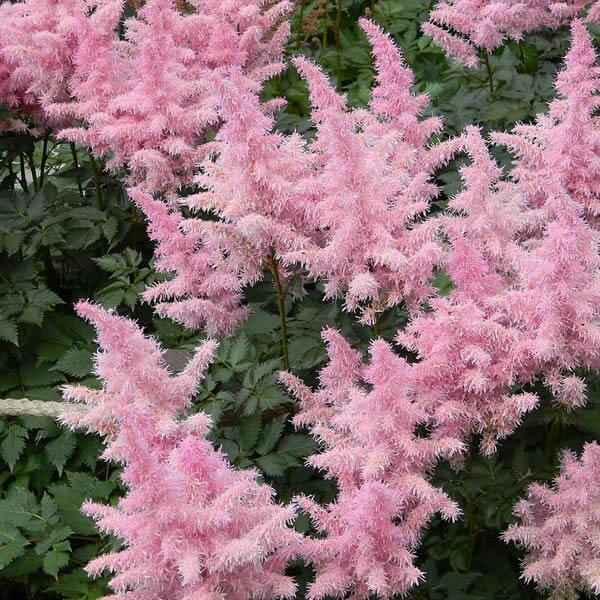
Astilbe 'Fireworks Pink'
Produces pale pink plumes of flowers in summer that contrast beautifully with the dark green, feathery, almost fern-like foliage.
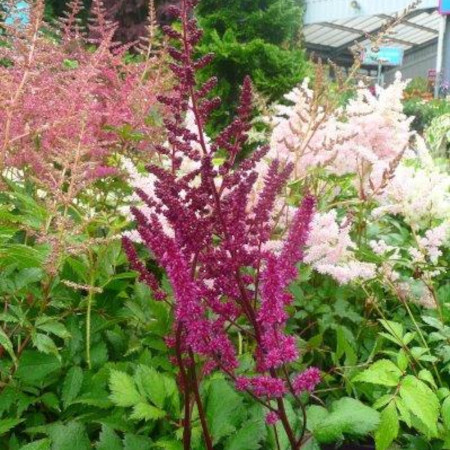
Astilbe 'Visions'
With unusually dense raspberry-pink flower heads and compact growth, 'Visions' performs particularly well in smaller gardens and containers whilst still providing excellent summer colour.

Astilbe 'Chocolate Shogun'
Chosen as much for its handsome foliage as its flowers, 'Chocolate Shogun' produces striking chocolate-bronze leaves topped with soft pink plumes. An outstanding foliage plant even before flowering begins.
Looking After Your Astilbes Through the Seasons
One of the pleasures of growing Astilbes is that, once established in the right position, they ask for remarkably little in return. Unlike many summer-flowering perennials, they don't require constant staking, feeding or deadheading to perform well. Instead, success comes from maintaining the growing conditions they naturally enjoy.
Watering
The single most important aspect of Astilbe care is ensuring the soil never dries out completely during the growing season.
During prolonged dry weather, water thoroughly every few days rather than giving plants a light daily sprinkle. Deep watering encourages stronger root systems and helps plants cope far better with periods of drought.
Container-grown Astilbes will naturally require more frequent watering, particularly during warm weather.
Feeding
Astilbes aren't especially hungry plants, but they do appreciate fertile soil rich in organic matter.
An annual mulch of garden compost, leaf mould or well-rotted manure applied each spring is usually all that's required. This not only provides nutrients but, perhaps more importantly, helps retain valuable soil moisture throughout summer.
If your soil is particularly poor, a balanced slow-release fertiliser applied in spring will support healthy foliage and abundant flower production.
Leave the Seed Heads?
Whilst spent flower stems may be removed once flowering has finished, many gardeners choose to leave the attractive seed heads standing throughout autumn and winter. They add texture to the garden, catch frost beautifully and continue providing architectural interest long after flowering has ended.
Cut the old stems back in late winter or early spring before fresh growth begins.
Propagating Astilbes
Astilbes are among the easiest herbaceous perennials to propagate, with division being both simple and beneficial to the health of mature plants.
As clumps age they gradually become larger and more congested. Dividing them every four or five years helps reinvigorate growth whilst also providing additional plants for elsewhere in the garden.
How to Divide Astilbes
- Lift the entire clump during early spring or autumn.
- Using a sharp spade or knife, divide the crown into healthy sections, ensuring each division has several shoots and a good root system.
- Replant immediately into prepared soil.
- Water thoroughly until re-established.
More Plants for Free
Unlike some perennials which resent disturbance, established Astilbes generally respond very well to periodic division. It's an excellent way to increase your stock, refresh older plants and fill other suitable areas of the garden.
Companion Planting
Astilbes combine beautifully with many other moisture-loving shade perennials, allowing you to create planting schemes that provide interest from spring through autumn.
For Woodland Gardens
- Hostas
- Ferns
- Brunnera
- Epimedium
- Hellebores
For Damp Borders
- Ligularia
- Rodgersia
- Iris sibirica
- Primulas
- Filipendula
For Japanese-inspired Planting
- Japanese Maples (Acer palmatum)
- Hakonechloa
- Hostas
- Japanese Forest Ferns
- Hydrangeas
Notice how many classic woodland plants naturally enjoy the same growing conditions as Astilbes. Rather than forcing contrasting plants together, successful borders often come from combining plants that already share similar needs.
Common Problems
Scorched Leaves
Usually caused by excessive sunshine combined with dry soil.
Solution: Improve soil moisture, mulch generously and consider moving plants to partial shade if problems persist.
Poor Flowering
Often the result of drought stress or overcrowded mature clumps.
Solution: Divide older plants and ensure consistent moisture throughout spring and early summer.
Brown Leaf Edges
A common response to hot winds and prolonged dry weather rather than disease.
Solution: Water deeply, mulch well and avoid allowing plants to dry out.
Slugs and Snails
Fresh spring growth may occasionally attract slugs and snails.
Solution: Regular monitoring together with whichever control method best suits your gardening style is usually sufficient.
Frequently Asked Questions
Can Astilbes grow in full shade?
Yes, although flowering is generally best where plants receive some filtered light or morning sunshine.
Can they tolerate full sun?
Only if the soil remains consistently moist. In most Irish gardens, partial shade generally produces healthier plants with longer-lasting flowers.
Should I deadhead Astilbes?
You can, but many gardeners prefer leaving the seed heads for their ornamental value through autumn and winter.
Are Astilbes evergreen?
No. They are herbaceous perennials that die back completely each winter before re-emerging in spring.
Final Thoughts
Astilbes remind us that every garden has opportunities if we're prepared to understand the conditions it naturally offers.
That cool, slightly damp corner which proves disappointing for sun-loving perennials may be exactly where an Astilbe will flourish. Rather than fighting against your garden, sometimes the most rewarding approach is simply choosing plants that already feel at home there.
Beautiful foliage, elegant summer flowers, excellent hardiness and surprisingly little maintenance once established make Astilbes one of the finest perennials for Irish gardens—particularly here in the west, where our climate often provides precisely the conditions they love.
Quick Reminder
Astilbes aren't difficult plants—they simply have clear preferences. Give them moist, humus-rich soil and shelter from the hottest afternoon sun, and they'll reward you with years of dependable summer colour.
Ready to Find the Right Plants for Your Garden?
Whether you're creating a cool woodland border, brightening a shady corner or searching for reliable plants that thrive in Irish conditions, we're always happy to help. Browse our collection online or visit us in-store for friendly advice on choosing plants that will truly flourish in your garden.
Explore Our Plant Collection