
With a mild November, there may still be kale, leeks, chard and other vegetables growing happily in the garden. But as beds gradually become empty, the question is: what should we do with them until spring?
Ask several gardeners and you may get several different answers. Some dig their beds over, others add compost without disturbing the soil, while some leave plants growing through winter. Each method has a purpose, and the best choice depends on your soil, the weeds present and how you intend to use the bed next year.
First, take a look at your soil
Before deciding what to do, consider whether your soil is heavy and clay-rich, light and sandy, or somewhere in between. Just as importantly, check how wet it is. Here in the west of Ireland, a mild autumn can also be a very wet one.
Option 1: The traditional approach — digging
The Royal Horticultural Society (RHS) generally recommends digging heavy clay soils in autumn, while lighter sandy soils are better dug in spring.
- Heavy soils: Autumn digging, when the ground is workable, leaves clods exposed to winter weather. Freezing and thawing can help break them down, making spring preparation easier. This benefit depends on getting suitable weather and is not a reason to dig wet clay.
- Light soils: These are usually easier to work and can lose nutrients readily through winter rainfall. Waiting until nearer planting time can reduce unnecessary disturbance and nutrient loss.
Digging can also help deal with some weeds and relieve compaction. However, repeatedly turning soil is not always necessary and may disturb soil organisms and structure. If your beds already grow vegetables well, you may have little to gain from digging them every year.
Option 2: Leave a little living cover
If a cleared bed is covered with low-growing annual weeds such as chickweed, hairy bittercress or speedwell, there is an argument for leaving them temporarily. Their leaves protect exposed soil from heavy rain, and their roots hold the surface together — effectively providing an informal living mulch.
Where the weeds are genuinely annual and have not set seed, you could cut or dig them in around three to four weeks before planting, allowing time for the greenery to decompose. For an early spring crop, that might mean dealing with them in February — but only if the ground is fit to work. Otherwise, remove or cut them down and compost the material, keeping seedheads out of the compost if you are unsure it will heat sufficiently.
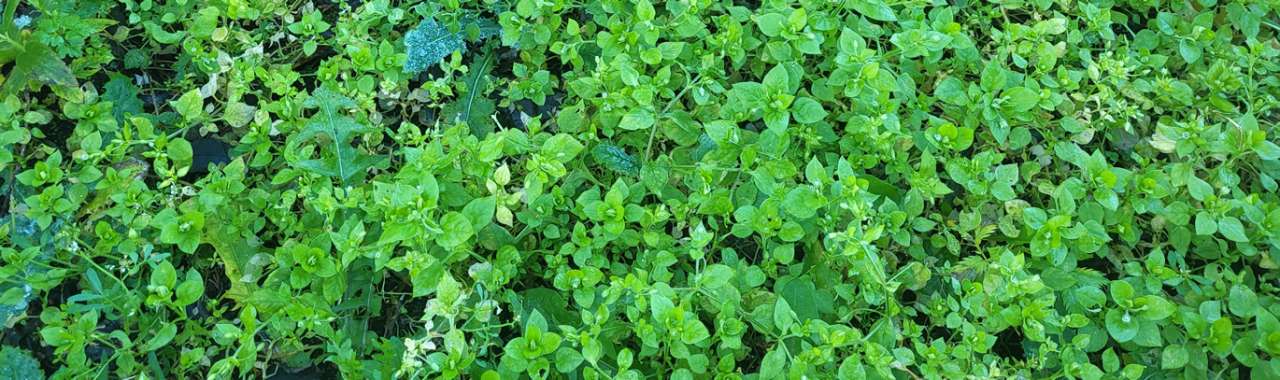
This is one of my veg beds completely covered in chickweed with the odd perennial weed in the mix. Although I may removed the obvious perennial weed such as dandelion where I can see them, I shall leave the rest and just cover this bed with black plastic. This will starve the annual weeds of light and they'll just rot back down into the soil. Alternatively I could leave these until early spring, but this may prove to be more work later (Photo taken by Richard (AGC) 12/11/2026).
Option 3: No-dig — compost on the surface
With a no-dig approach, you avoid turning the soil. Instead, clear or suppress troublesome weeds and spread a layer of well-rotted compost on the surface, allowing worms and other soil life to incorporate organic matter gradually.
Some gardeners do this in autumn and cover the bed with reusable, securely weighted black polythene or another light-excluding cover, like cardboard until spring. The cover helps suppress weeds and prevents the soil surface becoming excessively wet. Others leave the compost uncovered, allowing rain and soil life to work on it naturally.
There is also a reasonable case for covering the bed now and adding compost in late winter or spring, particularly in high-rainfall areas or on sandy soils where soluble nutrients may wash away. Well-matured, stable compost is less prone to rapid nutrient loss than fresh manure, but timing still matters.
Option 4: Sow a green manure
Rather than leave the soil bare, you can grow a crop specifically to protect and improve it. These are known as green manures. Their roots help hold the soil together, and actively growing plants can take up nutrients that might otherwise be lost during winter rain.
For late-autumn sowing, winter field beans or grazing rye may be options, depending on conditions and seed availability. Many other green manures need to be sown earlier in autumn, so always check the recommended sowing window.
In spring, green manures can be cut down and either incorporated into workable soil or left on the surface to decompose. Allow several weeks before sowing small seeds into the bed. Some, especially grazing rye, can regrow if not properly terminated.
A consideration for early planting: In areas with wet winters and springs, such as here in the west of Ireland, green manures may not be the best choice for vegetable beds you intend to plant early in the season. Wet soil can delay digging in the crop, and you should ideally allow around 3–4 weeks for the material to begin decomposing before planting. In cold conditions, this process may take longer. Green manures can therefore be more practical in beds intended for later spring or summer crops. Alternatively, some can be cut down and left on the surface, avoiding the need to dig wet soil.
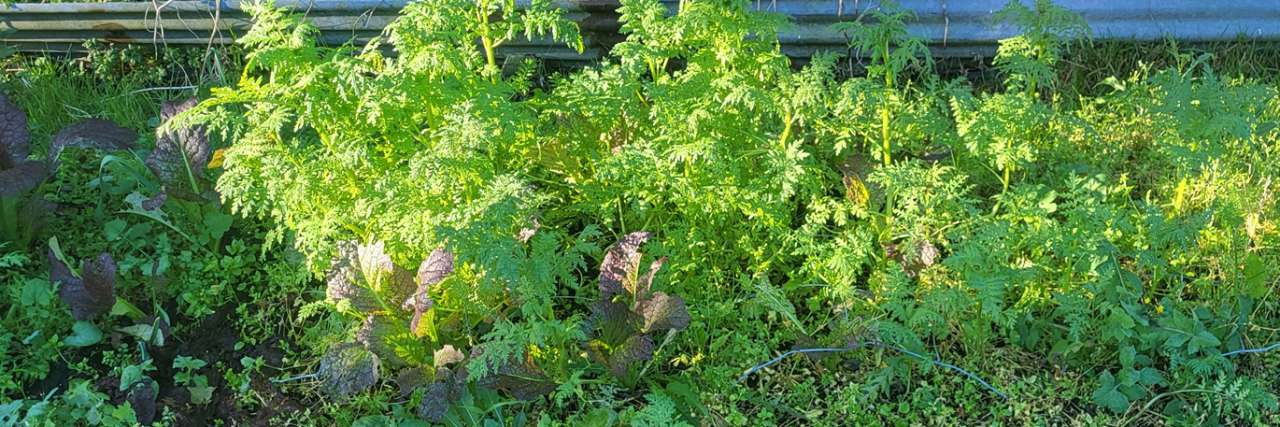
Here I have a bed (or part of it) where I have been growing phacelia and red mustard as green manures, sown at the end of summer. I will dig these in as soon as the ground becomes workable next spring. Inevitably I will also have to remove some weeds as I go.
Arguably, with how wet it tends to be here in spring, this might not be the best approach for our climate here in the west of Ireland, especially if you plan to be sowing early on in the season (Photo taken by Richard (AGC) 12/11/2026).
For more information on different green manures we recommend reading the RHS guide to green manures for suitable crops and sowing times.
Option 5: Leave a healthy bed largely alone
Sometimes the simplest option is to remove spent crops and any problematic weeds, then leave the bed undisturbed until it is needed. A covering of fallen leaves or other suitable organic mulch can help protect the surface. If you have healthy overwintering vegetables, of course, there is no need to clear them simply because it is November.
This works particularly well where soil structure is already good and beds are not being compacted by foot traffic. It may be less suitable where bare soil is vulnerable to erosion or winter weeds are likely to take over.
Starting a completely new vegetable bed?
Autumn and winter can also be useful times to plan next year's growing space. Mark out beds narrow enough to reach from the paths without stepping on the soil, and think about drainage, sunlight and access before starting.
- Dig method: Remove perennial weeds and their roots carefully. If the soil is dry enough to work, loosen compacted ground with a fork or spade, adding well-rotted organic matter where appropriate. Leave heavy soil roughly broken up over winter rather than trying to make a fine seedbed now.
- No-dig method: Cut down existing grass and weeds, remove especially troublesome perennial roots where practical, and cover the area with overlapping plain cardboard. Add a generous layer of mature compost on top. Where weed pressure is severe, a period under a light-excluding cover may be needed before planting.
Neither method is an instant solution to badly compacted, waterlogged ground. If drainage is a persistent problem, consider raised beds or improving access and drainage before investing in compost and plants.
Which approach might suit your garden?
| Approach | Potential advantage | Main consideration |
|---|---|---|
| Autumn digging | Can help prepare workable heavy soil for spring | Avoid wet soil; not always needed |
| Leave annual weeds temporarily | Living cover protects exposed soil | Remove before seeding; identify perennial weeds |
| No-dig compost and cover | Protects soil with little disturbance | Compost timing, weed pressure and cover management |
| Green manure | Living roots hold soil and retain nutrients | Sowing window and clearing before planting |
| Minimal intervention | Saves work and avoids unnecessary disturbance | Keep an eye on weeds and exposed soil |
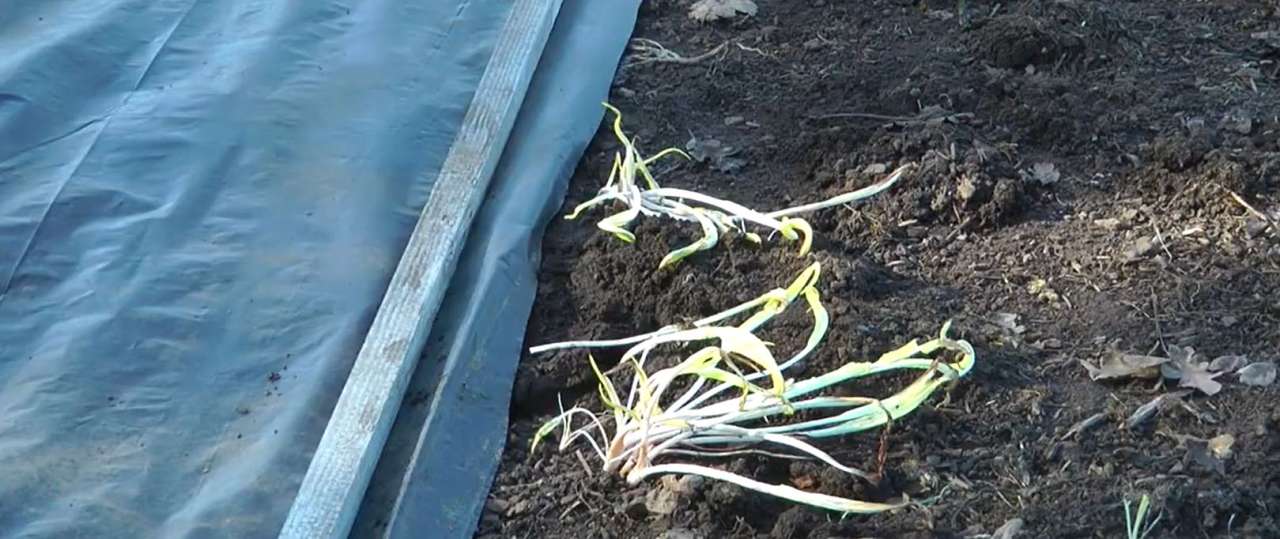
Above we have an example of a bed that was covered in black plastic over winter. By the following spring any annual weeds have died back, but you will still be left with the pale, sun-starved shoots of perennial weeds,
often with long tap-roots, like dandelions, that will need to be dug out before you start your veg planting and sowing for the season.
Planning next year's vegetable garden?
Whether you're improving existing beds or starting from scratch, our team at Ardcarne Garden Centre in Boyle and Roscommon Town will be happy to help with composts, soil improvers, seeds and practical advice. You can also explore our Grow Your Own A-Z for ideas on what to grow next.
Explore Grow Your Own GuidesShare this guide
If you know someone wondering what to do with an empty vegetable bed, feel free to share this guide.