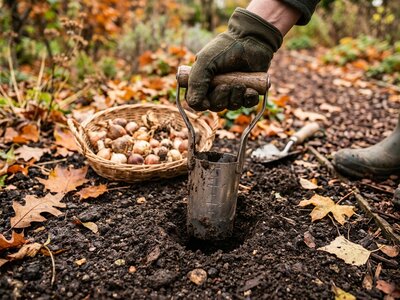

Hydrangeas are among the most popular hardy shrubs for Irish gardens, loved for their generous flowers, long season of interest and ability to bring colour to partially shaded areas. From classic mophead hydrangeas to elegant lacecaps, dramatic paniculata types, woodland-style aspera varieties and even climbing hydrangeas, there is a hydrangea suited to almost every garden.
However, not all hydrangeas grow or flower in exactly the same way. Some flower on old wood, some flower on new growth, and some need very little pruning at all. Understanding which type you have is the key to keeping your hydrangea healthy, well-shaped and flowering reliably year after year.
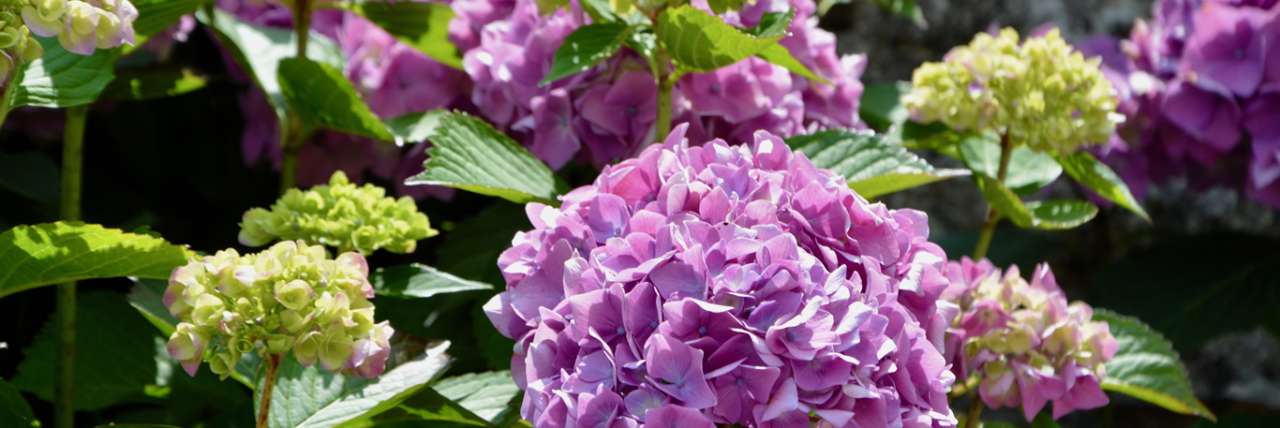
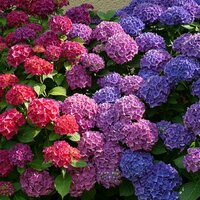
Macrophylla or 'Mophead' hydrangeas are probably the most well-known of the hydrangea types but often their colouring will be dependent on your soil type (see below) - Image by JackieLou DL from Pixabay
Understanding the Different Types of Hydrangea
The name “hydrangea” covers several different groups of shrubs and climbers, each with slightly different habits, flower shapes and pruning needs.
Hydrangea macrophylla – Mopheads and Lacecaps
These are the most recognisable hydrangeas, producing either rounded mophead flowers or flatter lacecap flowers. Flower colours often vary depending on soil pH, with blues usually strongest in acidic soils and pinks more reliable in alkaline conditions.
Best for: Partially shaded borders, cottage gardens, containers and sheltered planting schemes.
Hydrangea serrata
Closely related to macrophylla types, serrata hydrangeas are often slightly smaller and more delicate in appearance. They are excellent for smaller gardens and tend to have a refined, natural look.
Best for: Smaller gardens, woodland edges and softer planting schemes.
Hydrangea paniculata
Paniculata hydrangeas produce cone-shaped flowers, often starting white or pale green before developing pink, red or dusky tones as the season progresses. They are generally tougher and more sun-tolerant than many mophead types.
Best for: Larger borders, sunny or lightly shaded positions and long late-summer displays.
Hydrangea arborescens
These include much-loved varieties such as ‘Annabelle’, known for producing large rounded flower heads. They flower on new growth and are usually straightforward to prune.
Best for: Informal borders, pollinator-friendly planting and generous summer flower displays.
Hydrangea aspera
Aspera hydrangeas are grown as much for their large, textured foliage as for their lacecap flowers. They have a woodland character and can create a wonderfully lush effect in sheltered gardens.
Best for: Woodland-style planting, sheltered borders and larger gardens.
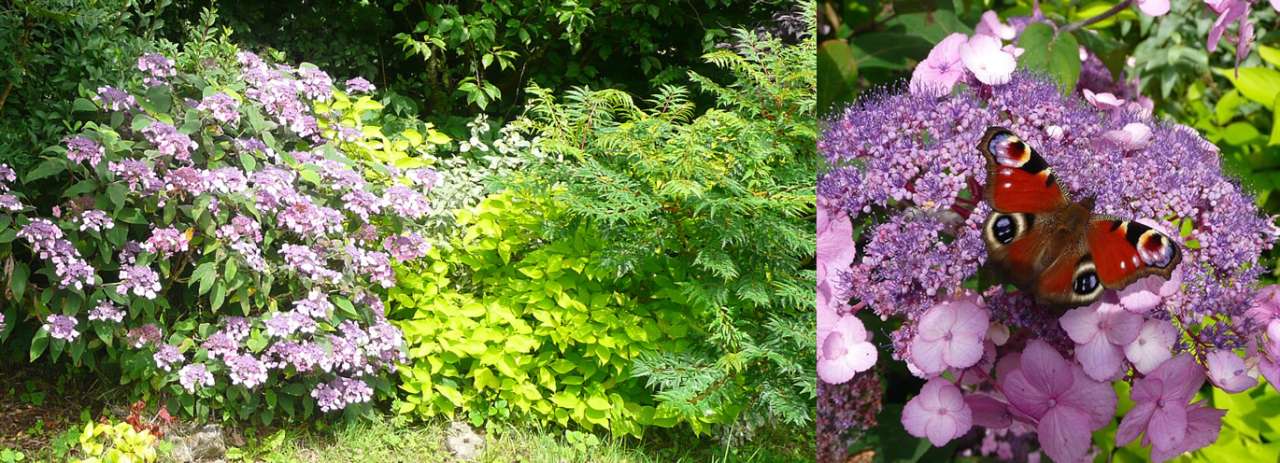
Hydrangea aspera 'Anthony Bullivant' is a particular favourite of mine, pictured here brightening up a pretty shaded area of my garden in late July. It also seems to be a magnet for Peacock butterflies - Photos taken by Richard (AGC) July 2025
Hydrangea quercifolia
Known as the oak-leaved hydrangea, this type has distinctive foliage that often colours beautifully in autumn. It provides excellent seasonal interest beyond the flowering period.
Best for: Autumn colour, mixed shrub borders and lightly shaded positions.
Hydrangea anomala subsp. petiolaris – Climbing Hydrangea
This self-clinging climbing hydrangea is ideal for shaded walls, fences and mature trees. It produces attractive white lacecap-style flowers and can be especially useful where other climbers struggle.
Best for: Shaded walls, north-facing boundaries and woodland-style gardens.
Choosing the Right Hydrangea for Your Garden
| Garden Situation | Suggested Hydrangea Type |
|---|---|
| Classic cottage garden colour | Hydrangea macrophylla |
| Smaller gardens | Hydrangea serrata |
| Long late-summer display | Hydrangea paniculata |
| Large rounded white flowers | Hydrangea arborescens |
| Woodland-style planting | Hydrangea aspera |
| Autumn foliage colour | Hydrangea quercifolia |
| Shaded wall or fence | Hydrangea anomala subsp. petiolaris |
Where Do Hydrangeas Grow Best?
Most hydrangeas prefer a position in partial shade or dappled shade, although some types, especially paniculata varieties, will tolerate more sun if the soil remains moist.
- Light: Partial shade is ideal for many types
- Soil: Moist but well-drained soil
- Shelter: Avoid strong drying winds and exposed frost pockets
- Moisture: Hydrangeas dislike drying out, especially when newly planted
In the west of Ireland, hydrangeas often perform very well because they appreciate moisture, but good drainage remains important. They enjoy damp soil — not waterlogged soil.
How Soil Affects Hydrangea Colour
One of the most fascinating features of some hydrangeas, particularly macrophylla types, is their ability to change colour depending on soil pH.
| Soil Type | Likely Flower Colour |
|---|---|
| Acidic soil | Blue tones are more likely |
| Alkaline soil | Pink and red tones are more likely |
| Neutral soil | Purple or mixed tones may appear |
If you want to maintain strong blue colouring, grow blue hydrangeas in acidic soil or ericaceous compost and water with rainwater where possible, as tap water can gradually influence soil conditions.
Important: Not all hydrangeas change colour. This effect is mostly associated with macrophylla and some serrata types. White hydrangeas generally remain white regardless of soil pH.
How to Plant Hydrangeas
Spring and autumn are usually the best times to plant hydrangeas, when the soil is naturally moist and temperatures are moderate. Container-grown plants can also be planted during summer, provided they are kept well watered.
- Water the plant well before planting
- Dig a hole wider than the rootball
- Improve light or sandy soil with compost or well-rotted organic matter
- Plant at the same depth as the pot
- Firm in gently and water thoroughly
- Apply a mulch of compost, leaf mould or well-rotted manure, keeping it slightly away from the stem
If the plant is pot-bound, gently tease out circling roots before planting. This helps encourage the roots to move out into the surrounding soil.
Planting Climbing Hydrangeas
Climbing hydrangeas are self-clinging once established, but young plants often need some initial guidance. Tie new shoots gently to wires or supports until they begin attaching naturally.
Hydrangeas Through the Seasons
| Season | Interest |
|---|---|
| Spring | Fresh foliage and new growth |
| Summer | Main flowering season for many types |
| Autumn | Changing flower tones, foliage colour and dried flower heads |
| Winter | Structure and retained flower heads on many varieties |
Varieties We Love This Season
Hydrangeas offer huge variety in flower form, colour and habit. Here are some of our favourite varieties this season.
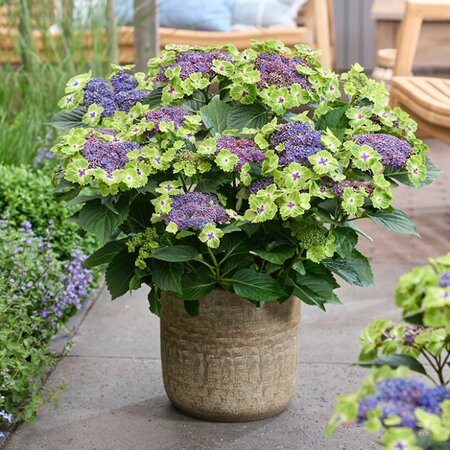
Hydrangea macrophylla ‘Magical Lacecap Edgy Green Blue’
A distinctive lacecap hydrangea with elegant blue-green tones and a long-lasting display. Its unusual colouring gives it a contemporary feel while still offering the charm of a classic hydrangea.
Best for: Partially shaded borders, containers and colour-themed planting schemes.
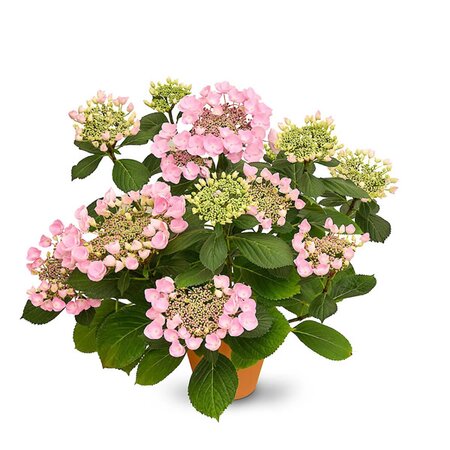
Hydrangea macrophylla ‘Teller Nanping Pink’
A beautiful lacecap hydrangea producing soft pink flowers with a refined, elegant appearance. Ideal for bringing gentle colour to mixed borders and lightly shaded garden spaces.
Best for: Cottage gardens, mixed shrub borders and softer planting schemes.
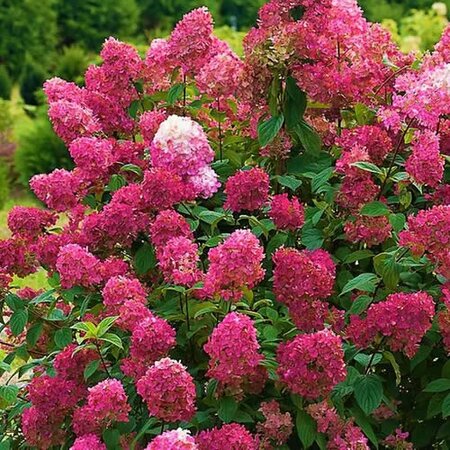
Hydrangea paniculata ‘Wim’s Red’
A striking paniculata hydrangea with cone-shaped flowers that change colour as they mature, often developing rich pink and red tones later in the season.
Because it flowers on new wood, it is also one of the easier types to prune with confidence.
Best for: Larger borders, late-summer colour and gardeners wanting a more straightforward pruning routine.
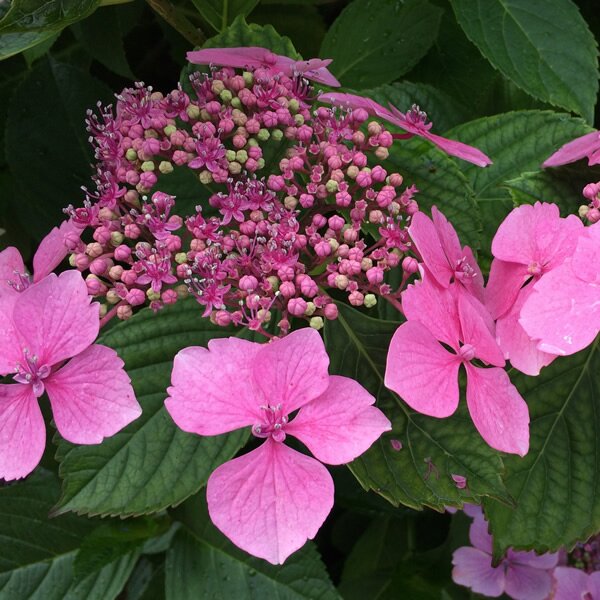
Hydrangea serrata ‘Magic Pillow Pink’
A compact and attractive serrata hydrangea producing delicate pink flowers on a neat plant. Its smaller habit makes it especially useful where space is limited.
Best for: Smaller gardens, containers, woodland edges and soft informal planting.
Old Favourites
Alongside newer varieties, there are several classic hydrangeas that remain popular for very good reason.
- Hydrangea anomala subsp. petiolaris: The climbing hydrangea, excellent for shaded walls and north-facing boundaries.
- Hydrangea arborescens ‘Annabelle’: A much-loved variety with large rounded white flower heads.
- Hydrangea aspera ‘Anthony Bullivant’: A bold, textured foliage plant with attractive lacecap flowers and a woodland feel (This is one of my particular favourites as it brightens up a pretty shady corner of my garden over a long period later in the season!).
- Hydrangea macrophylla ‘Masja’: A compact mophead variety with rich pink-red flowers.
- Hydrangea macrophylla ‘Anda Blue’: A classic blue hydrangea for acidic soils or ericaceous container planting.
The Hydrangea Pruning Guide
Pruning is where many gardeners become unsure, and it is one of the most common reasons hydrangeas fail to flower. The key is to know whether your hydrangea flowers on old wood or new wood.
Top tip: If you are unsure what type of hydrangea you have, avoid hard pruning until you identify it. Cutting back the wrong type at the wrong time can remove the flower buds for that year.
Group 1 – Hydrangeas That Flower on Old Wood
Includes: Hydrangea macrophylla and Hydrangea serrata.
These produce their flower buds on stems made the previous year, so heavy pruning in winter or early spring can remove the coming season’s flowers.
- Prune lightly in spring
- Remove old flower heads once new buds are visible
- Cut back to a pair of strong, healthy buds
- Remove a few older stems at the base if the plant needs thinning
Group 2 – Hydrangeas That Flower on New Wood
Includes: Hydrangea paniculata and Hydrangea arborescens.
These produce flowers on the current season’s growth and can be pruned more confidently in spring.
- Prune in late winter or early spring
- Cut stems back to strong buds
- Prune harder if you want larger flowers and a more compact plant
- Prune lightly if you prefer a taller, more natural shape
Group 3 – Minimal Pruning Hydrangeas
Includes: Hydrangea aspera and Hydrangea quercifolia.
These generally need only light tidying.
- Remove dead, damaged or crossing stems
- Lightly tidy after flowering if needed
- Avoid hard pruning unless renovation is necessary
Group 4 – Climbing Hydrangea
Includes: Hydrangea anomala subsp. petiolaris.
Prune after flowering in summer, shortening flowering shoots where required and removing any growth spreading beyond its intended space.
Looking After Hydrangeas
- Watering: Keep newly planted hydrangeas well watered during dry spells.
- Mulching: Apply compost, leaf mould or well-rotted manure in spring.
- Feeding: Avoid overfeeding, which can encourage leafy growth at the expense of flowers.
- Deadheading: Many old flower heads can be left on over winter for protection and interest, then removed in spring.
Propagation
Hydrangeas are usually propagated from softwood or semi-ripe cuttings.
- Take non-flowering shoots in spring or early summer
- Cut just below a leaf node
- Remove lower leaves, leaving a pair near the top
- Insert into free-draining compost
- Keep moist but not waterlogged
- Place in bright light away from direct sun
Once rooted, young plants can be potted on and grown until large enough to plant out.
Companion Planting with Hydrangeas
Hydrangeas combine beautifully with plants that enjoy similar conditions: moisture-retentive soil, shelter and partial shade.
- Hostas: Bold foliage contrasts beautifully with hydrangea flowers.
- Ferns: Excellent for woodland-style planting and shaded areas.
- Heucheras: Provide colourful foliage at the base of hydrangeas.
- Astilbes: Thrive in moist soil and extend the flowering season.
- Japanese Anemones: Flower later in the season and combine well with mature hydrangeas.
- Rhododendrons and Azaleas: Pair especially well with blue hydrangeas in acidic soils.
Common Hydrangea Problems
No Flowers
This is often caused by incorrect pruning, frost damage to buds, or too much shade.
Wilting Leaves
Hydrangeas can wilt during hot or dry weather, especially when newly planted. Water deeply and mulch to conserve moisture.
Poor Flower Colour
If a blue hydrangea turns pink or purple, soil pH may be too alkaline. Use ericaceous compost in containers or a suitable hydrangea colourant where appropriate.
Too Much Leaf Growth
Overfeeding, especially with nitrogen-rich fertiliser, can encourage foliage at the expense of flowers.
Transplanting Hydrangeas
If you need to move a hydrangea, the best time is from late autumn to late winter while the plant is dormant. This reduces stress and allows the plant to re-establish before active growth begins.
Final Thoughts
Hydrangeas are wonderfully rewarding shrubs, but the key to success is understanding which type you are growing. Once you know whether your hydrangea flowers on old wood, new wood or needs only light pruning, caring for it becomes much easier.
Choose the right hydrangea for your space, plant it in moisture-retentive soil with some shelter, and prune according to type, and you will be rewarded with years of reliable colour, structure and seasonal interest.
Looking for the perfect hydrangea for your garden?
Visit our garden centres in Boyle and Roscommon or browse our range online for classic favourites, new varieties and expert advice on choosing the right hydrangea for your space.