
...and how to grow and care for these beautiful plants.
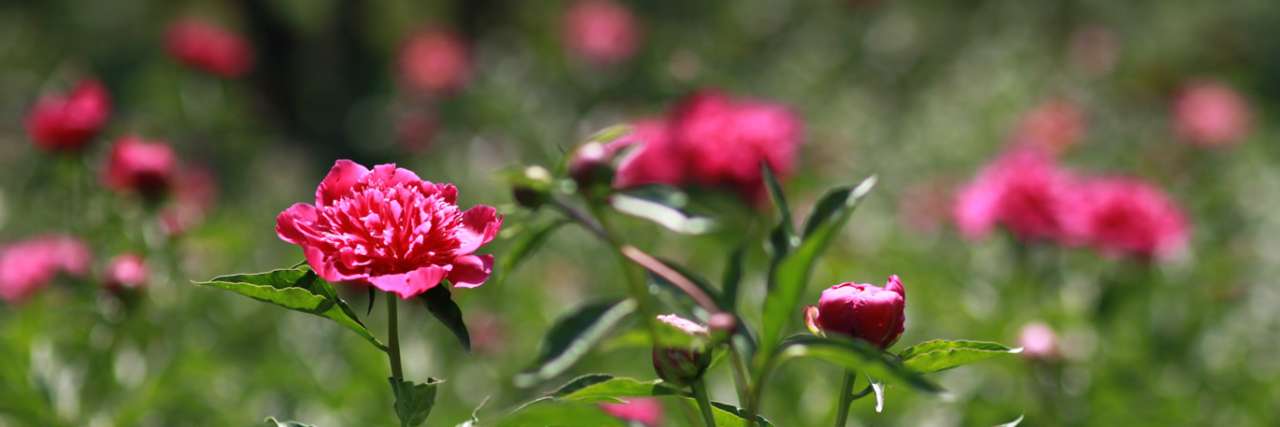
Peonies are among the most treasured garden plants in the world. Their spectacular blooms, long lifespan and remarkable resilience have made them favourites in gardens for centuries. In fact, a well-established peony can often outlive the gardener who planted it, producing magnificent flowers for decades with surprisingly little maintenance.
Yet peonies are also plants that reward patience. Unlike some perennials that settle in and flower freely within a season, peonies often take time to establish and may not reach their full potential for several years.
As the old gardening saying goes, "The first year they sleep, the second year they creep, and the third year they leap."
Understanding the different types of peony and their growing requirements is the key to long-term success.
Understanding the Different Types of Peony
While many gardeners simply refer to "peonies", there are actually three main groups commonly grown in gardens.
Herbaceous Peonies
These are the traditional garden peonies most people are familiar with.
- Die back completely during winter
- Re-emerge each spring from underground buds
- Produce large, often fragrant flowers
- Can remain in the same position for many decades
Most classic cottage garden peonies belong to this group.
Tree Peonies
Despite the name, Tree Peonies are not trees but woody shrubs.
- Retain a woody framework year-round
- Produce exceptionally large flowers
- Grow more slowly than herbaceous peonies
- Provide structure throughout winter
Many gardeners consider them among the most spectacular flowering shrubs available.
Intersectional (Itoh) Peonies
Often referred to simply as Itoh Peonies, these are hybrids between herbaceous and tree peonies.
- Combine the flower power of tree peonies with the reliability of herbaceous types
- Strong stems usually require less support
- Excellent garden performance
- Extended flowering season
They are increasingly popular and are often considered some of the finest peonies available for modern gardens.
Why Are Peonies So Popular?
Few garden plants offer such an impressive combination of beauty and longevity.
- Large, spectacular flowers
- Many varieties are highly fragrant
- Excellent cut flowers
- Long-lived plants
- Pollinator friendly when flowers are accessible
- Minimal maintenance once established
Many gardeners view peonies as an investment plant – something that may take a little time to settle but will reward them for many years to come.
Where Do Peonies Grow Best?
Peonies generally prefer a position in full sun or very light shade.
- Light: Full sun is ideal.
- Soil: Fertile, moisture-retentive but well-drained.
- Drainage: Essential, particularly during winter.
- Shelter: Avoid very exposed positions where strong winds may damage flowers.
In the west of Ireland, peonies often appreciate a little shelter from prevailing winds, particularly large-flowered varieties whose blooms can become heavy after rain.
While they enjoy moisture during the growing season, they dislike sitting in waterlogged soil during winter.
The Golden Rule of Planting Peonies
Do Not Plant Peonies Too Deeply.
This is by far the most common reason peonies fail to flower.
The eyes (buds) of herbaceous peonies should sit only around 2.5–5cm (1–2 inches) below the soil surface.
Planting significantly deeper than this often results in healthy foliage but few, if any, flowers.
If there is one piece of advice to remember from this article, this is it.
Planting Peonies Step-by-Step
Autumn is traditionally considered the best time to plant peonies, although container-grown plants can be planted throughout much of the year provided they are watered carefully.
- Choose a sunny position with well-drained soil.
- Dig a generous planting hole.
- Incorporate compost or well-rotted organic matter if required.
- Position the plant carefully, ensuring the crown sits at the correct depth.
- Backfill and firm gently.
- Water thoroughly.
- Apply a mulch around, but not directly against, the crown.
Before planting, take time to consider the plant's eventual size.
Peonies dislike being moved and may take time to re-establish if transplanted later.
Give Peonies Room to Shine
Peonies can remain in the same position for decades. Avoid planting too close to large shrubs, vigorous perennials or developing trees that may eventually compete for light, moisture and space.
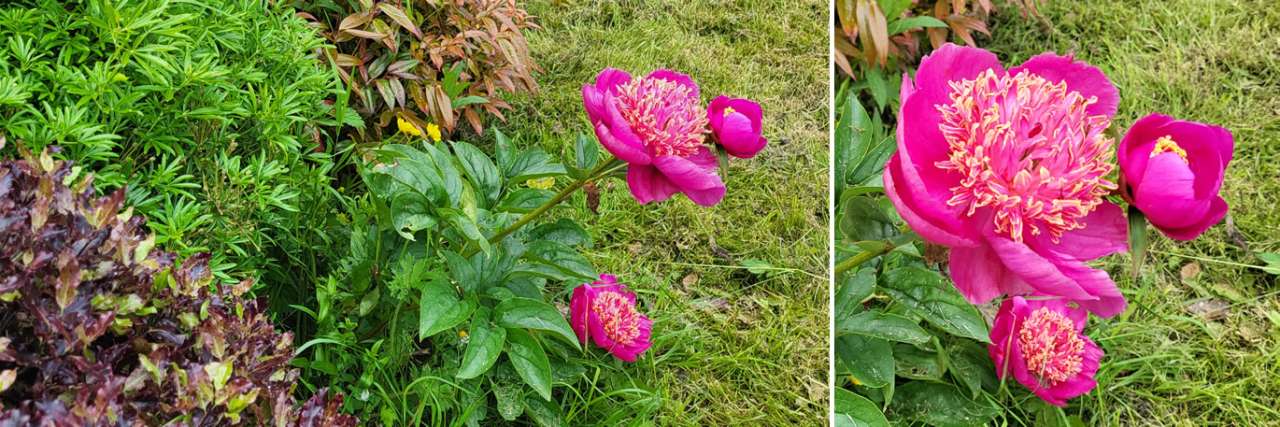
Don't make the same mistake as me! - As you can see here I planted this 'Nippon Beauty' too near to a neighbouring choisya and as are result the stems a practically horizontal. This is why it's important to take note of those listed 'Spread' measurements within plant profiles. Still a lovely flower though. Photo taken by Richard (AGC) 22/06/2026
Support Early, Not Late
Many herbaceous peonies, particularly double-flowered varieties such as 'Sarah Bernhardt', benefit from support.
Large blooms can become surprisingly heavy after rain and may cause stems to bend or flop.
The best approach is to install supports as shoots begin emerging in spring.
- Half hoops
- Peony rings
- Decorative plant supports
- Discrete framework supports
By placing supports early, foliage grows through and conceals them naturally. Waiting until flowers are fully developed often makes support more difficult and can spoil the appearance of the plant.
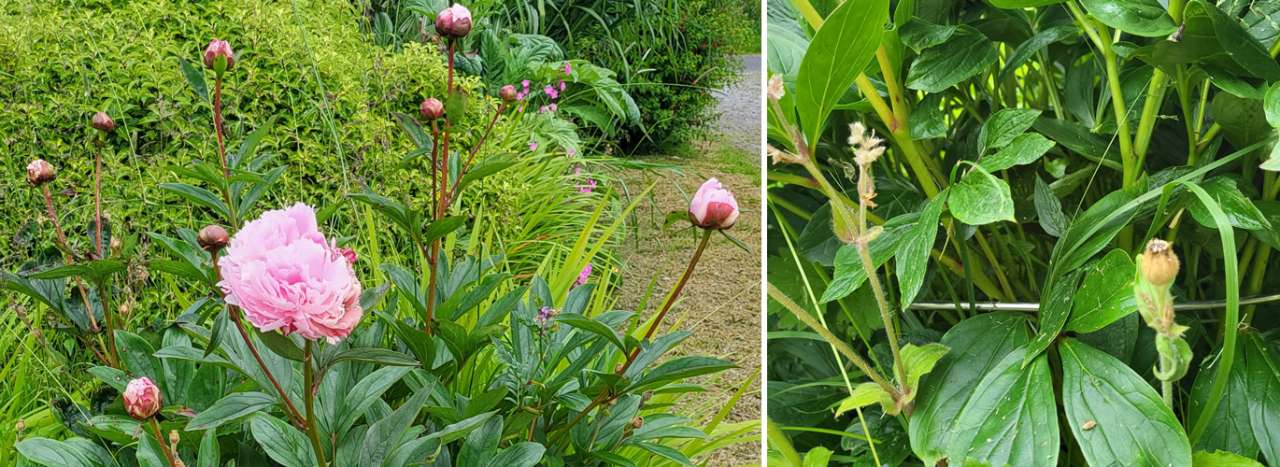
This Sarah Bernhardt has plenty of room in my garden but as you can see the plant can become a bit top-heavy with those large double blooms on quit tall stems. I have this supported by a steel half-hoop (right) which I positioned in the ground at the time of planting. This prevents the plant from flopping over whilst remaining inconspicuous. I may have to raise the height of it a little after this year's flowers are spent to insure continued support. Photo taken by Richard (AGC) 22/06/2026
Patience Pays Off
One of the most important things to understand about peonies is that they are rarely instant performers.
Even healthy, well-grown plants purchased in containers may take a year or two to settle fully before producing their best displays.
Likewise, recently moved plants often pause flowering while they re-establish their root systems.
A Peony is a Long-Term Investment
Peonies are not plants for instant gratification, but few plants reward patience so generously. Given the right conditions, a peony may continue flowering for decades.
Peonies Through the Seasons
| Season | Interest |
|---|---|
| Spring | Emerging shoots and fresh foliage |
| Late Spring / Early Summer | Spectacular flowers |
| Summer | Attractive foliage and structure |
| Autumn | Seasonal foliage colour and seed heads on some varieties |
| Winter | Dormancy (herbaceous) or woody framework (tree peonies) |
By understanding their seasonal cycle, gardeners can appreciate peonies for far more than just a few weeks of flowering.
Some of Our Favourite Peonies
Whether you prefer traditional herbaceous peonies, modern Itoh hybrids or the spectacular flowers of tree peonies, there is a variety to suit almost every garden style.
Herbaceous Peonies
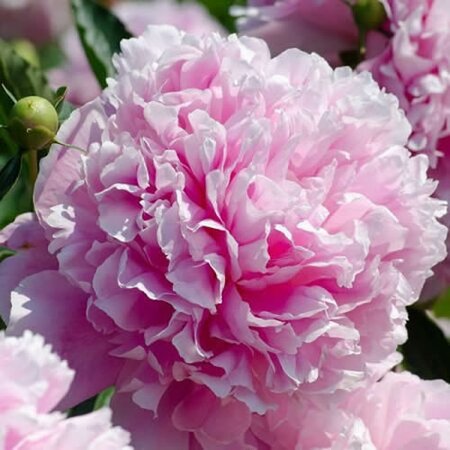
Paeonia lactiflora 'Sarah Bernhardt'
Perhaps the most famous peony of all, 'Sarah Bernhardt' produces large, fully double soft pink flowers with a delightful fragrance.
Introduced over a century ago, it remains one of the finest peonies available and a firm favourite in cottage gardens.
Best for: Traditional borders, cut flowers and fragrant gardens.
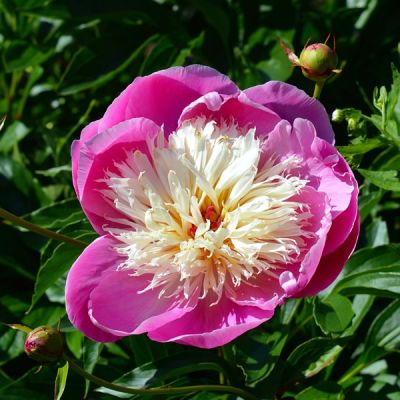
Paeonia lactiflora 'Bowl of Beauty'
A distinctive Japanese-form peony with rich pink outer petals surrounding a creamy-white centre.
Its unusual flower form makes it instantly recognisable and highly attractive to pollinators.
Best for: Mixed borders and pollinator-friendly planting.
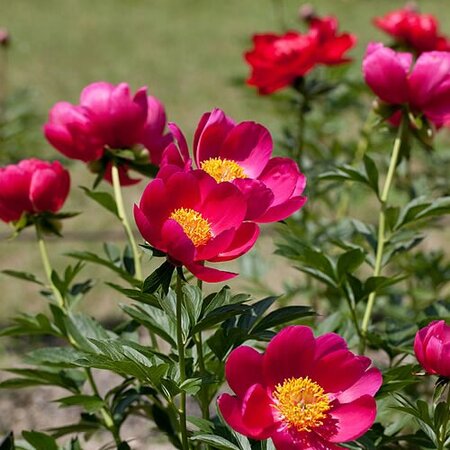
Paeonia lactiflora 'Scarlett O'Hara'
Producing bold crimson-red single flowers with golden centres, this variety offers a more natural and open appearance than many double-flowered peonies.
Best for: Wildlife gardens and dramatic colour schemes.
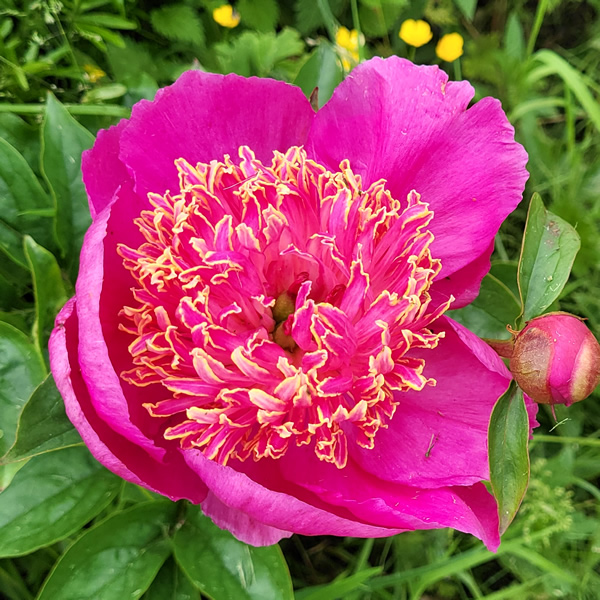
Paeonia lactiflora 'Nippon Beauty'
An elegant Japanese-form peony producing deep crimson flowers with a striking central tuft of golden stamens.
A long-established favourite with a refined and sophisticated appearance.
Best for: Formal borders and cut flower gardens.
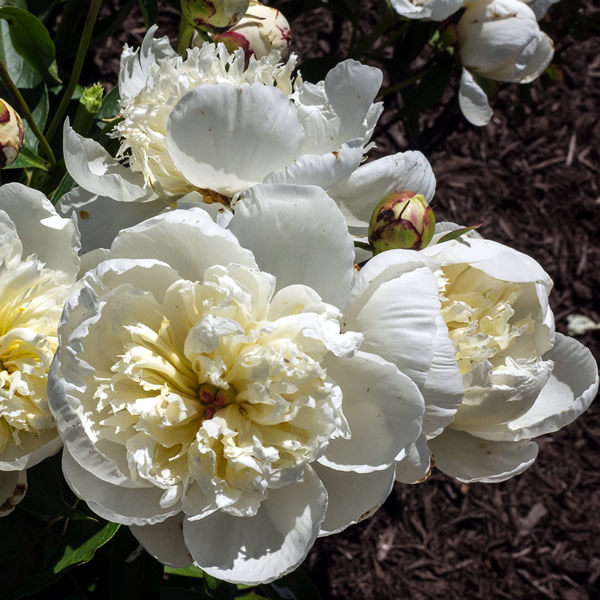
Paeonia lactiflora 'Primavere'
A beautiful variety featuring creamy white outer petals surrounding a soft yellow centre.
The subtle colouring makes it particularly useful in pastel planting schemes.
Best for: Elegant mixed borders and romantic planting combinations.
Intersectional (Itoh) Peonies
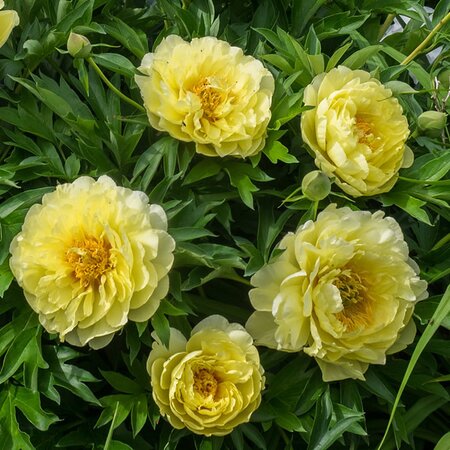
Paeonia 'Bartzella'
Often considered the benchmark Itoh peony, 'Bartzella' produces huge lemon-yellow flowers on strong stems.
It combines the best qualities of tree and herbaceous peonies and is widely regarded as one of the finest yellow peonies available.
Best for: Feature planting and modern perennial borders.
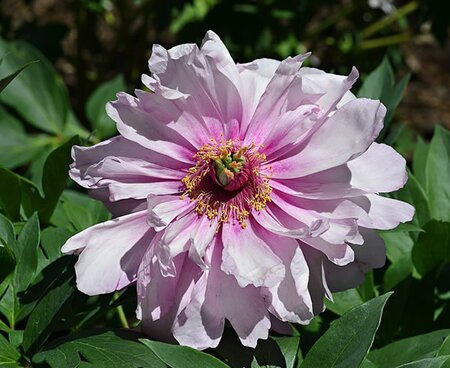
Paeonia 'First Arrival'
A stunning Itoh variety producing large lavender-pink flowers with excellent garden performance.
Its strong stems and long flowering period make it an excellent choice for contemporary gardens.
Best for: Mixed borders and long-lasting displays.
Tree Peonies
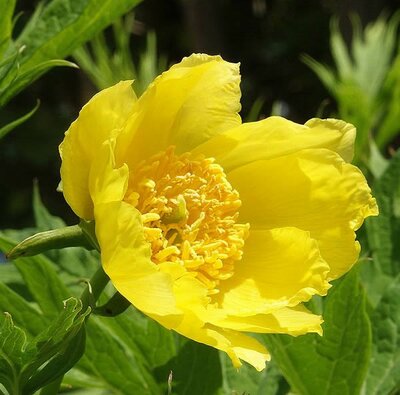
Paeonia 'Lutea'
A beautiful yellow-flowered tree peony that develops into an elegant woody shrub.
Its large flowers and architectural structure make it a wonderful specimen plant.
Best for: Woodland gardens, specimen planting and collectors.
Why Your Peony Might Not Be Flowering
One of the most common questions gardeners ask is why a healthy-looking peony is producing foliage but no flowers.
Common reasons include:
Planted Too Deeply
This remains the most frequent cause of poor flowering.
If herbaceous peony eyes are buried too deeply, flowering can be significantly reduced or prevented altogether.
Recently Planted
Newly planted peonies often spend their first year establishing roots rather than producing flowers.
Recently Moved
Peonies dislike disturbance and may take a year or two to resume flowering after being transplanted.
Too Much Shade
While peonies tolerate light shade, too much shade often results in reduced flowering.
Competition from Nearby Plants
Large shrubs, trees and vigorous perennials can compete for moisture, nutrients and light.
Companion Planting
Peonies combine beautifully with a wide range of perennials and shrubs.
Classic Companions
- Geraniums
- Salvia
- Nepeta (Catmint)
- Iris
- Alchemilla mollis
These plants complement peonies while helping extend seasonal interest.
For Cottage Garden Schemes
- Foxgloves
- Delphiniums
- Roses
- Campanulas
For Woodland and Tree Peony Planting
- Hostas
- Ferns
- Japanese Anemones
- Heucheras
Peonies as Cut Flowers
Peonies are among the most sought-after flowers used by florists.
Their large blooms, fragrance and romantic appearance make them highly prized for bouquets and arrangements.
For best results:
- Cut stems early in the morning.
- Harvest when buds are soft and beginning to open.
- Place immediately into clean water.
- Remove lower foliage below water level.
Many varieties have excellent vase life and are worth growing specifically for cutting.
Propagation
Peonies can be propagated, although they are generally slower to increase than many perennials.
Herbaceous Peonies
Division is the most common method.
- Lift mature clumps during autumn.
- Divide carefully using a sharp knife.
- Ensure each division contains several healthy eyes.
- Replant immediately at the correct depth.
Tree Peonies
Usually propagated by specialist nurseries through grafting or layering.
These methods are generally slower and more specialised than simple division.
Common Problems
Botrytis (Peony Wilt)
Can cause blackened stems and collapsed growth, particularly during cool, damp weather.
Good air circulation and removal of affected material usually helps minimise problems.
Flopping Flowers
Large double flowers can become heavy, especially after rain.
Installing supports early in the season helps prevent this.
Poor Establishment
Often linked to poor drainage or excessive competition from nearby plants.
Failure to Flower
Most commonly caused by:
- Planting too deeply
- Recent transplanting
- Excess shade
- Overfeeding with nitrogen-rich fertilisers
Final Thoughts
Peonies are among the most rewarding plants a gardener can grow. They may ask for patience in their early years, but few plants repay that patience so generously.
Whether you choose a traditional herbaceous peony, a spectacular tree peony or a modern Itoh hybrid, planting them correctly and giving them time to establish will reward you with decades of beautiful flowers.
In many gardens, peonies become treasured plants that are enjoyed not just for years, but for generations.
Looking for the perfect peony for your garden?
Visit our garden centres in Boyle and Roscommon to explore our range of peonies and receive expert advice on choosing the right variety for your garden.