
Composting is one of the simplest and most rewarding ways to improve your garden while reducing waste. In a time when global factors can affect the availability and cost of fertilisers and soil improvers, creating your own compost at home is not only sustainable but also highly practical. With a little time and understanding, everyday garden and kitchen waste can be transformed into a valuable resource that supports healthy plant growth year after year.
Why Compost at Home?
Across Ireland, many households are now required to separate food waste into brown bins for collection — a service that is often charged by weight. While this is an important step for waste management, it also presents an opportunity.
By composting suitable materials at home, you can:
- Reduce the amount of waste you dispose of
- Lower collection costs over time
- Create your own nutrient-rich soil improver
- Reduce reliance on shop-bought compost and fertilisers
In short, composting turns waste into something genuinely useful for your garden.
What Can and Cannot Be Composted?
| Suitable Materials | Avoid Adding |
|---|---|
| Fruit and vegetable peelings Grass clippings Leaves and hedge trimmings Tea bags (plastic-free) Coffee grounds Cardboard and paper (torn) |
Cooked food Meat and fish Dairy products Oily or greasy food Pet waste Diseased plants |
A good compost mix combines “green” materials (nitrogen-rich, such as grass and food waste) with “brown” materials (carbon-rich, such as cardboard and dry leaves). Decomposition can be helped by making sure kitchen scraps are chopped into small pieces, hedge trimmings are shredded and cardboard and paper are torn into smaller pieces. It should be noted that only brown cardboard and plain paper is used (nothing colourful or glossy) as certain inks may contain unwanted chemicals. Generally with brown card packaging, if these just have black ink on they are fine to use.
How Composting Works
Composting is a natural process where microorganisms break down organic matter into a dark, crumbly material rich in nutrients.
For this to happen efficiently, your compost heap needs:
- Air: Turning the pile helps oxygen circulate - although there is some debate about how often this should be done. Charles Dowding, for instance, suggests that this only really needs to be done once, when most of the compost has already broken down.
- Moisture: It should be damp, not waterlogged
- Balance: A mix of green and brown materials
When these elements are in balance, decomposition speeds up and produces high-quality compost. If you're interested in watching a short YouTube video on composting, I highly recommend Charles Dowing's video on this as it dispels some well entrenched myths about the composting process and what is required, making the whole process more simple and accessible.
Ways to Compost — From Simple to Structured
Composting doesn’t need to be complicated. There are several approaches depending on your space and needs:
- Simple heap: A basic pile in a corner of the garden — easy and effective
- Compost bin: Enclosed bins or compost convertors (including “tumbler” or “tombola” styles) help retain heat and speed up decomposition
- Three-bay system: Ideal for larger gardens — allowing material to move from fresh waste to ready-to-use compost in stages
Each method has its advantages, and even the simplest setup can produce excellent results over time.

If you have a larger garden or a lot of waste a 3 bay system can be useful. This 3 bay system build with pallet wood and some mesh, allows 1 bay to add your fresh materials, which, when full can then be turned into the second bay allowing you to continue adding materials to the first. By the time your first bay is full again, your second bay will have decomposed somewhat and can be turned into the 3rd bay to break down further and complete. The now full first bay can then be turned into the second one and so on...I'm sure you get the picture...Image by Manfred Antranias Zimmer from Pixabay
Using Your Compost Effectively
Homemade compost is incredibly valuable, but it’s worth using it strategically — particularly as it can take time to produce in large quantities.
Rather than spreading it thinly across large areas, consider:
- Adding compost to planting holes when planting trees, shrubs or vegetables where applicable.
- Using it as a mulch around individual plants
- Targeting hungry crops such as vegetables like squash, cucumbers, brassicas etc.
- Mixing it in to enrich other store bought composts when potting on containers etc. to make it stretch further and add fertility.
This targeted approach often delivers better results than spreading compost too widely over a surface where it may just end up feeding weeds.
It's also worth noting that home made compost doesn't have to be perfect. It doesn't need to be very fine and crumbly to use for many situations (like mulching or using for certain crops). Obviously you don't want to be throwing large, barely rotten cabbage cores over your garden but some larger pieces won't do much harm on a vegetable patch or when digging in to add fertility to a certain area in autumn, for planting in spring for example. If you're looking to use home made compost for seeds, then you will need to put it through a garden sieve and just note that for some plants, like a lot of flowers considered 'wild' like cornflowers, garden compost may be a little too rich.
How Long Does Compost Take?
One of the most common questions when starting out is how long composting actually takes. The answer can vary depending on the method used and how well the heap is managed.
As a general guide:
- Fast composting (well-managed bin): 2–4 months
- Average compost heap: 6–12 months
- Slower, passive systems: 12 months or more
Compost will be ready when it is dark, crumbly and earthy in smell, with little or no recognisable material remaining.
Turning the heap regularly (again - debatable), maintaining a good balance of green and brown materials, and keeping it moist (but not wet) will all help speed up the process.
You can also add something like Garotta Compost Maker, which helps speed up the process when mixed into your heap.
---Common Composting Mistakes (and How to Avoid Them)
Composting is straightforward, but a few common mistakes can slow the process or lead to poor-quality compost.
- Too much of one material: A heap made up mostly of grass clippings (too green) or cardboard (too brown) will struggle. Aim for a balanced mix. Grass clippings in particular, if not mixed through with other materials, can become very sludgy and prevent aeration, so it is best added in thin layers or mixed with lighter materials like cardboard as it is added.
- Lack of air: Compost needs oxygen. If the heap becomes compacted, decomposition slows and unpleasant smells can develop. Turning the heap helps prevent this but it the compost has a good mix throughout this shouldn't be to much of an issue, and may only need turning once through a season, towards the end of the process, when most larger materials have decomposed.
- Too wet or too dry: Compost should feel like a wrung-out sponge. If it’s too wet, add dry materials like cardboard; if too dry, add water or green waste.
- Adding the wrong materials: Cooked food, meat and dairy can cause smells and attract pests.
- Not enough patience: Composting is a natural process — it takes time. Let the materials break down to a workable state.
Getting these basics right will make a noticeable difference to both the speed and quality of your compost.
---How to Avoid Attracting Rats and Mice
A well-managed compost heap should not attract unwanted pests, but certain materials and conditions can make it more appealing to rodents.
To minimise the risk:
- Avoid cooked food, meat and dairy: These are the main attractants and should never be added to a compost heap.
- Cover fresh waste: Always cover kitchen scraps with a layer of brown material such as cardboard, leaves or soil.
- Use a closed bin where possible: Enclosed compost bins provide an extra barrier and help contain smells.
- Keep the area tidy: Avoid leaving food waste exposed nearby.
- Turn regularly: Disturbing the heap makes it less attractive as a nesting site.
If you are concerned about pests, starting with a sealed compost bin rather than an open heap can provide additional reassurance — particularly in smaller gardens.
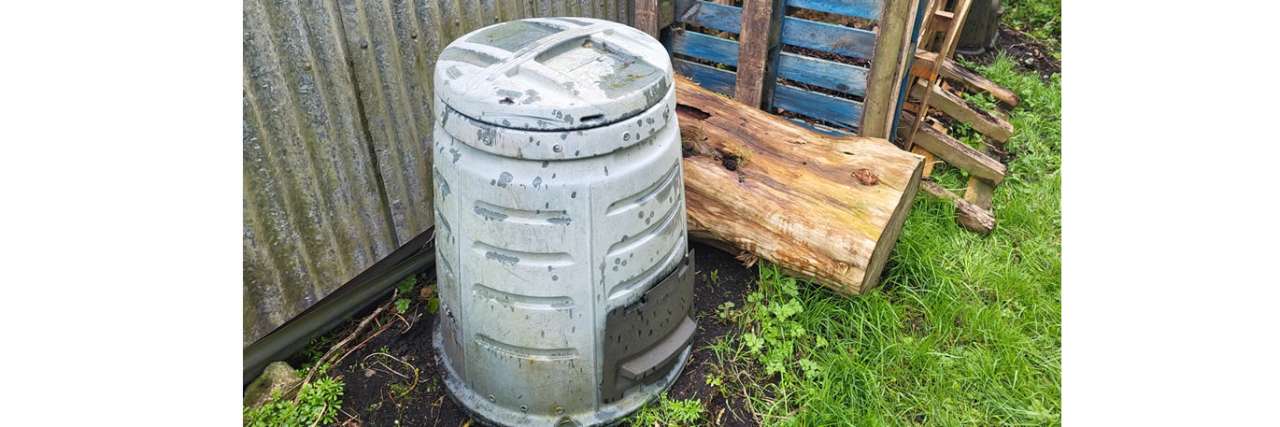
"I have this old 'Dalek' compost maker which I still use to add fresh kitchen waste and cardboard to, to allow for some decomposition before I then add to my larger heap. I do this mainly to avoid attracting any vermin." - Richard.
Final Thoughts
No matter the size of your garden, there is always a way to compost. From a small bin on a patio to a larger multi-bay system in a vegetable garden, composting can be adapted to suit your space.
Over time, it becomes part of the natural cycle of the garden — turning waste into nourishment, improving soil health and reducing reliance on external inputs. Whether you are growing flowers, vegetables or simply maintaining your garden, composting is one of the most valuable habits you can develop.
Looking to get started with composting?
Visit our garden centres in Boyle and Roscommon or browse our range of compost bins, soil improvers and gardening essentials online.