
Clematis are among the most versatile and rewarding climbing plants for Irish gardens, producing flowers across almost every season in a huge range of colours, shapes and sizes. Whether scrambling over arches, climbing through shrubs or covering fences and walls, there is a clematis suited to almost every garden situation.
However, many gardeners are understandably cautious when it comes to clematis — particularly pruning. The good news is that once you understand the basic pruning groups and choose the right variety for the right location, clematis are surprisingly straightforward and incredibly rewarding plants to grow.
Choosing the Right Clematis for the Right Place
Different clematis varieties suit different garden situations, so selecting the right type is important.
For Walls, Fences & Large Spaces
Vigorous varieties such as Clematis montana are excellent for quickly covering larger areas.
- Fast-growing
- Ideal for walls, sheds and fences
- Masses of spring flowers
These are best suited to larger gardens where they have space to spread.
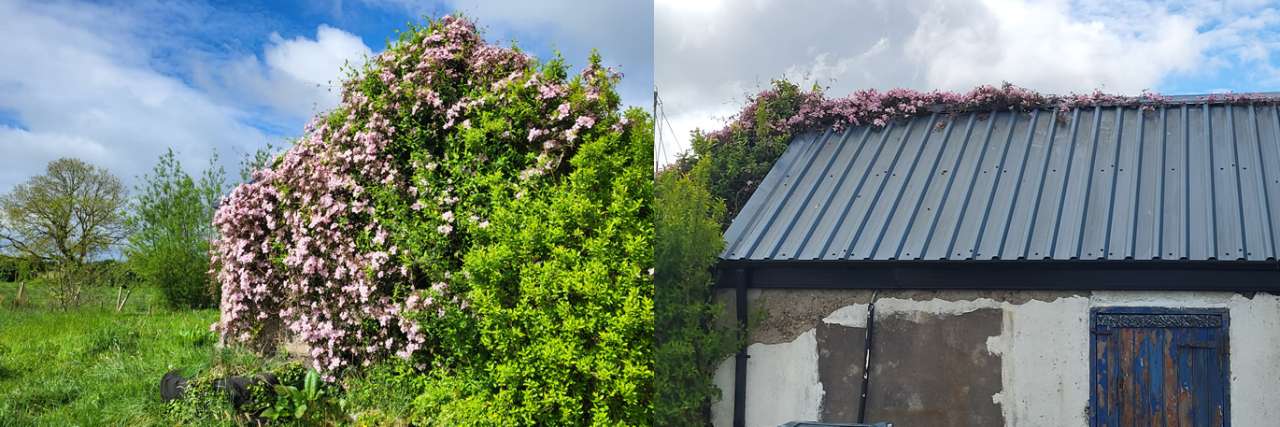
To give an example of how vigorous a Clematis montana can be, this 3 year old clematis is not only covering the entire gable wall of an old out-house but it is also spreading nicely across the roof! This photo was taken in May and you can see just how thick with flowers it is at this time of year. I haven't pruned this once, although it could perhaps do with some more tying in - photo taken by Richard (AGC) in Boyle, Co. Roscommon on 11 May 2026.
For Obelisks & Smaller Supports
Compact or medium-growing varieties work beautifully on obelisks, arches and trellis supports.
- Easier to manage
- Ideal for borders and containers
- Excellent for adding vertical interest
Examples would be Clematis ‘Princess Diana’, 'Markham's Pink' or 'Multi Blue', all of which are also suitable for container growing
For Shade
Many clematis prefer their roots cool and shaded, but some varieties tolerate partial shade particularly well.
Lighter flower colours often show up particularly well in shadier positions.
Examples of shade tolerant clematis would be montana 'Tetrarose, the white and pink striped 'Nelly Moser' and the purple-blue 'Jackmanii'
Winter Flowering Clematis
Some varieties flower during the colder months, adding interest when much of the garden is dormant.
Examples here would include Clematis x cartmanii ‘Avalanche’ and 'Clematis urophylla 'Winter Beauty'
Where Do Clematis Grow Best?
Clematis generally prefer:
- Sun or partial shade
- Cool roots and sheltered tops
- Fertile, moisture-retentive but well-drained soil
A common gardening phrase with clematis is:
“Heads in the sun, feet in the shade.”
This simply means the flowering growth enjoys sunlight, while the roots benefit from staying cool.
Mulching around the base or planting low-growing companions nearby can help achieve this naturally.
How to Plant Clematis
Proper planting helps establish stronger growth and reduces the risk of problems later on.
- Dig a generous planting hole
- Incorporate compost or organic matter
- Plant slightly deeper than the nursery pot level
- Angle stems gently toward the support structure
Water thoroughly after planting and keep well-watered during establishment.
Growing Clematis in Containers
Many clematis grow very successfully in large containers.
- Choose a deep pot with good drainage
- Use a fertile compost mix
- Keep roots cool and moist
Compact varieties are particularly well suited to patio growing.
Understanding Clematis Pruning Groups
This is the part many gardeners find confusing, but clematis pruning is actually quite straightforward once broken into three simple groups.
Group 1 – Early Flowering Clematis
These flower in late winter or spring on growth produced the previous year.
Examples: Clematis montana and winter flowering varieties.
Pruning: Minimal pruning required. Trim lightly after flowering if needed.
Group 2 – Large Flowered Clematis
These often flower twice — once in late spring and again later in summer.
Pruning: Light pruning in late winter or early spring, removing weak or damaged growth.
Group 3 – Late Flowering Clematis
These flower on new growth produced during the current season.
Examples: Viticella varieties such as ‘Etoile Violette’.
Pruning: Hard prune in late winter or early spring, cutting stems back to around 20–30cm from the ground.
Top tip: If in doubt, identifying when your clematis flowers is often the easiest way to determine its pruning group.
Featured Varieties
Clematis ‘Durandii’
A unique non-clinging clematis producing rich blue flowers through summer. Ideal for scrambling through shrubs or training against supports.
Clematis ‘Winter Beauty’
A winter flowering evergreen variety producing elegant creamy-white bell-shaped flowers during the colder months.
Clematis ‘Etoile Violette’
A vigorous and reliable viticella variety with masses of deep purple flowers through summer. Excellent disease resistance and ideal for hard pruning.
Clematis ‘Star of India’
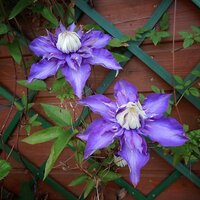
A striking large-flowered variety featuring rich purple blooms with distinctive reddish central bars.
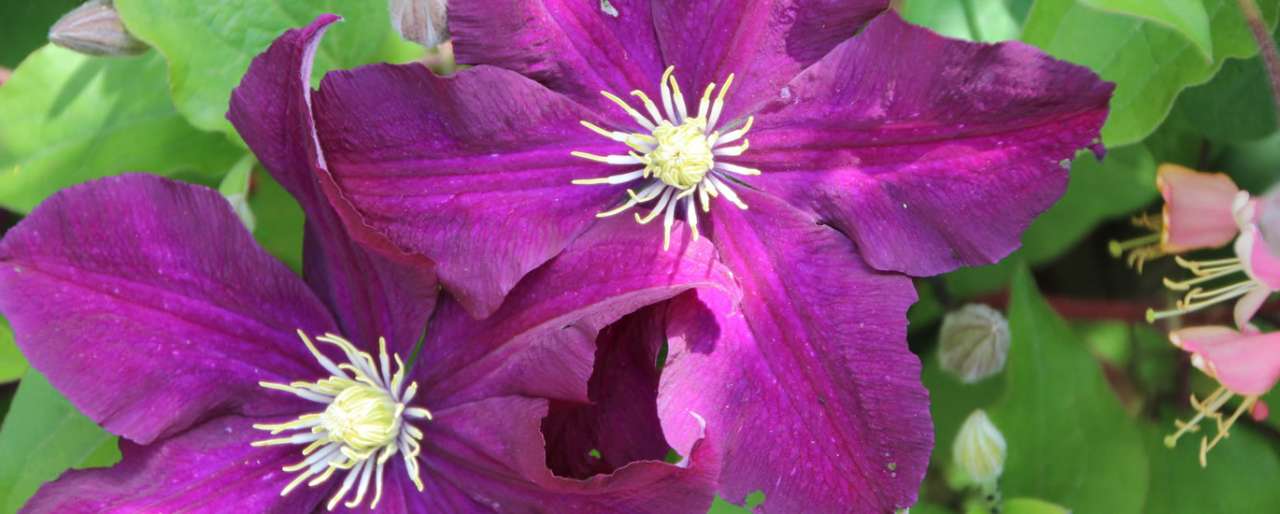
Clematis 'Star of India' flowers emerge a vibrant red-purple, however, these will fade to a more bluish purple colour if planted in full sun, so this one may be better in partial shade if you want them to remain more vibrant. Image by Etienne GONTIER from Pixaba
Companion Planting Ideas
Clematis combine beautifully with many other garden plants and are often used to extend seasonal interest.
Good companion plants include:
- Roses: A classic combination providing structure and long flowering displays
- Lavender: Helps shade roots while adding fragrance and pollinator appeal
- Shrubs: Clematis can scramble naturally through established shrubs
- Ornamental grasses: Add contrast and movement
- It's also possible to mix with other climbers that flower at different times of year so you have colour throughout the seasons. The Clematis montana pictured growing over an outhouse, for instance, also has an evergreen honeysuckle covering the same space which flowers later in summer and provides foliage throughout the year.
These combinations can create layered planting schemes with interest from ground level upwards.
Common Clematis Problems
- Poor flowering: Often due to incorrect pruning or insufficient sunlight
- Wilting stems: May indicate clematis wilt or physical stem damage
- Dry soil: Clematis dislike prolonged drought around the roots
How to Avoid Clematis Wilt
Clematis Wilt is one of the most common concerns gardeners have when growing large-flowered clematis varieties. It can appear alarming, with healthy stems and foliage suddenly collapsing or blackening, often during periods of active growth.
While not all clematis are affected equally, large-flowered varieties tend to be the most susceptible.
How to Reduce the Risk
- Plant deeply: Planting slightly deeper than the nursery pot level encourages additional shoots to develop below soil level, helping plants recover if stems are damaged.
- Avoid stem damage: Clematis stems can be brittle, and damage near the base may increase the risk of problems.
- Keep roots cool and healthy: Mulching and companion planting help reduce stress during warm weather.
- Maintain good airflow: Avoid overcrowding plants where possible.
If Wilt Occurs
If stems suddenly collapse:
- Cut affected growth back to healthy tissue
- Dispose of damaged material
- Keep the plant watered and fed
Important: Many clematis will successfully regrow from below ground level, particularly if planted deeply in the first place.
Viticella varieties such as ‘Etoile Violette’ are often considered more resistant and are excellent choices for gardeners concerned about wilt.
Final Thoughts
Clematis are among the most versatile climbing plants available, capable of transforming walls, fences, arches and containers with months of colour and interest.
While pruning can initially seem complicated, understanding the basic flowering groups quickly makes clematis much easier to manage. By choosing the right variety for the right location and giving plants suitable support and care, clematis can become one of the most rewarding features in any garden.
Looking for the perfect clematis for your garden?
Visit our garden centres in Boyle and Roscommon or browse our current range online.