
Cornus, commonly known as Dogwoods, are among the most versatile shrubs and small trees available to gardeners. Depending on the variety, they can provide spectacular flowers, vibrant autumn colour, edible fruits or some of the most striking winter stems in the garden. However, while many are simply sold under the name "Dogwood", different Cornus varieties can have very different uses and growing habits.
Some, such as Cornus alba 'Sibirica Variegata' and Cornus sanguinea 'Midwinter Fire', are grown primarily for their colourful stems during winter. Others, including Cornus kousa 'Scarlet Fire' and 'Satomi', are prized for their stunning flowers and ornamental tree-like form.
Understanding these differences can help you choose the perfect Cornus for your garden.
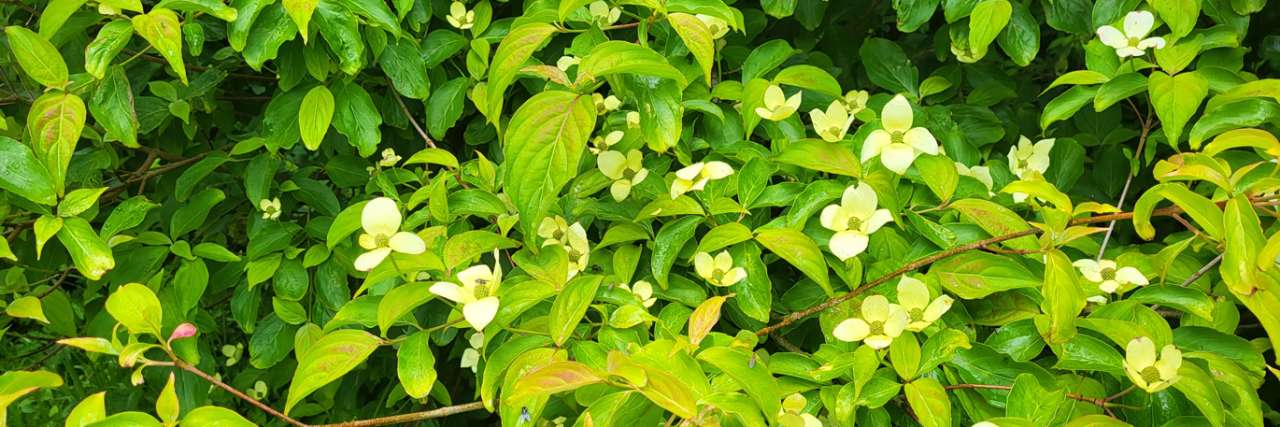
Flowering dogwood variety (I forget which!) with flowers that have white bracts, now starting to open all over this, now tree, in early June. Photo taken in Boyle by Richard (AGC) 08/06/2026.
Understanding the Different Types of Cornus
For simplicity, Cornus can be divided into three main groups:
- Winter Stem Cornus – grown for colourful stems that brighten the garden in winter.
- Flowering Cornus – grown as ornamental shrubs or small trees for their spectacular flowers and autumn colour.
- Cornus mas – a unique species offering flowers, edible fruits and wildlife value.
Winter Stem Cornus
These are often the varieties most gardeners associate with Dogwoods.
While attractive throughout the year, their true moment comes during autumn and winter when the leaves fall and reveal brightly coloured stems.
Why Grow Them?
- Exceptional winter colour
- Excellent wildlife habitat
- Suitable for hedging
- Adds structure to borders
- Works beautifully with evergreens and conifers
- Very resilient, will tolerate exposure and harsh winters
Where Do They Grow Best?
- Full sun or partial shade
- Moist but well-drained soil
- Mixed borders
- Waterside planting
- Informal hedges
Pruning for the Best Stem Colour
One of the most important things to understand about winter stem Cornus is that the brightest stem colour is produced on young growth.
To maintain vibrant colour:
- Prune hard in late winter or early spring.
- Remove older stems close to the ground.
- Encourage vigorous new growth each year.
Without pruning, stem colour often becomes less intense over time.
Flowering Cornus (Kousa Types)
Flowering Dogwoods are entirely different in character.
Rather than being grown for winter stems, they are valued for their spectacular flowers (technically colourful bracts), layered branching structure and beautiful autumn colour.
Why Grow Them?
- Outstanding flowers
- Excellent autumn foliage colour
- Beautiful architectural form
- Suitable as specimen trees
- Four-season interest
Growing Conditions
- Sheltered position
- Moist but free-draining soil
- Slightly acidic to neutral soil preferred
- Sun or partial shade
Important: As with Magnolias, flowering Cornus perform best in sheltered positions. Strong winds can damage flowers and reduce the quality of the display.
Cornus Kousa Fruits
It may be worth mentioning that the fruit often produced by cornus kousa are in fact edible, looking like a large, tough raspberry with a flavour akin to ripe American persimmons. The fruits usually mature around august, with an orange or red skin (depending on variety).
They are a bit of a strange one to eat though as the skin is rough and gritty and the seeds are large. The best way to eat them is to pull out the fruit stem, which makes a small opening at the top, then, squeeze the inner goodness into your mouth before spitting out the seeds. Perhaps not one to share on the dinner table, but if you like a bit of grazing as you walk around your garden, you may want to give them a try.
Important - It's always worth noting that if you're not 100% certain if a berry is edible, then just don't. Cornus kousa berries are pretty distinct and so are unlikely to be confused with anything else.
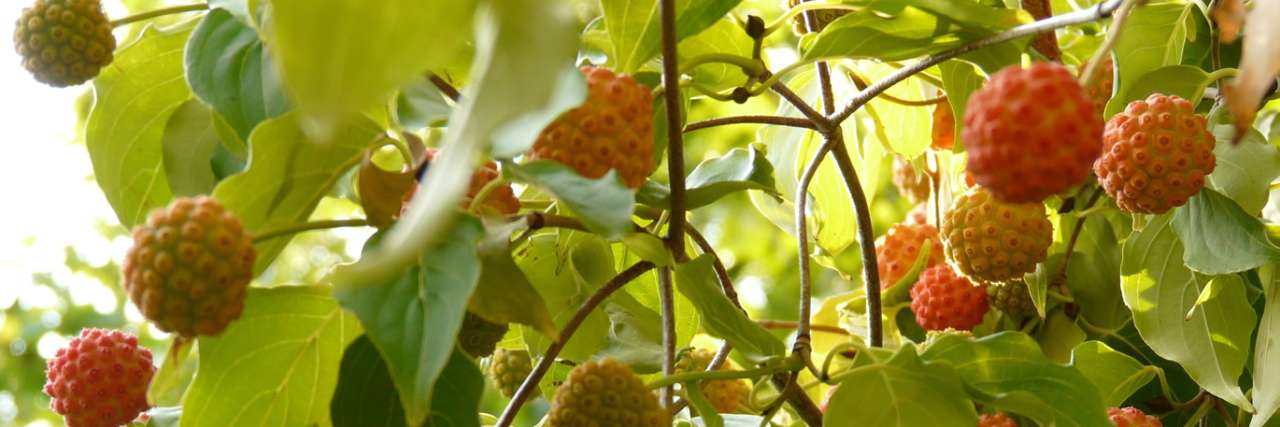
Cornus Kousa berries are very distinct, picture here, beginning to ripen in late summer - Image by Hans from Pixabay
Cornus mas – The Cornelian Cherry
Cornus mas occupies a unique position within the genus.
It combines ornamental value with wildlife benefits and edible fruits.
- Masses of yellow flowers in late winter and early spring
- Attractive red fruits in autumn that can be used in jam and wine making (a little too sour to eat straight from the tree!)
- Excellent pollinator plant
- Suitable for larger gardens and mixed hedgerows
Its flowers are often among the earliest signs that spring is approaching.
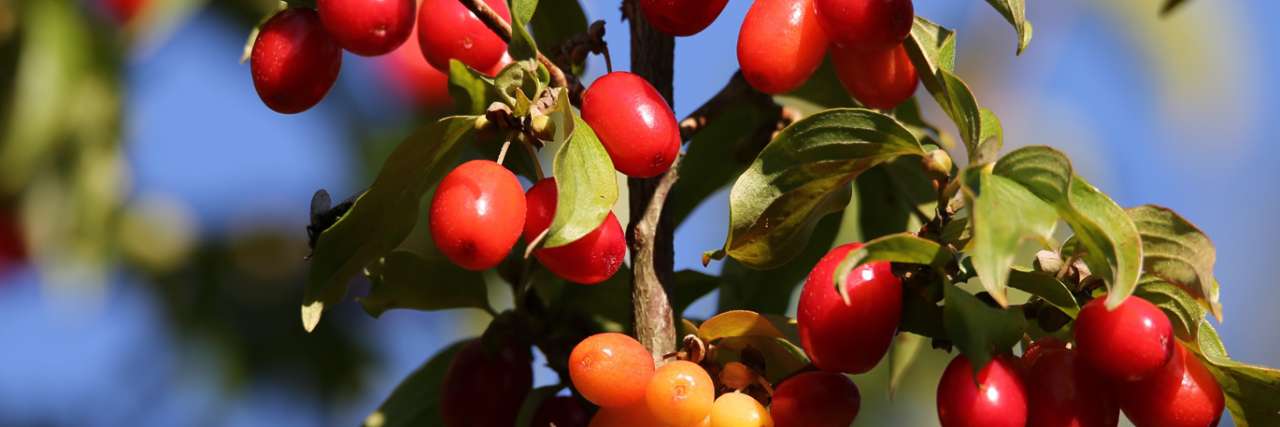
Cornus Mas berries are very different to their 'Kousa' cousins and, whilst very sour to eat from the tree, can be used to make jam, wine or cornelian cherry syrup - Image by Goran Horvat from Pixabay.
Cornus Through the Seasons
| Season | Interest |
|---|---|
| Spring | Flowers, bracts and fresh foliage |
| Summer | Attractive foliage and architectural structure |
| Autumn | Brilliant foliage colour and fruits |
| Winter | Colourful stems and strong branch structure |
Few shrubs provide genuine interest throughout all four seasons as effectively as Cornus.
Varieties We Love This Season
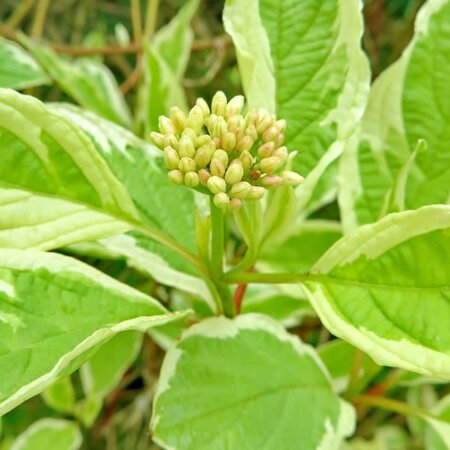
Cornus alba 'Sibirica Variegata'
A striking variegated Dogwood combining cream-edged foliage with brilliant red winter stems.
Excellent in mixed borders, winter gardens and informal hedging schemes.
Best for: Winter colour, hedging and mixed shrub borders.
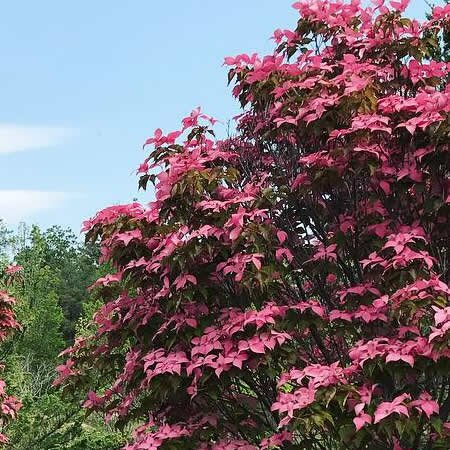
Cornus kousa 'Scarlet Fire'
One of the most spectacular flowering Dogwoods available.
Produces large deep pink to red bracts followed by excellent autumn colour.
Best for: Specimen planting and ornamental gardens.
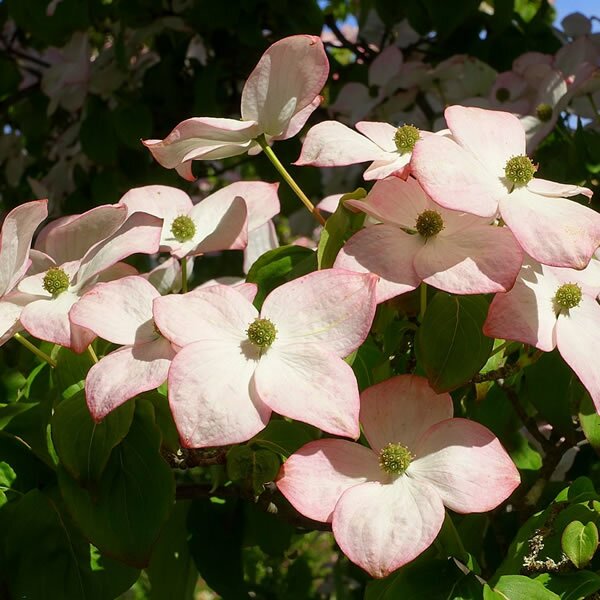
Cornus kousa 'Satomi'
An elegant variety producing soft pink bracts and attractive layered growth.
Ideal for smaller gardens where a flowering focal point is required.
Best for: Smaller gardens and woodland-style planting.
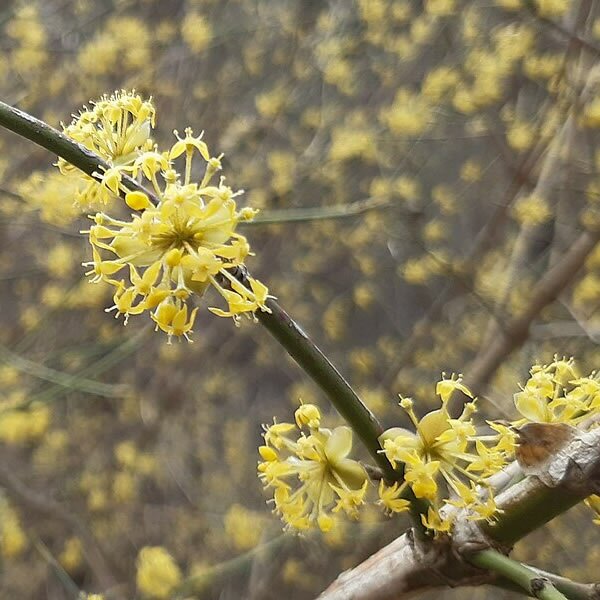
Cornus mas
A wonderfully versatile species producing clouds of yellow flowers before many other plants have begun growing.
The edible fruits are attractive to wildlife and can even be used in preserves.
Best for: Wildlife gardens, mixed hedgerows and productive landscapes.
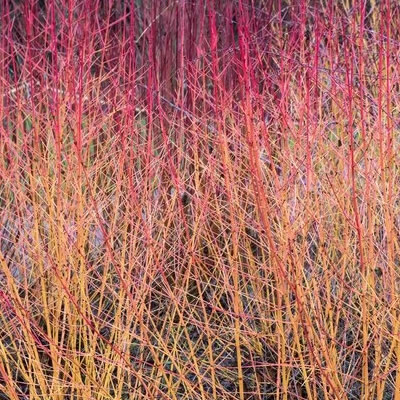
Cornus sanguinea 'Midwinter Fire'
One of the finest winter shrubs available.
Its stems blend shades of yellow, orange and red creating a glowing effect during the darkest months.
Best for: Winter borders and dramatic seasonal displays.
Companion Planting Ideas
For Winter Stem Cornus
The colourful stems are particularly effective when planted alongside:
- Conifers
- Heathers
- Evergreen shrubs
- Ornamental grasses
The contrast between brightly coloured stems and dark evergreen foliage can be spectacular in winter. This creates a border that remains attractive even during the darkest months of the year.
Tip: It's also a great idea to plant spring bulbs within this kind of border as this carries the interest through into the next season, whilst the Cornus retain those colourful stems before leafing up into summer.
For Flowering Cornus
These combinations help create beautiful woodland-style planting schemes.
Can Cornus Be Grown as a Hedge?
Many gardeners are surprised to learn that certain Cornus make excellent informal hedges.
Particularly suitable varieties include:
- Cornus alba 'Sibirica' (Red stemmed dogwood)
- Cornus alba 'Sibirica Variegata' (Red stemmed dogwood)
- Cornus sanguinea 'Midwinter Fire' (Orange stemmed dogwood)
- Cornus stolonifera 'Flaviramea' (Yellow stemmed dogwood)
These varieties provide screening during summer and exceptional stem colour during winter.
It is most economical, when growing dogwood as a hedge, to buy bare-root shrubs and plant in autumn or spring We usually have these varieties available from around November until March if you're looking to plant a dogwood hedge. These varieties of dogwood are very resilient and will thrive in most normal soils and growing exceptionally well in rich, moist sites - making it ideal for the Irish climate and soil conditions.
Spacing for a dogwood hedge: For a dogwood hedge these are best planted at a spacing of around 3 per metre (or 5 per metre for a double row) or 30-35cm apart and they are fairly quick-growing, putting on around 45-60cm growth in a year.
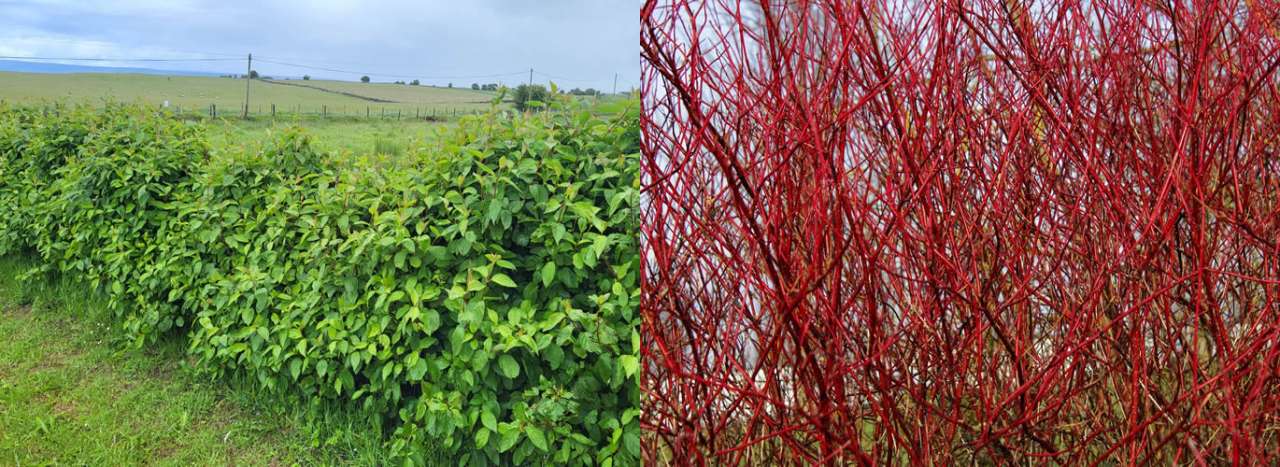
This is my dogwood hedge of cornus sibirica at the beginning of summer (left), by winter it will look much more like the image to the right, providing a warm looking thicket of red stems and much needed colour over the winter months (left photo taken 08/09/2026 by Richad (AGC) - right image by armennano of pixabay.)
Common Problems
- Poor stem colour: Usually caused by insufficient pruning.
- Reduced flowering: Often linked to excessive shade.
- Wind damage: Particularly relevant to flowering Kousa varieties.
- Drought stress: Young plants benefit from watering during prolonged dry periods.
Final Thoughts
Whether you're looking for fiery winter stems, spectacular flowers, brilliant autumn colour or valuable wildlife plants, there is a Cornus suited to almost every garden.
By understanding the different groups and choosing the right variety for the right situation, Dogwoods can provide year-round interest and become some of the most rewarding shrubs and small trees in the garden.
Looking for the perfect Cornus for your garden?
Visit our garden centres in Boyle and Roscommon or browse our latest range online for expert advice and seasonal availability.