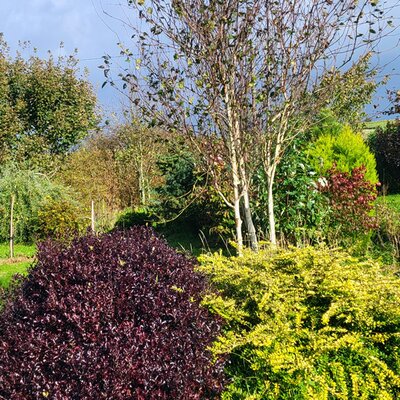

Conifers sometimes get a slightly unfair reputation for being either enormous trees or rather uninspiring evergreen hedging. In reality, the group is extraordinarily diverse, ranging from tiny plants that may only grow a few centimetres each year to substantial trees that can become major features of a garden.
That range is precisely what makes conifers so useful. They can provide year-round structure, colour and texture, act as standalone focal points, create a sense of height or depth in a border, or bring evergreen interest to parts of the garden that might otherwise look rather bare during the winter months.
For an Irish garden, particularly in the west where soils can remain wet for long periods, conifers can also be remarkably reliable plants when the right variety is matched to the right position or a little care is taken to prepare the planting area well. However, that doesn't mean every conifer will thrive in every garden. Drainage, light and available space are all important, and choosing a plant that suits your conditions is far more successful than trying to alter your garden to suit the plant.

Why Grow Conifers?
One of the greatest advantages of conifers is their ability to provide structure throughout the year. While many deciduous trees and shrubs lose their leaves in autumn, conifers retain their foliage, allowing them to continue providing form and interest through the darker months.
This can be particularly valuable in an Irish garden, where the winter garden can otherwise become rather open and exposed. A well-placed conifer can provide a permanent framework around which seasonal planting can change.
They are also available in an enormous variety of forms. Some grow upwards in narrow columns, others form rounded mounds, while some have spreading, cascading or distinctly architectural shapes. Foliage can range from deep green through blue-grey, silver and golden tones, while some varieties change colour noticeably with the seasons.
Rather than thinking of conifers simply as evergreen plants, it can therefore be useful to think of them as architectural plants – providing shapes, textures and colours that remain in the garden long after many other plants have gone dormant.
Choosing the Right Size
Perhaps the most important consideration when choosing a conifer is not how it looks when you buy it, but how large it is likely to become.
Conifers are often described using terms such as miniature, dwarf, intermediate and large. These descriptions aren't simply marketing terms; they give an indication of the plant's typical growth rate and eventual size.
- Miniature conifers generally grow around 2–2.5cm per year. After approximately ten years, a typical specimen may be around 30cm (1ft) or less in height, although it may spread considerably wider.
- Dwarf conifers generally grow around 2.5–15cm per year, with many reaching approximately 60–180cm (2–6ft) after ten years.
- Intermediate conifers or medium-sized conifers generally grow around 15–30cm per year and can eventually reach approximately 1.8–4.5m (6–15ft), depending on the variety and growing conditions.
- Large conifers can grow 30cm or more each year, with many eventually exceeding 4.5m (15ft) and some becoming considerably larger.
These figures should always be treated as a guide rather than a guarantee. Growth rates vary between species and cultivars and are also influenced by soil, light and growing conditions. Most importantly, always check the eventual dimensions of an individual cultivar before planting.
A small conifer can look perfectly proportioned when planted, yet eventually become much larger than expected. Giving plants sufficient room from the beginning is usually much easier than trying to control a plant that has outgrown its position.

Miniature, Dwarf, Intermediate or Large?
The different size categories also open up very different possibilities in the garden.
Miniature conifers are particularly useful where space is limited. They can be planted in rockeries and gravel gardens, used at the front of borders or grown in containers where their slow growth makes them easier to manage.
Dwarf conifers offer a little more presence without becoming dominant. They work well towards the front or middle of borders, among other low-growing shrubs and perennials, and can also make excellent specimen plants in smaller gardens.
Intermediate conifers are useful where you want something with more height and presence. They can form part of a mixed shrub border, create a strong vertical accent or help establish the framework of a woodland-inspired or Japanese-style planting scheme.
Large conifers are best considered as structural plants. They need considerably more space, but a well-chosen specimen can become one of the defining features of a garden, providing height, shelter and a strong evergreen presence throughout the year.
Think About the Space, Not Just the Plant
When selecting a conifer, it can be tempting to choose the one that looks best in the garden centre. Remember that what you see is only a snapshot of the plant's life.
Before planting, consider its expected height and width, its growth rate and what will be around it in ten, twenty or even thirty years. A miniature conifer that slowly increases in size can be an excellent long-term choice for a small garden, while a large specimen may need to be given a permanent position where it can develop without eventually overwhelming its surroundings.
This is one of the reasons the miniature, dwarf, intermediate and large classifications are useful: they help us choose a conifer according to the space available rather than simply according to how attractive it looks today.
Where Should You Plant Conifers?
Most conifers perform best in full sun and a well-drained soil. This is particularly important in areas where the soil can remain wet through autumn and winter.
Although many conifers will tolerate a degree of moisture, prolonged waterlogging can lead to problems with the roots and, over time, can weaken the plant. A position that receives plenty of light and allows excess water to drain away is therefore generally the safest choice.
This is worth remembering because conifers are sometimes described simply as "low maintenance" plants. They certainly can be, but low maintenance doesn't mean they are indifferent to their conditions. A conifer planted in the right place can require very little attention; one planted in a position that stays wet or receives too little light may struggle.
Full Sun or Partial Shade?
There are conifers that will tolerate partial shade, but for many of the varieties grown in gardens, full sun will produce the best results.
Good light encourages strong, compact growth and helps maintain the foliage colour for which many cultivars are grown. This is especially important with blue, silver and golden forms, whose colour can be considerably less impressive in heavy shade.
If you have a naturally shaded part of the garden, it is therefore worth looking at the requirements of the individual variety rather than assuming that every conifer will perform equally well there.
Soil and Drainage
Most conifers are happiest in a soil that is moist but free draining. In the west of Ireland, this distinction can be particularly important. Our rainfall can provide plenty of moisture, but heavy or compacted soils may hold onto that water for much longer than the plant's roots would prefer.
If your soil is heavy, improving its structure and drainage before planting can be worthwhile. Organic matter can help improve soil structure, although simply adding more compost isn't always the answer to severe drainage problems. Where water naturally collects or the soil remains saturated for long periods, choosing a better-suited position or growing a suitable conifer in a raised bed or container planting may be the more practical solution.
Conversely, very light or sandy soils can drain rapidly and may require additional organic matter to improve their ability to retain enough moisture during dry periods.
As with any plant, the aim isn't to create the "perfect" soil in isolation, but to understand what you have and select a conifer that is capable of thriving in those conditions.
When to Plant
Conifers can be planted at various times of year, but autumn and spring are particularly useful periods. Planting when the soil is naturally moist gives the plant an opportunity to establish its roots before the demands of the following summer.
In an Irish garden, autumn planting can work particularly well provided the soil isn't waterlogged. The plant can begin establishing roots while temperatures remain relatively mild, although newly planted conifers should still be monitored during unusually dry periods.
Container-grown conifers can also be planted during the growing season, but remember that a plant in a container can dry out much more quickly than one established in the ground. Watering is particularly important during hot or prolonged dry spells.
Using Conifers in the Garden
One of the great strengths of conifers is their versatility. They can be used to create a strong focal point, add height and structure to a border, soften the edges of a gravel garden or provide a year-round framework around which other plants can change with the seasons.
And because conifers come in such a wide range of shapes, colours and growth rates, they don't have to dominate a garden. A carefully chosen miniature or dwarf cultivar can bring the same architectural quality to a small space that a much larger tree brings to a bigger garden.
Standalone Specimens
Larger conifers can make particularly impressive standalone specimens. Their shape and foliage often provide enough visual interest without needing a collection of surrounding plants, making them useful where you want to create a clear focal point.
A specimen conifer can also become more valuable as the garden matures. Rather than relying on flowers for seasonal impact, its form remains present throughout the year, providing a fixed point around which other planting can develop.
When choosing a large specimen, however, think well beyond the size of the plant when you buy it. A conifer that looks perfectly manageable in a garden centre may eventually become a substantial tree, so consider its eventual height, spread and relationship with buildings, paths, boundaries and neighbouring plants.
Woodland-Style Planting
Conifers can work beautifully in woodland-inspired planting schemes, particularly where they are combined with plants that enjoy similar conditions rather than simply being chosen for appearance.
In a brighter woodland-style border, conifers can provide an evergreen framework among hellebores, ferns and spring bulbs. Snowdrops, crocuses and narcissus can provide seasonal colour around the base, while hellebores and other shade-tolerant plants help soften the more architectural shapes of the conifers.
The important consideration is light. A conifer planted beneath a dense canopy or in deep shade may not perform as well as one given a brighter position, so choose varieties and companion plants according to the actual conditions of your garden.
Rock and Gravel Gardens
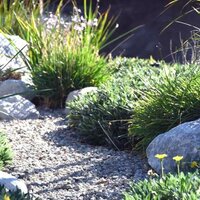
Miniature and dwarf conifers are particularly well suited to rock and gravel gardens. Their naturally slow growth means that they can provide structure without quickly overwhelming the space, while their different shapes and foliage colours work well alongside stone, gravel and low-growing plants.
This can also be an excellent way to create a garden with year-round interest in a relatively small area. A miniature pine, for example, can provide a permanent framework while low perennials and bulbs provide seasonal changes around it.
Good drainage is particularly important in these situations, making a free-draining gravel or rock garden a natural setting for many smaller conifers.
Japanese-Inspired Gardens
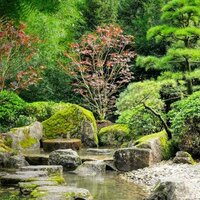
The strong shapes and restrained colour palette of many conifers make them natural partners for Japanese-inspired planting.
Upright, columnar and sculptural forms can be used to create focal points, while spreading or mound-forming varieties can help balance stones, gravel and lower planting. Junipers, pines and other carefully selected conifers can provide structure without relying on bright flowers.
They can also be combined with plants such as Japanese grasses, ferns and carefully chosen acers to create contrast in texture and form. The aim isn't to recreate a particular Japanese garden, but to use the qualities of the plants themselves to create a calm and considered composition.
Combining Different Heights and Textures
Another effective way to use conifers is to combine several sizes rather than planting a collection of similar plants.
A low-growing miniature can sit towards the front of a border, a dwarf or intermediate conifer can provide middle-ground structure, while a larger specimen can create height further back. Differences in foliage colour – from deep green through blue, silver and gold – can add another layer of interest.
This approach works particularly well because the plants continue to provide structure when flowering plants have finished for the season. The surrounding planting can change, while the conifers provide the permanent framework.
Conifers We Love This Season
With so many cultivars available, choosing just a few favourites is difficult. We've selected these examples to show the range of shapes, colours and eventual sizes available – from tiny plants suitable for containers and rock gardens to substantial specimen trees.
Miniature Conifers

Pinus mugo ‘Carstens Wintergold’
A compact, slow-growing mountain pine with a particularly attractive seasonal change. Its green foliage develops a warm golden colour during the colder months, making it especially valuable in autumn and winter planting.
Best for: Rock and gravel gardens, containers and small sunny spaces where its seasonal colour can be appreciated up close.

Pinus strobus ‘Squiggles’
A wonderfully distinctive miniature pine with unusual, twisted foliage that gives it a character all of its own. This is a conifer that is interesting even when viewed from close quarters, making it ideal for smaller gardens where its unusual form can be appreciated.
Best for: Containers, rock gardens and as a feature plant where its unusual foliage can take centre stage.

Pinus mugo ‘Allgäu’
A compact, densely growing mountain pine with a neat, mound-forming habit. Its restrained growth makes it useful where you want the character of a pine without committing to a large tree.
Best for: Rockeries, gravel gardens, containers and the front of sunny borders.
Dwarf Conifers

Pinus heldreichii ‘Little Dracula’
A compact, strongly structured pine with a distinctive upright habit. It brings height without requiring the space of a full-sized pine and makes an excellent architectural plant in a smaller garden.
Best for: Sunny borders, rock gardens and mixed planting where an upright evergreen accent is needed.

Pinus densiflora ‘Low Glow’
A low-growing pine with a spreading, mound-forming habit. Its shape makes it useful for bringing evergreen structure down towards ground level rather than adding height.
Best for: The front of borders, gravel gardens, rockeries and sunny positions where a low, spreading form is useful.

Picea pungens glauca ‘Super Blue’
For those looking for colour rather than just green, this blue-foliaged spruce provides a strong focal point. Its cool blue-grey foliage contrasts particularly well with darker greens and softer planting.
Best for: Sunny borders, specimen planting and anywhere you want to introduce a strong blue foliage colour.
Intermediate Conifers

Picea ‘Wills Zwerg’
A compact, narrow-growing spruce with an upright, conical shape. It offers the traditional character of a spruce in a much more manageable form, making it useful where vertical structure is wanted without a large spreading tree.
Best for: Mixed borders, specimen planting and smaller gardens where a strong upright form is required.

Juniperus chinensis ‘Stricta’
A narrow, upright juniper with blue-green foliage and a naturally architectural shape. Its columnar habit makes it particularly useful for introducing vertical emphasis into a planting scheme.
Best for: Japanese-inspired planting, formal borders, gravel gardens and as a vertical accent among lower-growing plants.

Taxus baccata ‘Summergold’
A golden-foliaged form of our native yew, bringing warm colour to an otherwise evergreen planting scheme. Yew is also more tolerant of shade than many conifers, making this a useful choice where a brighter foliage colour is wanted without requiring a completely open, sunny position.
Best for: Mixed borders, woodland-style planting and structural planting where evergreen colour and a more flexible light tolerance are useful.
Large Conifers

Cupressocyparis leylandii
One of the most familiar conifers in Irish gardens, Leylandii is extremely vigorous and can make an effective evergreen screen or hedge where there is sufficient space and regular maintenance is possible.
Its rapid growth is both its strength and its limitation. It can provide screening relatively quickly, but it should never be planted without considering its eventual size and the need for regular trimming.
Best for: Large gardens and substantial boundaries where screening is required and the hedge can be maintained regularly.

Cedrus libani ‘Glauca’
A magnificent blue-grey cedar that can become a substantial specimen tree. Its strong form and unusual foliage colour make it a dramatic feature, but this is very much a tree to choose for the space you have available rather than the space it occupies when young.
Best for: Large gardens and open sunny positions where a long-term specimen can be allowed to develop naturally.

Picea breweriana
Brewer's spruce is an elegant and unusual conifer, valued for its distinctive, pendulous branches. Rather than the dense, conventional shape associated with some spruces, it develops a graceful silhouette that makes it an exceptional specimen plant.
Best for: Larger gardens where it can be given space to develop its natural shape and become a long-term focal point.
Planting and Caring for Conifers
Once you've chosen the right conifer for the conditions and space available, they are generally straightforward plants to look after. The key is giving them a good start and avoiding the problems caused by poor drainage, drought during establishment or inappropriate pruning.
Planting
As we've mentioned above, autumn and early spring are particularly useful planting periods, provided the soil isn't waterlogged or frozen. Container-grown conifers can be planted at other times too, but newly planted specimens will need more attention to watering during dry weather.
Prepare the surrounding soil rather than concentrating all your effort on creating a small pocket of improved soil in the planting hole. On heavy or compacted ground, improving the structure of the wider planting area can encourage roots to spread more effectively. Aim to go deep and wide in your soil prep, especially when planting larger specimens.
Most conifers don't require staking, although larger varieties or plants in particularly exposed positions may need temporary support while their root systems establish.
Watering
One of the most common misconceptions about conifers is that evergreen means they can simply be planted and forgotten. Newly planted conifers need regular watering while they establish, particularly during dry spells.
Once established, many conifers are relatively low maintenance, but plants growing in containers remain dependent on us for water. This is particularly important during prolonged dry weather, when evergreen foliage continues to lose moisture.
Mulching
A mulch of well-rotted organic matter, bark or similar material can help conserve moisture, suppress weeds and improve the soil around newly planted conifers.
Keep the mulch away from direct contact with the main stem or trunk, however. A clear space around the base helps prevent excess moisture being held against the plant.
Pruning – Less Is Usually More
Most specimen conifers need very little pruning. Their natural shapes are often one of their greatest attractions, so it is usually better to choose a plant whose natural habit suits your space rather than relying on regular pruning to keep an unsuitable plant under control.
If pruning is necessary, many conifers can be lightly trimmed between spring and late summer. The important rule is to avoid cutting back into old, brown wood. Most conifers cannot regenerate from completely bare wood, meaning a hard cut can leave a permanent brown or bare patch.
Yew is an important exception and is much more forgiving of hard pruning. Leylandii and other conifer hedges are different again: they need regular trimming while they are still within their intended size because an overgrown conifer hedge generally cannot be renovated by simply cutting it back hard.
In other words, pruning is best thought of as maintenance rather than a rescue operation. If a conifer has become far too large for its position, replacing it with a better-sized cultivar is often the more successful long-term solution.
Common Conifer Problems
Brown or Dying Foliage
Browning can have several causes, including drought, frost, cold drying winds, waterlogging or problems with establishment. Before reaching for a treatment, look at the growing conditions first.
If the browning is widespread or affecting an otherwise established plant, check the roots and surrounding soil for signs of waterlogging or poor drainage.
Too Much Water
In our climate, it can be tempting to assume that conifers will never struggle for moisture. The opposite can be true on poorly drained ground. Roots need access to air as well as water, and prolonged waterlogging can lead to serious problems.
If your garden is naturally wet, choosing a plant suited to those conditions or improving drainage before planting may be far more effective than trying to solve the problem afterwards.
The Conifer Has Outgrown Its Space
This is one of the most common problems with conifers and one of the easiest to prevent. Remember that a small plant at the garden centre may only be at the beginning of its life in your garden.
Check the eventual size before planting and consider what the surrounding garden might look like in ten, twenty or even thirty years. A conifer that fits perfectly today may eventually block light, crowd neighbouring plants or become difficult to maintain.
Bare Patches After Pruning
If a conifer has been cut back into old brown wood, it may not produce new green growth from that area. This is why regular, light trimming is preferable to allowing a conifer or hedge to become overgrown and then attempting a drastic reduction.
Conifers: A Long-Term Investment in Garden Structure
Conifers sometimes have an unfair reputation for being either enormous trees or rather uninspiring evergreen hedges. The reality is far more interesting.
There are conifers for rock gardens, containers, borders, woodland-style planting and Japanese-inspired gardens. There are plants with blue, silver, gold or deep green foliage, spreading forms, upright columns, rounded mounds and beautifully architectural silhouettes.
The trick is to stop thinking of a conifer simply as an evergreen plant and start thinking about what role it needs to play in your garden.
Does the garden need height? A narrow intermediate conifer may be the answer. Do you need something low and permanent among gravel and stone? A miniature or dwarf cultivar could work beautifully. Looking for a specimen that will become part of the garden's character for decades? Then perhaps a larger tree is appropriate.
Most importantly, choose the plant for the conditions you actually have. Consider the light, drainage, exposure and available space before falling in love with the plant itself. When those things are right, conifers can provide some of the most dependable structure and year-round interest in an Irish garden.
Choose the Conifer, Not Just the Look
When choosing a conifer, don't just ask whether you like how it looks today. Ask why it is the right plant for your garden. How big will it become? Does it suit your soil? Will it get enough light? Can you give it the drainage and space it needs?
Choosing well at the beginning is usually far easier than trying to manage an unsuitable plant later.
Final Thoughts
Conifers can bring something to a garden that few other plants can match: dependable structure that doesn't disappear when the flowers finish or the leaves fall.
From tiny, characterful plants that can live happily in a container or rock garden to magnificent specimen trees, there is a remarkable range to choose from. The key is understanding that "conifer" doesn't describe one particular type of garden plant – it describes a huge and diverse group of plants with very different habits and requirements.
Choose according to your garden's conditions, give the plant enough room to develop, and resist the temptation to force it into a space it was never suited to occupy. Get those basics right, and a well-chosen conifer can become one of the most reliable and rewarding features in the garden.
Looking for the Right Conifer?
Whether you're looking for a compact conifer for a container or rock garden, a colourful specimen for a border or a larger tree to provide long-term structure, we'd be happy to help you find a plant that suits your garden.
Browse our current selection of conifers or visit us in-store and talk to the team about finding the right plant for your space.