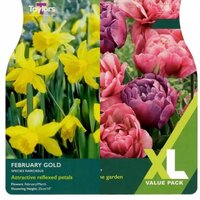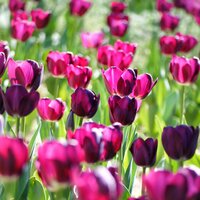

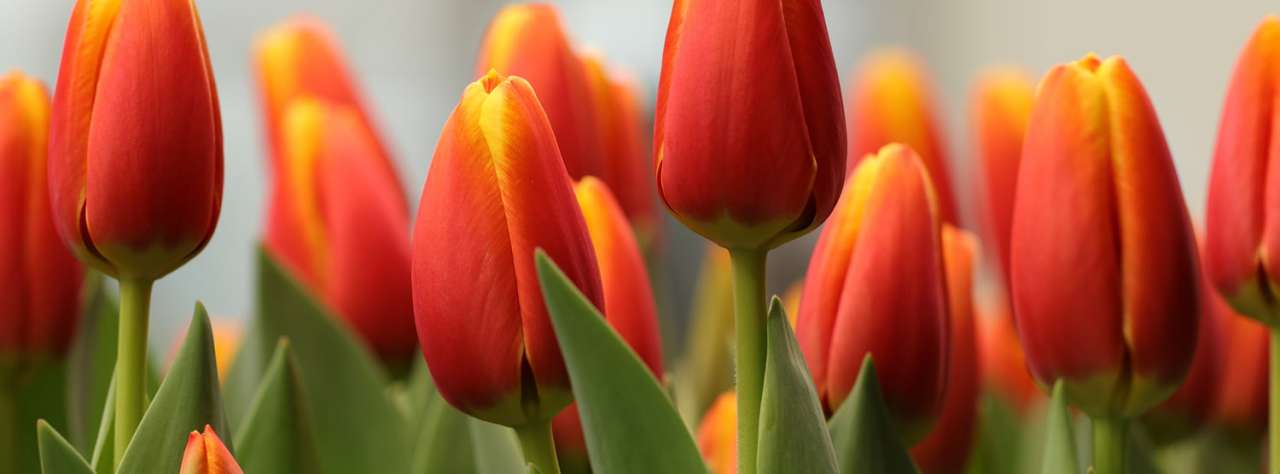
A bed of Darwin Tulips with bold red-orange and yellow colouring - Image by Marjon Besteman from Pixabay.
Few spring flowers offer quite the variety of colour, shape and character that we find among tulips. From the familiar, elegant cup-shaped flowers to extravagant ruffled blooms that almost resemble peonies, there is an extraordinary range to choose from but if you've ever looked through a selection of tulip bulbs, you may have noticed descriptions such as Darwin Hybrid, Triumph, Parrot, Viridiflora or Fosteriana. What do these names actually mean, and do they tell us anything useful about how the plants will perform in our gardens?
There is also another question that gardeners frequently ask: why do some tulips return year after year, while others produce a wonderful display in their first spring and then gradually disappear?
Here in the west of Ireland, our generally mild, damp climate adds another dimension to growing tulips successfully. Although they are perfectly capable of producing beautiful flowers here, getting them to perform consistently over several seasons can require a little more thought.
In this guide, we'll look at the different types of tulip, what makes them distinctive, how to choose them for different garden situations and what you can do to give them the best chance of returning.
Understanding Tulip Classifications
Tulips belong to the genus Tulipa, a group of bulbous perennial plants with wild origins across parts of Europe, North Africa and Asia, particularly Central Asia. Centuries of cultivation and breeding have produced thousands of named cultivars, with an extraordinary range of colours, flower forms and growth habits.
To make this diversity easier to understand, cultivated tulips are traditionally arranged into 15 horticultural divisions. These divisions are based on characteristics such as flower shape, flowering period and, in some cases, the species involved in their ancestry. Importantly, they are not all botanical species. Names such as Triumph and Parrot describe horticultural groups, while Fosteriana and Greigii refer to groups associated with particular tulip species.
Understanding these distinctions can help you choose tulips for the effect you want, rather than relying entirely on the photograph on the packet.
The Different Types of Tulips
Early-Flowering Tulips
Early tulips are useful for bringing colour into the garden before the main tulip season gets underway. Their exact flowering time varies with weather and location, but they generally begin earlier than the larger late-season types.
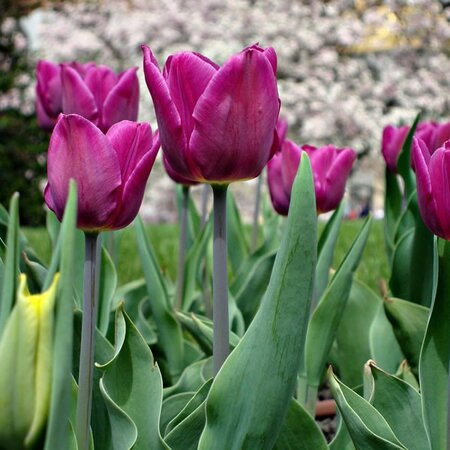
Single Early Tulips (Division 1)
Single Early tulips have the traditional cup-shaped flowers most people associate with tulips.
They are generally relatively compact, with sturdy stems and flowers that open widely in sunshine.
Their manageable height makes them particularly useful for containers, the front of borders and more formal spring displays.
Best for: Early colour, pots, smaller gardens and exposed positions where shorter stems can be an advantage.
Longevity: Often grown for seasonal display, although individual cultivars may perform differently.
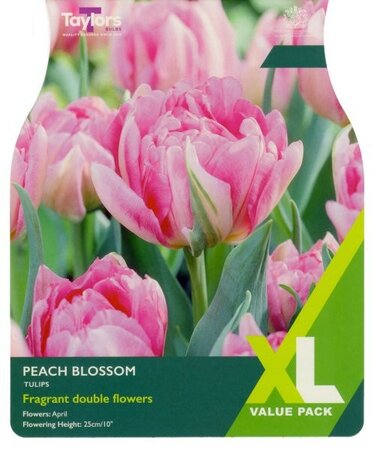
Double Early Tulips (Division 2)
Sometimes described as peony-flowered tulips, Double Early varieties have numerous petals that create a rounded, full appearance.
They are often fairly short-stemmed and can make spectacular container displays.
However, their large, heavy flowers can collect rainwater, making them more vulnerable to damage during prolonged wet or windy weather.
Best for: Sheltered borders, patio containers and decorative spring displays.
Worth knowing: Their impressive flower heads are often best appreciated somewhere sheltered from heavy rain.
Mid-Season Tulips
These groups include some of the most familiar garden tulips and offer an excellent combination of height, colour and flower size.
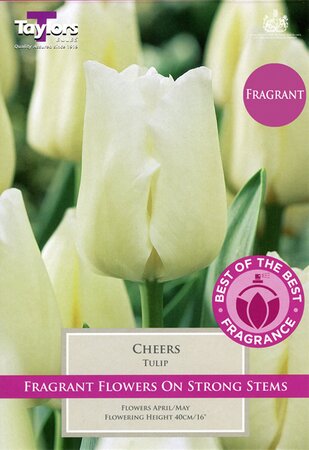
Triumph Tulips (Division 3)
Triumph tulips are among the most widely grown garden tulips.
They were developed through breeding involving early and later-flowering tulips, producing plants with neat, cup-shaped flowers on generally strong stems.
They are available in a remarkable range of colours, including many attractive bicoloured varieties.
Their relatively tidy flower shape and dependable first-year display make them popular for borders, containers and cut flowers.
Best for: Classic spring displays, colour combinations, containers and cutting gardens.
Longevity: Some may return for several years, but many are best regarded primarily as bedding tulips rather than reliable naturalisers.
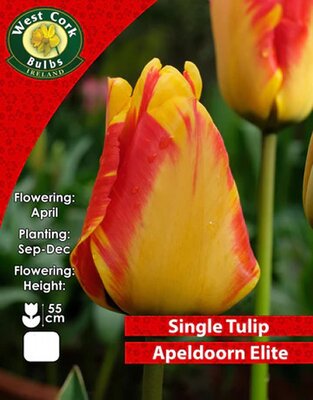
Darwin Hybrid Tulips (Division 4)
Darwin Hybrids are particularly notable for their large, substantial flowers and generally tall, strong stems.
They were developed through breeding involving Tulipa fosteriana and other cultivated tulips.
The flowers are often boldly coloured, with red, orange, yellow and pink shades particularly well represented.
One of their greatest attractions is their reputation for returning more reliably than many other large-flowered garden tulips.
Best for: Bold border displays, larger planting schemes and gardeners hoping to encourage repeat flowering.
Longevity: Among the better choices for perennialising, provided soil conditions are suitable.
Worth knowing: Even Darwin Hybrids are not guaranteed to return reliably in persistently wet soil.
Late-Flowering Tulips
Late-flowering groups extend the tulip season and include some of the most unusual and dramatic flower forms. In Irish gardens, their flowering period can overlap considerably with mid-season types, depending on the weather.
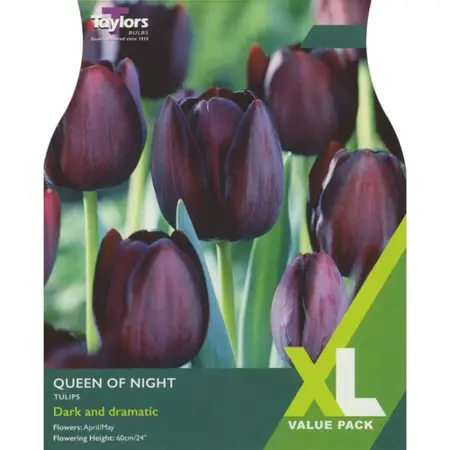
Single Late Tulips (Division 5)
Single Late tulips are often tall, elegant plants with substantial cup- or goblet-shaped flowers.
They include varieties with particularly rich colours, making them valuable for extending spring interest into the later part of the season.
Some varieties are excellent cut flowers.
Best for: Late spring colour, taller borders and cutting gardens.
Worth knowing: Tall stems can benefit from shelter in windy gardens.

Lily-Flowered Tulips (Division 6)
Lily-flowered tulips are among the most elegant of all the tulip groups.
Their narrow, pointed petals curve outwards, creating a distinctive, almost star-like appearance when fully open.
They often have a graceful, slender outline that contrasts beautifully with the rounded flowers of traditional tulips.
Best for: Elegant borders, naturalistic combinations and cut flowers.
Worth knowing: Their refined appearance can be particularly effective when planted among emerging perennials.
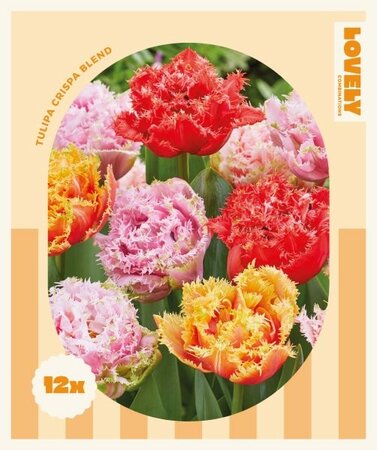
Fringed Tulips (Division 7)
Fringed tulips are distinguished by their finely serrated or crystalline-looking petal edges.
These delicate fringes create a decorative effect that is especially noticeable when the flowers are viewed close up.
They occur in a range of colours and flower shapes.
Best for: Containers, prominent borders and planting areas where the flowers can be admired at close range.
Worth knowing: The fringed edges are a stable bred characteristic, not evidence of damage or disease.
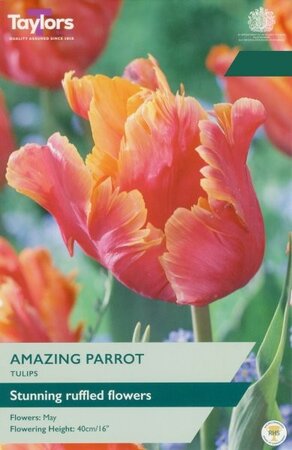
Parrot Tulips (Division 10)
Parrot tulips are among the most flamboyant of all tulips.
Their petals are often twisted, waved, ruffled or deeply cut, sometimes with dramatic colour variations.
The result can be almost sculptural, with flowers that look quite unlike the familiar cup-shaped tulip.
They are particularly striking as cut flowers, where their unusual shapes can be appreciated up close.
Best for: Statement planting, sheltered containers and cut flowers.
Worth knowing: Their large, irregular flowers can be vulnerable to heavy rain and strong winds. In exposed western Irish gardens, a sheltered position is particularly worth considering.
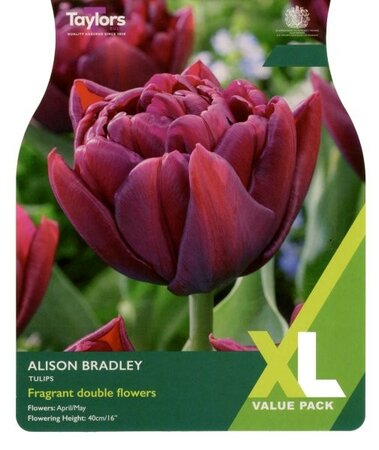
Double Late Tulips (Division 11)
Also known as peony-flowered tulips, Double Late varieties produce large, densely petalled flowers that can closely resemble peonies.
They are often among the most spectacular tulips when conditions are favourable.
However, the weight of their flowers can become a disadvantage in wet weather.
Best for: Sheltered borders, containers and dramatic late spring displays.
Worth knowing: These are wonderful tulips for impact, but not always the most practical choice for a very exposed garden.
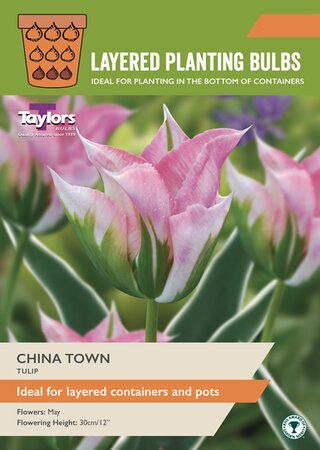
Viridiflora Tulips (Division 8)
Viridiflora tulips are recognised by their distinctive green colouring on the petals.
The green may appear as broad flames, stripes or central markings, combined with white, pink, red or other colours.
The effect can be particularly sophisticated, making them useful in more subtle planting schemes.
Best for: Unusual colour combinations, cut flowers and decorative borders.
Worth knowing: The green markings are a normal characteristic of this group, not a sign of poor flower development.
Species and Species-Derived Tulips
While the larger garden tulips often attract the most attention, some of the smaller tulips are particularly interesting for gardeners who want plants that may persist and multiply over time. These include wild species, selected forms and hybrids associated with particular species.
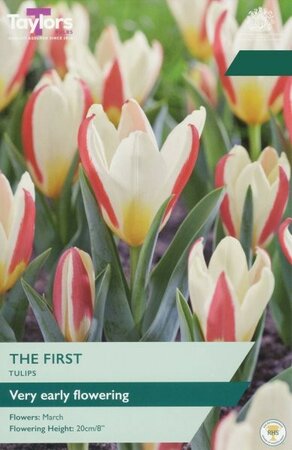
Kaufmanniana Tulips (Division 12)
Sometimes called water-lily tulips, Kaufmanniana types are usually low-growing and early flowering.
Their flowers open widely in sunshine, often forming a striking star-like shape.
Some have attractively marked foliage.
Best for: Rock gardens, gravel gardens, containers and the front of borders.
Longevity: Often among the more promising choices for repeat flowering in suitable, well-drained conditions.
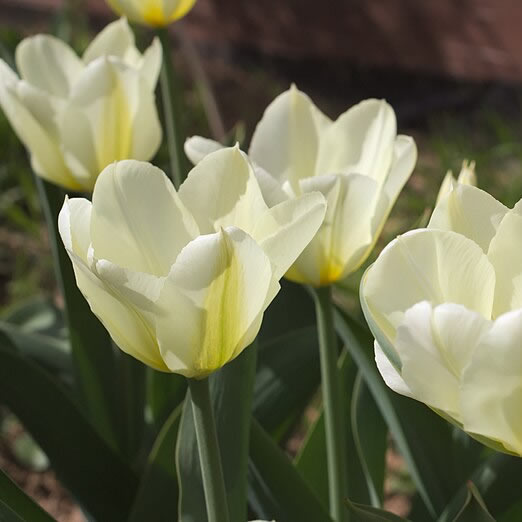
Fosteriana Tulips (Division 13)
Fosteriana tulips are often associated with the name Emperor tulips.
They generally have large, brightly coloured flowers and relatively broad leaves.
Some varieties also have attractive foliage markings.
They are often earlier flowering than many of the larger hybrid groups.
Best for: Bold early colour and gardeners looking for tulips with some potential to return.
Longevity: Often better than many highly bred bedding tulips, although conditions remain important.
Greigii Tulips (Division 14)
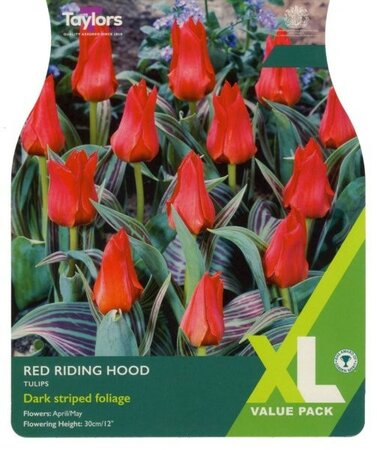
Greigii tulips are particularly interesting because their foliage can be almost as attractive as their flowers.
Many varieties have leaves marked with purple or brown stripes and mottling.
They are generally relatively short, with large flowers that open widely in sunshine.
Best for: Containers, rock gardens and smaller planting areas.
Longevity: Can be good in suitable conditions, especially where summer drainage is reliable.
Botanical or Species Tulips (Division 15)
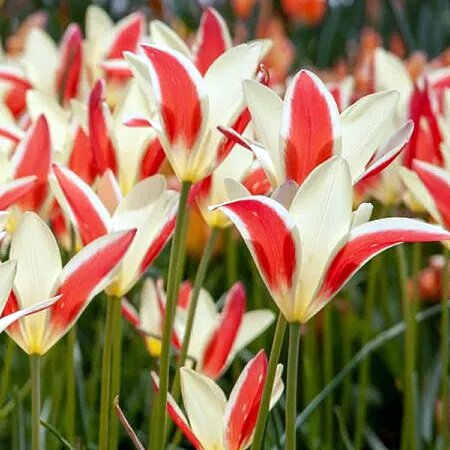
These include wild tulip species and forms closely related to them.
They are often smaller, more delicate and less formal-looking than modern garden hybrids.
Some produce several flowers from a single stem, while others form attractive star-shaped blooms.
Examples include Tulipa tarda, Tulipa turkestanica and Tulipa sylvestris.
Best for: Naturalistic planting, rock gardens, gravel gardens and suitable containers.
Longevity: Some species can establish and multiply over time, although their growing requirements vary considerably.
What About Rembrandt Tulips?
Rembrandt tulips (Division 9 tulips) are traditionally associated with flowers displaying dramatic streaks and feathered colour patterns. Historically, some of these patterns were caused by tulip-breaking viruses, which altered the distribution of pigments within the petals. Modern tulips sold with similar feathered or flamed colouring are generally bred to produce those effects without the disease. This distinction is important because virus infection can weaken tulips and affect their long-term health.
Species and Miscellaneous Tulips
The final group in the traditional tulip classification system listed above is Division 15 - Botanical or Species Tulips.
This division includes botanical tulip species and other tulips that do not fit into the preceding horticultural groups i.e. miscellaneous species.
It is worth noting that division 15 is a broad classification rather than a group of plants with identical characteristics. The growing requirements of individual species in this group can vary considerably.
Choosing Tulips for Different Garden Situations
Once you understand the different groups, it becomes easier to choose tulips for a particular purpose.
For Exposed Gardens
In gardens affected by strong winds, shorter tulips are often a more practical choice than tall varieties with heavy flowers.
Single Early, Greigii and Kaufmanniana types are worth considering.
However, exposure isn't simply about height. Shelter from prevailing winds, drainage and the weight of the flower heads all influence performance.
For Dramatic Displays
Parrot, Double Late, Fringed and Lily-flowered tulips offer some of the most distinctive flower forms.
These are particularly effective in containers or borders where their individual flowers can be appreciated.
For Repeat Flowering
Darwin Hybrids, Fosteriana, Greigii, Kaufmanniana and selected species tulips are good starting points.
However, no tulip group can guarantee reliable perennial performance in every garden.
For Cut Flowers
Triumph, Single Late, Lily-flowered, Parrot and many Double Late varieties can make excellent cut flowers.
For the best vase life, cut them when the buds are coloured but have not fully opened.
Why Are Tulips Sometimes Difficult to Keep?
One of the most frustrating experiences for gardeners is planting a beautiful selection of tulips, enjoying a wonderful display the following spring and then finding that only a few return the year after. This doesn't necessarily mean you've done anything wrong. Many modern garden tulips have been bred primarily for flower size, colour, shape and commercial production. They are excellent at producing a spectacular display from a mature, well-grown bulb, but that doesn't automatically make them reliable long-lived garden plants.
The Importance of Summer Dormancy
Many tulips originate from regions with cold winters, a period of spring growth and comparatively warm, dry summers. During spring, the leaves photosynthesise and help replenish the bulb's stored reserves. After flowering, the foliage gradually dies back and the plant enters summer dormancy.
For many tulips, a relatively dry, warm resting period is beneficial for the development of the following year's flowers. Here in the west of Ireland, we often experience almost the opposite: mild winters, cool summers and rainfall throughout much of the year. This can make it difficult for some tulips to complete their annual cycle under ideal conditions.
Why Drainage Matters So Much
When we recommend well-drained soil for tulips, we're not simply trying to prevent bulbs from rotting during winter. For many varieties, the ability of the soil to dry out during summer is also important for successful repeat flowering. A border that drains reasonably well in winter but remains cool and moist all summer may still be less than ideal for long-term tulip performance.
Why Do Tulips Produce Leaves but No Flowers?
Gardeners sometimes describe this as their tulips having gone blind. The bulbs are still alive and produce leaves, but no flower appears.
There are several possible explanations.
- Insufficient stored energy: The bulb may not have developed enough reserves to produce a flower.
- Foliage removed too early: Cutting leaves before they have naturally died back reduces the plant's opportunity to replenish its reserves.
- Unsuitable summer conditions: Persistently wet or cool soil can affect the development and survival of bulbs.
- Bulb division: The original bulb may have produced smaller replacement bulbs that are not yet large enough to flower.
- Overcrowding or competition: Established clumps may compete for space, light and nutrients.
- Planting depth or other cultural factors: Shallow planting, poor drainage or unsuitable conditions can contribute to disappointing results.
It's worth remembering that a healthy-looking leaf does not necessarily mean the bulb has enough reserves to produce a flower.
Getting Tulips to Return Year After Year
There are several approaches gardeners use to encourage tulips to flower over successive seasons. Some are relatively straightforward, while others require a little more work.
1. Choose Tulips with Better Perennial Potential
Probably the simplest approach is to begin with varieties that have a reputation for returning. Darwin Hybrids are often a good choice among the larger garden tulips.
Fosteriana, Greigii, Kaufmanniana and suitable species tulips are also worth considering. Even then, it is important to match the plant to the conditions.
2. Leave the Foliage to Die Back Naturally
After flowering, the leaves continue photosynthesising and help build reserves for the next growing season. Allow them to yellow and die back naturally before removing them.
It can be tempting to tidy up a border as soon as the flowers fade, but prematurely removing healthy foliage can reduce the chance of repeat flowering.
3. Remove Spent Flowers
For tulips you hope to keep, removing the spent flower head before seeds develop can help direct resources away from seed production. Leave the flower stem and foliage in place until they naturally decline.
This is less important for species tulips that you deliberately want to self-seed.
4. Feed While the Plants Are Growing
Tulips rely heavily on the reserves stored in their bulbs, but they also take up nutrients during active growth. Where soil fertility is poor, an appropriate bulb fertiliser or potassium-rich feed during the growing season may help support bulb development. However, feeding cannot compensate for persistently waterlogged soil, disease or unsuitable summer conditions.
Excessive fertiliser is not necessarily beneficial, particularly where the soil already contains adequate nutrients.
5. Consider Lifting and Storing the Bulbs
One traditional method of encouraging repeat flowering is to lift tulip bulbs after the foliage has died back. The bulbs are then cleaned, inspected and allowed to dry before being stored in a warm, dry, well-ventilated place until autumn.
This approach can help provide the drier summer resting conditions that many tulips prefer. However, it is not a guarantee of repeat flowering.
Some bulbs will have divided into smaller offsets that may need additional growing seasons before they are large enough to flower again.
Only healthy, firm bulbs should be retained for storage. Discard any that are soft, rotting or show signs of disease.
6. Use Containers to Control Conditions
Containers can be particularly useful in the west of Ireland, where garden soil may remain wet for long periods. Growing tulips in a free-draining compost allows greater control over moisture levels. Once the foliage has died back, pots can be moved into a sheltered position to keep the dormant bulbs relatively dry.
However, containers must still have adequate drainage, and bulbs should not be left in persistently saturated compost. They also need sufficient moisture during active growth, particularly in dry spring weather.
Is It Better to Treat Tulips as Annuals?
This is a question that sometimes divides gardeners. From a strictly botanical point of view, tulips are perennial plants but in practical gardening, many modern large-flowered tulips are treated as annual bedding plants. New bulbs are planted each autumn, providing a reliable display the following spring.
There is nothing inherently wrong with this approach, particularly where a specific colour scheme or formal display is important. However, for gardeners who prefer a more permanent style of planting, it may be more satisfying to experiment with species and cultivars that have better perennial potential. One practical compromise is to use both approaches. Plant reliable species and species-derived tulips in suitable permanent positions, while using more extravagant hybrids for seasonal colour in containers or prominent borders. This allows you to enjoy the best of both without expecting every variety to behave in exactly the same way.
Naturalising Tulips – What Does It Really Mean?
The term naturalising is often used in relation to spring bulbs, but it is worth understanding what it actually means. Naturalising refers to plants establishing themselves and persisting, often increasing in number, without needing to be replanted regularly. This can happen through the production of additional bulbs or, in some species, through seed however, not every tulip that flowers again the following year is necessarily naturalising. A tulip may return for two or three years without ever increasing in number.
True naturalising requires the plant to be well suited to the site and capable of sustaining itself over time. Some botanical tulips can do this very successfully in appropriate conditions. For example, Tulipa sylvestris can spread through underground stems and may establish in suitable partly shaded areas. Other species prefer sunny, sharply drained conditions more typical of gravel gardens or rock gardens. Even within the botanical tulips, there is no single set of growing conditions that suits every species.
Choosing Tulips for Wet Western Irish Gardens
Our climate can be very favourable for the spring growth of tulips, with relatively cool temperatures that may help flowers last longer than they would in hot weather.
However, prolonged rainfall, heavy soils, wind and cool, wet summers can all create difficulties.
Improve Drainage Where Necessary
For long-term planting, choose areas that drain freely and do not remain saturated. Raised beds, gravel gardens or suitable containers may be better choices than low-lying borders that remain wet throughout winter and summer.
Simply adding a little grit to the bottom of a planting hole in heavy soil is unlikely to solve a serious drainage problem. In fact, the surrounding soil may continue to hold water, leaving the bulbs in an unfavourable environment.
Consider Wind Exposure
Tall tulips with large, heavy flowers can be damaged by strong winds, especially when the flowers are wet. In exposed gardens, shorter types or more sheltered positions may give better results.
Containers can also be useful, as they can be positioned where the flowers are protected from the worst of the weather.
Don't Assume Every Tulip Needs the Same Site
Although most tulips prefer sunshine and good drainage, there are exceptions. Some species, including Tulipa sylvestris and Tulipa sprengeri, can tolerate some shade and more moisture-retentive soil, whilst others need particularly sharp drainage and may be better suited to pots or specialist alpine conditions.
As with so many plants, the best approach is to choose a variety that suits the conditions you already have, rather than trying to make every tulip grow in the same way.
Common Tulip Problems
Tulip Fire
Tulip fire is a fungal disease caused by Botrytis tulipae. It can cause distorted growth, brown spotting on leaves and flowers, and grey fungal growth during damp conditions. Severe infections can make plants appear scorched, which explains the name.
Wet spring weather can encourage the spread of the disease.
Remove and dispose of affected plants promptly, including infected bulbs, and avoid replanting tulips in the affected area for at least three years.
Good air circulation and healthy planting material are important preventative measures.
Bulb Rot
Bulbs may rot when grown in persistently waterlogged soil or stored in damp conditions.
Soft, discoloured or mouldy bulbs should not be planted.
Improving drainage and avoiding excessive moisture during dormancy can help reduce the risk.
Slugs and Other Pests
Slugs can damage young tulip foliage and flowers, particularly during damp spring weather.
Rodents may also dig up or eat bulbs, while other animals can damage emerging growth.
Where this is a recurring problem, physical protection such as suitable wire mesh may help.
Unexpected Colour Changes
Occasionally, a tulip may develop unusual streaks, mottling or changes in flower colour.
Some colour patterns are normal features of particular cultivars, but unexpected streaking may indicate virus infection.
Plants suspected of being infected should not be used for propagation, and removing affected plants may help protect nearby tulips.
Using Tulips in Garden Design
Although tulips are often associated with formal spring bedding, they can be used in many different styles of garden.
Planting Among Perennials
One particularly effective approach is to plant tulips among herbaceous perennials that emerge later in spring. The tulips provide early colour, while the developing perennial foliage gradually helps disguise the fading tulip leaves.
Hardy geraniums, hostas and other suitable perennials can be useful, depending on the site conditions, however, avoid combinations where vigorous neighbouring plants create excessive shade or competition while the tulips are still actively growing.
Combining Different Flower Forms
Mixing tulips with contrasting flower shapes can create a particularly interesting display - for example, the neat cups of Triumph tulips can provide a pleasing contrast to the more dramatic petals of Parrot or Lily-flowered varieties.
Alternatively, planting several varieties with similar flower shapes but different colours can create a more unified effect.
Extending the Tulip Season
By combining early, mid-season and late tulips, it's possible to enjoy flowers over a longer period than would be possible with a single variety, however flowering times should always be treated as approximate.
A cool spring may delay some varieties, while warm weather can bring several groups into flower at almost the same time. In Irish gardens, local conditions can be just as important as the flowering period printed on the packet.
A Few Tulip Terms Worth Knowing
- Cultivar: A cultivated variety selected for particular characteristics such as flower colour, shape or growth habit.
- Species tulip: A tulip belonging to a recognised botanical species, rather than one of the complex modern garden hybrids.
- Hybrid: A plant resulting from crossing different parent plants, sometimes including different species.
- Perennialising: The ability of a tulip to survive and flower again over successive years.
- Naturalising: Establishing and potentially increasing in number over time without regular replanting.
- Offset: A smaller bulb produced by a parent bulb. Offsets may need time to reach flowering size.
- Blind bulb: A bulb that produces foliage but fails to flower.
- Deadheading: Removing spent flowers to prevent seed formation.
- Dormancy: A resting period when the plant is not actively producing visible growth.
- Bulb size: Commercial tulip bulbs are often graded by circumference in centimetres, rather than diameter. For example, a 12/+ bulb has a circumference of at least 12cm.
When Should Tulips Be Planted?
Tulips are traditionally planted during autumn, with November often considered a particularly suitable time.
They can also be planted later, provided the bulbs remain healthy and the ground is workable and not waterlogged.
In our relatively mild climate, there is often still an opportunity to plant tulips after many other spring bulbs have already been planted.
However, it is best not to leave bulbs sitting in storage unnecessarily for extended periods.
For more detailed advice on planting depth, spacing, containers and general spring bulb care, see our Gardening Quick Guide to Planting Spring Bulbs.
Final Thoughts
Tulips are far more diverse than their familiar spring appearance might suggest.
Understanding the differences between Triumph, Darwin Hybrid, Parrot, Lily-flowered, Viridiflora and the various species-derived groups can help you choose plants that suit both your taste and your garden.
For gardeners in the west of Ireland, the main challenge is often not producing a beautiful display in the first spring, but encouraging the bulbs to remain healthy and flower again in subsequent years.
Good drainage, appropriate variety selection and allowing the foliage to complete its natural cycle can all help.
And where conditions are less than ideal, there is nothing wrong with treating some of the more extravagant tulips as seasonal colour while experimenting with longer-lived species elsewhere in the garden.
Perhaps the most important lesson is that not all tulips should be expected to behave in the same way.
Choose them with their individual characteristics in mind, and you can enjoy a much wider range of colours, forms and flowering periods, while giving your plants the best possible chance of success.
Still planning your spring bulb display?
There's still time to plant tulips, and we have a selection of varieties available at Ardcarne Garden Centre.
Browse our spring bulbs online or visit us in Boyle or Roscommon Town, where our team will be happy to help you choose tulips suited to your garden and the effect you're hoping to create.
Browse Our Tulip SelectionShare this article: