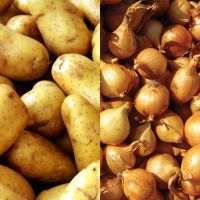

From mid to late March is the time to start planting your first early seed potatoes, as soon as your ground is workable. If your ground is particularly heavy, wet and cold, you may want to hold off until near the end of month. Ideally you will have your ground already prepared, having dug in your organic matter, compost or well rotted manure over autumn or winter.
Failing that you can take a more, 'No Dig' approach by planting your seed potatoes in the soil and adding a good 10cm of compost or well-rotted manure over the top as a mulch. This method works particularly well for first earlies as they tend to be 'determinate' varieties of potato which means they produce their tubers across one layer.
This also means they don't require as much 'earthing up' of soil through their growing period as later varieties do - particularly maincrop. Any earthing up you do will be more in the way of protecting your plants' exposed shoots from late frosts and just ensuring those tubers remain covered and not exposed to sunlight as they develop.
By way of contrast a lot of maincrop varieties are classed as 'indeterminate' which means they can produce potatoes across a number of layers. For these maincrop varieties (such as 'Desiree', 'Maris Piper and 'Rooster' and 'King Edward') earthing up not only protects tubers from exposure but continually doing so at intervals through their longer growing season may actually produce a higher yield. This is because they are able to produce extra layers of potatoes above the initial layer, where the earth has been built up around their haulm (which is growing plant stem).
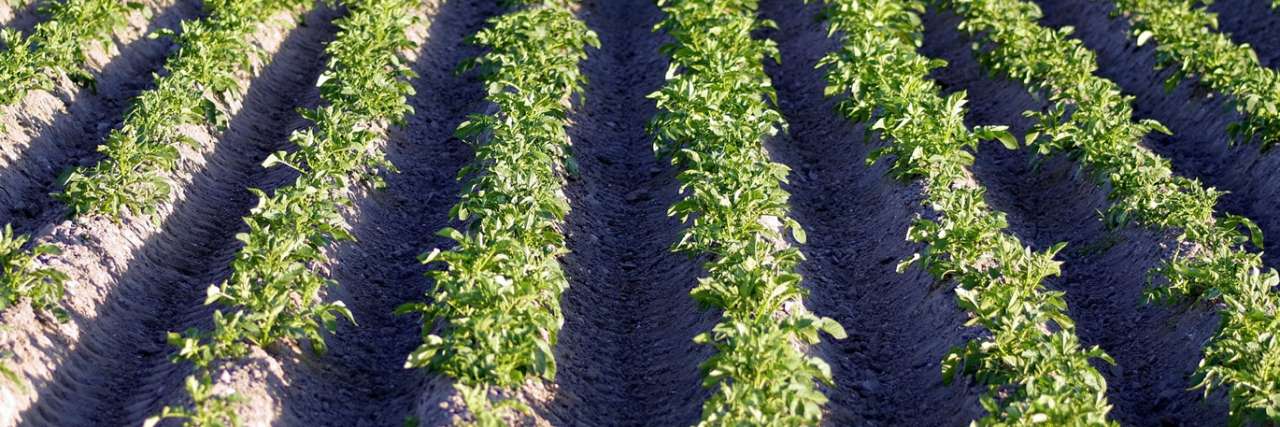
Traditionally (and commercially) potatoes are planted in drills and earthed up continuously throughout the season. However this isn't so necessary with first earlies as they tend to produce tubers across one layer. You only need to earth up to protect plants from late frosts, and just to ensure the developing tubers don't become exposed to sunlight. With first earlies, continuous earthing up will do little or nothing in terms of increasing yields. Potatoes can also be grown very successfully using large containers or potato grow sacks.
Another thing to note is, don't be tempted to just dig in a lot of fresh manure now, as this will be very nitrogen rich and will only result in a lot of lush, green leaves on your plants at the expense of tuber production.
If you don't have a plot of prepared ground or the space available, you can also grow first earlies in large containers or potato sacks.
Whilst early seed potatoes may not be as high yielding as their maincrop relatives, there's little that is more delicious than having new potatoes to dig up, fresh from your plot, as early as late June and adding them as a side to your salads, part of your main meal or as my father-in-law does, just eating a bowl of them, freshly boiled and covered in butter! This early harvesting also means that you tend to have them out of the ground before any chance of blight takes hold.
There are some great varieties available from the very tasty and versatile 'Red Duke of York' to the reliable and floury 'Sharpes Express' and the more unusual, purple 'Vitanoire'.
We have a limited amount of first early potatoes still available so why not purchase some today and have yourself a harvest of these delicious staples available from mid to late summer!
For a more comprehensive guide on growing seed potatoes, you can find more information on these and other crops in our 'Grow Your Own A-Z' or pop in to one of our stores, where our staff will be happy to help with advice on the best method and variety to suite your needs and taste.