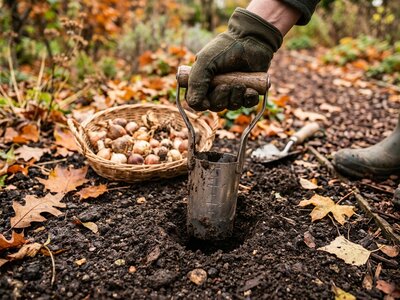

Gardening isn't just for spring and summer! While the longer, brighter days of the warmer months might be when we spend most of our time enjoying the garden, autumn is actually one of the most rewarding times to get outside and think about what our gardens could offer throughout the rest of the year.
Let's be honest, heading outside to dig and plant on a wet Irish autumn day might not be everyone's idea of fun. But there are some very good reasons to make the most of this time of year, particularly if you want to create a garden that offers something to enjoy in every season rather than one that looks spectacular in summer and rather bare for the months that follow.
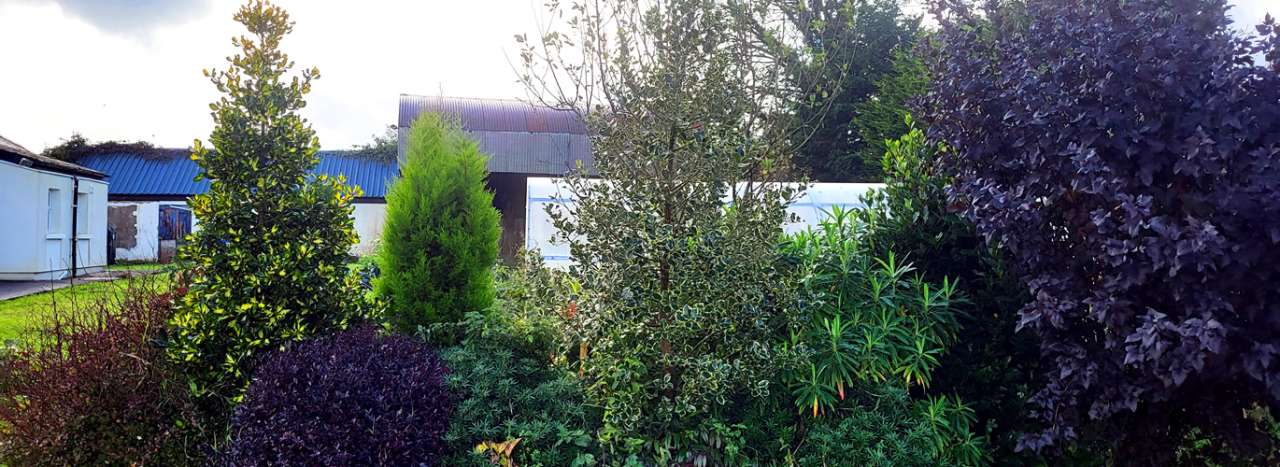
Maybe not the best example (or photo!) but here I have an autumn border with a mix of evergreens that will last through the winter and at least give me some foliage and colour to look at over the darker months - Holly (Ilex), Pittosporum 'Tom Thumb', Cupressus, Choisya and Euphorbia - Photo by Richard (AGC) taken 09/10/2026
October is an especially useful time to take stock. Many of our herbaceous perennials are beginning to die back, but their positions are still visible, making it easier to identify gaps in borders without accidentally digging up plants that are simply taking a winter rest. It's also a chance to look at the garden with fresh eyes and consider where a little more evergreen structure, winter colour or contrasting foliage could make all the difference.
And this is where evergreens come into their own.
From shrubs that provide year-round structure to grasses and ferns that bring texture and movement, evergreen plants help keep a garden looking alive even when much of its summer growth has disappeared. Add a few carefully chosen plants with winter flowers, colourful stems or berries, and you can create a garden that has plenty to offer well beyond the traditional gardening season.
Why Is Autumn Such a Good Time to Plant?
Autumn offers several advantages when it comes to planting, particularly for evergreen shrubs, conifers and hardy perennials.
The Soil Is Still Relatively Warm
Although air temperatures are falling, the soil retains some of the warmth accumulated over summer. This can allow roots to establish before the main flush of growth begins again in spring.
Rather than immediately putting all their energy into producing new leaves and flowers, newly planted shrubs and perennials have an opportunity to settle into their new surroundings.
Natural Rainfall Helps with Establishment
Our Irish climate certainly provides no shortage of rain in autumn and winter! When conditions are suitable, this natural moisture can help reduce the amount of watering needed after planting.
However, rainfall is a benefit only when the soil can drain properly. Ground that remains saturated is not suitable for planting, so it is important to choose your moment rather than assume that wetter weather automatically makes conditions ideal.
You Can See Where the Gaps Are
As summer-flowering perennials begin to die back, it becomes easier to assess the underlying structure of your borders.
You can identify empty spaces, areas that would benefit from evergreen foliage and places where plants of different heights or textures could improve the overall balance.
This is also a good opportunity to consider whether your garden has enough winter interest. Are there areas that become completely bare? Could a compact evergreen shrub fill an awkward gap? Would a clump of ornamental grass introduce some movement, or could a fern provide interest in a shady corner?
Enjoy the Benefits Straight Away
One of the great advantages of planting evergreens is that you don't have to wait until next summer to see a difference.
A new shrub can immediately add shape and structure to a border, while evergreen grasses, ferns and foliage plants introduce contrasting textures. Even when the garden is quiet, these plants continue to provide something to look at.
And by planting in autumn, you are also giving many of these plants time to establish before the following growing season.
A useful autumn gardening tip
Before buying new plants, take a walk around your garden and identify the gaps that need filling. Think about the height, shape, foliage and growing conditions of each area, as well as the eventual size of any new plants.
A Word About Planting in Wet Weather
Before we look at the plants themselves, there is one important consideration for anyone gardening in Ireland: soil compaction.
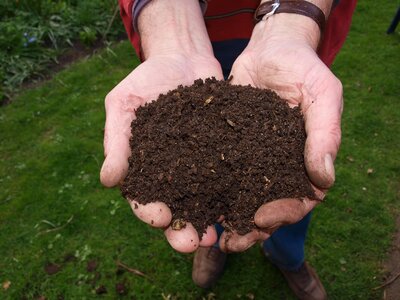
Repeatedly walking or digging on wet soil can squeeze the air out of the spaces between soil particles, damaging its structure and making it harder for roots to grow. This is particularly problematic on heavy soils or in areas that already drain poorly.
If your soil is saturated, wait until conditions improve before planting. If you need to cross an open bed, use boards where practical to distribute your weight over a wider area rather than repeatedly walking directly on the soil.
When preparing a planting area, loosen compacted ground and improve its structure where appropriate. Avoid digging when the soil is so wet that it sticks heavily to your tools or smears into a dense, solid mass.
The aim is to make the most of autumn planting conditions without creating problems that will persist long after the planting is finished.
Evergreen Shrubs – The Backbone of a Winter Garden
Evergreen shrubs are among the most useful plants for creating a garden that looks good throughout the year. They provide a permanent framework, helping to give borders shape and definition when deciduous plants have lost their leaves and herbaceous perennials have died back.
This doesn't mean filling every available space with green shrubs. In fact, a mixture of evergreen and deciduous plants will often create a more interesting garden. The key is to have enough permanent structure to give the planting continuity, with other plants adding seasonal changes around it.
Here are some of the shrubs worth considering when planning an autumn planting scheme.
Skimmia – Ideal for Shady Corners
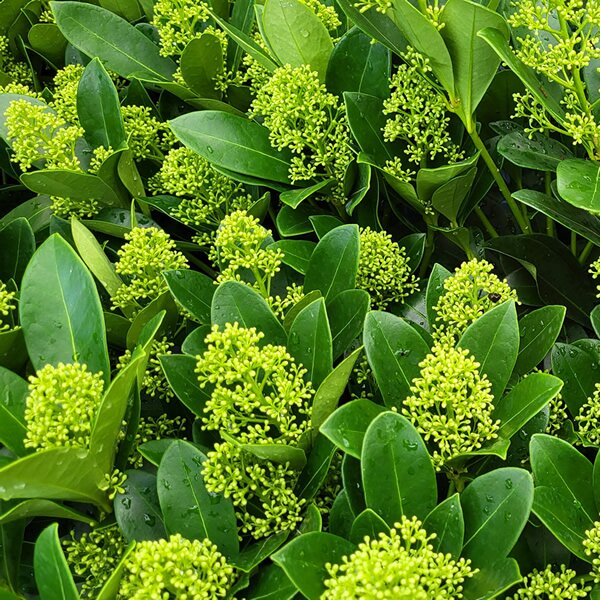
Skimmia is an excellent choice for partial or deeper shade, particularly where you want glossy evergreen foliage without having to carry out much maintenance.
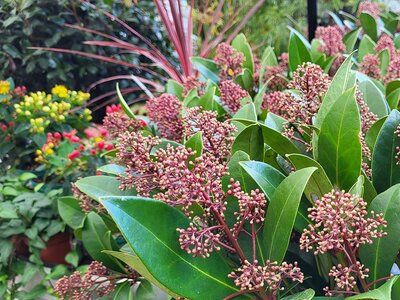
Its attractive flower buds provide interest through autumn and winter, opening into clusters of fragrant flowers in spring. Female varieties can also produce red berries following successful pollination.
Skimmia works particularly well beneath trees, in woodland-style borders or in containers close to an entrance where its foliage, flowers and berries can be appreciated.
It prefers humus-rich, moisture-retentive soil with good drainage, making it important to distinguish between a naturally moist position and one that becomes waterlogged.
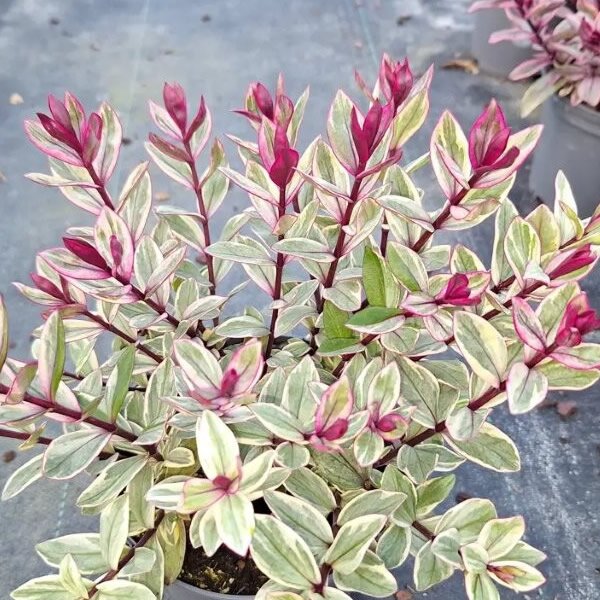
Hebes – Evergreen Foliage and Seasonal Flowers
Hebes provide a useful range of evergreen shrubs, from compact varieties suitable for containers and smaller borders to larger plants that can help fill a space.
Their foliage varies considerably in shape, colour and texture, while many varieties produce flowers during the warmer months. Some also have particularly attractive foliage that provides interest long after flowering has finished.
They generally prefer a sunny position and reasonably free-draining soil. In exposed or particularly cold gardens, choosing a suitably hardy variety and providing some shelter can make a difference.
Compact Hebes are especially useful towards the front of a border, while larger varieties can help provide structure further back.
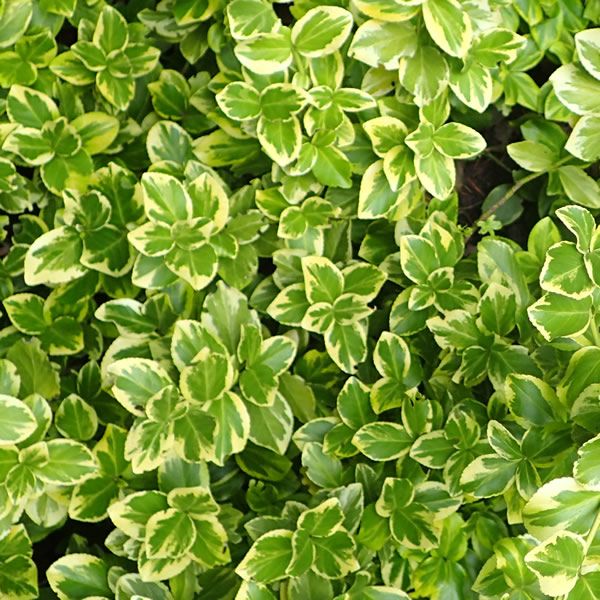
Euonymus – Colourful Foliage for Year-Round Interest
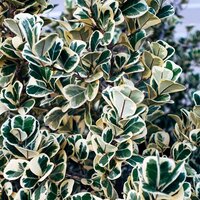
Evergreen Euonymus varieties are useful when a garden needs more than plain green foliage. Depending on the variety, their leaves may be edged or marked with cream, yellow or gold, providing a brighter contrast against darker shrubs and surrounding planting.
Many are adaptable and relatively easy to grow, although the best position will depend on the variety. Some are particularly useful in partial shade, while others develop their best foliage colour with more sunlight.
Low-growing forms can be used as ground cover or along the front of a border, while more upright varieties can contribute height and structure.
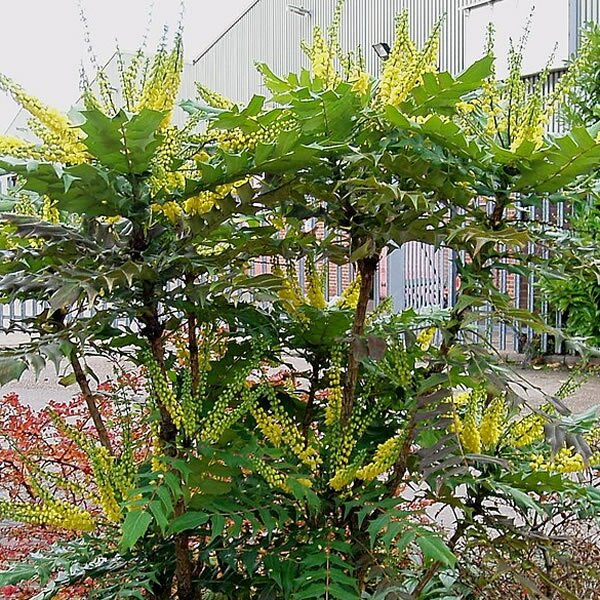
Mahonia – Structural Evergreen Shrub, Many With Yellow Winter Flowers
With their bold, architectural evergreen leaves and striking clusters of yellow flowers, Mahonias bring welcome colour and structure to the garden as the days grow shorter.
Many varieties flower in autumn or winter, often with a lovely fragrance, when relatively few other shrubs are in bloom. They are particularly useful in partially shaded spots, although some varieties tolerate sunnier positions, provided the soil doesn't dry out excessively.
Mahonias generally prefer fertile, humus-rich, well-drained soil and, depending on the variety, can range from compact shrubs to substantial plants, so it's worth checking their eventual size before choosing a position.
Other Shrubs Worth Considering
There are plenty of other options for building evergreen structure into your garden, including:
- Sarcococca (Christmas box): an excellent shrub for shade, with small, highly fragrant winter flowers.
- Pieris: evergreen foliage, often with attractive young growth, followed by spring flowers.
- Dwarf Rhododendrons: useful in suitable acidic soil, with evergreen foliage and seasonal flowers.
- Evergreen Viburnums: some varieties offer attractive foliage and fragrant winter or early-spring flowers.
- Compact conifers: useful for adding shape, colour and year-round structure, particularly where a shrub with a more architectural form is required.
These are just a few examples - other staples include Holly (Ilex), Choisya, Leucathoe, Nandina, and Pittosporum.
As always, check the mature size and growing requirements of individual varieties before planting. A small plant in a pot today may eventually become a substantial shrub, so allow enough room for it to develop naturally.
Evergreen Perennials – More Than Just Flowers
When we think of perennials, we often picture plants that burst into flower during spring and summer before dying back in autumn. However, there are plenty of perennials that provide foliage interest through the colder months, helping to bridge the gap between the growing seasons.
Some retain their leaves throughout winter, while others may lose some foliage or become less colourful during prolonged cold weather. Their performance will depend on the variety and local conditions, but they can all play a useful role in creating a more balanced border.
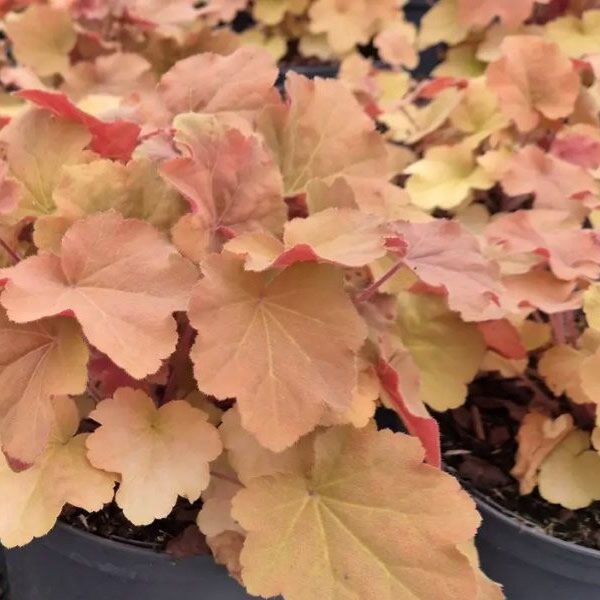
Heuchera - Foliage That Doesn't Die After The Summer
We've already mentioned Heuchera among evergreen shrubs, but these foliage plants are also useful in the perennial border.
Their coloured leaves provide a long-lasting contrast with green shrubs, ornamental grasses and ferns. Plant them in small groups towards the front of a border or use them to introduce colour beneath taller plants.
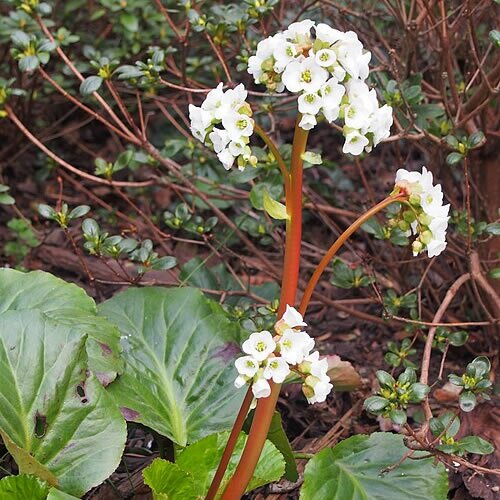
Bergenia – Bold Leaves for Difficult Areas
Bergenia is a particularly useful evergreen or semi-evergreen perennial, depending on the variety and conditions.
Its large, leathery leaves provide a strong contrast with finer foliage, while spring flowers add another layer of interest. Some varieties also develop attractive reddish or bronze tones in colder weather.
Bergenias are useful for borders and ground cover, including areas of partial shade. They are generally tolerant of a range of conditions, provided the soil does not remain excessively waterlogged.
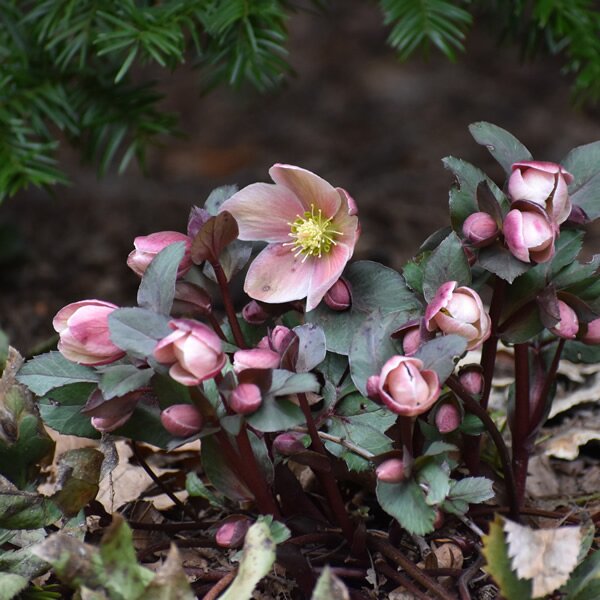
Hellebores – Flowers When the Garden Needs Them Most
Hellebores are valuable plants for winter and early-spring interest, with flowers appearing when many other perennials are still dormant.
Their evergreen or semi-evergreen foliage also helps maintain structure, although old or damaged leaves may need removing as new growth and flowers emerge.
They are particularly useful in partial shade and woodland-style planting, where they can be combined with Skimmia, ferns, spring bulbs and other shade-tolerant plants.
Hardy Geraniums
Not all hardy geraniums retain their foliage through winter, so choose varieties carefully if evergreen interest is your priority.
Some provide attractive foliage for much of the year, while others die back and return in spring. Even where the foliage is seasonal, hardy geraniums can be useful for filling spaces between shrubs and providing flowers during the growing season.
The important point is to consider their contribution across the whole year rather than expecting every perennial to remain attractive throughout winter.
Evergreen Grasses – Texture and Movement
Ornamental grasses can bring a different quality to winter planting. While shrubs provide solid structure, grasses introduce movement, fine textures and a softer outline.
Some grasses remain evergreen or semi-evergreen, while others are grown for their winter seedheads and dried foliage. Combining both types can help a garden remain interesting even when there are few flowers to enjoy.
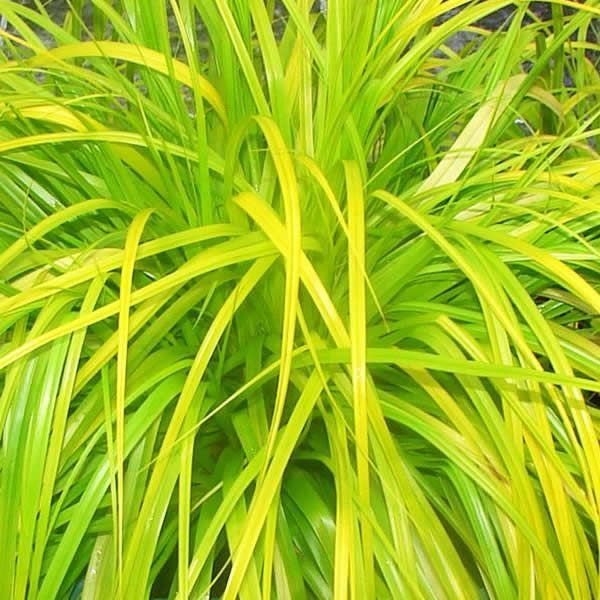
Carex – Compact and Versatile
Carex varieties are among the most useful evergreen or semi-evergreen grasses for smaller spaces.
Depending on the variety, their foliage may be green, bronze, golden or variegated. They work well in containers, along the front of borders and among other foliage plants.
Some prefer shade and moisture, while others tolerate sunnier positions, so it is worth checking the requirements of the variety you choose.
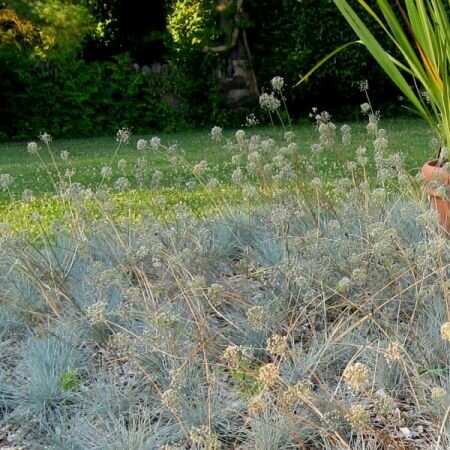
Festuca – Neat Clumps of Fine Foliage
Blue or grey-leaved Festuca varieties can introduce a different colour and texture, particularly in sunny borders and gravel gardens.
Their compact, rounded growth habit makes them useful towards the front of a planting scheme, where they contrast with broader-leaved shrubs and perennials.
They generally prefer well-drained soil and are less suited to positions that remain wet for long periods.
Evergreen Grasses and Sedges in Containers
Grasses and sedges can be particularly effective in containers, where their upright or arching foliage adds height and movement without requiring a large amount of space.
Try combining a compact Carex with a small evergreen shrub and seasonal bedding plants. The shrub and grass provide the permanent framework, while the bedding can be changed as the seasons progress.
This is a simple way to create a container that looks considered throughout winter rather than relying entirely on flowers.
Ferns – A Natural Choice for Shade
If you have a shady area that is difficult to plant, ferns are well worth considering.
Their appeal comes from foliage rather than flowers, and the range of leaf shapes and textures makes them particularly useful for adding depth to woodland-style planting.
Some ferns are evergreen, while others die back or lose much of their foliage in winter. Choosing the right type will allow you to enjoy their structure for longer.
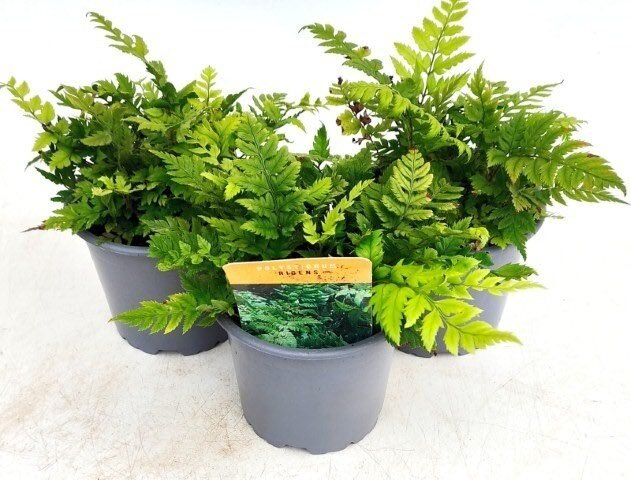
Polystichum – Evergreen Ferns for Woodland Planting
Many Polystichum ferns, including forms of the soft shield fern, retain their foliage through much of the winter.
Their finely divided fronds provide a softer texture than the broad leaves of evergreen shrubs, making them useful beneath trees or towards the middle of a shady border.
They generally prefer humus-rich soil that retains some moisture while still draining adequately.
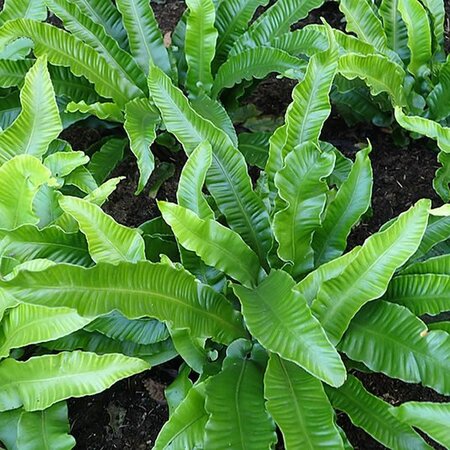
Asplenium – Neat Foliage for Smaller Spaces
Hart's-tongue fern (Asplenium scolopendrium) has long, undivided fronds that provide a distinctive contrast with the finely divided foliage of many other ferns.
It is particularly useful in shady areas and can work well alongside rocks, walls and woodland-style planting.
Its evergreen foliage makes it a good choice where you want to retain some greenery through winter without introducing a large shrub.
Planting Ferns Successfully
Ferns vary in their preferences, so it is worth checking whether the variety you choose prefers moist woodland soil, a more sheltered position or a well-drained site.
Prepare the planting area appropriately and water new plants while they establish. Even moisture-loving ferns can struggle if their roots are sitting in permanently saturated soil.
Conifers – Structure That Lasts
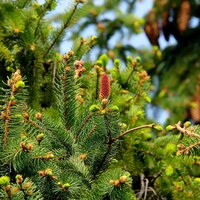
Conifers deserve a place in any discussion about year-round garden interest. Their range of forms, foliage colours and growth habits makes them useful in everything from small courtyard gardens to larger borders.
A compact conifer can provide a focal point in a gravel garden or container, while a larger specimen can give a garden a sense of permanence. Upright forms introduce height, spreading varieties can soften edges, and blue, golden or green foliage provides contrast throughout the year.
However, choosing the right variety is particularly important because conifers vary enormously in their eventual size and growth rate.
Before planting, consider not just how the plant looks in its pot, but how much room it will need in ten or twenty years.
We've covered this in more detail in our article Conifers – Choosing the Right Conifer for an Irish Garden, which explores the different size categories, growing conditions and varieties to consider.
A Word About Mature Size and Growth Rate
When choosing evergreens, it’s worth looking beyond the size of the plant in the pot. Check its expected height and spread at maturity, as well as its natural growth habit and how quickly it grows. A compact shrub today may eventually become a substantial plant, while a fast-growing evergreen can soon overshadow neighbouring plants, block light or outgrow its allotted space.
Choosing carefully from the outset will help your garden remain balanced and attractive as it matures, with less need for drastic pruning or moving plants later on. Remember, too, that growth rates can vary depending on soil, exposure and growing conditions.
Seasonal Plants to Complement Evergreens
Evergreens provide the structure, but that doesn't mean the garden has to be entirely green during winter.
In fact, some of the most attractive winter displays combine permanent foliage with seasonal flowers, colourful stems and berries. The evergreen plants form the background, while the seasonal additions bring colour and variety.
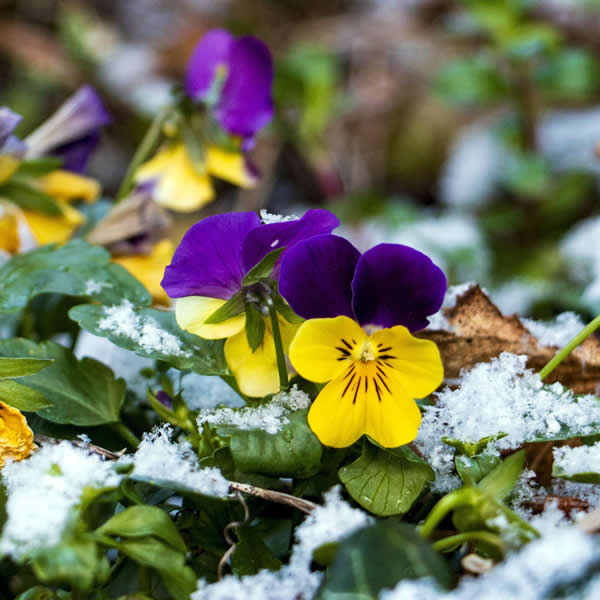
Winter Bedding Plants
Winter bedding is a straightforward way to introduce colour to containers, window boxes and gaps in the border.
Pansies and violas are particularly useful, often flowering intermittently through mild winter weather. Primulas and polyanthus can provide further colour, while Bellis daisies and hardy wallflowers offer additional options.
Plant them in groups among evergreen foliage rather than treating them as a display on their own. The contrast between flowers and foliage gives the arrangement more depth and helps it look attractive even when flowering slows during cold weather.
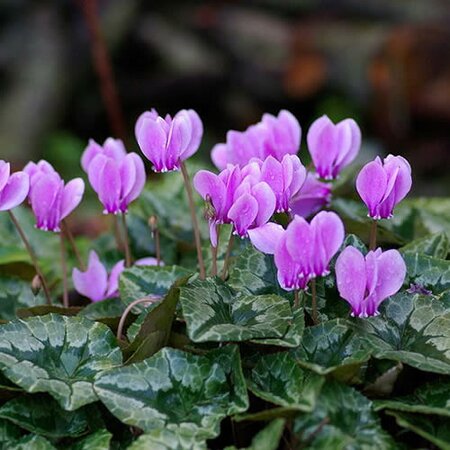
Cyclamen
Cyclamen can be particularly useful for autumn and winter colour, but it is important to choose the right type.
Hardy garden cyclamen, such as Cyclamen hederifolium, can naturalise in suitable conditions beneath trees and shrubs, producing flowers in autumn and attractive patterned foliage.
Florist's cyclamen (Cyclamen persicum) is less reliably hardy outdoors in exposed Irish gardens, although it can provide colour in sheltered positions and containers for a period.
Check the plant label carefully rather than assuming all cyclamen can be treated in the same way.
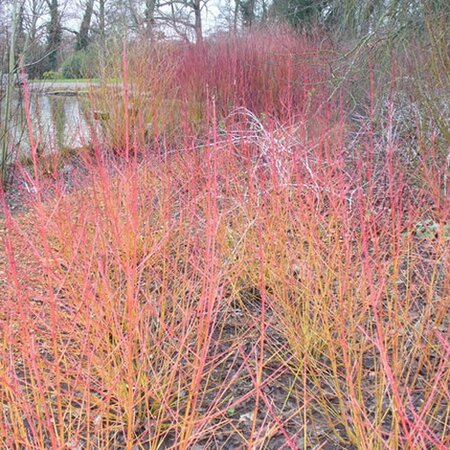
Dogwoods – Colourful Stems for Winter
If you want to introduce colour without relying on flowers, dogwoods are worth considering.
Deciduous Cornus varieties grown for their stems can provide striking red, orange or yellow growth during winter, particularly when planted in groups where their colour becomes more noticeable.
They work well alongside evergreen shrubs and grasses, which provide a contrasting background for the stems.
Remember that these dogwoods lose their leaves, so they are not evergreen themselves. Their contribution comes from the colour of their bare stems rather than foliage.
Hellebores and Other Winter-Flowering Plants
Hellebores are another excellent addition to winter planting schemes, with flowers appearing from winter into spring, depending on the variety and conditions.
Other plants worth considering include winter-flowering heathers, selected Mahonias and fragrant shrubs such as Sarcococca. These can introduce flowers and scent at a time of year when both are particularly welcome.
Where possible, position fragrant winter-flowering plants near entrances, paths or seating areas so you can appreciate their scent without having to venture far into the garden on a cold day.
Berries and Seedheads
Winter interest is not restricted to flowers and foliage.
Berries on suitable shrubs can provide colour, while the seedheads of some perennials and grasses create attractive shapes against winter light or frost.
Rather than cutting everything back as soon as flowering finishes, consider which seedheads and stems are still contributing to the garden. Some can be left standing until late winter or early spring, when they can be tidied away before new growth gets underway.
Bringing It All Together – Planning a Garden for Every Season
The most successful winter gardens are rarely created by planting lots of evergreens without considering how they fit together.
Instead, think about the different roles each plant can play.
- Structure: evergreen shrubs and conifers provide the permanent framework.
- Foliage: Heuchera, Bergenia, Carex and ferns introduce contrasting shapes, textures and colours.
- Height and movement: ornamental grasses and taller shrubs help create layers and soften the overall outline.
- Seasonal colour: winter bedding, cyclamen, hellebores and winter-flowering shrubs bring flowers when they are most appreciated.
- Stems and berries: selected dogwoods and berry-producing shrubs add another dimension to the winter display.
You don't need to incorporate all of these elements into every garden. Even adding two or three carefully chosen plants to an existing border can make a noticeable difference.
It is also worth thinking about repetition. Using the same evergreen shrub or foliage plant in several places can help link different parts of the garden, making the overall design feel more cohesive.
Most importantly, choose plants that suit the conditions you already have. A shady, moisture-retentive border will call for different plants from a sunny, free-draining gravel garden, and selecting accordingly will save a great deal of unnecessary work later.
Final Thoughts
Autumn is an excellent opportunity to look at your garden differently.
Instead of seeing it as the end of the gardening year, think of it as the beginning of the next stage of your garden's development. With the soil still relatively warm, many plants can establish before spring, while the fading summer growth makes it easier to identify the spaces that need attention.
Evergreen shrubs, perennials, grasses, ferns and conifers all have a role to play in creating a garden that offers something to enjoy throughout the year. Combine them with seasonal flowers, colourful stems and winter-flowering plants, and even the quietest months can have their own appeal.
Just remember to choose your planting conditions carefully, avoid working saturated soil and give new plants the aftercare they need to establish.
You may not be spending as much time sitting out in the garden during the winter months, but that doesn't mean it has to be a place without interest. A little autumn planting now can make a real difference to how your garden looks and feels for the rest of the year.
So, before the spring rush arrives, why not take a look around your garden and see where a little evergreen interest could make all the difference?
Explore our range of evergreen shrubs, perennials, grasses and ferns online, or call into our garden centres in Boyle or Roscommon Town for inspiration.